Artwork
The Holy Kinship
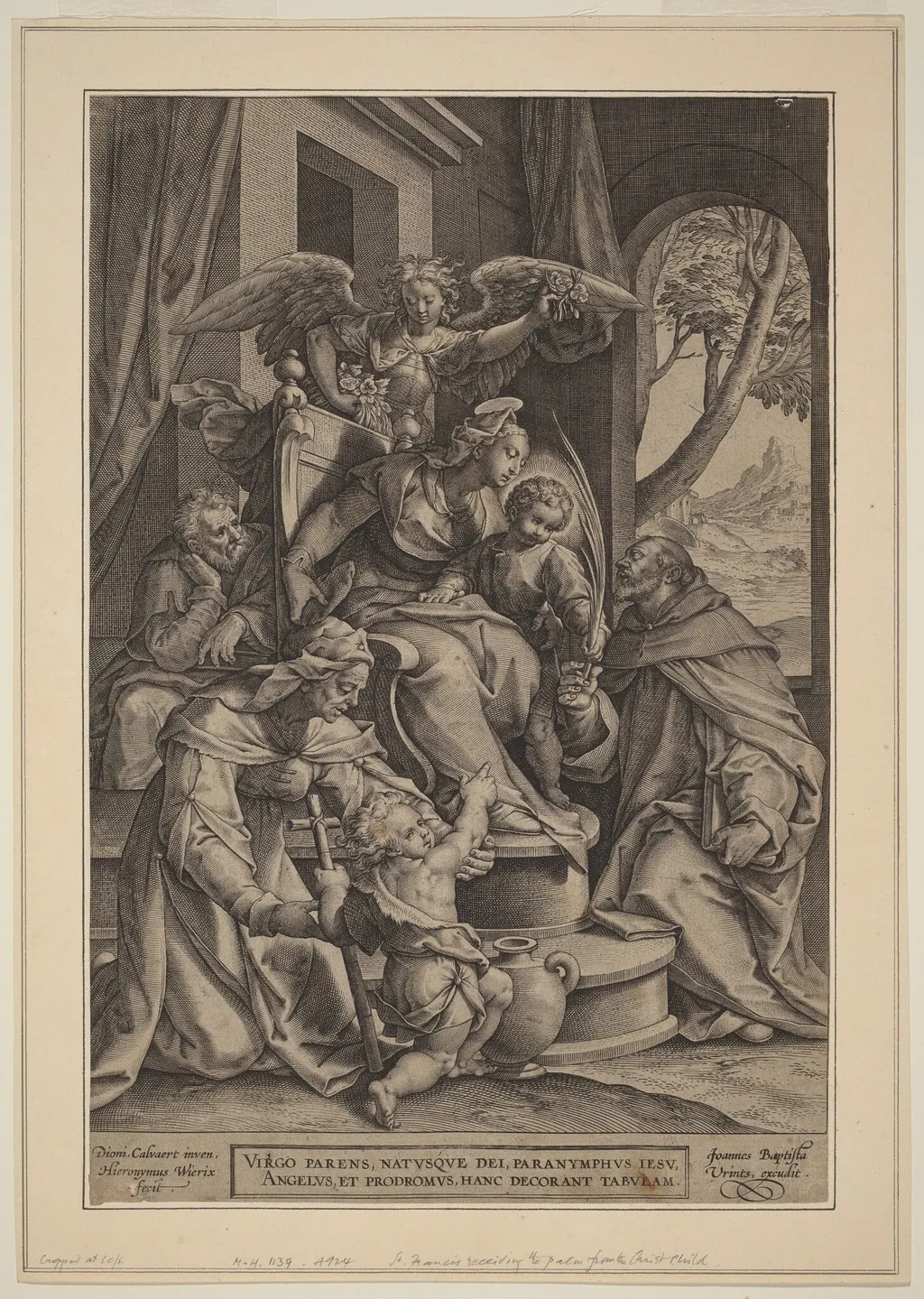
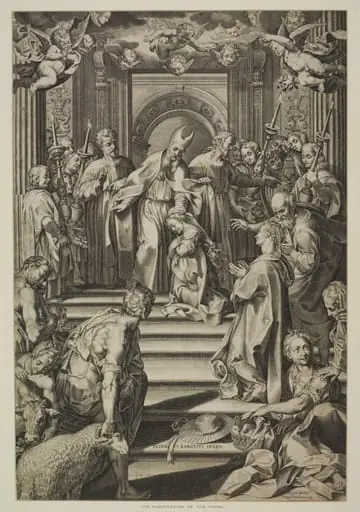
The Holy Kinship is an ink print by the Baroque artist Hieronymus Wierix. It dates from 1611 and is held in the collection of the National Gallery of Art.
About this work
Overview
Created in 1611, this engraving on laid paper presents a domestic interior populated by a seated woman cradling a child, surrounded by several figures in various poses. The composition includes a window that opens onto a landscape with trees, and the artist employs fine cross‑hatching to model forms and suggest depth.
Subject & Meaning
The scene depicts the Holy Kinship, a traditional Christian motif that gathers Saint Anne, her daughter the Virgin Mary, and their offspring, emphasizing familial bonds within the sacred narrative. The arrangement of kneeling and standing figures underscores reverence toward the central mother and child.
Technique & Style
Executed with meticulous line work, the engraving relies on dense cross‑hatching to render shadows and textures, creating a tactile sense of volume. The precision of the incised lines reflects the Flemish printmaking tradition of the early 17th century, where detail served both decorative and didactic purposes.
History & Provenance
The print is attributed to Hieronymus Wierix, a member of a prolific family of Flemish engravers active during the Counter‑Reformation. Wierix was known for reproducing works by earlier masters, thereby extending the reach of Netherlandish visual culture beyond the Southern Netherlands.
Context
Produced at a time of intense confessional conflict, the engraving aligns with the Catholic emphasis on devotional imagery. By visualizing the Holy Kinship, the work reinforced familial piety and provided a model of sanctified lineage for viewers navigating religious division.
Artist & collection

Artist
Hieronymus Wierix (1553–1619) was a Flemish engraver, draughtsman and publisher. He is known for his reproductive engravings after the work of well-known local and foreign artists including Albrecht Dürer. Together with…