Artwork
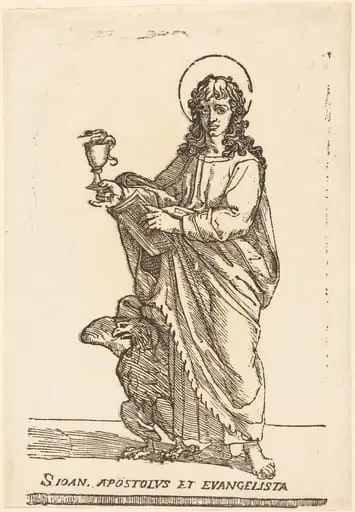
Si mortiferum quid biberint ... (Saint John the Evangelist)
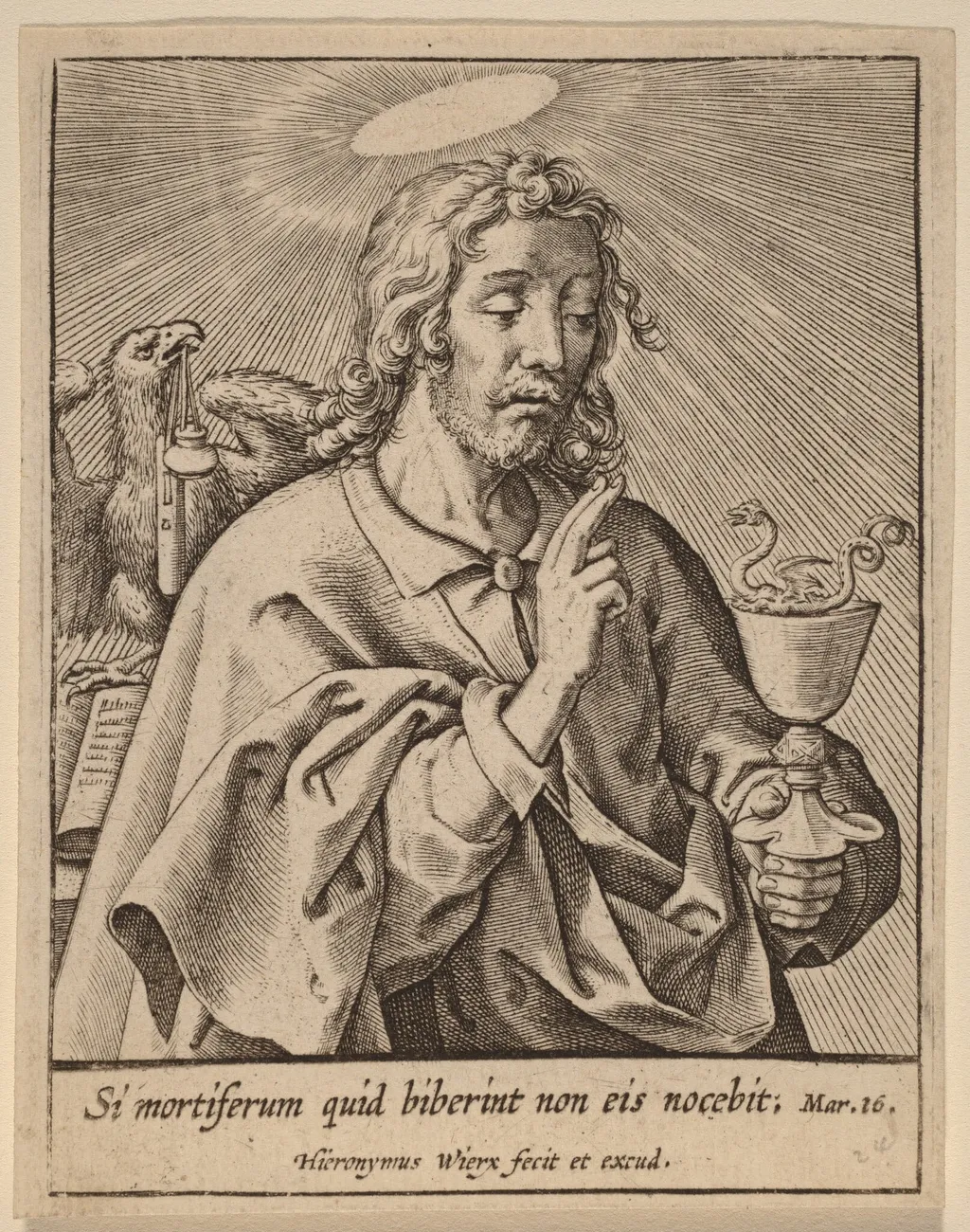
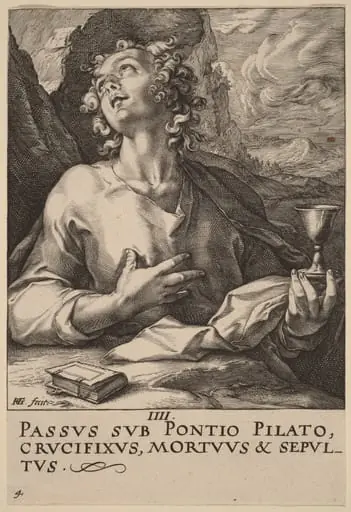
Si mortiferum quid biberint ... (Saint John the Evangelist) is an ink print by the Renaissance artist Hieronymus Wierix. It dates from 1586 and is held in the collection of the National Gallery of Art.
About this work
Overview
As part of a prolific family of printmakers, Wierix specialized in detailed reproductive engravings that disseminated religious imagery across Europe.
Created in 1586 by Hieronymus Wierix, this engraving depicts Saint John the Evangelist confronting a poisoned chalice. As part of a prolific family of printmakers, Wierix specialized in detailed reproductive engravings that disseminated religious imagery across Europe. His work reflects the devotional demands of the Counter-Reformation, blending narrative clarity with technical precision in a medium that allowed wide distribution.
Subject & Meaning
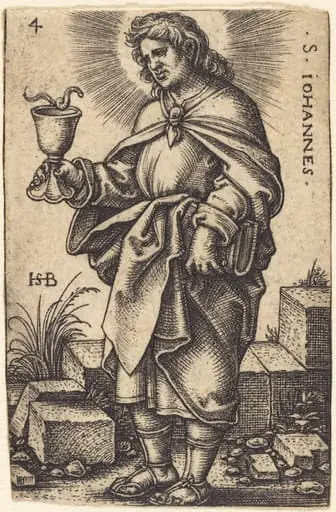
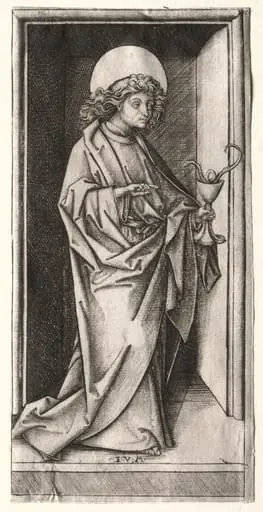
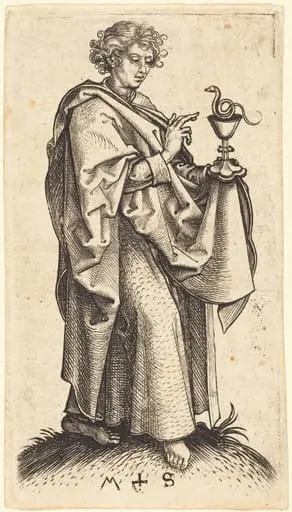
The scene illustrates the apocryphal legend in which Saint John, confronted with a cup of poisoned wine, blesses it and renders the poison harmless. A hovering angel, barely visible, signifies divine intervention. The image conveys faith’s triumph over death, aligning with Catholic teachings that emphasized the miraculous endurance of saints. The narrative hinges on quiet drama rather than overt violence, inviting contemplation.
Technique & Style
Wierix employed fine, controlled lines to render texture and shadow through cross-hatching, creating depth without color. The poison’s steam is suggested by delicate, swirling strokes, while the saint’s robes and the angel’s form are defined with subtle gradations. The engraving’s precision reflects the artist’s mastery of metalplate incision, a technique requiring steady hand and intimate knowledge of light and form.
History & Provenance
Produced during Wierix’s active years in Antwerp, the print was likely made for devotional use or scholarly circulation. As a Catholic artist working in a region marked by religious upheaval, Wierix navigated both Protestant and Catholic markets. This piece, like many of his works, survives in multiple impressions across European collections, testifying to its early and sustained demand.
Context
In the late 16th century, engravings served as accessible tools for religious instruction amid the Reformation’s doctrinal conflicts. Wierix’s imagery drew from established iconographic traditions, adapting biblical and apocryphal stories to reinforce Catholic orthodoxy. His prints reached audiences beyond the Southern Netherlands, contributing to a transnational visual language of piety.
Legacy
Wierix’s engravings, including this one, helped standardize the visual representation of saintly miracles for generations. His technical discipline influenced later printmakers, and his ability to convey complex narratives in miniature formats ensured his work remained in circulation long after his death. The print endures as a quiet example of how print culture shaped religious perception in early modern Europe.
Artist & collection

Artist
Hieronymus Wierix (1553–1619) was a Flemish engraver, draughtsman and publisher. He is known for his reproductive engravings after the work of well-known local and foreign artists including Albrecht Dürer. Together with…