Artwork
Indigence et honneur
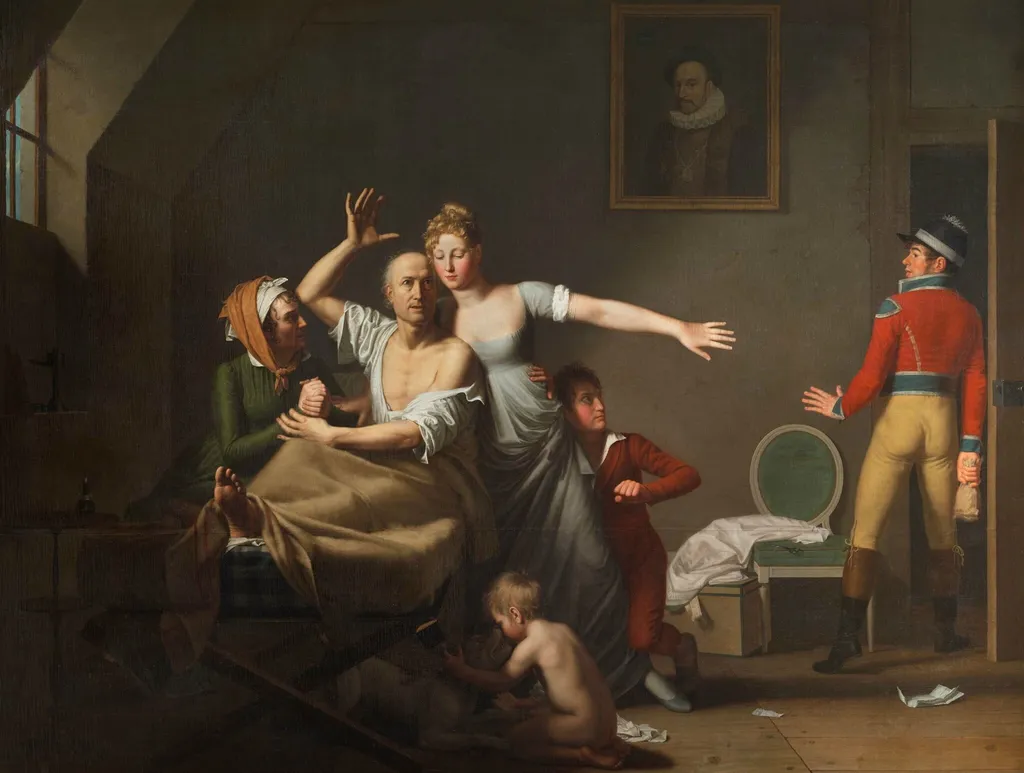
Indigence et honneur is an oil painting by the Neoclassicist artist Hilaire Ledru. It dates from 1804 and is held in the collection of the Art Institute of Chicago.
About this work
Overview
Indigence et honneur is an oil on canvas genre painting created by French artist Hilaire Ledru in 1804. It is part of the collection at the Art Institute of Chicago.
Subject & Meaning
The scene suggests an unexpected or confrontational visit, with the subjects reacting in surprise or apprehension.
The painting depicts a dramatic, tense moment in a cluttered, dimly lit room. A soldier in a conspicuous red coat interacts with five individuals, including a partially dressed woman, a man with a baby, another man with a child, and an implied sixth figure through a portrait on the wall. The scene suggests an unexpected or confrontational visit, with the subjects reacting in surprise or apprehension.
Technique & Style
Ledru employs strong chiaroscuro, contrasting the soldier's vibrant red coat with the shadowy, mundane interior. This lighting emphasizes the soldier's presence and heightens the emotional tension of the scene, guiding the viewer's focus.
History & Provenance
Created in 1804, the painting's history prior to its acquisition by the Art Institute of Chicago is not detailed here. It is currently held in the museum's collection.
Context
Painted during the Napoleonic era, Indigence et honneur may touch on themes of economic hardship (indigence) and personal dignity (honneur) in the face of military presence or obligation, though specific contextual references are not explicitly outlined in the provided details.
Legacy
The painting's impact or influence on subsequent art movements or genres is not specified in the available information.
Own this work as a print
Artist & collection

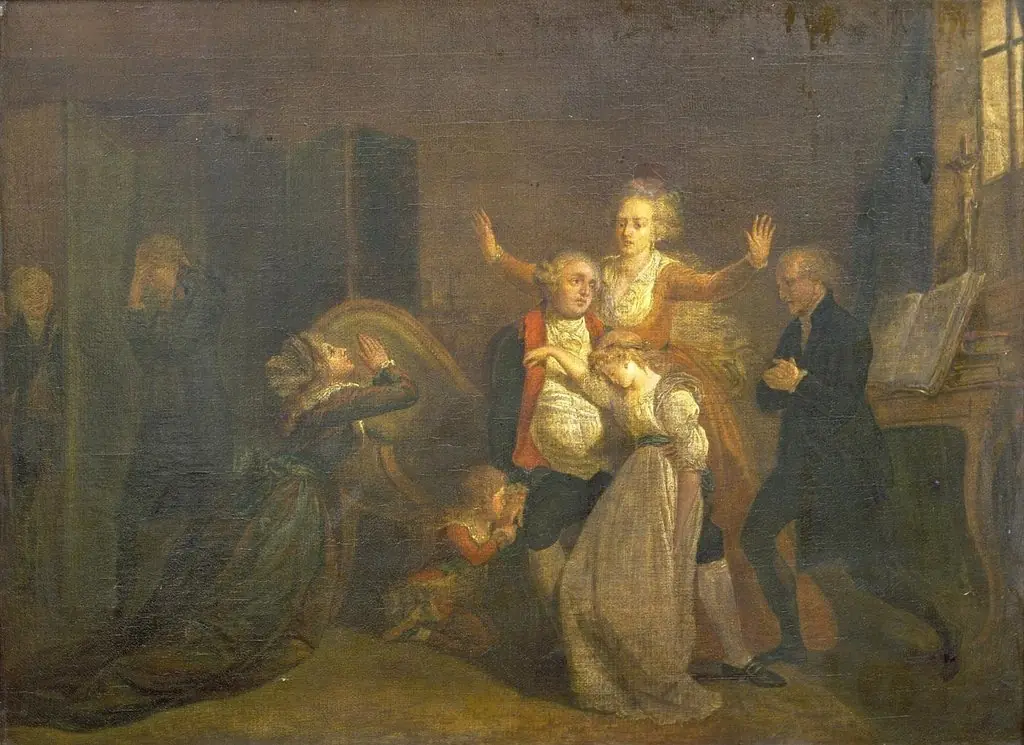 The last moments of Louis XVI
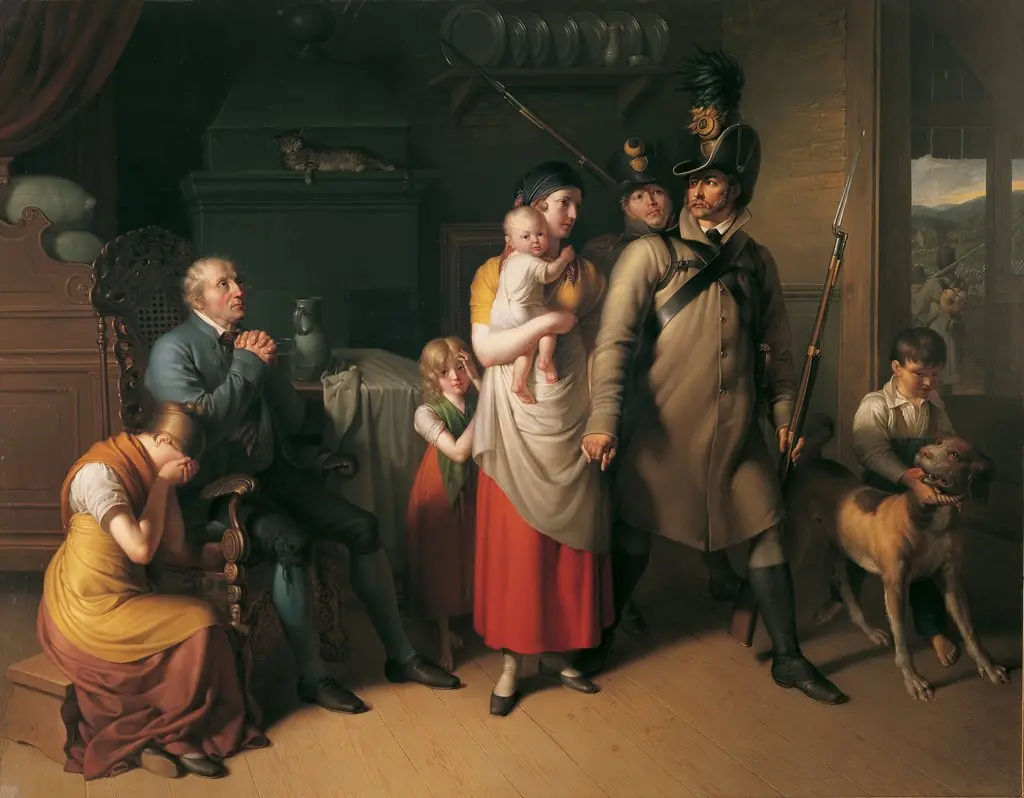 The Farewell of the Country Soldier
 Salametsästäjän vapauttaminen
 From Ludvig Holberg's "Jean de France", Act 1, Scene 6
 Portrait of Aernout van Beeftingh, his Wife Jacoba Maria Boon and their Children
 El año del hambre de Madrid
 Interrupted Supper: “Oh, what a fool!”
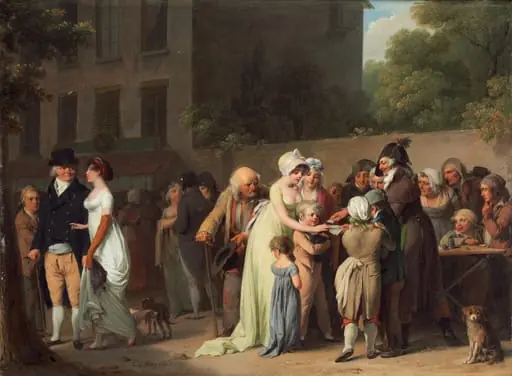 The Card Sharp on the Boulevard
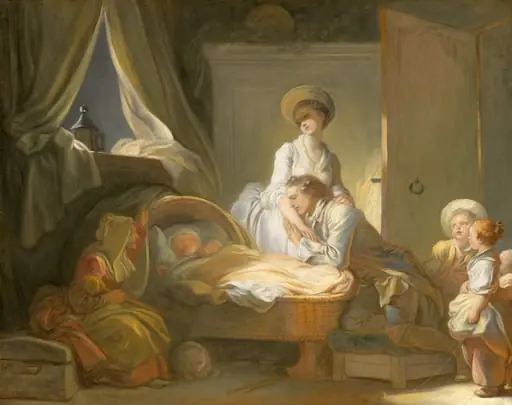 The Visit to the Nursery
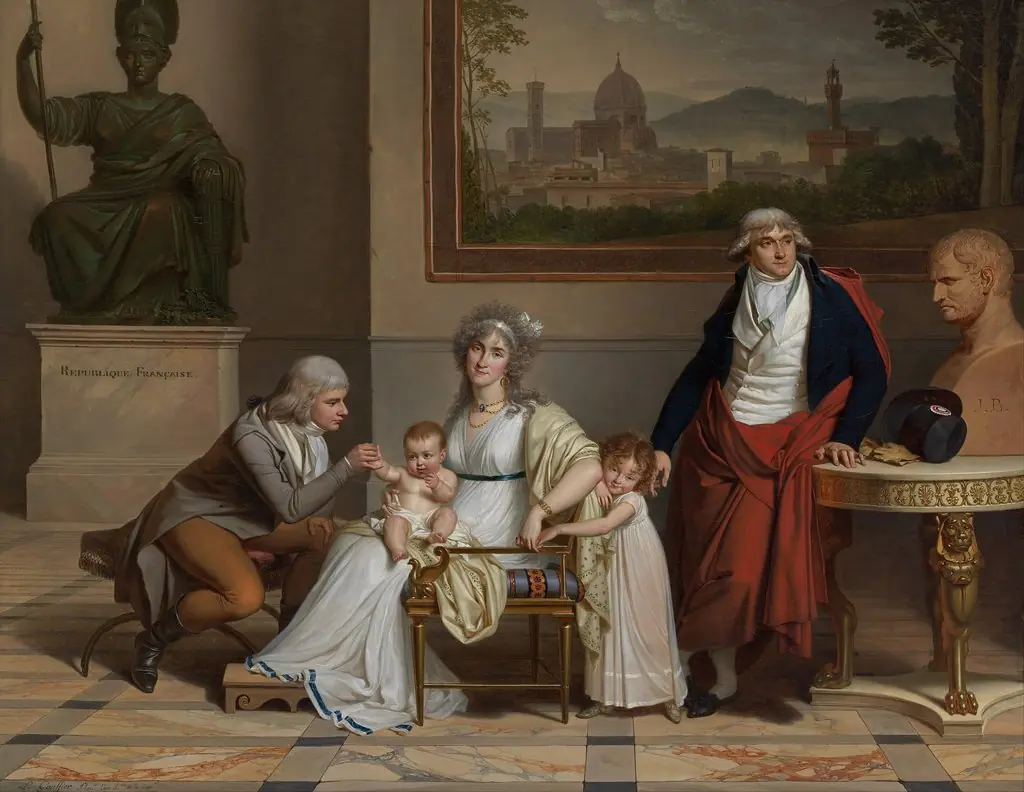 The family of André-François, Count Miot de Melito, (1762-1841) consul of France to Florence
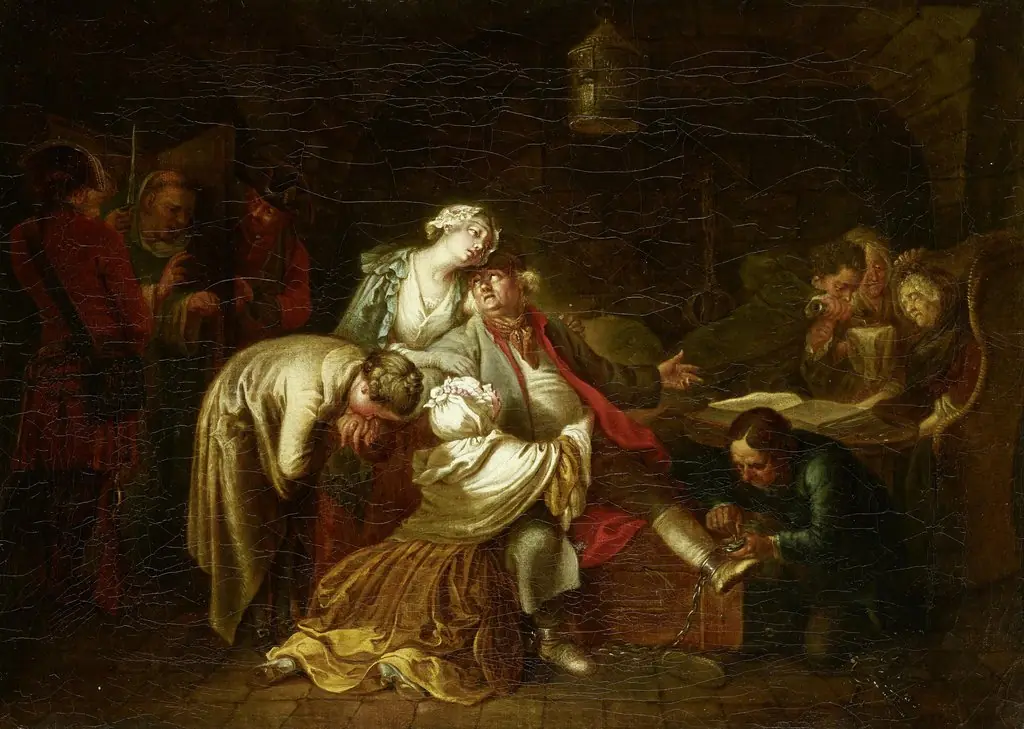 Jean Calas' Farewell to his Family
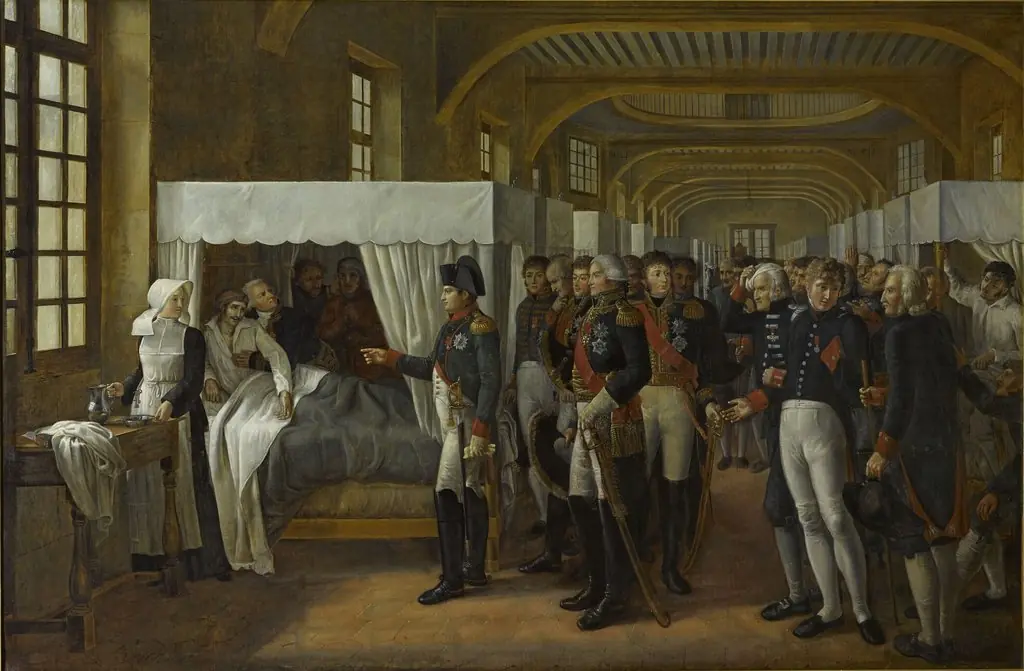 Napoleon I visiting the infirmary at Les Invalides, February 11, 1808