Artwork
Plate 13: A Tiger, a Lynx, and a Jaguar(?)
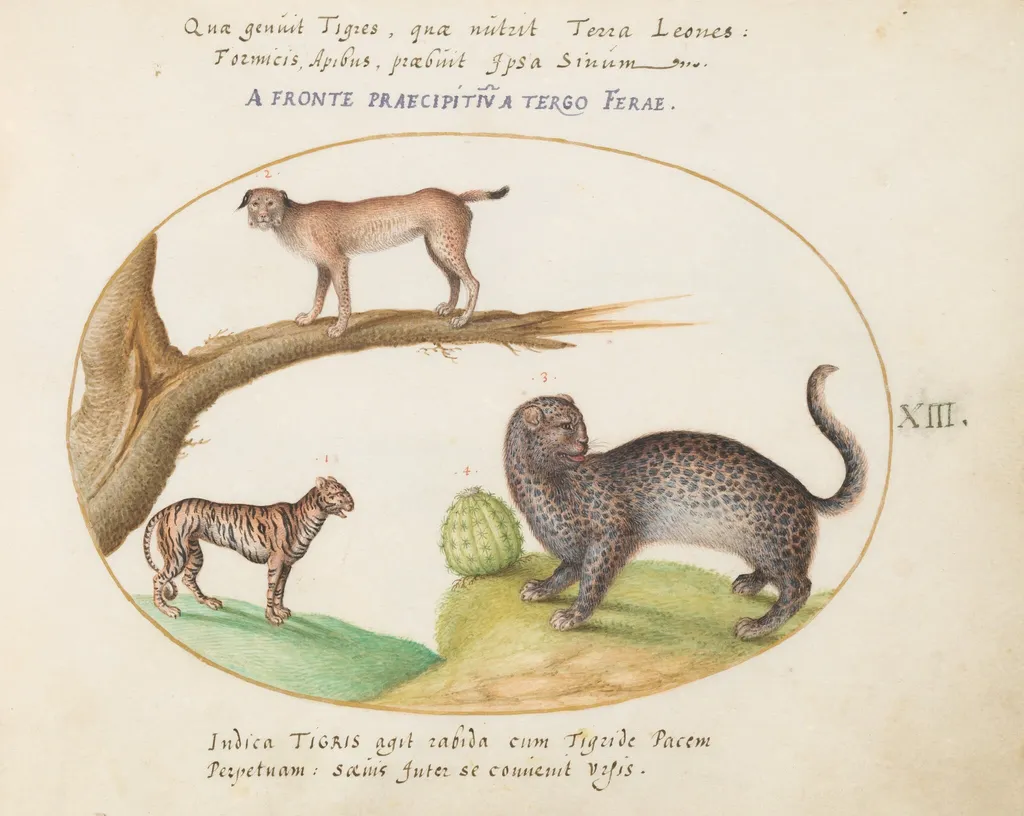
Plate 13: A Tiger, a Lynx, and a Jaguar(?) is a gouache drawing by the Renaissance artist Joris Hoefnagel. It dates from 1594 and is held in the collection of the National Gallery of Art.
About this work
Overview
The work is part of a broader series of natural studies that reflect Hoefnagel’s commitment to precise visual documentation.
Created around 1594 by the Flemish artist Joris Hoefnagel, this watercolor and gold-painted drawing on parchment depicts three large felines: a tiger, a lynx, and a jaguar, the latter identified with some uncertainty. The work is part of a broader series of natural studies that reflect Hoefnagel’s commitment to precise visual documentation. Its use of gold leaf and delicate brushwork aligns with manuscript illumination traditions, while its subject matter points toward emerging interests in natural history.
Subject & Meaning
The three cats are presented individually, each in a distinct environment—lynx on a branch, tiger on green grass, jaguar on yellow grass—suggesting an attempt to capture their natural habitats. Their physical distinctions, including tail length and coat patterns, are rendered with careful attention, indicating an observational intent rather than symbolic representation. The absence of human figures or narrative context emphasizes the animals as subjects worthy of study in their own right.
Technique & Style
Hoefnagel employed fine watercolor washes and precise linework to model fur texture and anatomical detail, enhancing realism through subtle shading. Gold paint outlines the animals and accents the parchment background, a nod to medieval illumination practices. The off-white ground allows the colors to remain luminous, while the lack of landscape depth focuses attention on the creatures themselves. This fusion of artistic refinement and biological accuracy defines his distinctive approach.
History & Provenance
The plate likely originated as part of a larger illustrated manuscript commissioned by a European noble or scholarly patron, common in late 16th-century courts. Hoefnagel’s work was circulated among collectors interested in natural curiosities, particularly after his travels across Central Europe. Though the full manuscript’s current location is uncertain, fragments like this plate survive in institutional collections, preserving his legacy as a bridge between medieval art and early scientific illustration.
Context
In the late Renaissance, European interest in exotic animals grew alongside global exploration. Hoefnagel’s depictions, though based on captive or imported specimens, reflect a shift from mythological representations toward empirical observation. His contributions helped lay groundwork for later naturalist illustration, influencing both artistic and scientific communities as taxonomy and zoology began to formalize in the early modern period.
Legacy
Hoefnagel’s detailed animal studies, including this plate, contributed to the evolution of natural history illustration as a distinct field. His integration of artistic technique with observational rigor influenced subsequent generations of illustrators, particularly in northern Europe. Though not widely known today, his work remains a significant reference point in the history of how nature was visually recorded before the advent of photography.
Artist & collection

Artist
Joris Hoefnagel or Georg Hoefnagel (1542 – 24 July 1601) was a Flemish painter, printmaker, miniaturist, draftsman and merchant.

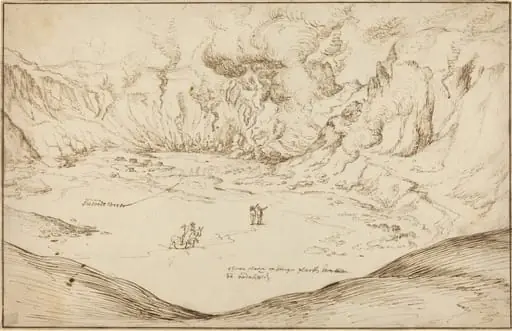 Forum Vulcani: The Hot Springs at Pozzuoli
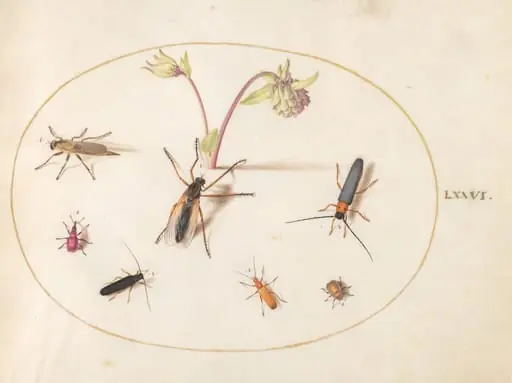 Plate 76: Insects with a Pink and Cream Columbine
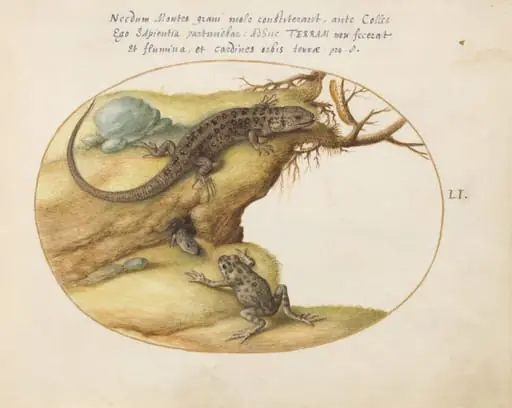 Plate 51: Two Sand Lizards, a Common Parsley Frog(?), and a Caterpillar
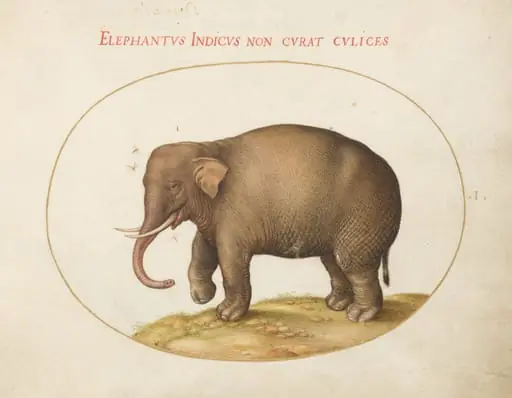 Plate 1: Elephant with Insects
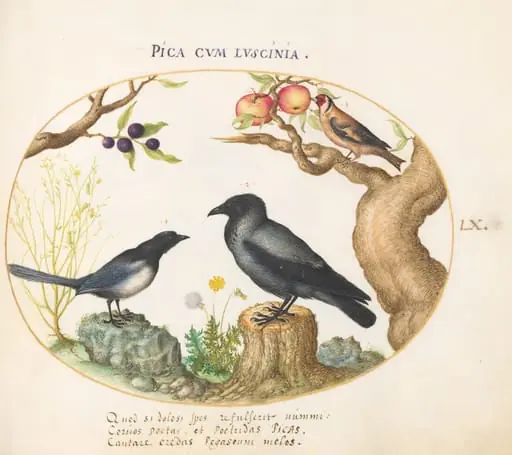 Plate 60: Magpie, Crow, and Goldfinch
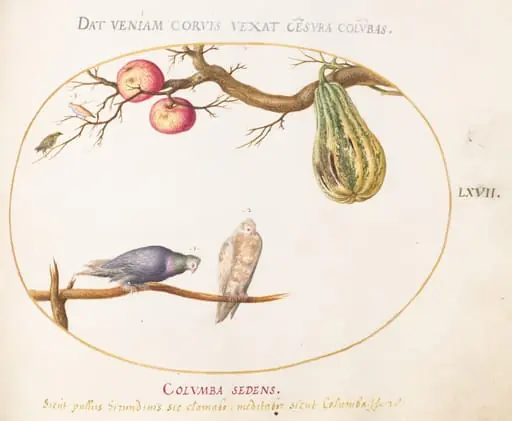 Plate 67: Two Doves beneath a Gourd and Apples
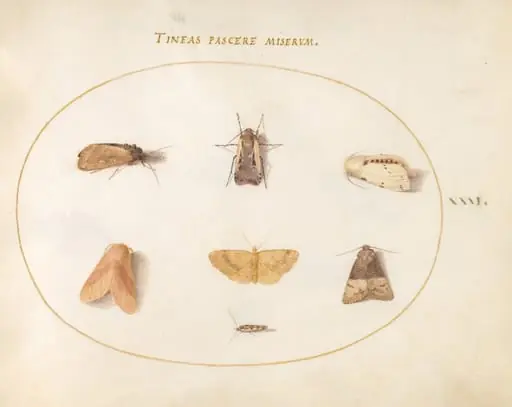 Plate 31: Seven Moths
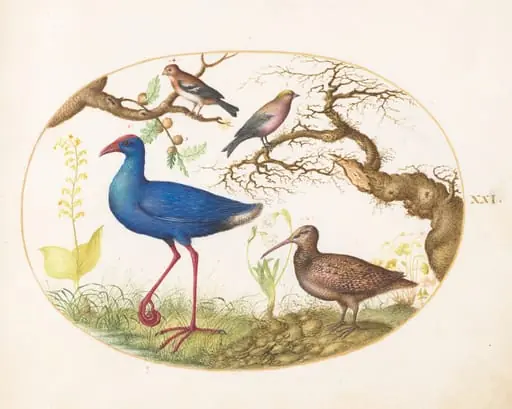 Plate 21: Swamp Hen and Woodcock with a Streaked Rosefinch, a Finch, and Oak Galls
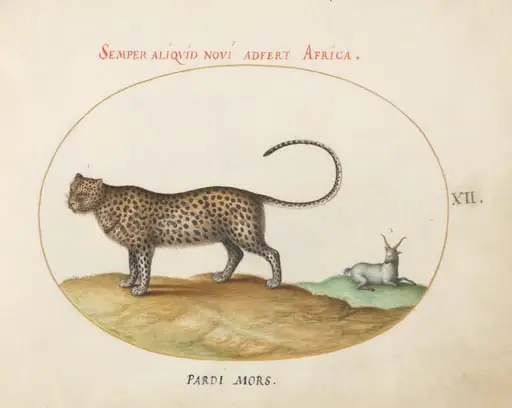 Plate 12: A Cheetah(?) and a Wild Sheep
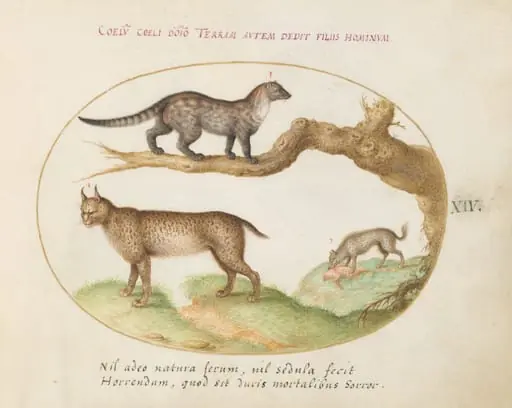 Plate 14: A Civet, a Lynx, and a Hyena Eating a Dog
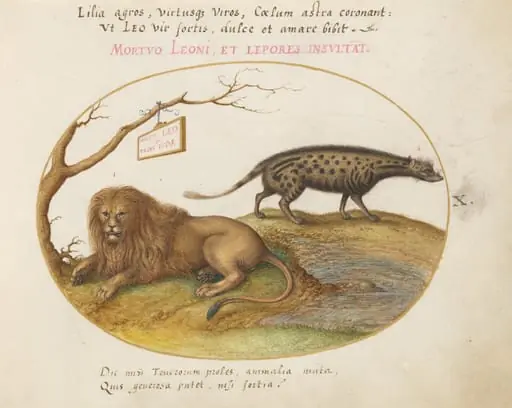 Plate 10: A Lion and a Civet Cat
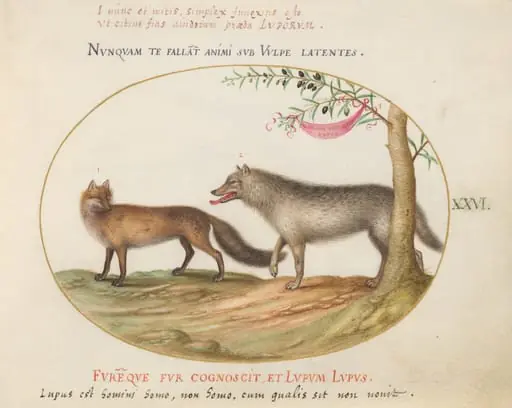 Plate 26: A Red Fox and a Wolf
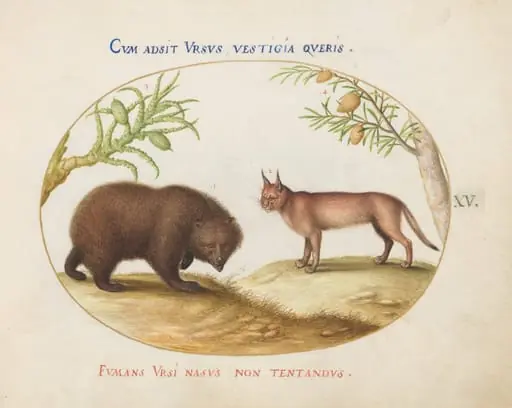 Plate 15: A Bear and a Lynx(?)
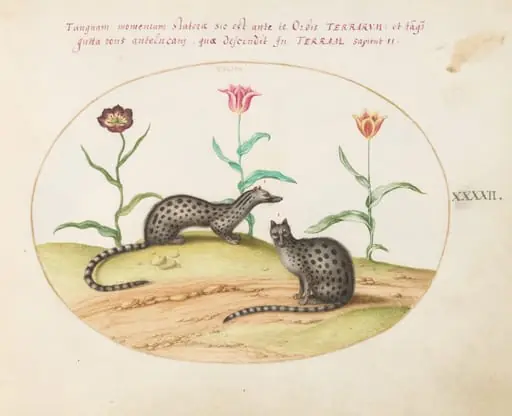 Plate 42: Two Genets or Civet Cats with Tulips
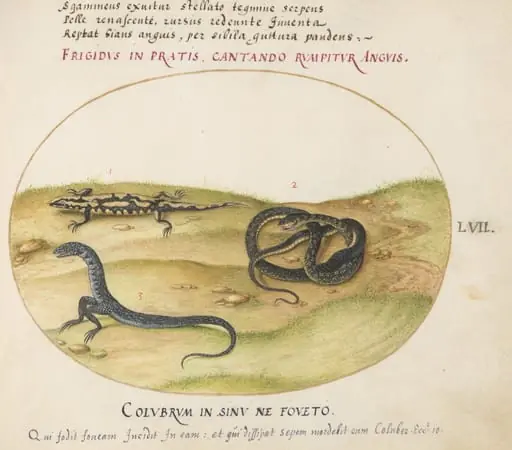 Plate 57: A Snake, a Fire Salamander, and a Snakelike Creature with Two Legs
 Plate 14: A "Sea Ape," Two Scorpion Fish, and Two Other Fish
 Plate 3: Camel, Ibex, and Goat