Artwork
Plate 18: A Pig with Acorns
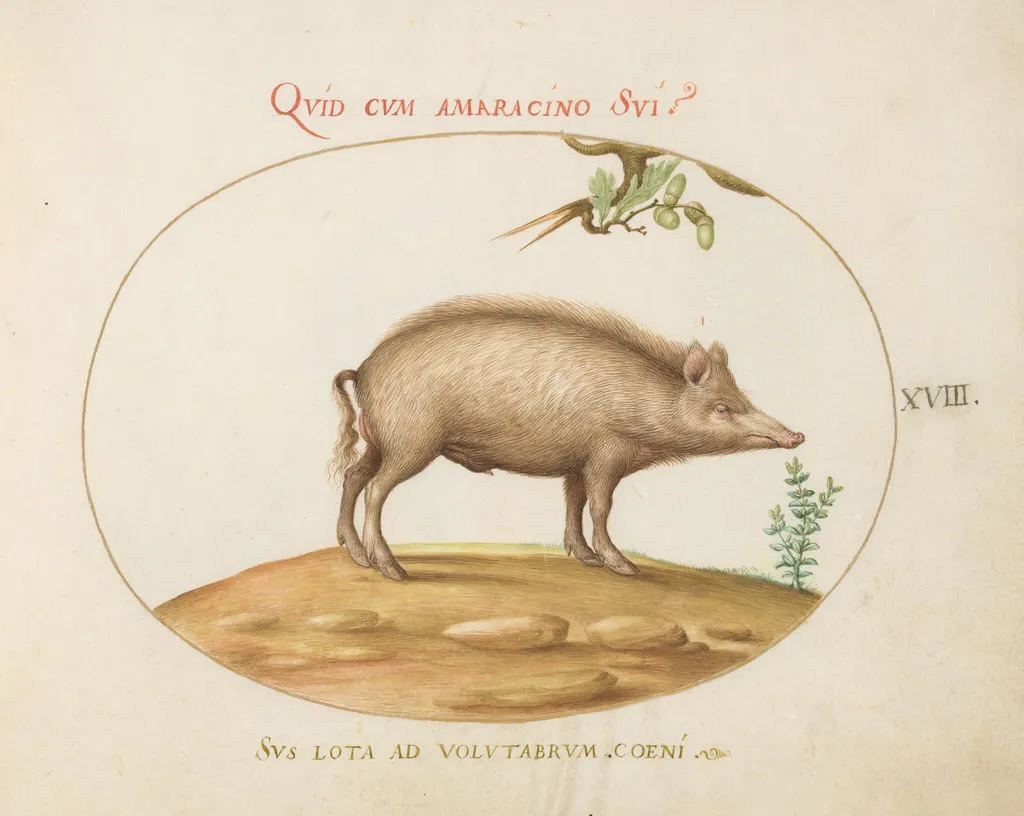
Plate 18: A Pig with Acorns is a gouache drawing by the Renaissance artist Joris Hoefnagel. It dates from 1594 and is held in the collection of the National Gallery of Art.
About this work
Overview
Its scale and medium reflect the tradition of manuscript art, even as its subject matter anticipates emerging interests in observational botany and zoology.
Created around 1594 by Joris Hoefnagel, this small watercolor and gold paint drawing on parchment depicts a pig standing on its hind legs amid acorns. Executed with meticulous detail, the work belongs to a series of natural studies that bridge medieval illumination and early modern natural history illustration. Its scale and medium reflect the tradition of manuscript art, even as its subject matter anticipates emerging interests in observational botany and zoology.
Subject & Meaning
The pig, rendered with subtle individuality, is shown interacting with acorns and fallen leaves—elements tied to its natural foraging behavior. Rather than a pastoral scene, the image functions as a focused study of animal anatomy and seasonal ecology. The inclusion of gold outlines elevates the creature beyond mere livestock, suggesting a contemplative engagement with nature’s forms, consistent with Renaissance curiosity about the natural world.
Technique & Style
Hoefnagel employed fine brushwork to capture the texture of the pig’s bristles, the glossy sheen of acorns, and the delicate veins of leaves. Gold paint traces the animal’s contours, creating a luminous outline against the unadorned parchment. The restrained palette and precise lines reflect a methodical, almost scientific approach, characteristic of his miniaturist training and his role in documenting nature with clarity rather than embellishment.
History & Provenance
The work is part of a larger collection of natural studies compiled by Hoefnagel during his travels in Central Europe. It likely originated as a page in an unpublished manuscript, later separated and preserved as an independent drawing. Acquired by the National Gallery of Art in Washington, D.C., it now resides within their Dutch still-life holdings, where its origins as a manuscript fragment are acknowledged alongside its aesthetic significance.
Context
In late 16th-century Flanders, artists like Hoefnagel were shifting from religious illumination toward secular natural observation. His work contributed to a growing genre of detailed plant and animal studies, influencing later still-life traditions. While still rooted in manuscript culture, this piece signals a transition toward empirical representation, aligning with broader intellectual currents of the time that valued close observation over symbolic convention.
Legacy
Hoefnagel’s precise renderings, including this pig study, helped establish a visual language for natural history illustration in northern Europe. Though not widely known today, his work laid groundwork for the scientific drawings of the 17th century and informed the development of botanical and zoological art. His fusion of decorative technique with observational rigor remains a distinctive contribution to early modern visual culture.
Artist & collection

Artist
Joris Hoefnagel or Georg Hoefnagel (1542 – 24 July 1601) was a Flemish painter, printmaker, miniaturist, draftsman and merchant.

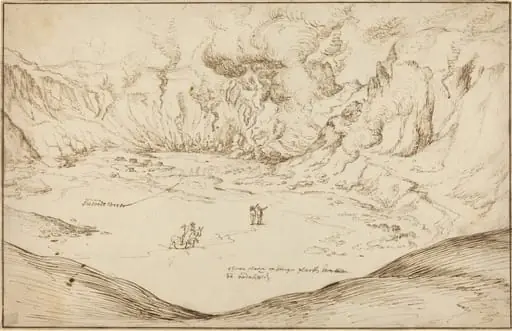 Forum Vulcani: The Hot Springs at Pozzuoli
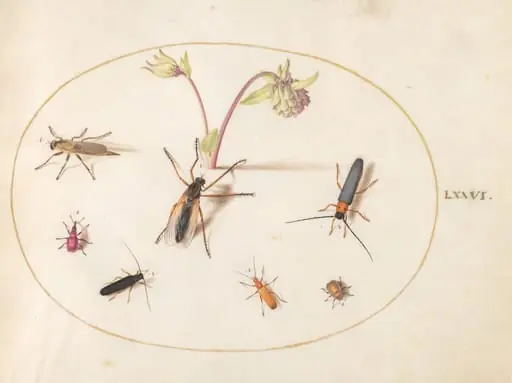 Plate 76: Insects with a Pink and Cream Columbine
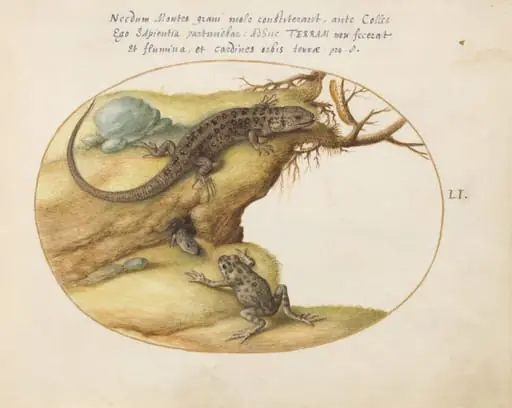 Plate 51: Two Sand Lizards, a Common Parsley Frog(?), and a Caterpillar
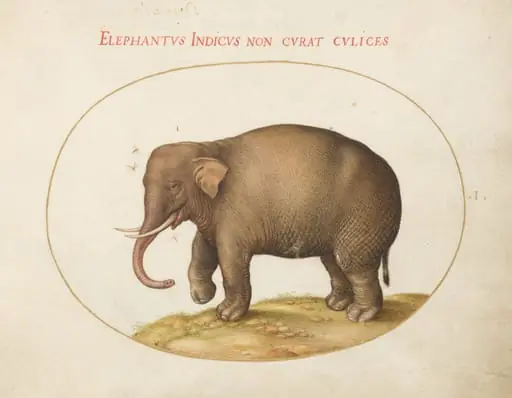 Plate 1: Elephant with Insects
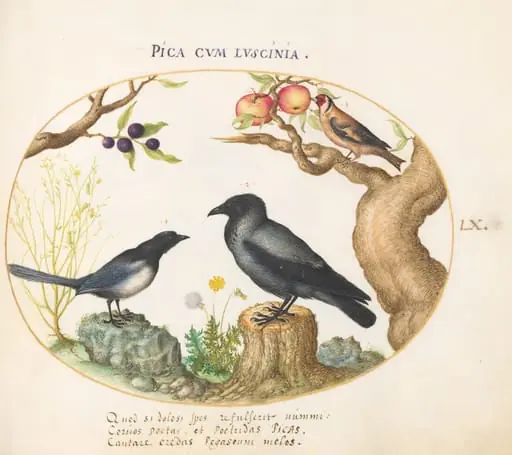 Plate 60: Magpie, Crow, and Goldfinch
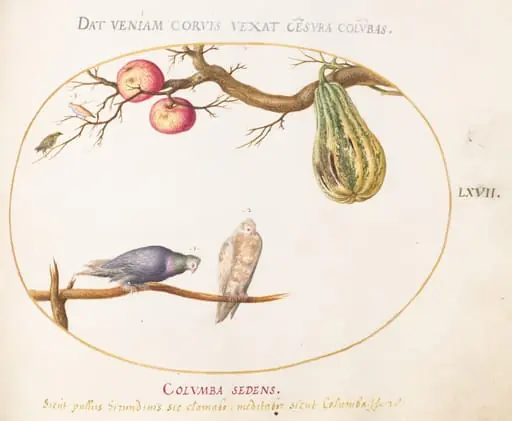 Plate 67: Two Doves beneath a Gourd and Apples
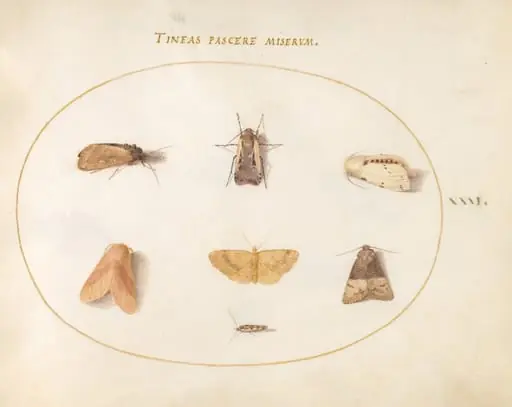 Plate 31: Seven Moths
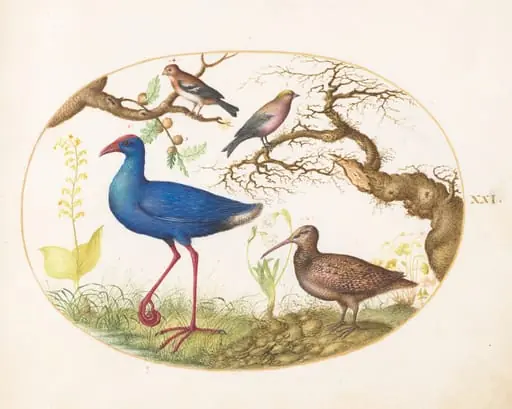 Plate 21: Swamp Hen and Woodcock with a Streaked Rosefinch, a Finch, and Oak Galls
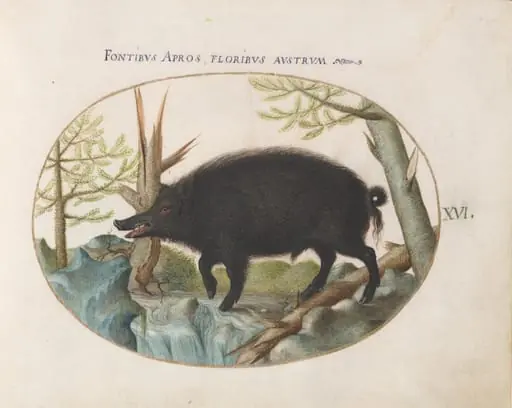 Plate 16: Wild Boar
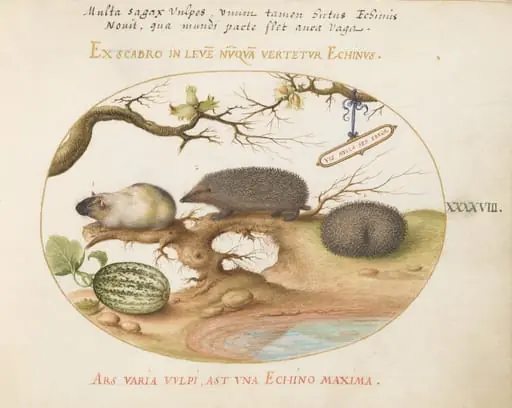 Plate 48: Guinea Pig and Hedgehogs with Melon and Cobnuts
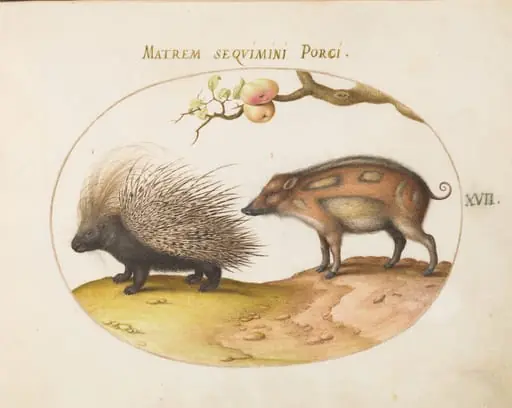 Plate 17: Old World Porcupine (Hystrix) and Wild Pig
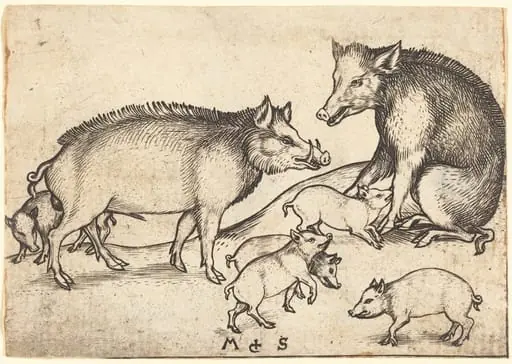 Family of Pigs
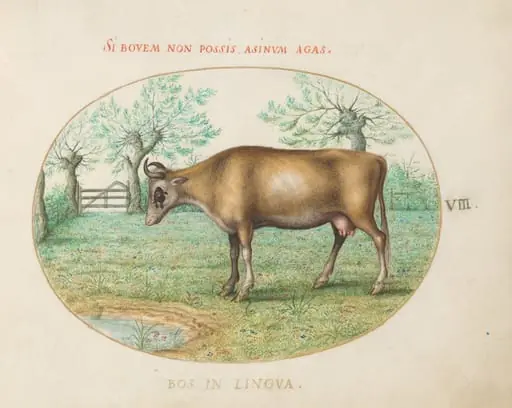 Plate 8: A Cow
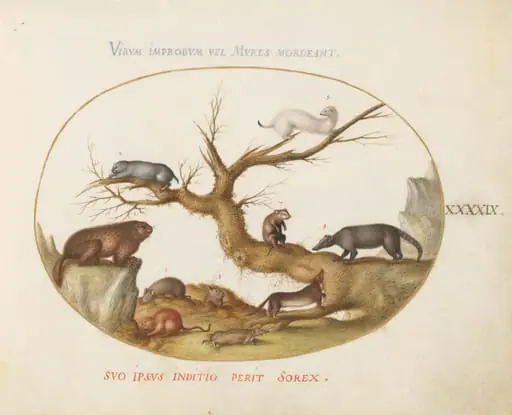 Plate 49: Marmot, Hamsters, Rat, Field Mouse, Shrew, and a Coatimundi
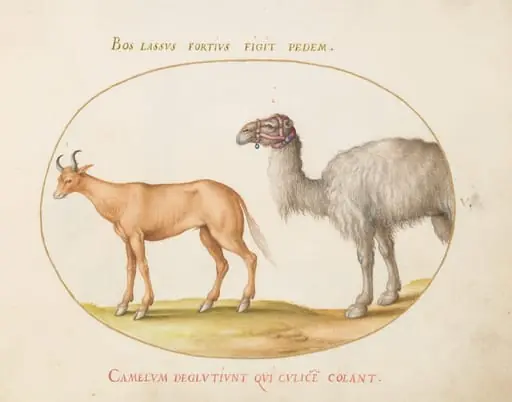 Plate 5: An Ox and a Camel
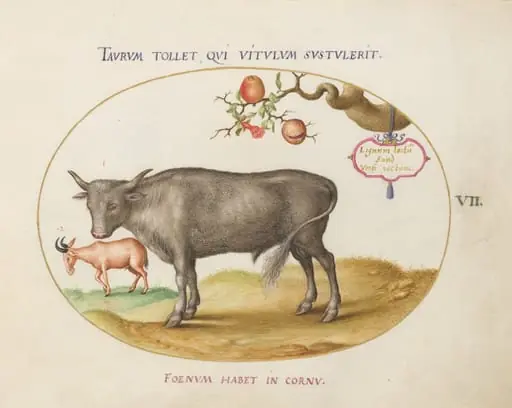 Plate 7: A Bull and a Horned Animal
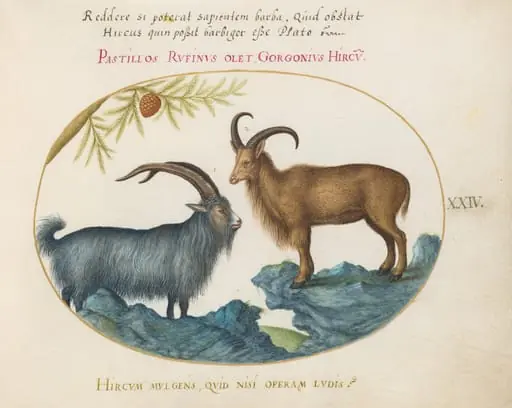 Plate 24: A Wild Goat and a Barbary Sheep(?)
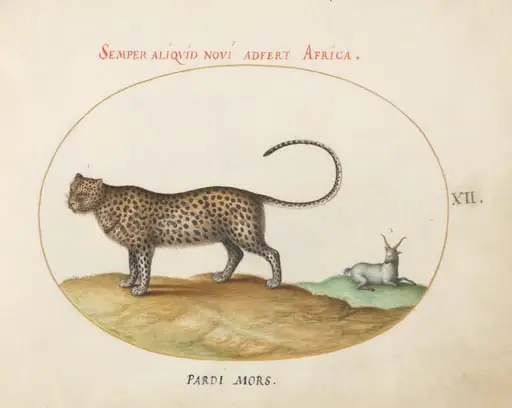 Plate 12: A Cheetah(?) and a Wild Sheep
![A Fool Feeding Flowers to Swine [fol. 42 recto], by French early 16th Century](https://artifactworldgallery.com/img/french-early-16th-century--a-fool-feeding-flowers-to-swine-fol-42-recto--27579a7c495e1682-w320.webp) A Fool Feeding Flowers to Swine [fol. 42 recto]
A Fool Feeding Flowers to Swine [fol. 42 recto]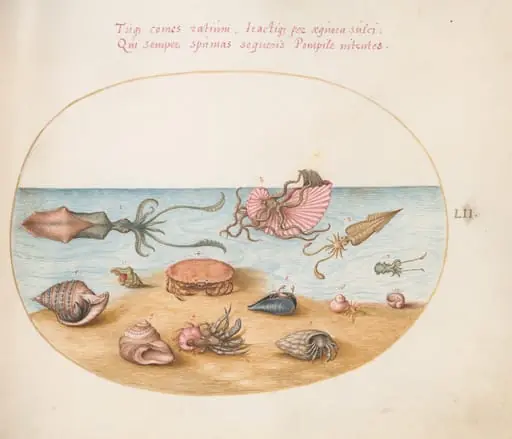 Plate 52: An Argonaut, Squid, Hermit Crabs, Shells, and a Crab