Artwork
Plate 19: A Damselfish and Other Fish, Including Two "Coracinis"
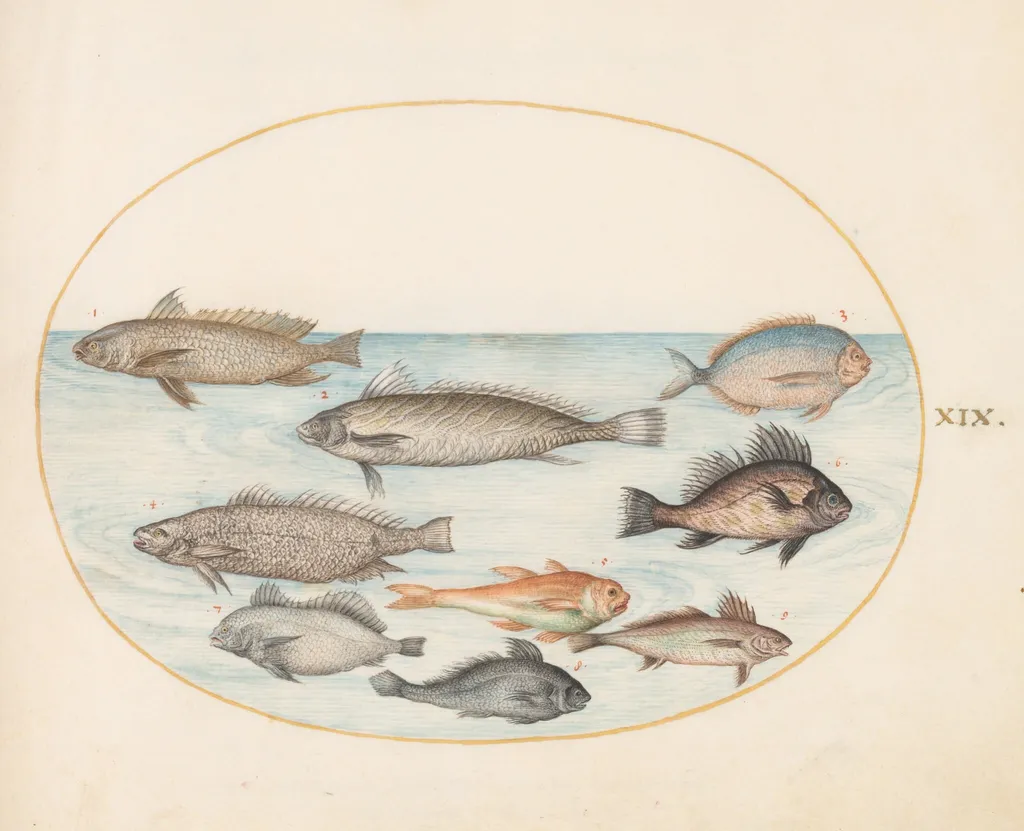
Plate 19: A Damselfish and Other Fish, Including Two "Coracinis" is a gouache drawing by the Renaissance artist Joris Hoefnagel. It dates from 1594 and is held in the collection of the National Gallery of Art.
About this work
Overview
Hoefnagel’s work bridges the tradition of illuminated manuscripts with emerging scientific illustration.
Created circa 1594 by Joris Hoefnagel, this watercolor and gold-painted parchment sheet depicts a damselfish alongside other marine species, two labeled as 'coracinis.' Part of a larger natural history project, the plate exemplifies late Renaissance manuscript illumination, merging meticulous observation with decorative artistry. Hoefnagel’s work bridges the tradition of illuminated manuscripts with emerging scientific illustration.
Subject & Meaning
The plate presents a group of fish, rendered with attention to anatomical detail and surface texture. The inclusion of the term 'coracinis'—a historical designation for certain fish—suggests an attempt to classify or document species known to contemporary naturalists. The imagery serves not as symbolic allegory but as a visual record, reflecting the period’s growing interest in systematic observation of the natural world.
Technique & Style
Hoefnagel applied watercolor with fine brushwork on parchment, enhancing certain elements with gold paint to highlight scales and fins. The composition is tightly arranged, each fish isolated yet grouped for comparison. His style combines the precision of scientific drawing with the luminous finish typical of manuscript illumination, creating a hybrid aesthetic that resists purely artistic or purely empirical categorization.
History & Provenance
This plate was produced during Hoefnagel’s later years, likely as part of a commissioned natural history collection. It may have been intended for the court of Emperor Rudolf II in Prague, a center for scientific curiosity and artistic patronage. The work survived as a standalone sheet, separate from its original codex, and is now held in institutional collections as a rare example of late manuscript naturalism.
Context
In the late 16th century, European scholars increasingly sought to document flora and fauna with accuracy, influenced by exploration and the rise of empirical science. Hoefnagel’s work aligns with this trend, even as he retained the ornamental conventions of manuscript culture. His fish studies stand at the intersection of medieval artistic practice and early modern natural history, before the full emergence of printed scientific atlases.
Legacy
Hoefnagel’s detailed aquatic studies influenced later naturalists and illustrators in northern Europe, contributing to the transition from decorative manuscript to scientific illustration. Though not widely published in his lifetime, his drawings were circulated among collectors and scholars, preserving a visual record of marine life as understood in the late Renaissance. His approach remains a touchstone for the history of biological depiction.
Artist & collection

Artist
Joris Hoefnagel or Georg Hoefnagel (1542 – 24 July 1601) was a Flemish painter, printmaker, miniaturist, draftsman and merchant.

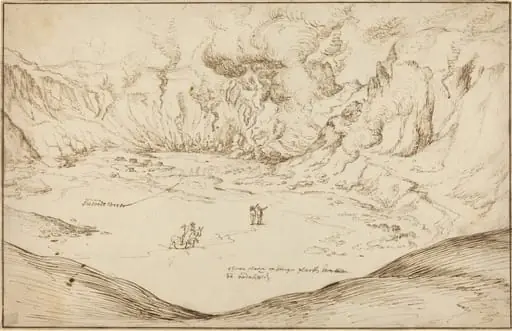 Forum Vulcani: The Hot Springs at Pozzuoli
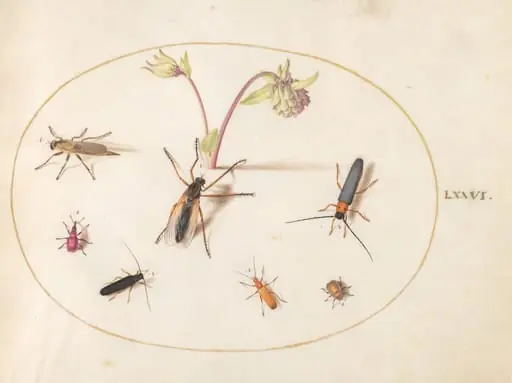 Plate 76: Insects with a Pink and Cream Columbine
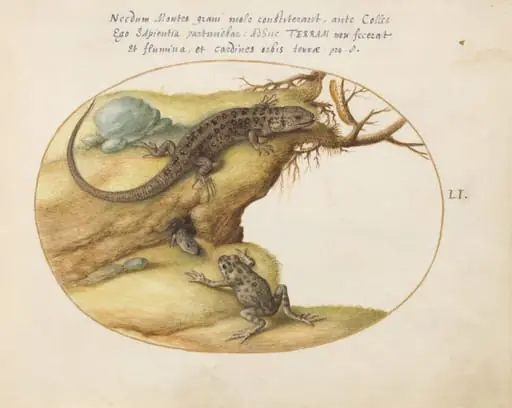 Plate 51: Two Sand Lizards, a Common Parsley Frog(?), and a Caterpillar
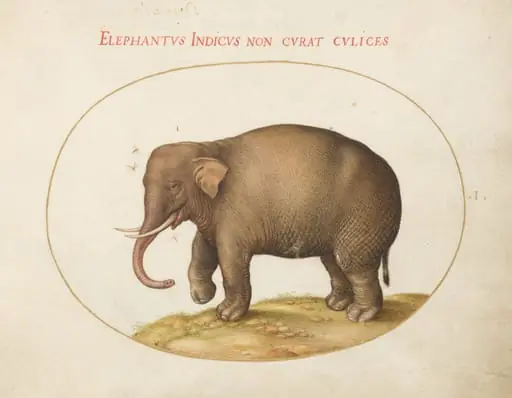 Plate 1: Elephant with Insects
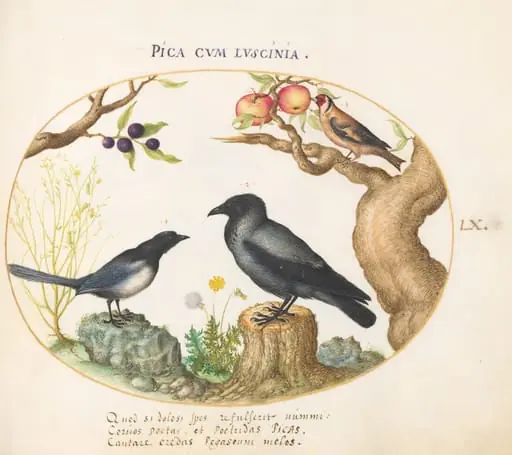 Plate 60: Magpie, Crow, and Goldfinch
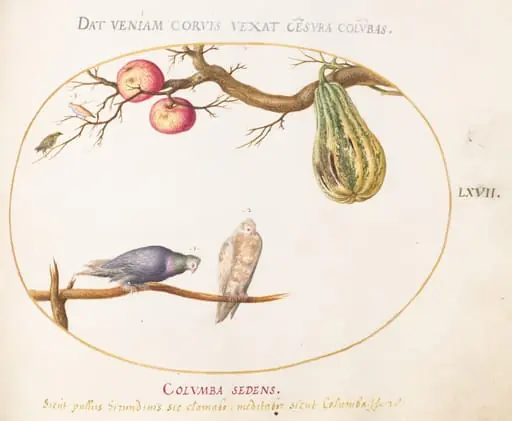 Plate 67: Two Doves beneath a Gourd and Apples
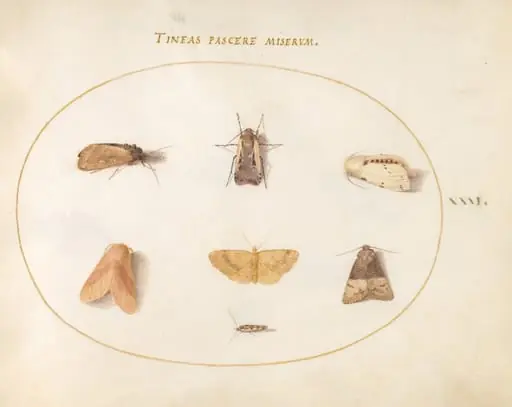 Plate 31: Seven Moths
 Plate 21: Swamp Hen and Woodcock with a Streaked Rosefinch, a Finch, and Oak Galls
 Plate 27: Blennies, Scorpion Fish, and Other Fish
 Plate 41: Whitefish(?) and Other Fish
 Plate 20: Sea Bream, Dentex, Sargo, and Other Fish
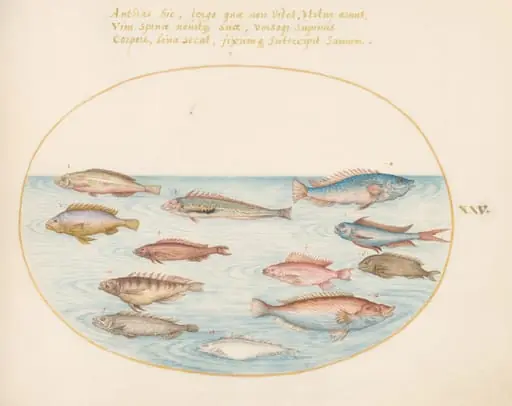 Plate 25: Mediterranean Rainbow Wrasse, Other Wrasse, a Swallowtail Sea Perch(?), Several "Anthiae," and Other Fish
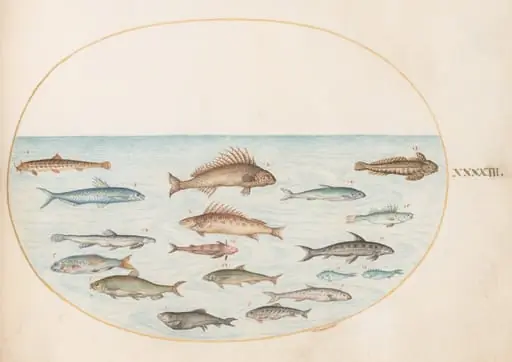 Plate 43: Fifteen Fish
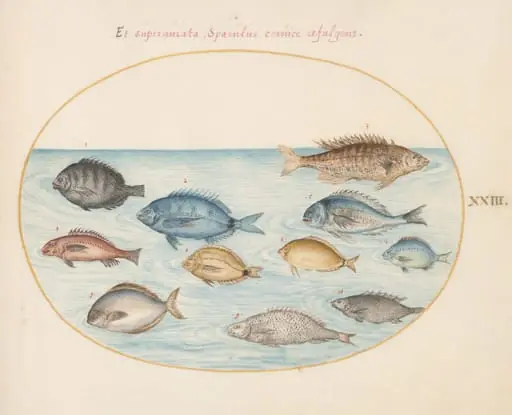 Plate 23: Bream(?) and Other Fish
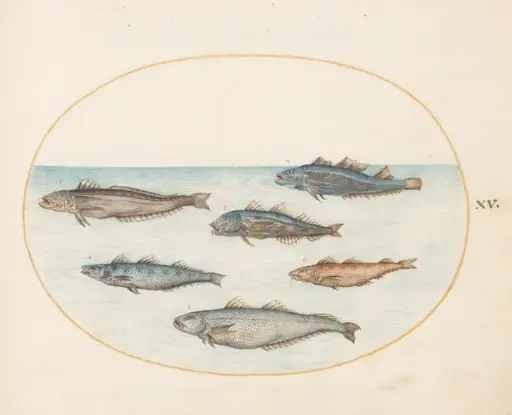 Plate 15: Six "Asellorum" Fish (Cod?)
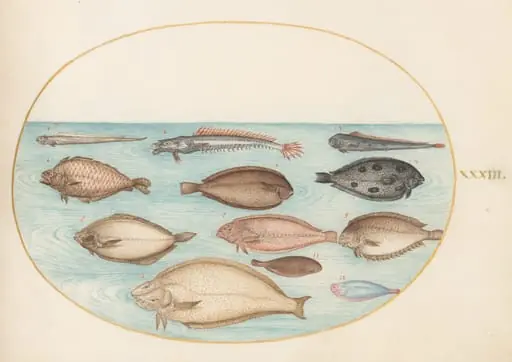 Plate 33: Sole and Other Flatfish with Bandfish(?)
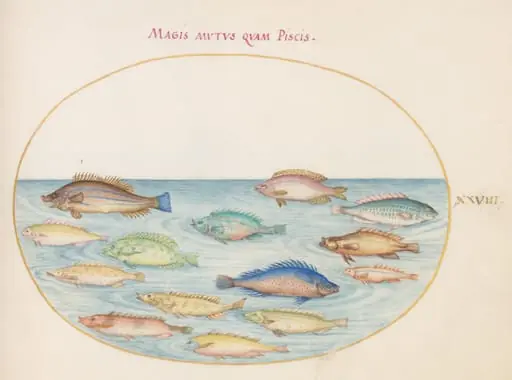 Plate 28: Sea Bream(?) and Other Fish
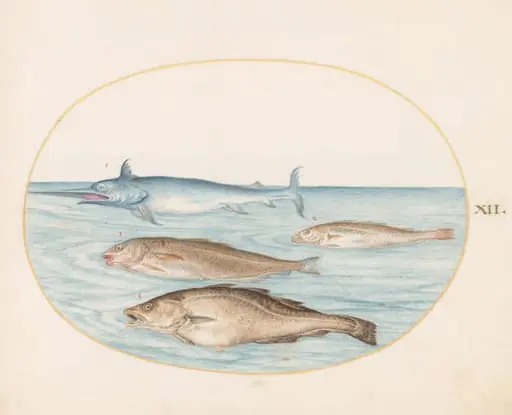 Plate 12: A Swordfish and Three Other Fish
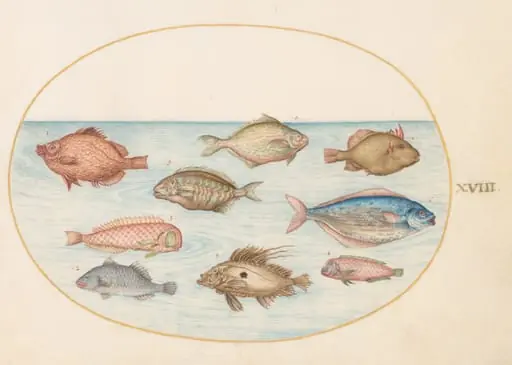 Plate 18: Boarfish, Razorfish, Butterfish, a John Dory, and Other Fish
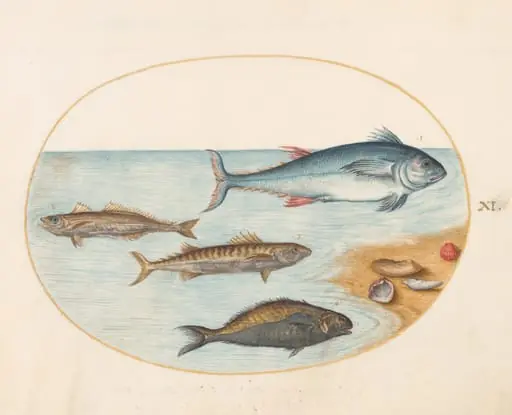 Plate 11: Four Fish and Shells