Artwork
Plate 26: Two Hawk Moths
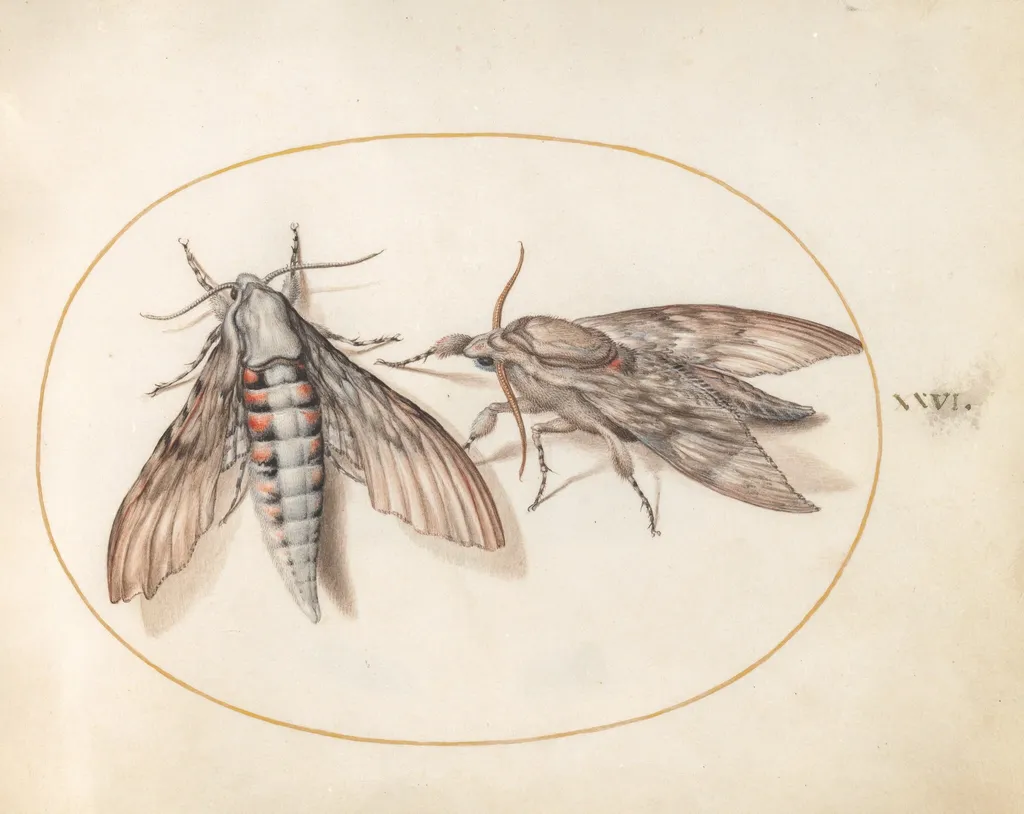
Plate 26: Two Hawk Moths is a gouache drawing by the Renaissance artist Joris Hoefnagel. It dates from 1594 and is held in the collection of the National Gallery of Art.
About this work
Overview
Created circa 1594, Plate 26: Two Hawk Moths is a small watercolor drawing on parchment accented with gold paint. Flemish artist Joris Hoefnagel rendered a pair of hawk moths perched on a branch, their wings rendered in vivid pink and black striping, while the foliage is speckled with minute gold flecks that catch the light.
Subject & Meaning
The composition focuses on the delicate anatomy of the insects, emphasizing their fuzzy bodies and distinctive wing patterns. By presenting the moths in a naturalistic pose, Hoefnagel highlights the beauty of everyday fauna, reflecting the period’s growing fascination with close observation of the natural world.
Technique & Style
Hoefnagel employed a glazing technique, applying successive translucent washes of watercolor to achieve depth and realism. The addition of gold paint on the parchment creates a subtle ornamental quality, merging scientific accuracy with decorative flourish characteristic of late‑Renaissance manuscript illumination.
History & Provenance
The work belongs to a series of natural‑history illustrations produced by Hoefnagel toward the end of his career, when he was among the last artists to work within the illuminated‑manuscript tradition. It later entered private collections before being acquired by a museum specializing in early modern European art.
Context
During the late 16th century, northern European artists began to explore detailed still‑life and natural‑history subjects. Hoefnagel’s meticulous studies contributed to this shift, influencing subsequent generations of botanical and entomological illustrators.
Artist & collection

Artist
Joris Hoefnagel or Georg Hoefnagel (1542 – 24 July 1601) was a Flemish painter, printmaker, miniaturist, draftsman and merchant.

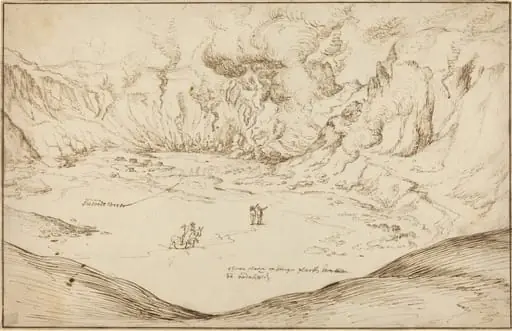 Forum Vulcani: The Hot Springs at Pozzuoli
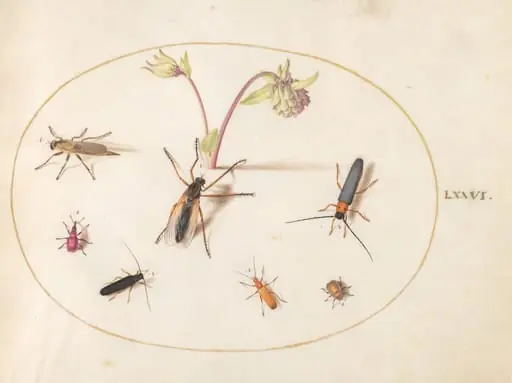 Plate 76: Insects with a Pink and Cream Columbine
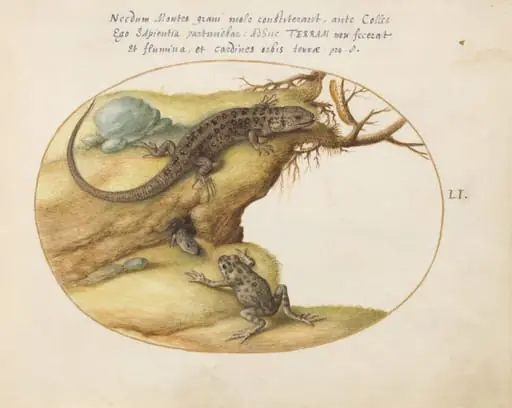 Plate 51: Two Sand Lizards, a Common Parsley Frog(?), and a Caterpillar
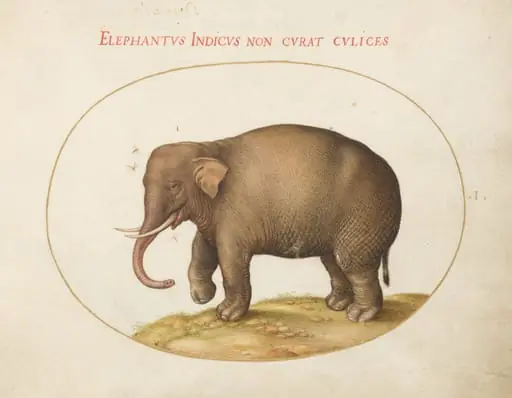 Plate 1: Elephant with Insects
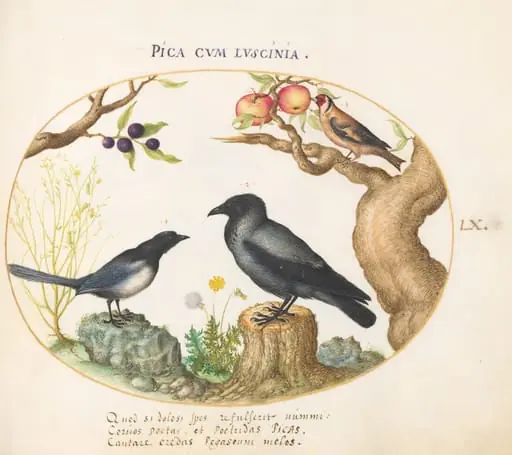 Plate 60: Magpie, Crow, and Goldfinch
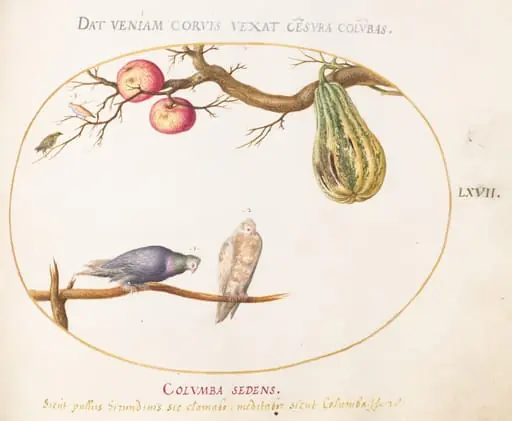 Plate 67: Two Doves beneath a Gourd and Apples
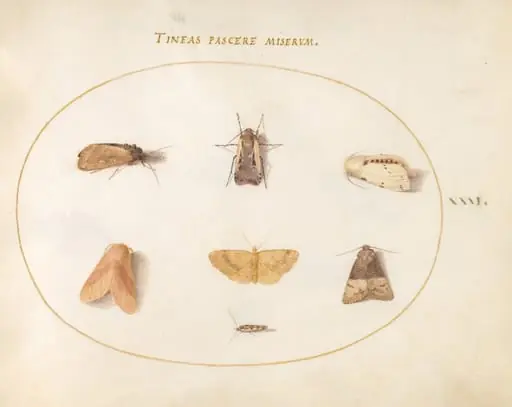 Plate 31: Seven Moths
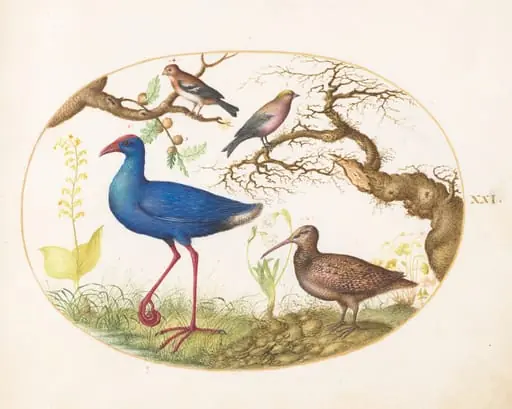 Plate 21: Swamp Hen and Woodcock with a Streaked Rosefinch, a Finch, and Oak Galls
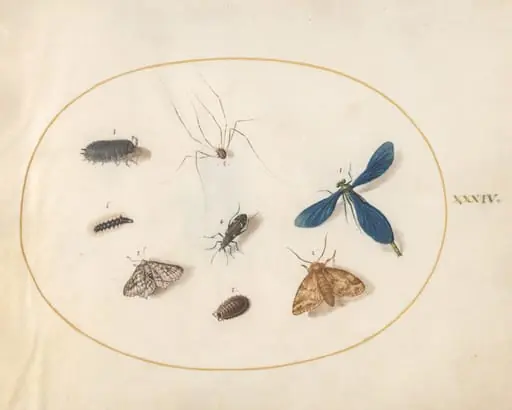 Plate 34: Two Moths with a Spider, a Caterpillar, a Damselfly, and Other Insects
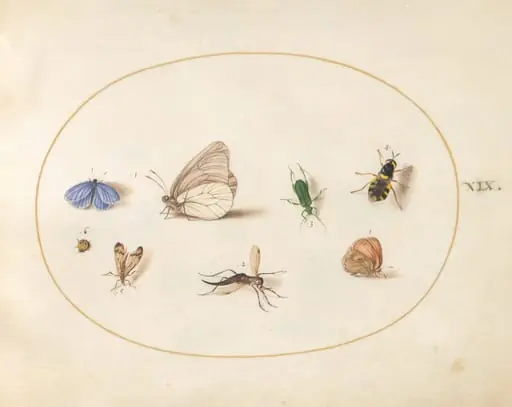 Plate 19: Two Butterflies with Five Other Insects
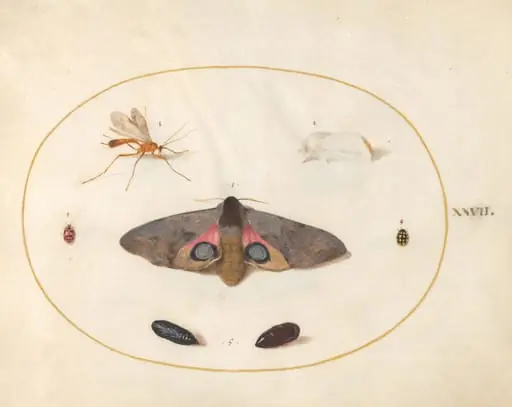 Plate 27: An Eyed Hawk-Moth, Two Chyrsalides, and Other Insects
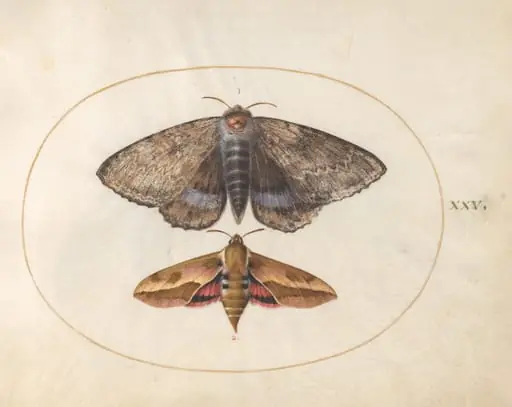 Blue Underwing Moth and Spurge Hawk Moth (plate 25 from Ignis)
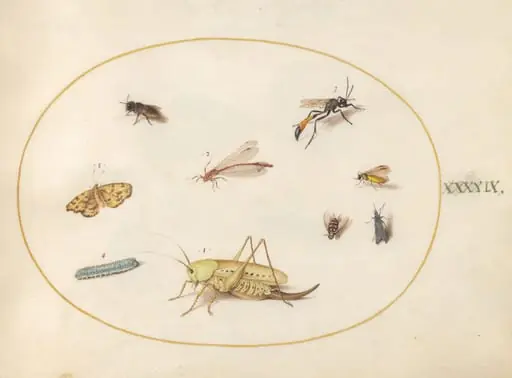 Plate 49: A Grasshopper, a Caterpillar, a Butterfly, a Moth, and Other Insects
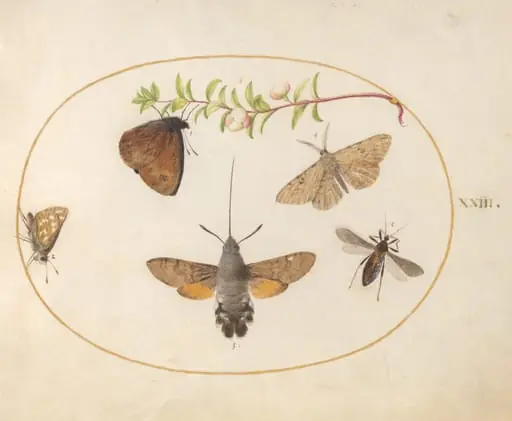 Plate 23: Hummingbird Hawk Moth, Butterflies, and Other Insects around a Snowberry Sprig
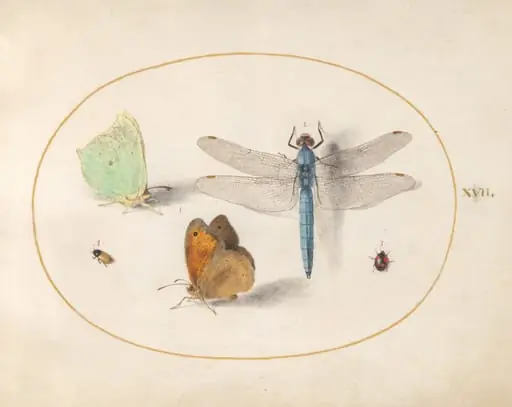 Plate 17: Brimstone and Meadow Brown(?) Butterflies, a Blue Chaser, and Two Small Insects
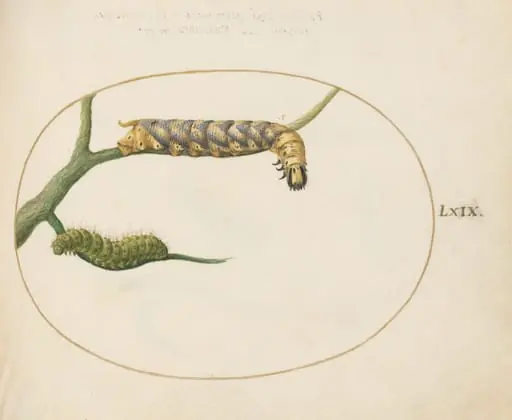 Plate 69: Emperor Moth Caterpillar with a Second Caterpillar on a Branch
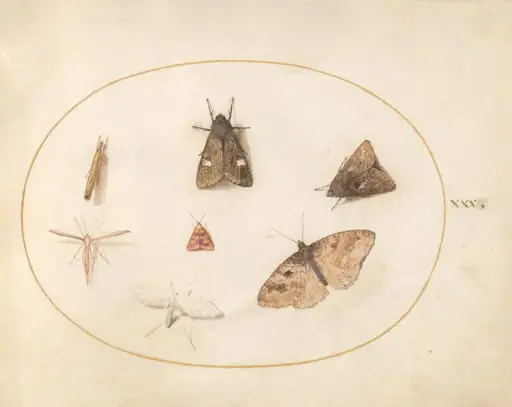 Plate 30: Seven Moths
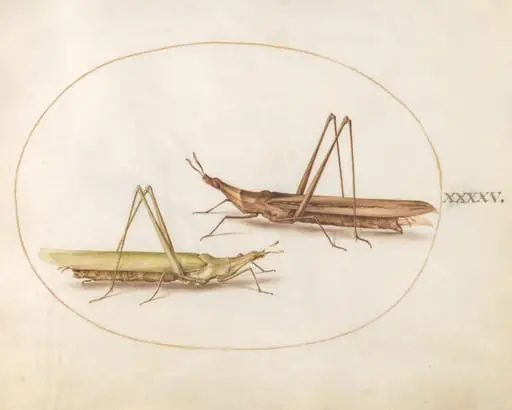 Plate 45: Two Long-Headed Grasshoppers(?)
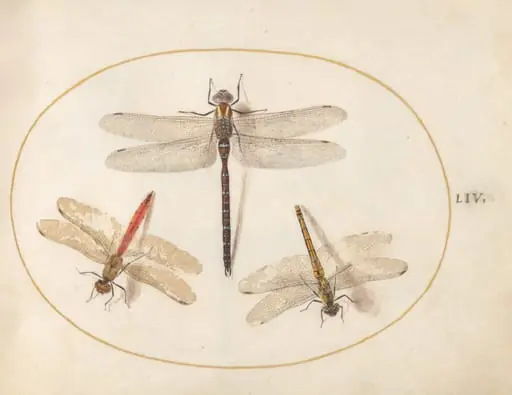 Plate 54: Hairy Dragonfly and Two Darters
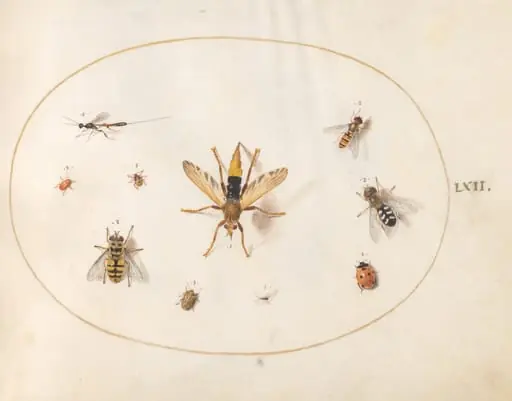 Plate 62: Ten Insects