Artwork
Plate 30: Seven Moths
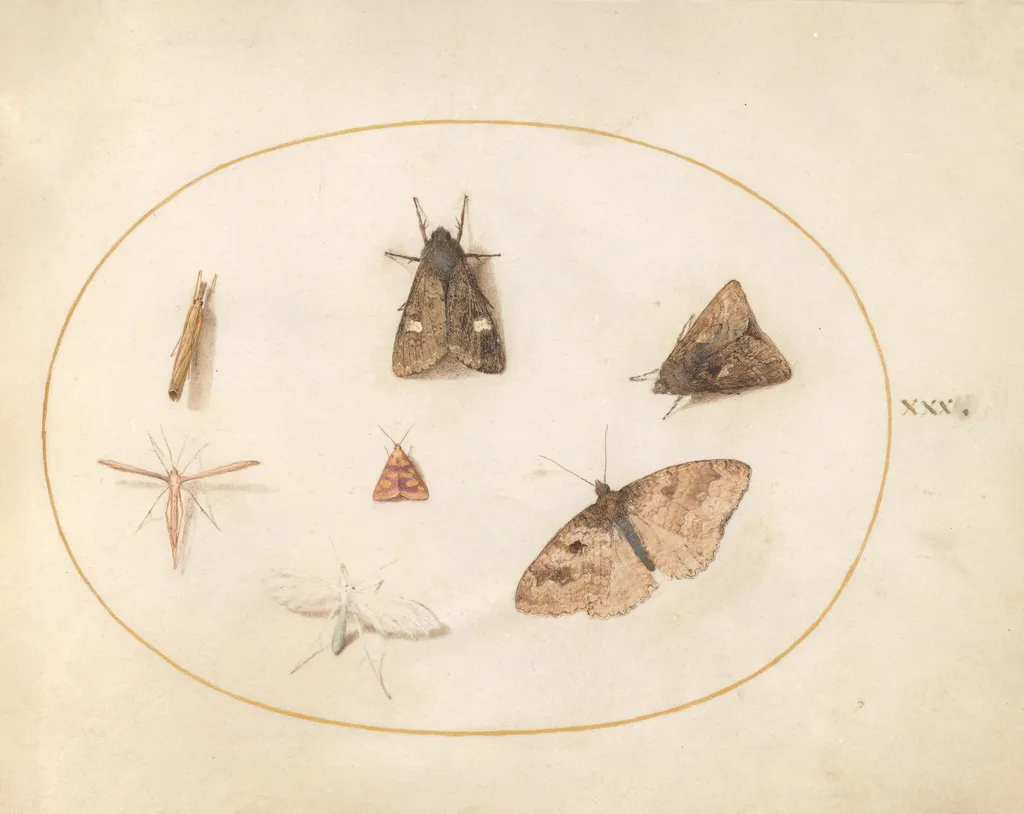
Plate 30: Seven Moths is a gouache drawing by the Renaissance artist Joris Hoefnagel. It dates from 1594 and is held in the collection of the National Gallery of Art.
About this work
Overview
Created around 1594 by Joris Hoefnagel, this small parchment sheet depicts seven moths rendered in watercolor, lepidchromy, and gold paint.
Created around 1594 by Joris Hoefnagel, this small parchment sheet depicts seven moths rendered in watercolor, lepidchromy, and gold paint. Part of a larger manuscript, it exemplifies the transition from medieval illumination to early modern natural history documentation. The work combines precision with ornamentation, reflecting the artist’s dual role as observer and artisan in an era when science and art were deeply intertwined.
Subject & Meaning
The seven moths are rendered with meticulous attention to species-specific markings, suggesting a scientific intent. Each insect is portrayed life-sized and without idealization, indicating direct observation rather than conventionalized representation. The inclusion of gold highlights may reference both the preciousness of nature and the devotional tradition of illuminating manuscripts, subtly elevating the humble creatures to objects of contemplation.
Technique & Style
Hoefnagel applied thin, layered watercolors to achieve luminous color depth, using glazing techniques to enhance vibrancy without opacity. Gold leaf was meticulously placed along wing edges and bodies, catching light to simulate iridescence. Fine brushes enabled intricate detailing of scales and venation, while the parchment’s smooth surface allowed for controlled, precise strokes. The absence of background or context focuses attention entirely on the insects’ form and texture.
History & Provenance
This plate originates from a codex compiled during Hoefnagel’s time in Prague, where he worked under the patronage of Emperor Rudolf II. The manuscript, now dispersed, was part of a broader collection of natural studies commissioned by the court. Its survival as a single sheet underscores the fragmentary nature of Renaissance manuscript circulation, with individual folios often separated over centuries.
Context
In late 16th-century Europe, natural history illustration emerged as a distinct field, fueled by curiosity about newly encountered species and advances in optics. Hoefnagel’s work aligns with contemporaries like Ulisse Aldrovandi, yet retains the decorative sensibility of manuscript tradition. His moths bridge the gap between medieval emblematic imagery and the empirical gaze of the Scientific Revolution.
Legacy
Hoefnagel’s detailed approach influenced later naturalists and still-life painters in the Low Countries, particularly in the treatment of insects and flora. His integration of scientific accuracy with aesthetic refinement set a precedent for illustrated natural histories. Though little known today, his work remains a quiet milestone in the history of visual taxonomy and the artistic representation of the natural world.
Artist & collection

Artist
Joris Hoefnagel or Georg Hoefnagel (1542 – 24 July 1601) was a Flemish painter, printmaker, miniaturist, draftsman and merchant.

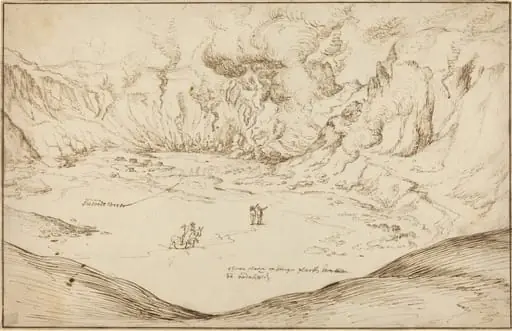 Forum Vulcani: The Hot Springs at Pozzuoli
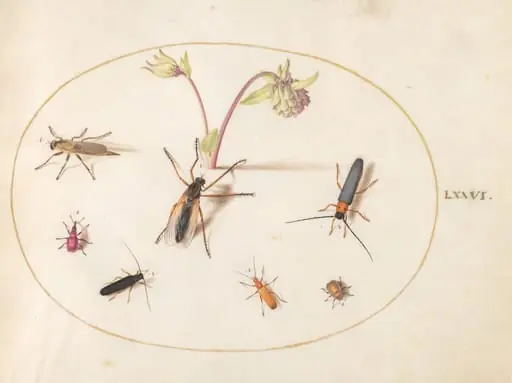 Plate 76: Insects with a Pink and Cream Columbine
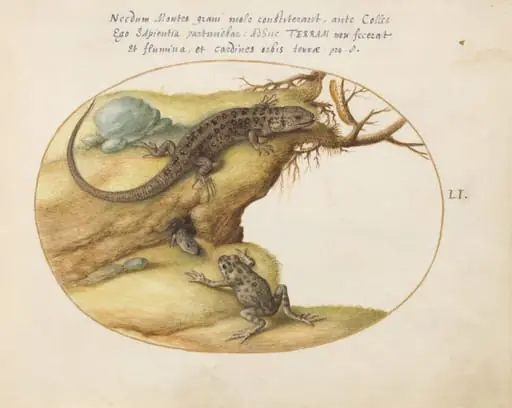 Plate 51: Two Sand Lizards, a Common Parsley Frog(?), and a Caterpillar
 Plate 1: Elephant with Insects
 Plate 60: Magpie, Crow, and Goldfinch
 Plate 67: Two Doves beneath a Gourd and Apples
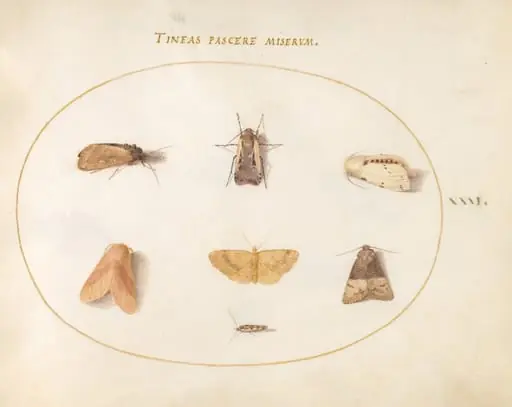 Plate 31: Seven Moths
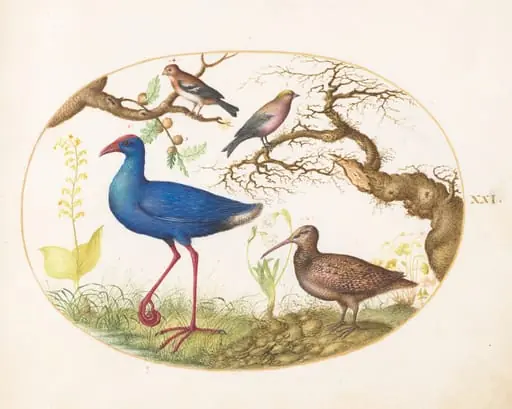 Plate 21: Swamp Hen and Woodcock with a Streaked Rosefinch, a Finch, and Oak Galls
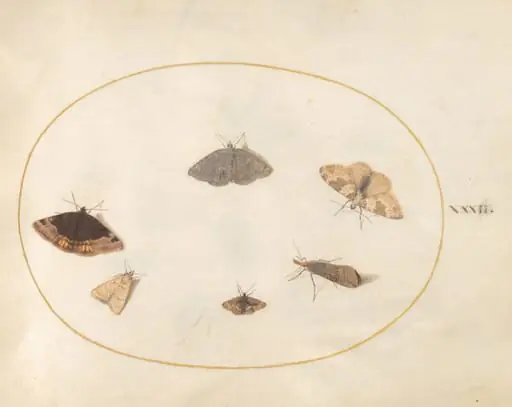 Plate 32: Six Moths
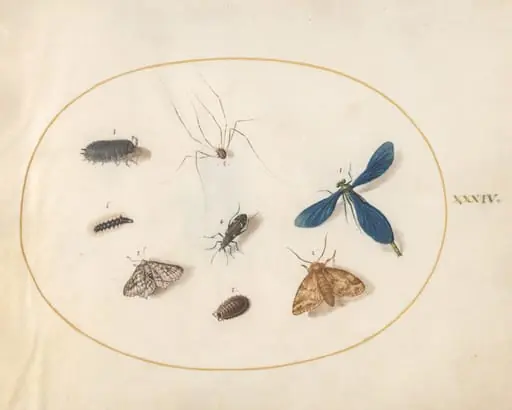 Plate 34: Two Moths with a Spider, a Caterpillar, a Damselfly, and Other Insects
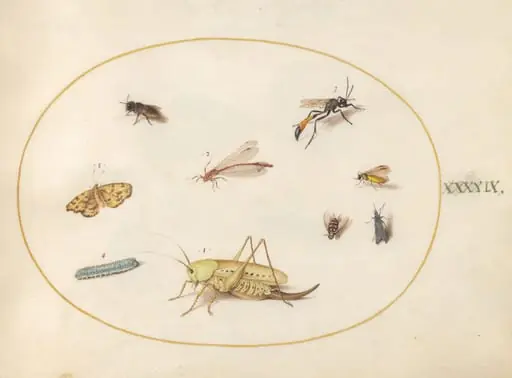 Plate 49: A Grasshopper, a Caterpillar, a Butterfly, a Moth, and Other Insects
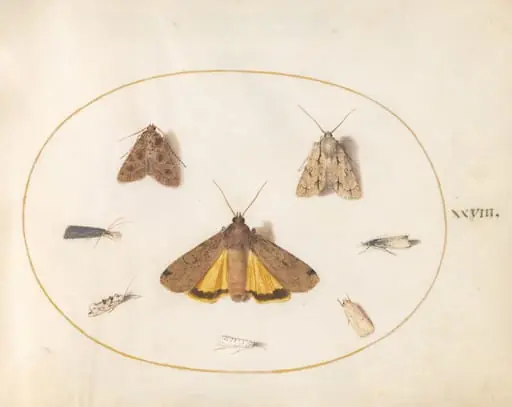 Plate 28: Eight Moths, Including a Large Yellow Underwing and Grey Dagger
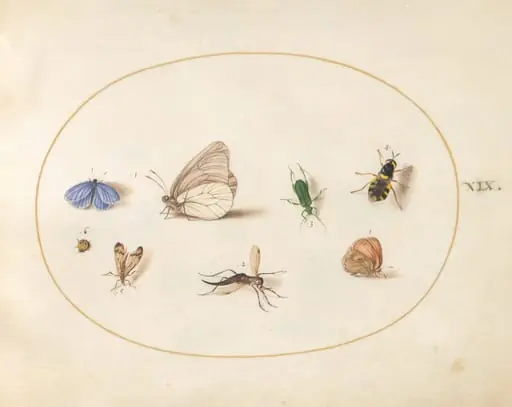 Plate 19: Two Butterflies with Five Other Insects
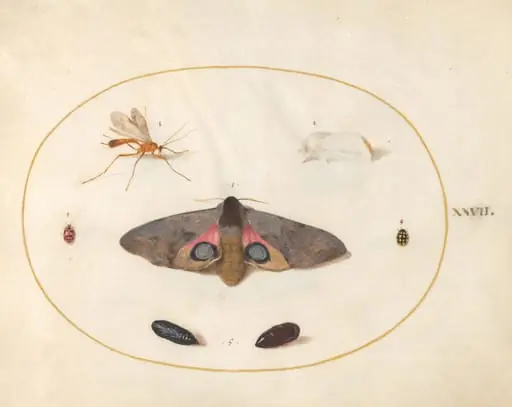 Plate 27: An Eyed Hawk-Moth, Two Chyrsalides, and Other Insects
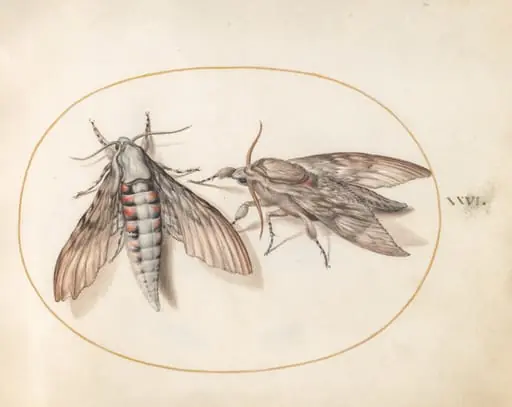 Plate 26: Two Hawk Moths
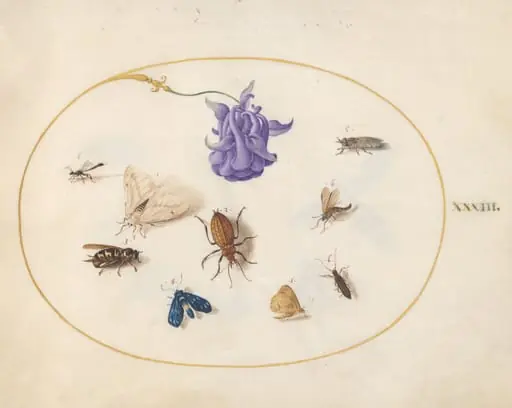 Plate 33: Moth and Butterfly with other Insects and a Columbine Flower
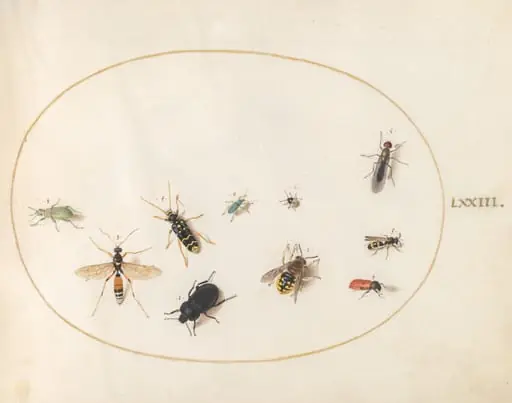 Plate 73: Ten Insects