Artwork
Plate 28: Eight Moths, Including a Large Yellow Underwing and Grey Dagger
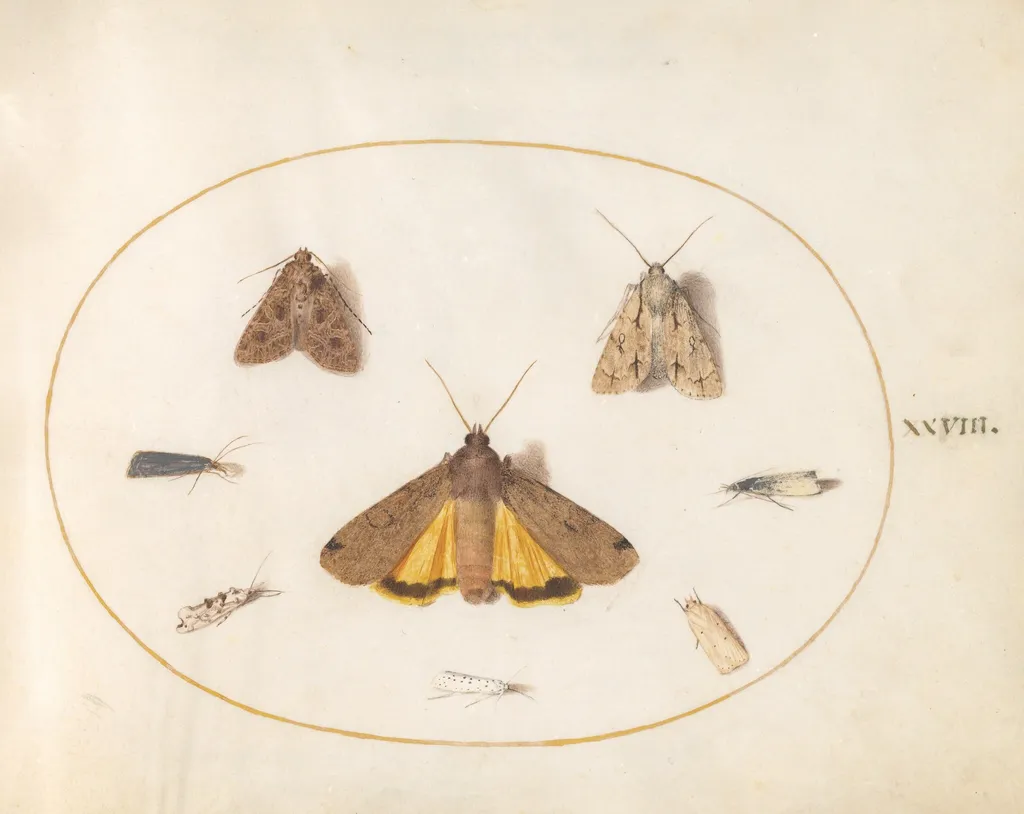
Plate 28: Eight Moths, Including a Large Yellow Underwing and Grey Dagger is a gouache drawing by the Renaissance artist Joris Hoefnagel. It dates from 1594 and is held in the collection of the National Gallery of Art.
About this work
Overview
Created circa 1594, this work by Joris Hoefnagel presents eight lepidopteran specimens arranged within a circular gold border on parchment.
Created circa 1594, this work by Joris Hoefnagel presents eight lepidopteran specimens arranged within a circular gold border on parchment. The composition isolates each insect against a blank ground, emphasizing their forms and markings. Executed in watercolor, gold paint, and a technique known as lepidochromy—where scales are transferred directly from wings—it reflects the period’s growing interest in precise natural observation.
Subject & Meaning
The plate depicts five moths and three smaller insects, identified in the title as a Large Yellow Underwing and Grey Dagger among others. Unlike symbolic or allegorical representations common in earlier manuscripts, these studies prioritize scientific accuracy. The pinned arrangement suggests a collector’s display, aligning with the Renaissance fascination with cataloging nature’s diversity.
Technique & Style
Hoefnagel employed translucent watercolor washes to build up subtle tonal variations, while gold paint outlines the circular frame, heightening the illusion of specimens suspended in space. Lepidochromy—a method of embedding actual wing scales—enhanced the lifelike sheen of the moths. This approach bridged artistic and scientific practices, capturing both texture and hue with unprecedented fidelity.
History & Provenance
The work originates from Hoefnagel’s broader series of natural history illustrations, likely commissioned for a patron with an interest in entomology. While its early ownership remains undocumented, it exemplifies the artist’s role in elevating insect studies to independent subjects. The plate’s survival underscores the durability of parchment and the care given to such detailed miniatures.
Context
During the late 16th century, northern European artists increasingly turned to direct observation of flora and fauna, moving beyond medieval traditions. Hoefnagel’s work reflects this shift, influenced by the era’s cabinets of curiosity and printed natural histories. His meticulous studies contributed to the emergence of still-life painting as a distinct genre, blending artistry with empirical inquiry.
Legacy
This plate illustrates the transition from illuminated manuscripts to specialized natural history illustration. Hoefnagel’s techniques influenced later artists who sought to document nature with scientific precision. The work’s focus on insects as subjects foreshadowed the detailed studies of the 17th and 18th centuries, bridging artistic and taxonomic practices.
Artist & collection

Artist
Joris Hoefnagel or Georg Hoefnagel (1542 – 24 July 1601) was a Flemish painter, printmaker, miniaturist, draftsman and merchant.

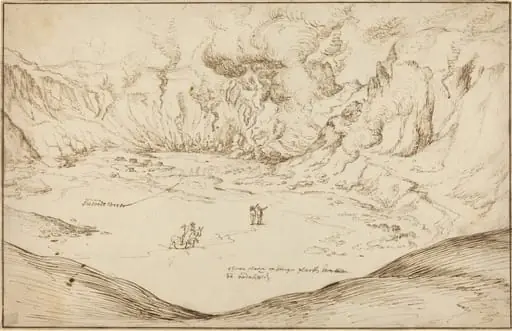 Forum Vulcani: The Hot Springs at Pozzuoli
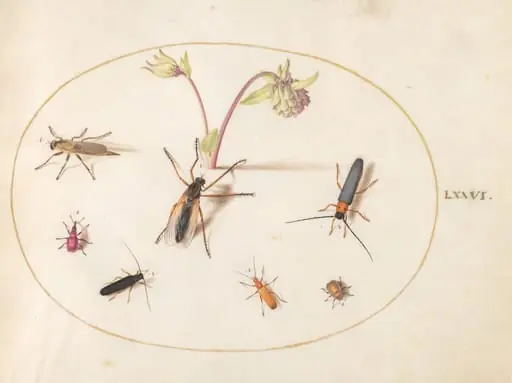 Plate 76: Insects with a Pink and Cream Columbine
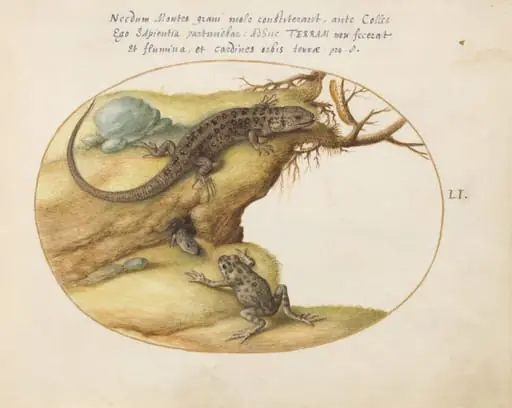 Plate 51: Two Sand Lizards, a Common Parsley Frog(?), and a Caterpillar
 Plate 1: Elephant with Insects
 Plate 60: Magpie, Crow, and Goldfinch
 Plate 67: Two Doves beneath a Gourd and Apples
 Plate 31: Seven Moths
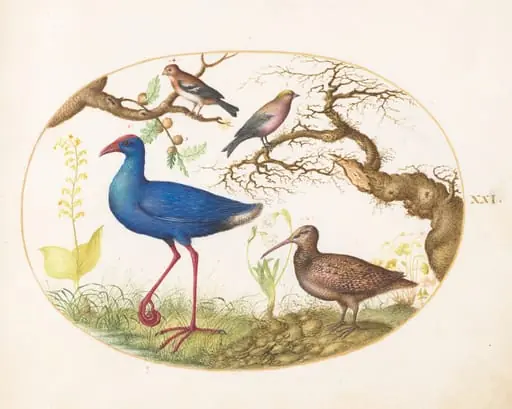 Plate 21: Swamp Hen and Woodcock with a Streaked Rosefinch, a Finch, and Oak Galls
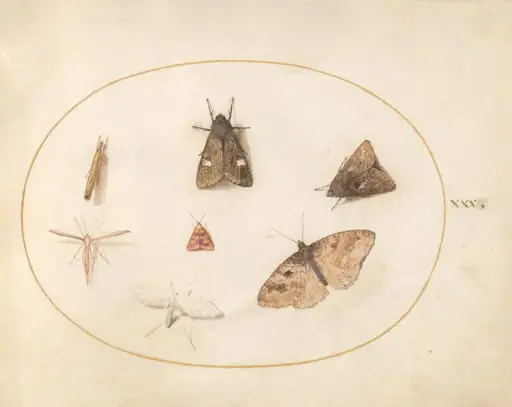 Plate 30: Seven Moths
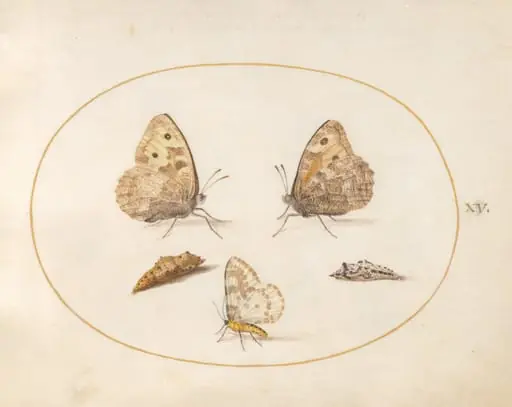 Plate 15: Grayling Butterfly, Magpie Moth, and Two Chrysalides
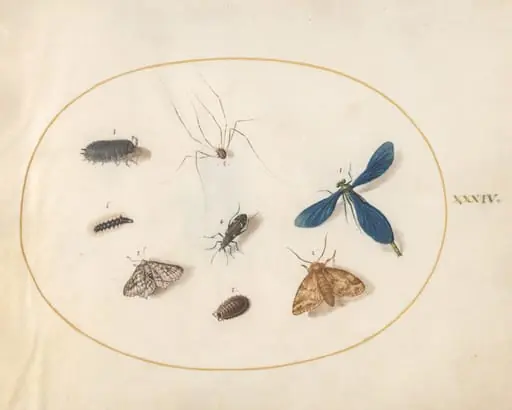 Plate 34: Two Moths with a Spider, a Caterpillar, a Damselfly, and Other Insects
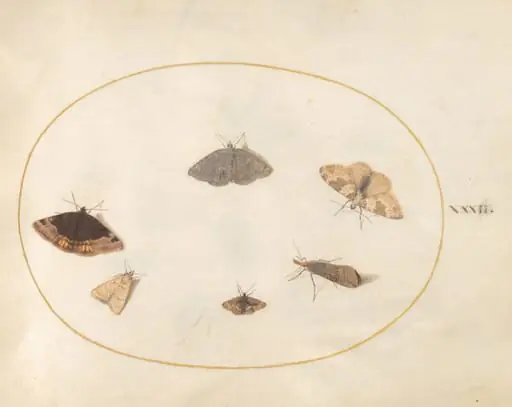 Plate 32: Six Moths
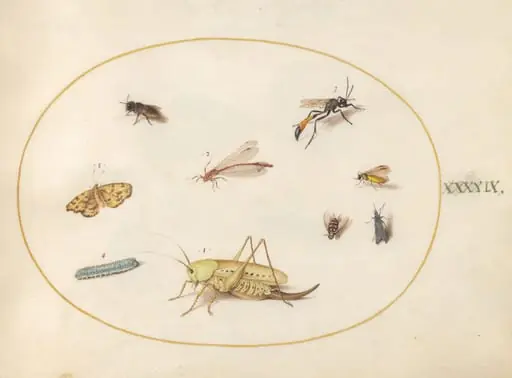 Plate 49: A Grasshopper, a Caterpillar, a Butterfly, a Moth, and Other Insects
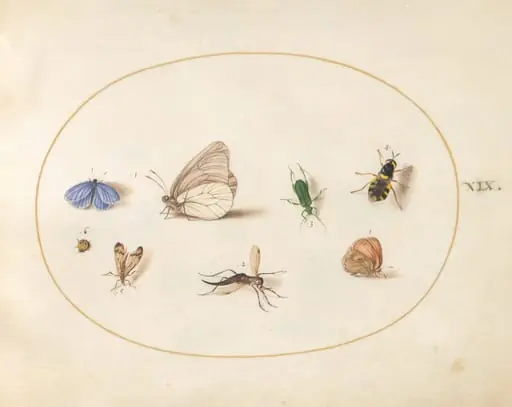 Plate 19: Two Butterflies with Five Other Insects
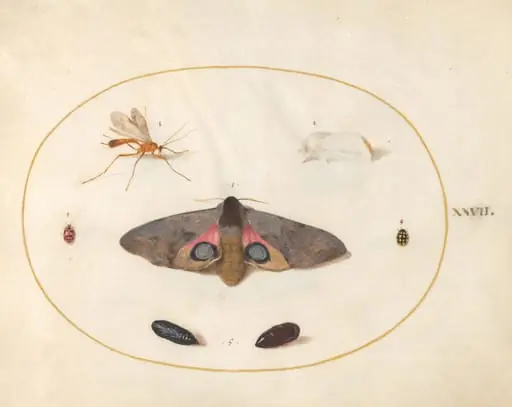 Plate 27: An Eyed Hawk-Moth, Two Chyrsalides, and Other Insects
 Plate 22: A Cinnabar Moth and a Cockchafer with Butterflies, other Insects, and a Snapdragon
 Plate 18: Two Butterflies and a Moth with a Damselfly, Two Ants, and Four Other Insects