Artwork
Plate 43: Musk Beetle, Oil Beetle, Tansy Beetle(?), Cockroach, Leaf-Footed Bug, and Other Insects
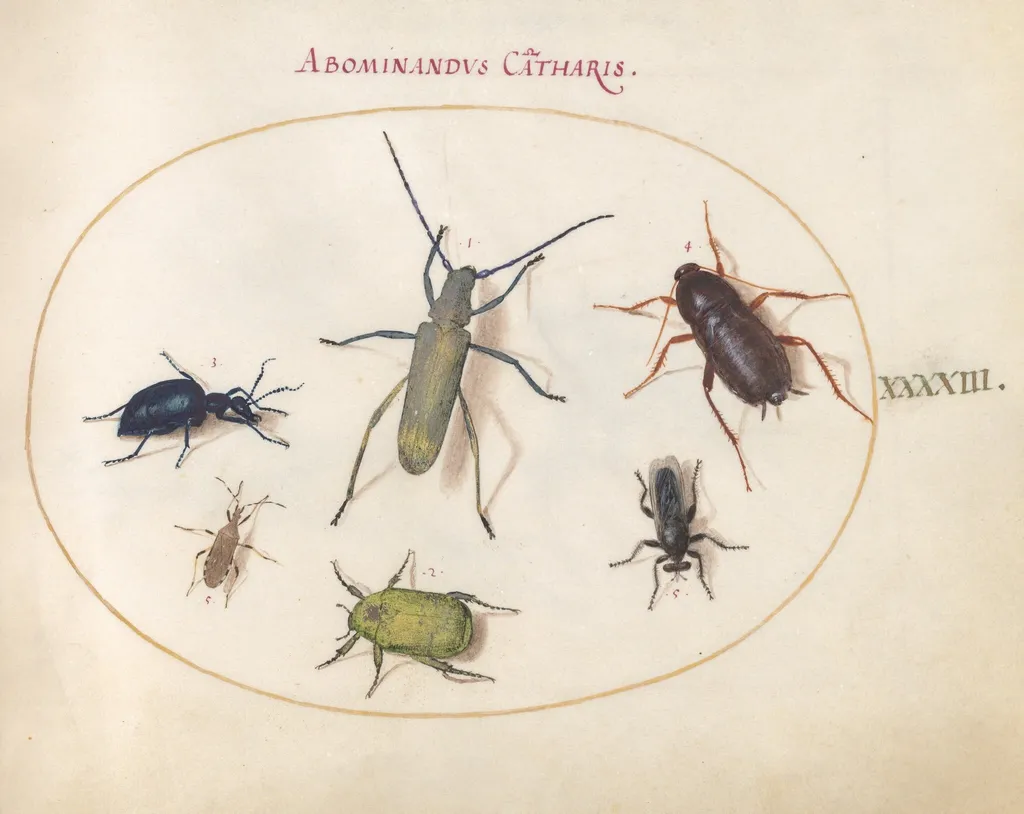
Plate 43: Musk Beetle, Oil Beetle, Tansy Beetle(?), Cockroach, Leaf-Footed Bug, and Other Insects is a gouache drawing by the Renaissance artist Joris Hoefnagel. It dates from 1594 and is held in the collection of the National Gallery of Art.
About this work
Overview
Created around 1594, this watercolor and gold-leaf drawing on parchment is one of a series by Joris Hoefnagel documenting insects with precision. Executed in a miniature format, it combines scientific observation with decorative artistry. The use of gold paint and leaf elevates the study beyond mere illustration, reflecting the value placed on natural inquiry in late Renaissance courtly culture.
Subject & Meaning
Rather than presenting them as pests, Hoefnagel treats each specimen with equal attention, suggesting an interest in biodiversity and taxonomy.
The plate depicts a cluster of insects, including beetles and bugs, some identified with tentative labels. Rather than presenting them as pests, Hoefnagel treats each specimen with equal attention, suggesting an interest in biodiversity and taxonomy. The inclusion of uncertain identifications, such as the Tansy Beetle(?), reveals a commitment to accuracy over assumption, aligning with emerging empirical methods in natural history.
Technique & Style
Hoefnagel applied watercolor with fine brushwork to capture minute anatomical details, while gold leaf and paint were used selectively to highlight textures and edges. The contrast between delicate pigments and metallic accents creates a luminous effect, grounding the creatures in a realm between the natural and the idealized. This synthesis of scientific clarity and ornamental richness was characteristic of his manuscript illumination practice.
History & Provenance
The drawing originated as part of a larger, unpublished manuscript commissioned by Holy Roman Emperor Rudolf II, a patron of scientific and artistic inquiry. Hoefnagel worked on this series during his time at the Prague court, where naturalists and artists collaborated to document the emperor’s collections. The work remained in imperial hands until the 17th century, later entering private and institutional collections.
Context
In late 16th-century Europe, the study of nature was shifting from symbolic interpretation to empirical classification. Hoefnagel’s work emerged alongside early entomological texts and the rise of cabinet collections. His illustrations bridged medieval manuscript traditions with Renaissance naturalism, influencing later scientific illustrators and contributing to the visual language of early biology.
Legacy
Hoefnagel’s insect studies helped establish a visual standard for natural history illustration in northern Europe. His fusion of artistic refinement with observational rigor set a precedent for later naturalists like Maria Sibylla Merian. Though not widely published in his lifetime, his manuscripts became reference points for 17th-century scholars and remain valued for their technical precision and aesthetic harmony.
Artist & collection

Artist
Joris Hoefnagel or Georg Hoefnagel (1542 – 24 July 1601) was a Flemish painter, printmaker, miniaturist, draftsman and merchant.

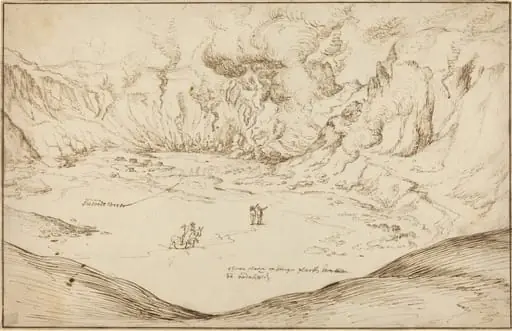 Forum Vulcani: The Hot Springs at Pozzuoli
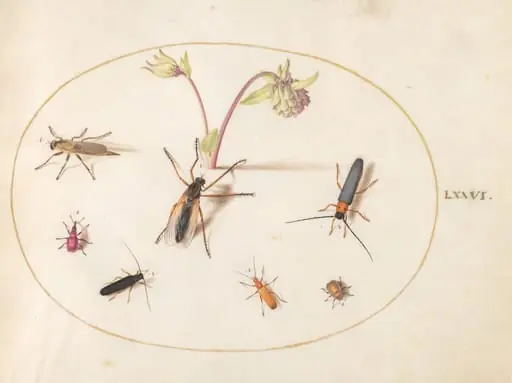 Plate 76: Insects with a Pink and Cream Columbine
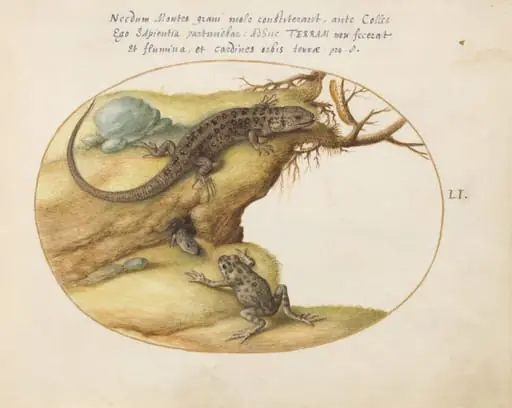 Plate 51: Two Sand Lizards, a Common Parsley Frog(?), and a Caterpillar
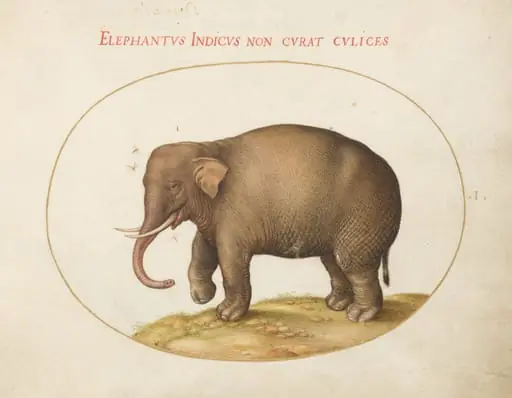 Plate 1: Elephant with Insects
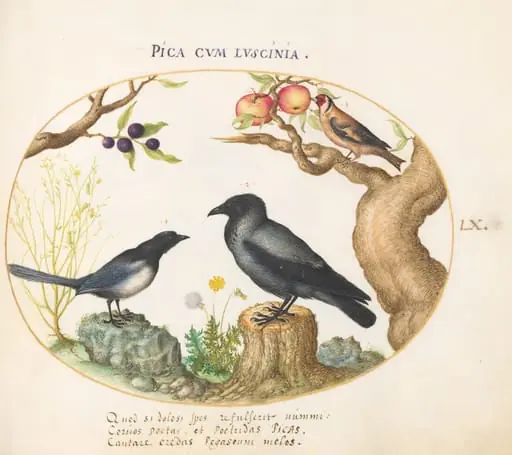 Plate 60: Magpie, Crow, and Goldfinch
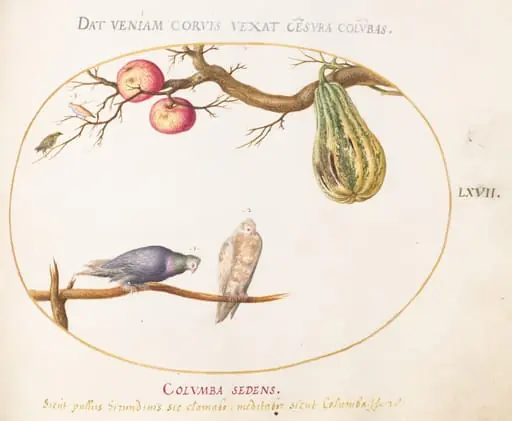 Plate 67: Two Doves beneath a Gourd and Apples
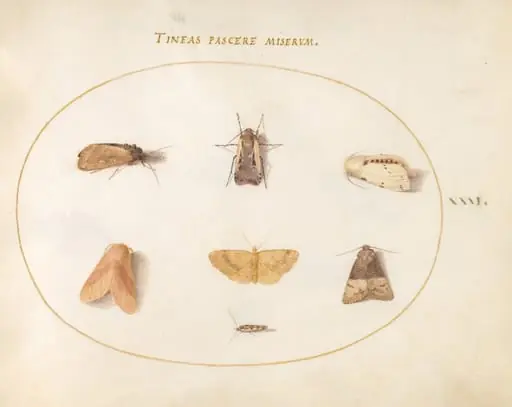 Plate 31: Seven Moths
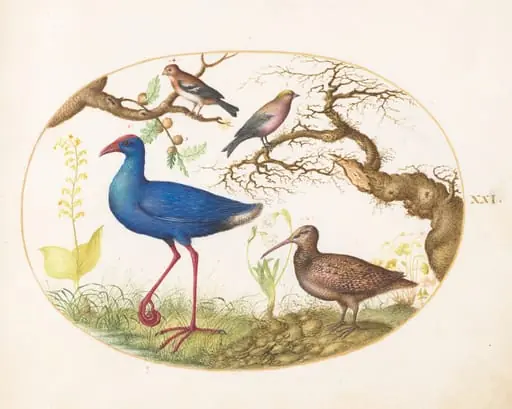 Plate 21: Swamp Hen and Woodcock with a Streaked Rosefinch, a Finch, and Oak Galls
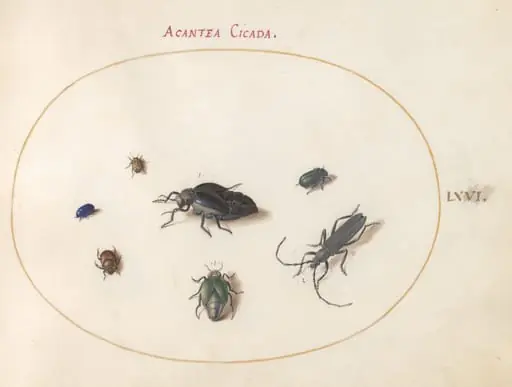 Plate 66: Two Oil Beetles, a Longhorn Beetle, and Four Other Insects
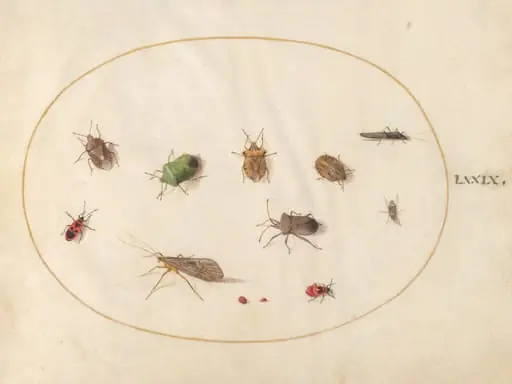 Plate 79: Twelve Insects, Including Shield Bugs
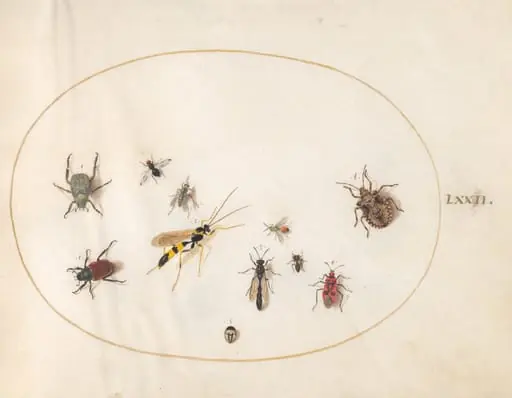 Plate 72: Shield Bug, Cinnamon Bug, Wasp, and Other Insects
 Plate 67: Seven Insects, Including a White Butterfly and a Bee
 Plate 73: Ten Insects
 Plate 49: A Grasshopper, a Caterpillar, a Butterfly, a Moth, and Other Insects
 Plate 64: Eleven Insects, Including a Dragonfly and Longhorn Beetle
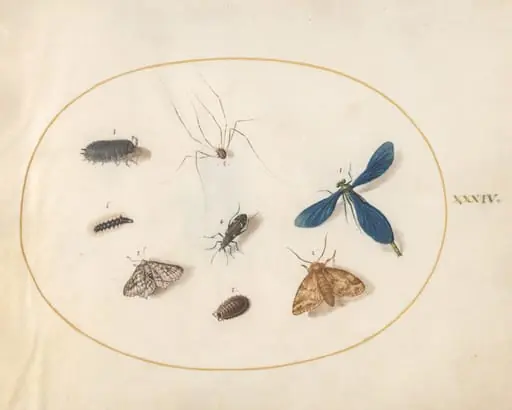 Plate 34: Two Moths with a Spider, a Caterpillar, a Damselfly, and Other Insects
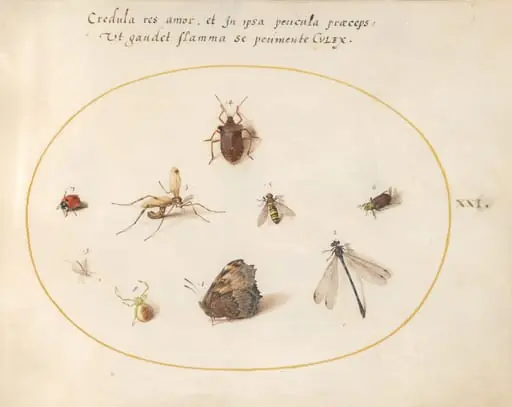 Plate 21: A Butterfly with a Dragonfly, a Ladybug, and Five other Insects
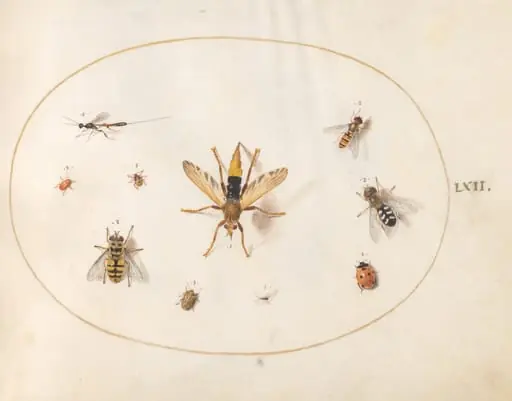 Plate 62: Ten Insects
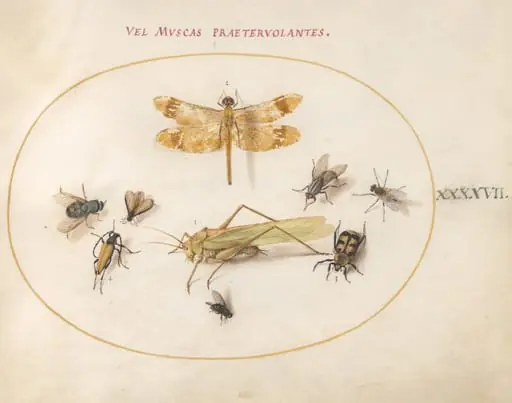 Plate 47: A Dragonfly (Banded Darter?), Grasshopper, Houseflies, a Carrion Beetle, a Flower Longhorn Beetle, and Other Insects