Artwork
Plate 67: Seven Insects, Including a White Butterfly and a Bee
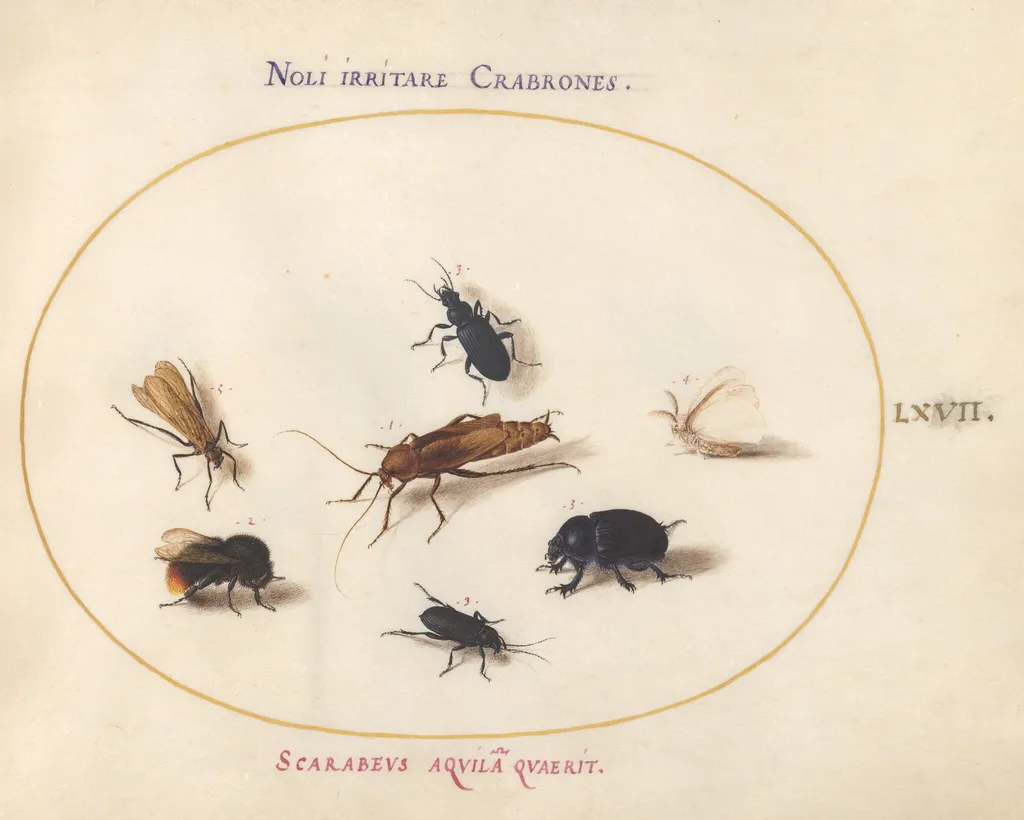
Plate 67: Seven Insects, Including a White Butterfly and a Bee is a gouache drawing by the Renaissance artist Joris Hoefnagel. It dates from 1594 and is held in the collection of the National Gallery of Art.
About this work
Overview
Created around 1594 by Joris Hoefnagel, this small parchment drawing combines watercolor and gold paint to depict seven insects with exceptional precision.
Created around 1594 by Joris Hoefnagel, this small parchment drawing combines watercolor and gold paint to depict seven insects with exceptional precision. Unlike traditional manuscript decoration, the insects are rendered as subjects in their own right, marking a shift toward independent natural observation in northern European art. The scale and detail suggest a scientific intent, yet the luminous gold accents elevate the work beyond mere documentation.
Subject & Meaning
The composition features a white butterfly, a honeybee, a crane fly, and four other small insects, each arranged with careful attention to posture and spatial relationship. The inclusion of dewdrops on wings and fine body hairs underscores a fascination with minute biological detail. Rather than symbolic or allegorical, the insects are presented as observable entities, reflecting Renaissance curiosity about the natural world’s hidden structures.
Technique & Style
Hoefnagel applied translucent watercolors with fine brushes to capture the delicate textures of insect bodies, while gold paint was used selectively to mimic the iridescence of wings and exoskeletons. The parchment’s pale surface enhances luminosity, and the magnified perspective—unusual for the time—allows viewers to see individual hairs on the bee’s legs and the fragile veins of wings. This technique bridges manuscript illumination with emerging naturalist illustration.
History & Provenance
The work likely originated as part of a larger manuscript or album commissioned by a patron interested in natural history. Hoefnagel, active in Prague and Vienna, worked for imperial courts where such studies were valued. While its exact early ownership is undocumented, its survival in private or institutional collections reflects its rarity as a standalone natural study from the late 16th century.
Context
In the late 1500s, European scholars increasingly turned to direct observation of nature, aided by emerging optical tools and printed natural histories. Hoefnagel’s work aligns with this trend, paralleling the detailed insect studies of contemporaries like Ulisse Aldrovandi. His images were not merely decorative but served as visual records, contributing to the foundation of entomological illustration before the advent of scientific engraving.
Legacy
Hoefnagel’s precision and focus on small creatures influenced later naturalists and artists who sought to depict nature with fidelity. Though not widely known in his lifetime, his insect studies helped establish a visual language for biological illustration that would evolve into modern scientific drawing. The work stands as an early example of art serving empirical inquiry, bridging aesthetics and observation.
Artist & collection

Artist
Joris Hoefnagel or Georg Hoefnagel (1542 – 24 July 1601) was a Flemish painter, printmaker, miniaturist, draftsman and merchant.

 Forum Vulcani: The Hot Springs at Pozzuoli
 Plate 76: Insects with a Pink and Cream Columbine
 Plate 51: Two Sand Lizards, a Common Parsley Frog(?), and a Caterpillar
 Plate 1: Elephant with Insects
 Plate 60: Magpie, Crow, and Goldfinch
 Plate 67: Two Doves beneath a Gourd and Apples
 Plate 31: Seven Moths
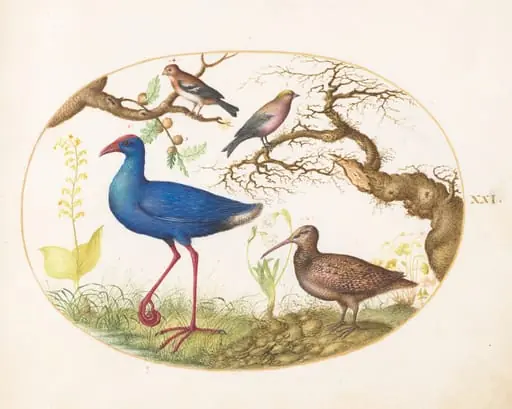 Plate 21: Swamp Hen and Woodcock with a Streaked Rosefinch, a Finch, and Oak Galls
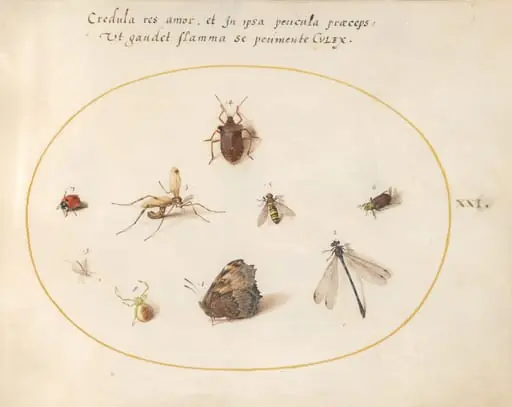 Plate 21: A Butterfly with a Dragonfly, a Ladybug, and Five other Insects
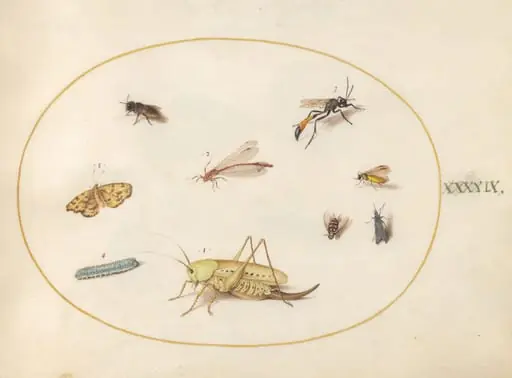 Plate 49: A Grasshopper, a Caterpillar, a Butterfly, a Moth, and Other Insects
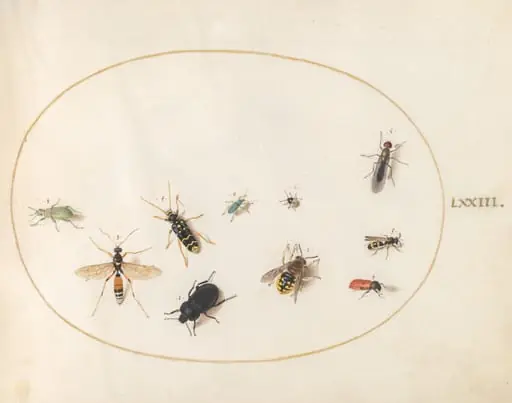 Plate 73: Ten Insects
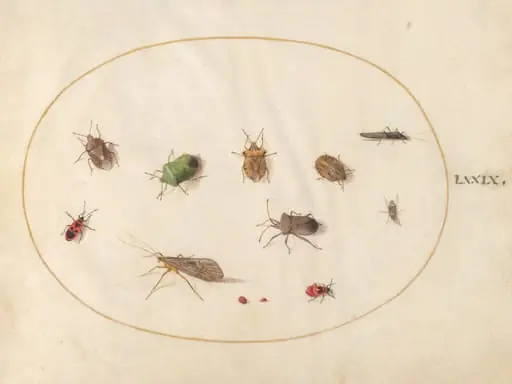 Plate 79: Twelve Insects, Including Shield Bugs
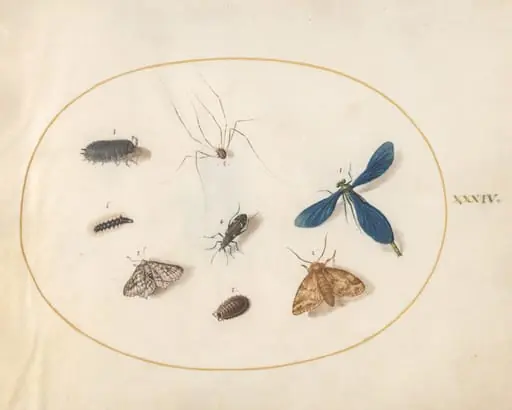 Plate 34: Two Moths with a Spider, a Caterpillar, a Damselfly, and Other Insects
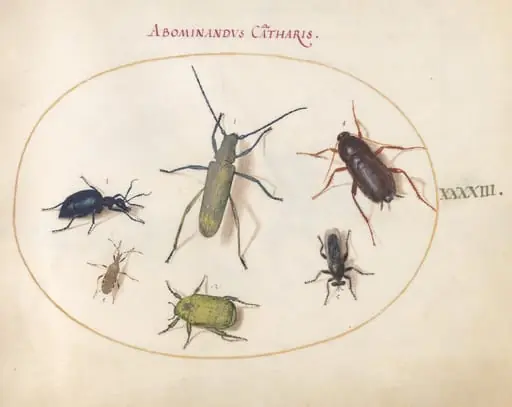 Plate 43: Musk Beetle, Oil Beetle, Tansy Beetle(?), Cockroach, Leaf-Footed Bug, and Other Insects
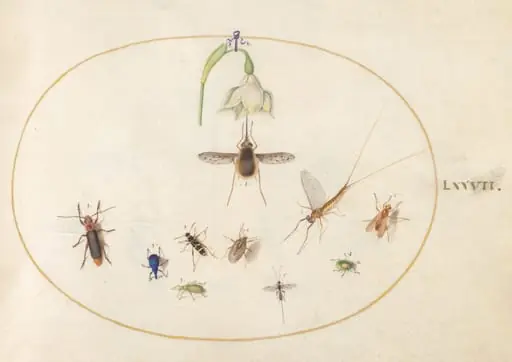 Plate 77: Dotted Bee Fly with a White Flower, a Mayfly, a Blue Weevil, and Other Insects
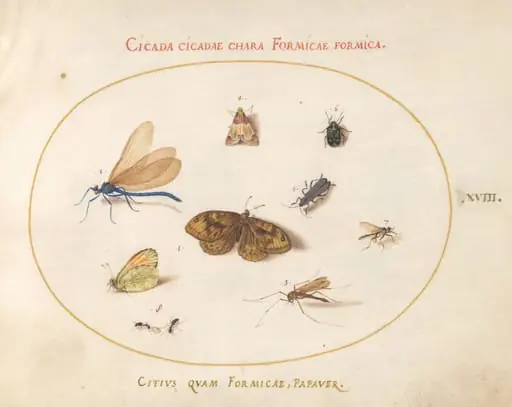 Plate 18: Two Butterflies and a Moth with a Damselfly, Two Ants, and Four Other Insects
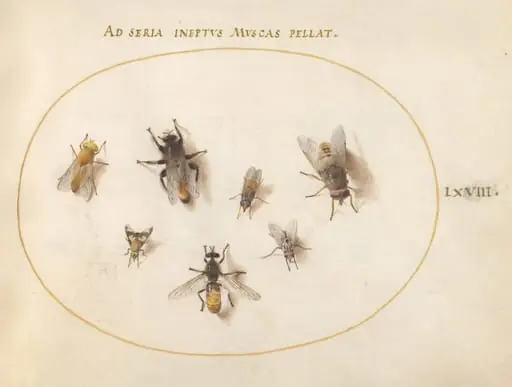 Plate 68: Seven Bees and Flies
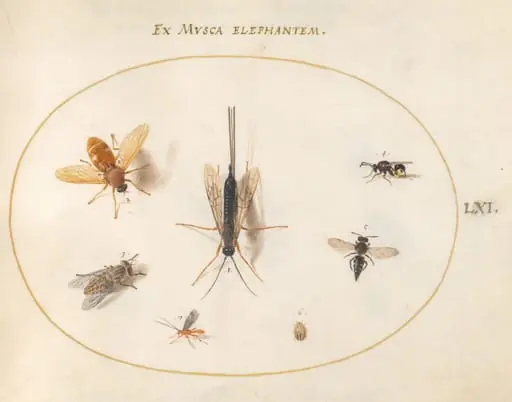 Plate 61: Seven Insects, Including Flies
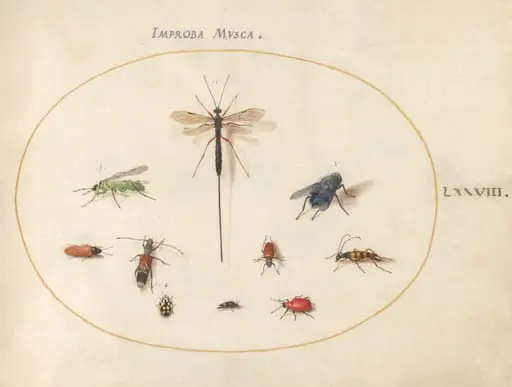 Plate 78: Ten Insects, Including a Blue Fly
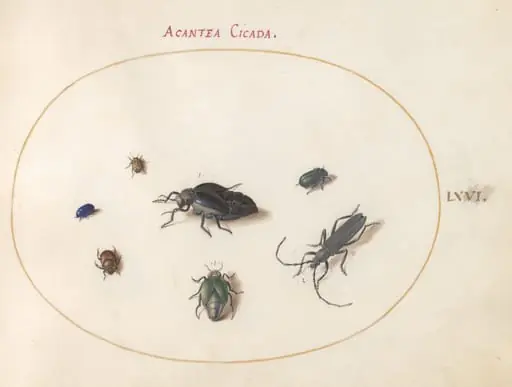 Plate 66: Two Oil Beetles, a Longhorn Beetle, and Four Other Insects