Artwork
Plate 79: Twelve Insects, Including Shield Bugs
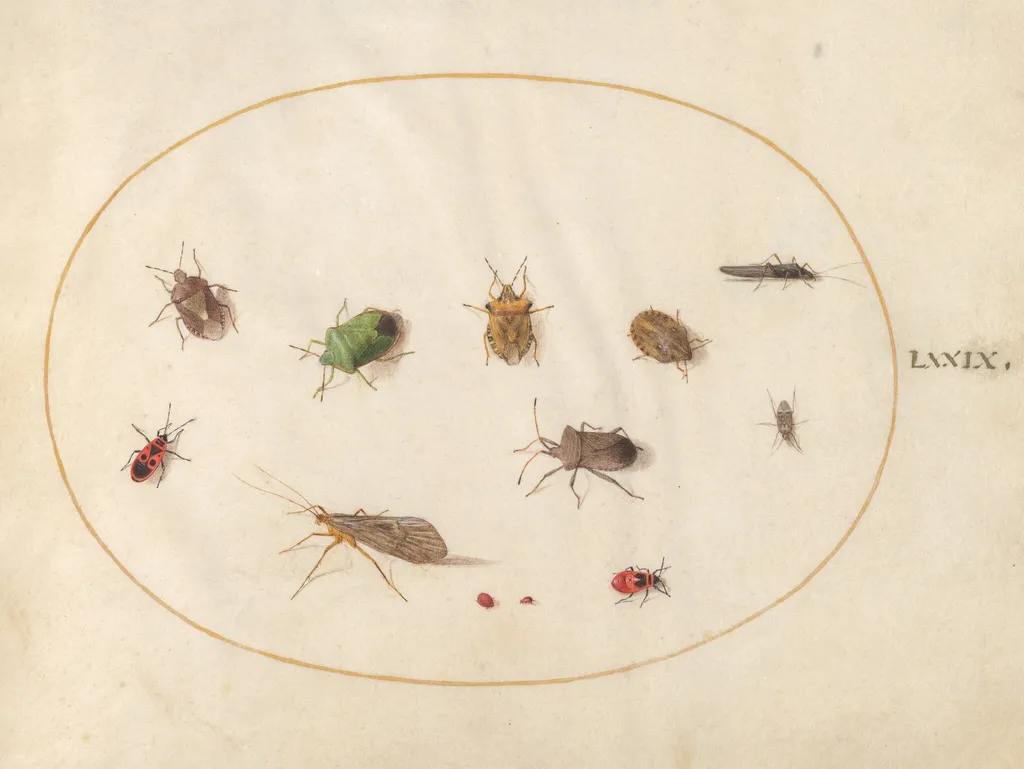
Plate 79: Twelve Insects, Including Shield Bugs is a gouache drawing by the Renaissance artist Joris Hoefnagel. It dates from 1594 and is held in the collection of the National Gallery of Art.
About this work
Overview
It belongs to a series of natural history illustrations that reflect the transition from medieval manuscript traditions to empirical observation.
Created around 1594 by Joris Hoefnagel, this small parchment drawing features twelve insects rendered in watercolor and gold paint. It belongs to a series of natural history illustrations that reflect the transition from medieval manuscript traditions to empirical observation. The work exemplifies the precision and patience required to depict minute biological forms with clarity and care, positioning Hoefnagel at the intersection of art and early scientific documentation.
Subject & Meaning
The plate presents twelve insects, with particular emphasis on shield bugs, rendered with anatomical accuracy. Rather than symbolic or decorative intent, the focus is on observation: each creature is depicted as a distinct biological entity. This approach signals a shift toward natural history as a field grounded in direct study, where the value of the image lies in its fidelity to the specimen rather than allegorical or ornamental meaning.
Technique & Style
Hoefnagel employed fine brushes and translucent watercolor to capture the texture and form of each insect’s exoskeleton, wings, and antennae. Gold paint was sparingly used to highlight edges and subtle reflections, enhancing three-dimensionality without overwhelming detail. The composition arranges the insects in a loose, non-symmetrical grid, allowing each to be studied individually while maintaining visual cohesion across the small surface.
History & Provenance
This plate was likely part of a larger, unpublished manuscript commissioned by a patron interested in natural phenomena. Hoefnagel’s work in this period was closely tied to imperial and scholarly circles in Prague, where he served Rudolf II. The piece remained within private collections until modern institutional acquisition, preserving its original condition and offering insight into late Renaissance scientific illustration practices.
Context
In the late 16th century, northern Europe saw growing interest in cataloging nature through visual means, driven by exploration and the rise of natural philosophy. Hoefnagel’s drawings responded to this trend, combining the illuminated manuscript tradition with emerging scientific ideals. His work preceded the widespread use of printed natural history texts, making his hand-painted studies among the most detailed visual records of their time.
Legacy
Hoefnagel’s insect studies influenced later naturalists and illustrators by demonstrating how artistic skill could serve empirical inquiry. His attention to minute anatomical features set a standard for biological illustration, bridging the gap between artisanal craft and scientific documentation. Though not widely published in his lifetime, his manuscripts became reference points for 17th-century natural history collections and academic illustration.
Artist & collection

Artist
Joris Hoefnagel or Georg Hoefnagel (1542 – 24 July 1601) was a Flemish painter, printmaker, miniaturist, draftsman and merchant.

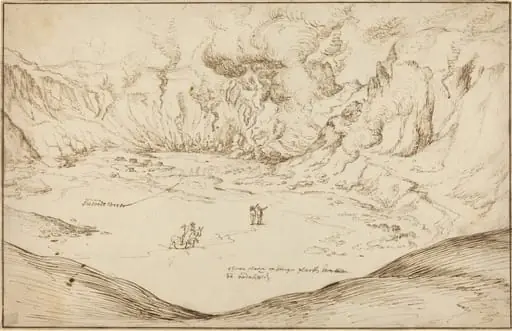 Forum Vulcani: The Hot Springs at Pozzuoli
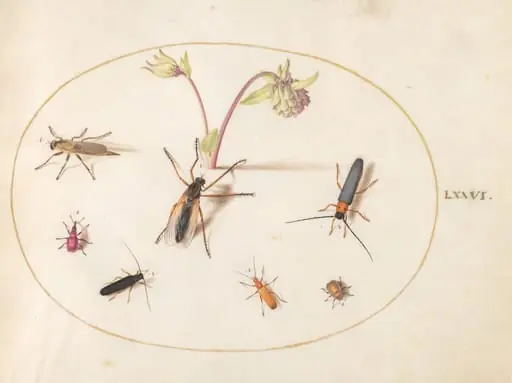 Plate 76: Insects with a Pink and Cream Columbine
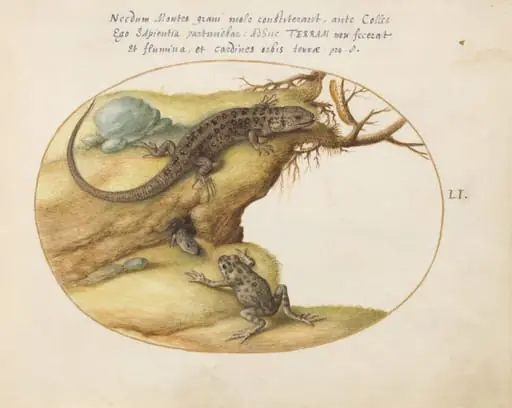 Plate 51: Two Sand Lizards, a Common Parsley Frog(?), and a Caterpillar
 Plate 1: Elephant with Insects
 Plate 60: Magpie, Crow, and Goldfinch
 Plate 67: Two Doves beneath a Gourd and Apples
 Plate 31: Seven Moths
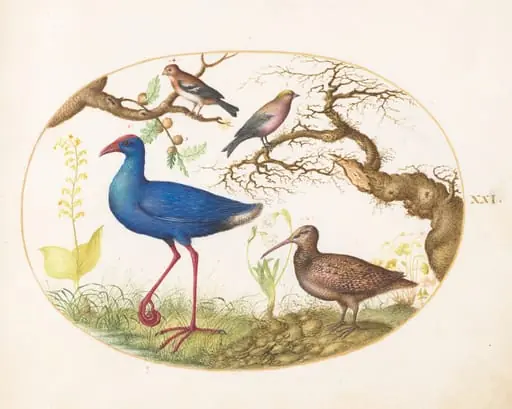 Plate 21: Swamp Hen and Woodcock with a Streaked Rosefinch, a Finch, and Oak Galls
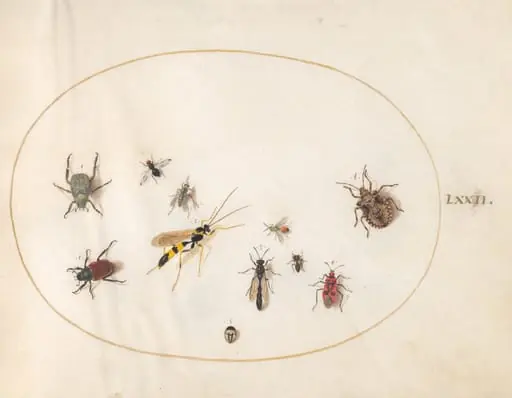 Plate 72: Shield Bug, Cinnamon Bug, Wasp, and Other Insects
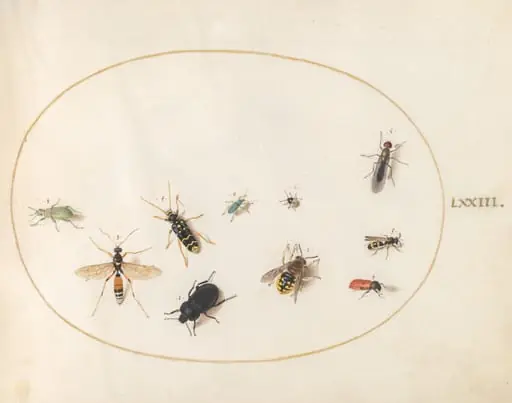 Plate 73: Ten Insects
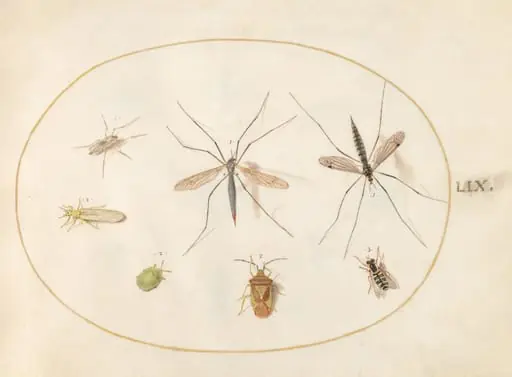 Plate 59: Seven Insects, Including a Hawthorn Shield Bug, Crane Flies, and a Hoverfly
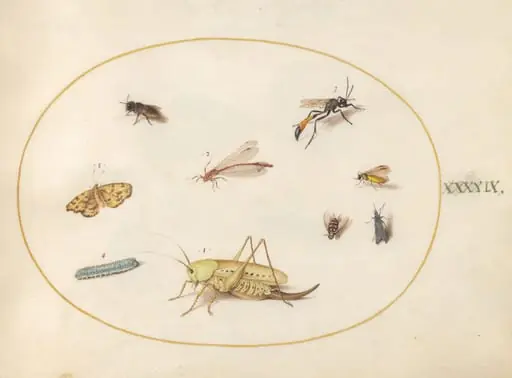 Plate 49: A Grasshopper, a Caterpillar, a Butterfly, a Moth, and Other Insects
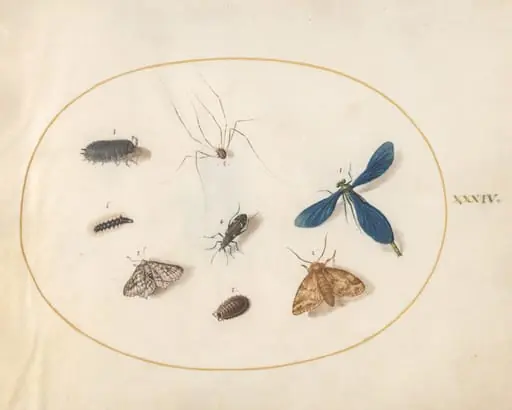 Plate 34: Two Moths with a Spider, a Caterpillar, a Damselfly, and Other Insects
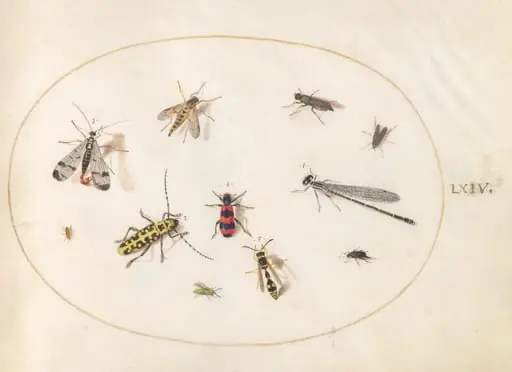 Plate 64: Eleven Insects, Including a Dragonfly and Longhorn Beetle
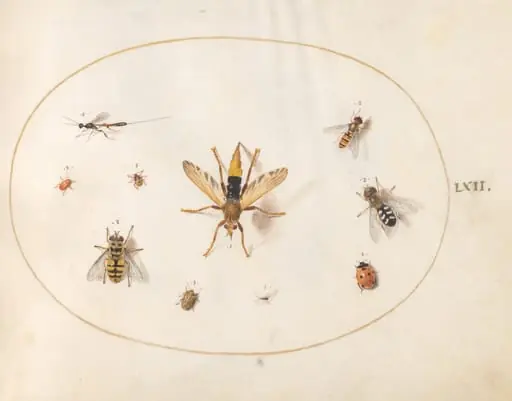 Plate 62: Ten Insects
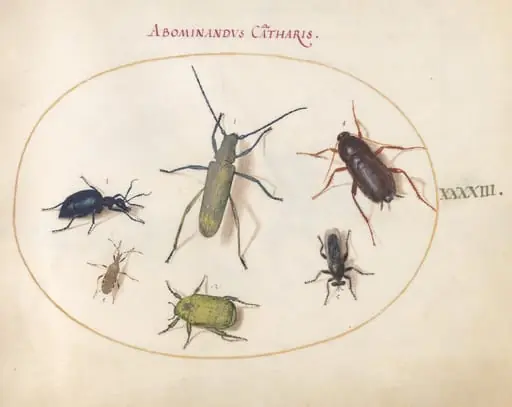 Plate 43: Musk Beetle, Oil Beetle, Tansy Beetle(?), Cockroach, Leaf-Footed Bug, and Other Insects
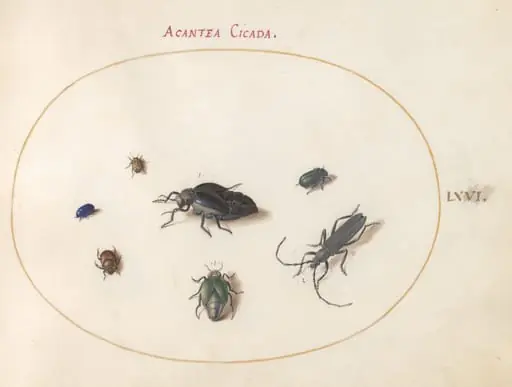 Plate 66: Two Oil Beetles, a Longhorn Beetle, and Four Other Insects
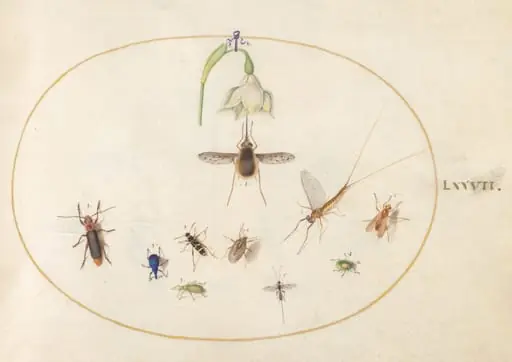 Plate 77: Dotted Bee Fly with a White Flower, a Mayfly, a Blue Weevil, and Other Insects
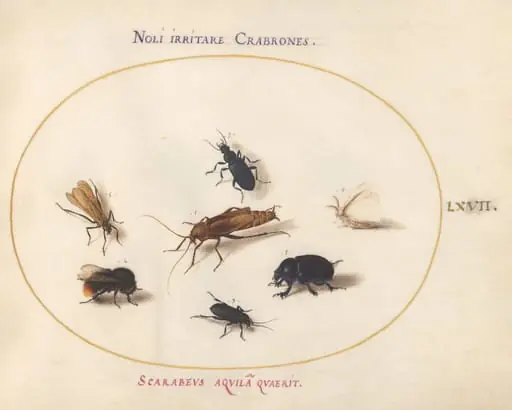 Plate 67: Seven Insects, Including a White Butterfly and a Bee
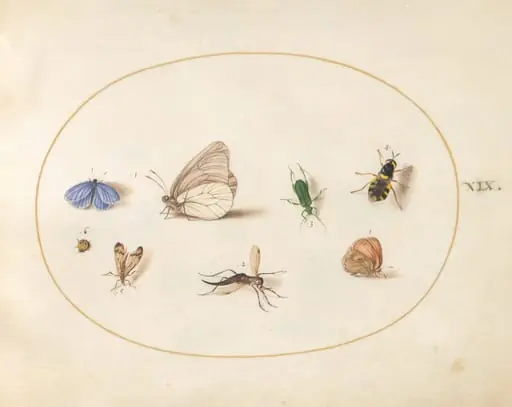 Plate 19: Two Butterflies with Five Other Insects