Artwork
Plate 44: Lobster, Two Crabs, Scallop Shells, and Other Sea Life
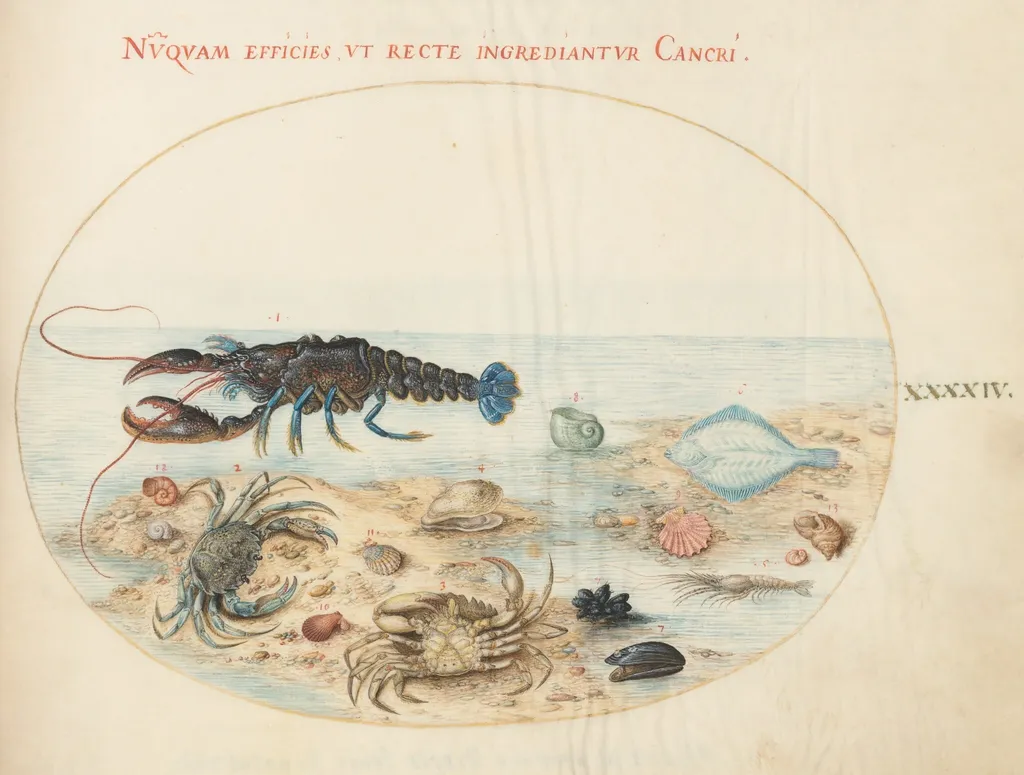
Plate 44: Lobster, Two Crabs, Scallop Shells, and Other Sea Life is a gouache drawing by the Renaissance artist Joris Hoefnagel. It dates from 1594 and is held in the collection of the National Gallery of Art.
About this work
Overview
Created around 1594 by Joris Hoefnagel, this watercolor and gold-painted work on parchment is part of a larger collection of natural history illuminations.
Created around 1594 by Joris Hoefnagel, this watercolor and gold-painted work on parchment is part of a larger collection of natural history illuminations. Executed with precision and care, it belongs to a tradition of manuscript decoration that persisted into the late Renaissance, bridging medieval craftsmanship with emerging scientific observation. The use of gold highlights and delicate pigments reflects its origins in book art rather than standalone painting.
Subject & Meaning
The plate depicts a cluster of marine organisms—lobster, two crabs, scallop shells, and other sea life—arranged with attention to anatomical detail. Rather than symbolic or allegorical intent, the focus lies in the accurate representation of natural forms. This reflects a growing 16th-century interest in cataloging the natural world, aligning with contemporary efforts in natural philosophy and specimen collection.
Technique & Style
Hoefnagel employed fine brushwork and translucent watercolor layers to render textures of shell, exoskeleton, and membrane. Gold paint was used selectively to accentuate edges and surfaces, adding luminosity without overwhelming the naturalism. The composition is tightly framed, emphasizing individual forms against a blank parchment ground, a hallmark of manuscript illumination that prioritizes clarity over spatial depth.
History & Provenance
This piece was produced during Hoefnagel’s later years, when he worked on illuminated manuscripts for imperial patrons in Prague. It likely formed part of a codex commissioned by Rudolf II, whose court fostered a fascination with natural curiosities. The work remained within aristocratic collections until modern institutional acquisition, preserving its original format and condition.
Context
In late 16th-century Europe, natural history illustration flourished as scholars sought to document biodiversity. Hoefnagel’s work intersected with this movement, drawing from both artistic tradition and emerging empirical methods. His plates were neither purely scientific nor purely decorative but occupied a middle ground, serving as visual records for collectors and thinkers alike.
Legacy
Hoefnagel’s detailed renderings influenced the development of still-life and botanical illustration in northern Europe. Though rooted in manuscript culture, his approach to natural forms prefigured the precision of later scientific atlases. His integration of ornament and observation helped shape how nature was visually understood in the transition from Renaissance to early modern science.
Artist & collection

Artist
Joris Hoefnagel or Georg Hoefnagel (1542 – 24 July 1601) was a Flemish painter, printmaker, miniaturist, draftsman and merchant.

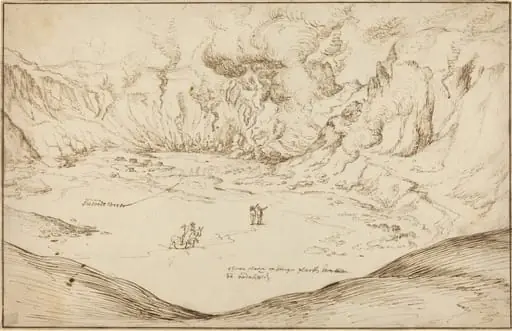 Forum Vulcani: The Hot Springs at Pozzuoli
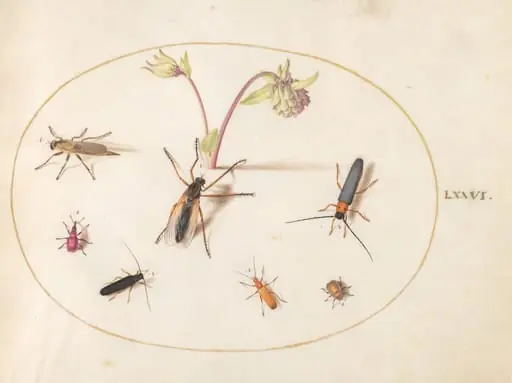 Plate 76: Insects with a Pink and Cream Columbine
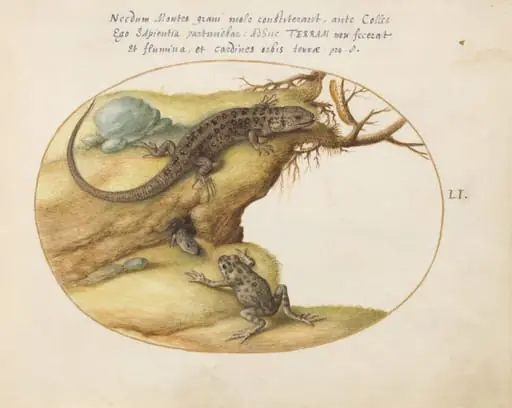 Plate 51: Two Sand Lizards, a Common Parsley Frog(?), and a Caterpillar
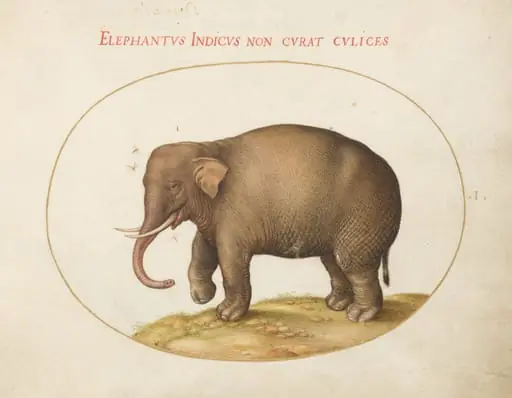 Plate 1: Elephant with Insects
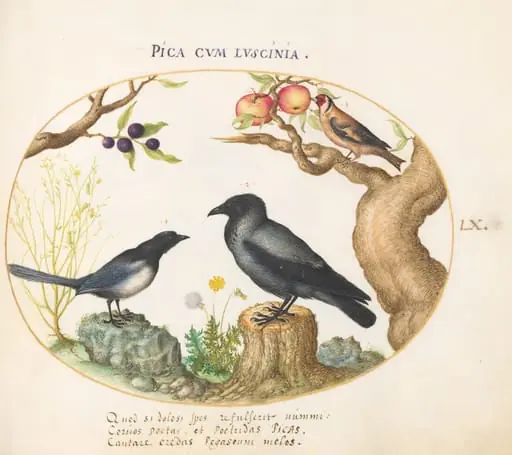 Plate 60: Magpie, Crow, and Goldfinch
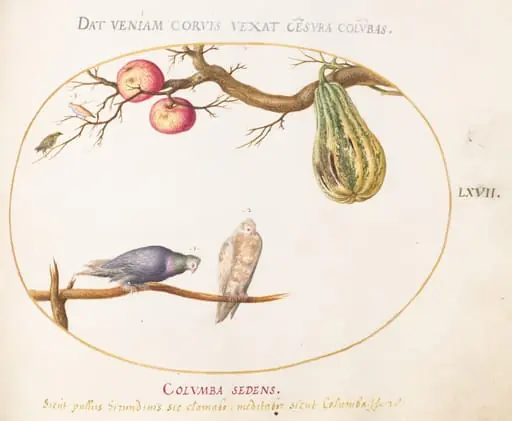 Plate 67: Two Doves beneath a Gourd and Apples
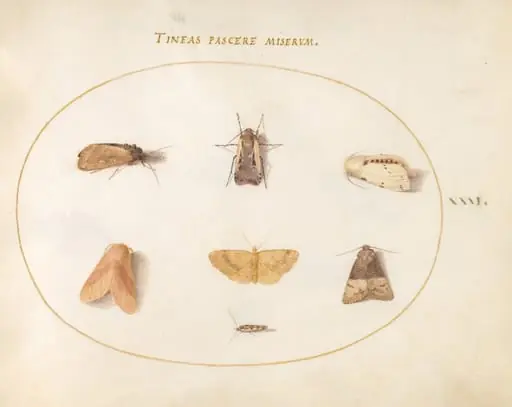 Plate 31: Seven Moths
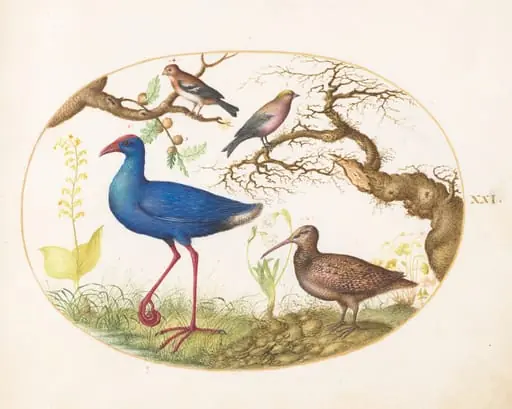 Plate 21: Swamp Hen and Woodcock with a Streaked Rosefinch, a Finch, and Oak Galls
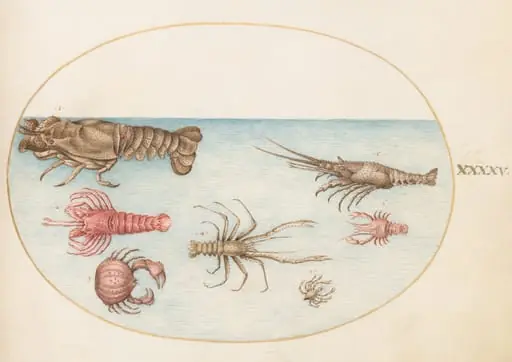 Plate 45: Lobster, Squilla Mantis, and Other Crustaceans
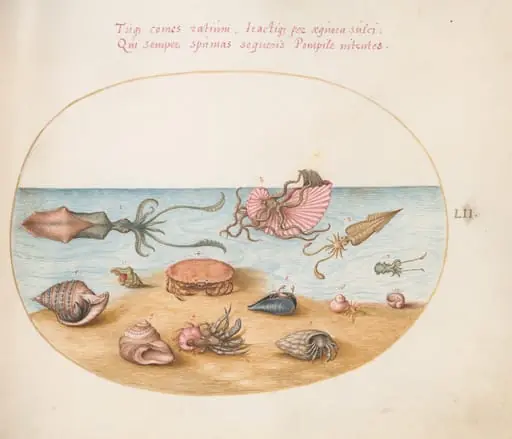 Plate 52: An Argonaut, Squid, Hermit Crabs, Shells, and a Crab
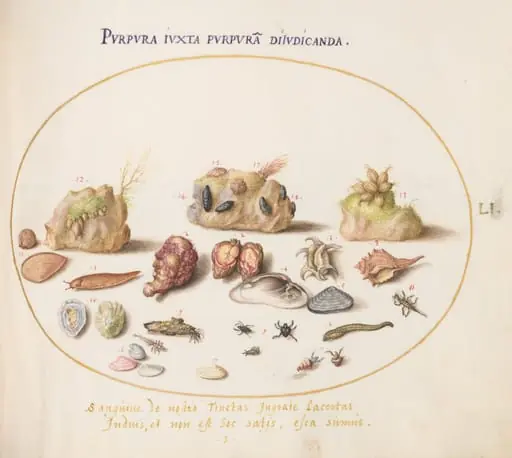 Plate 51: Murex Mollusks, Shells, Hermit Crabs, a Slug, Insects, and Other Sea Life
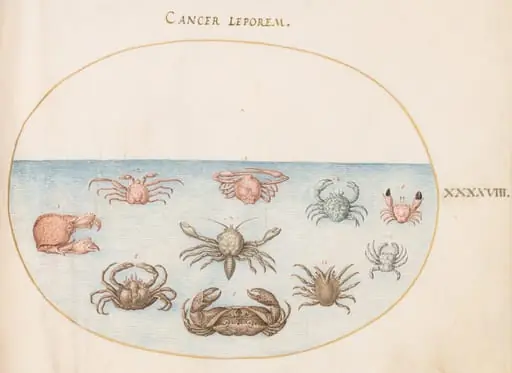 Plate 48: Ten Crabs
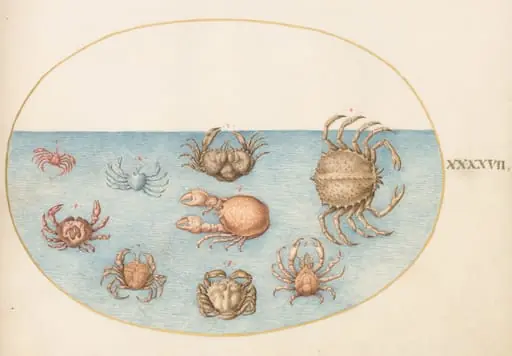 Plate 47: Nine Crabs
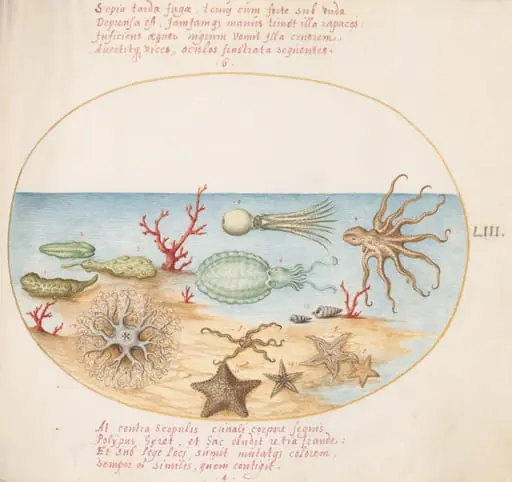 Plate 53: Sea Cucumbers, Coral, Octopus, Starfish, Squid, and Other Sea Creatures
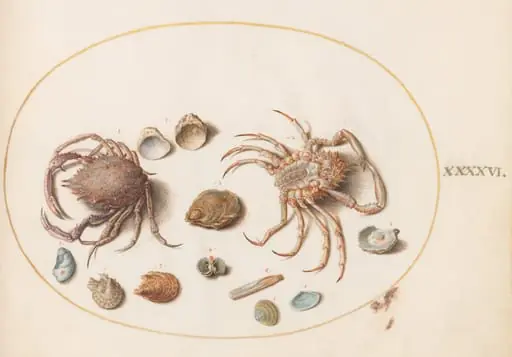 Plate 46: Two Crabs with Seashells
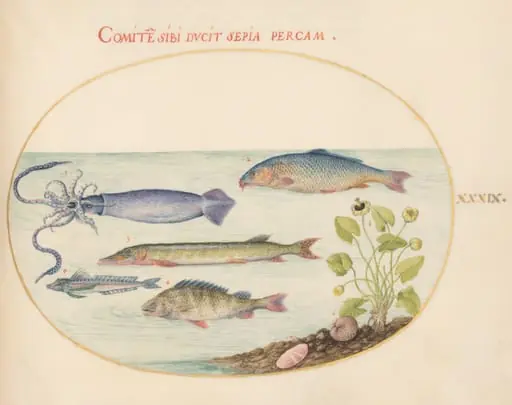 Plate 39: Squid, Gurnard, Pike, and Other Fish
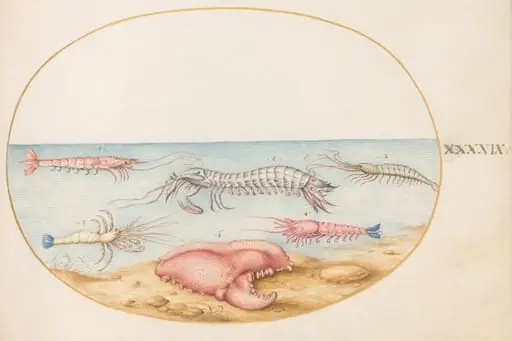 Plate 49: Mantis Shrimp and the Claw of a European Crayfish
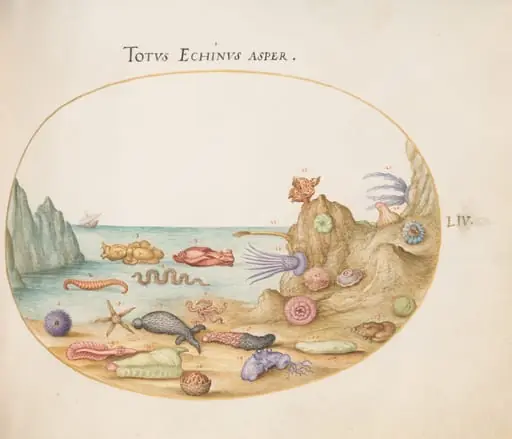 Plate 54: Sea Cucumbers, Sea Urchins, Starfish, a Sea Nettle, a "Sea Hare," and Other Marine Life
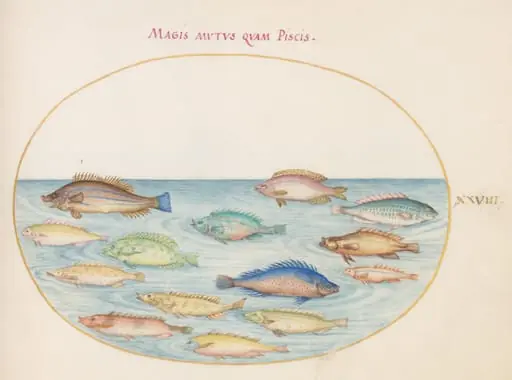 Plate 28: Sea Bream(?) and Other Fish
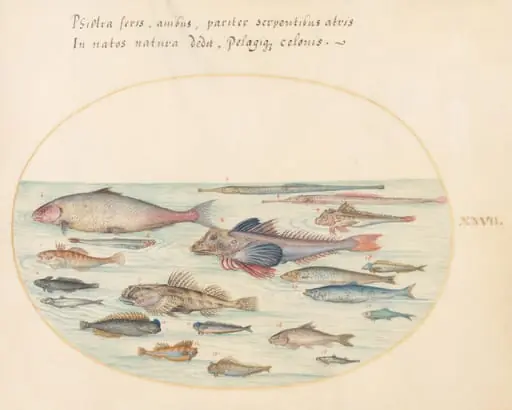 Plate 27: Blennies, Scorpion Fish, and Other Fish