Artwork
Plate 53: Sea Cucumbers, Coral, Octopus, Starfish, Squid, and Other Sea Creatures
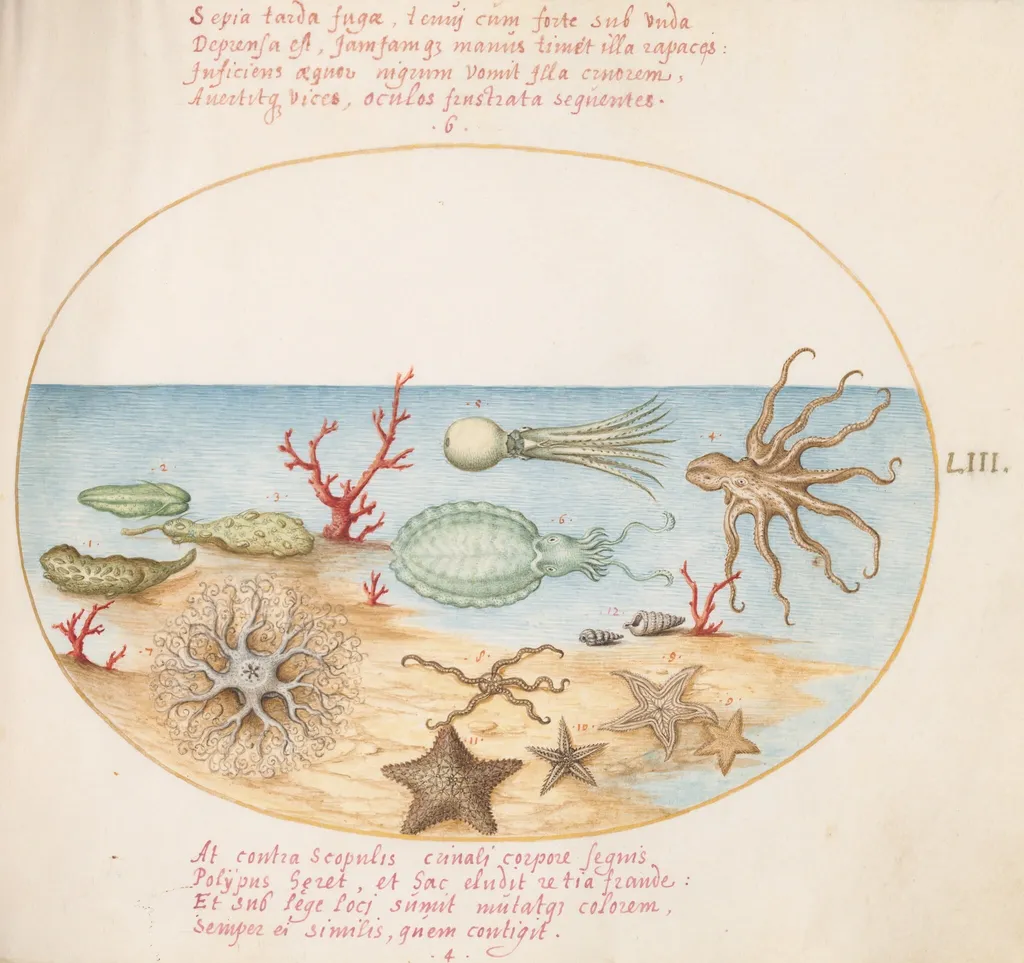
Plate 53: Sea Cucumbers, Coral, Octopus, Starfish, Squid, and Other Sea Creatures is a gouache drawing by the Renaissance artist Joris Hoefnagel. It dates from 1594 and is held in the collection of the National Gallery of Art.
About this work
Overview
Created around 1594, this parchment drawing by Joris Hoefnagel combines watercolor and gold paint to depict a variety of marine organisms.
Created around 1594, this parchment drawing by Joris Hoefnagel combines watercolor and gold paint to depict a variety of marine organisms. As one of the final practitioners of manuscript illumination, Hoefnagel bridged medieval traditions with emerging naturalist observation. The plate belongs to a larger collection of biological studies, reflecting a shift toward systematic documentation of the natural world in late Renaissance Europe.
Subject & Meaning
The plate presents sea cucumbers, coral, octopus, starfish, squid, and other unidentified marine forms arranged without hierarchical order. Rather than symbolic or allegorical intent, the focus is on accurate representation. Each creature is rendered with attention to anatomical detail, suggesting an early scientific curiosity about oceanic biodiversity, possibly for scholarly or princely collections rather than religious use.
Technique & Style
Hoefnagel applied translucent watercolors with precision on parchment, enhancing contours and textures with delicate gold highlights. His brushwork captures the softness of tentacles, the roughness of coral, and the translucency of gelatinous bodies. The composition is tightly packed yet orderly, avoiding background elements to isolate each form—a method that prioritizes clarity over aesthetic harmony, aligning with emerging naturalist conventions.
History & Provenance
This work was part of a manuscript commissioned by the Habsburg court, likely intended as a visual record of natural specimens. Hoefnagel’s illustrations were later incorporated into the Codex Mendoza and other imperial collections. The plate survived intact through centuries of archival storage, eventually entering a major European museum collection in the 19th century, where it remains as evidence of early modern natural history documentation.
Context
In the late 16th century, European interest in marine biology expanded alongside global exploration and the rise of cabinets of curiosities. Hoefnagel’s work emerged alongside the first printed natural histories, yet retained the artisanal methods of manuscript illumination. His drawings served as intermediaries between oral tradition and empirical science, offering visual references for scholars who had never seen these creatures firsthand.
Legacy
Hoefnagel’s marine studies influenced later naturalists and illustrators by demonstrating how meticulous observation could be rendered with artistic precision. Though overshadowed by printed botanical texts, his illuminated plates preserved a tactile, hand-crafted approach to scientific imagery. Today, they are valued as transitional artifacts—bridging medieval artistry and early modern empiricism in the study of nature.
Artist & collection

Artist
Joris Hoefnagel or Georg Hoefnagel (1542 – 24 July 1601) was a Flemish painter, printmaker, miniaturist, draftsman and merchant.

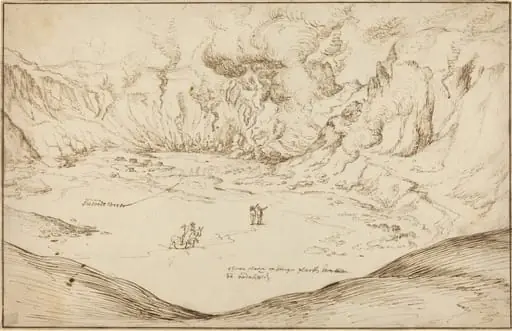 Forum Vulcani: The Hot Springs at Pozzuoli
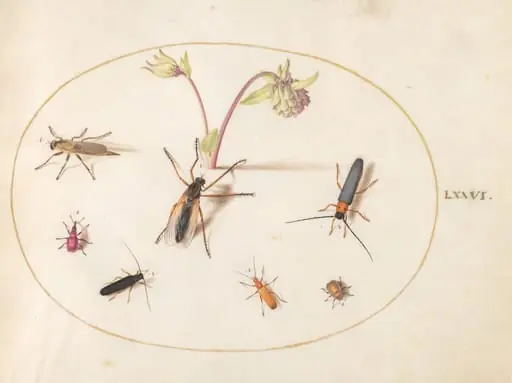 Plate 76: Insects with a Pink and Cream Columbine
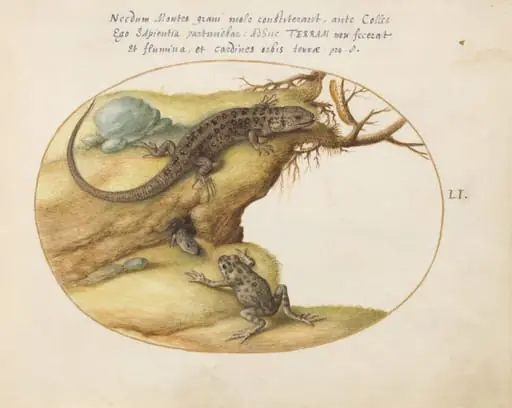 Plate 51: Two Sand Lizards, a Common Parsley Frog(?), and a Caterpillar
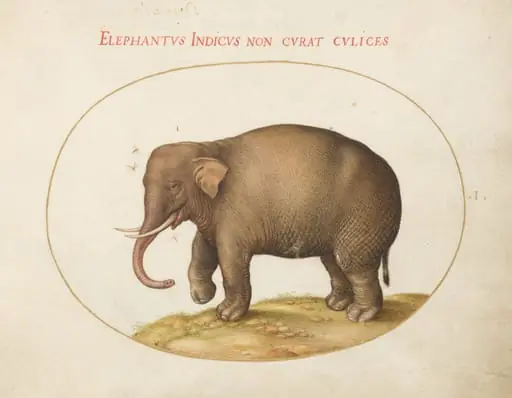 Plate 1: Elephant with Insects
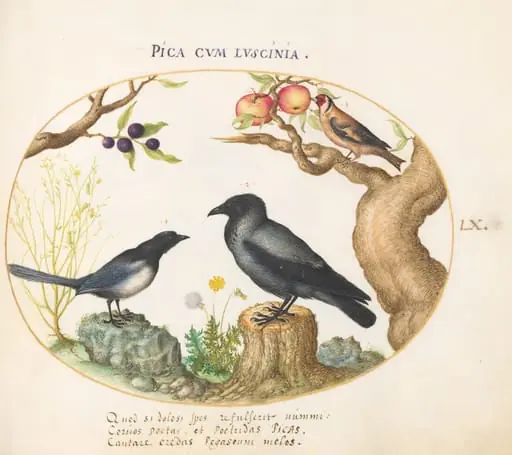 Plate 60: Magpie, Crow, and Goldfinch
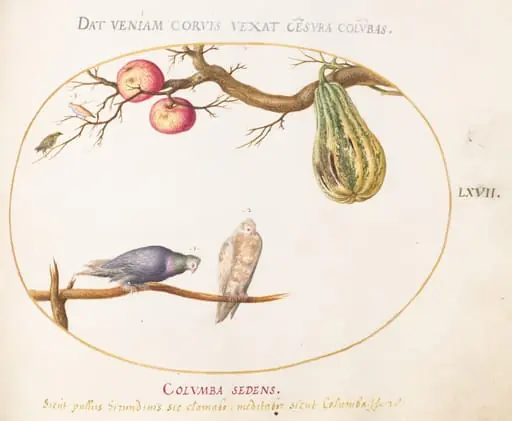 Plate 67: Two Doves beneath a Gourd and Apples
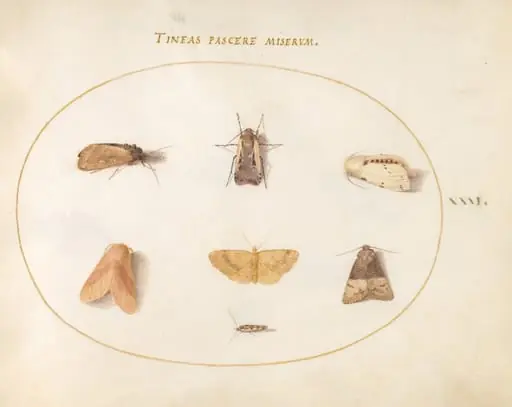 Plate 31: Seven Moths
 Plate 21: Swamp Hen and Woodcock with a Streaked Rosefinch, a Finch, and Oak Galls
 Plate 39: Squid, Gurnard, Pike, and Other Fish
 Plate 54: Sea Cucumbers, Sea Urchins, Starfish, a Sea Nettle, a "Sea Hare," and Other Marine Life
 Plate 52: An Argonaut, Squid, Hermit Crabs, Shells, and a Crab
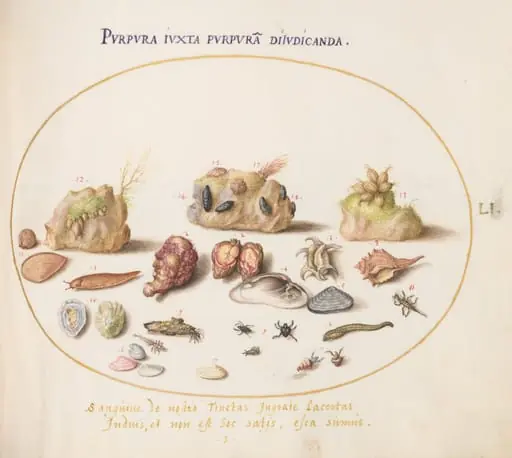 Plate 51: Murex Mollusks, Shells, Hermit Crabs, a Slug, Insects, and Other Sea Life
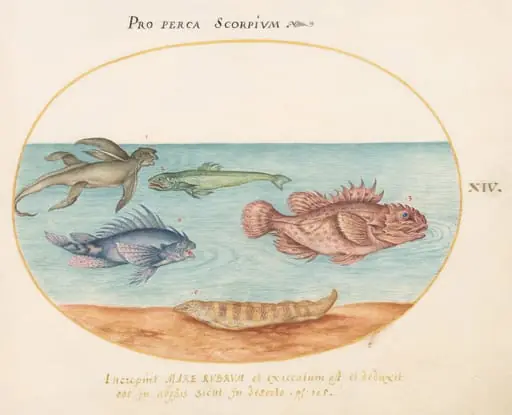 Plate 14: A "Sea Ape," Two Scorpion Fish, and Two Other Fish
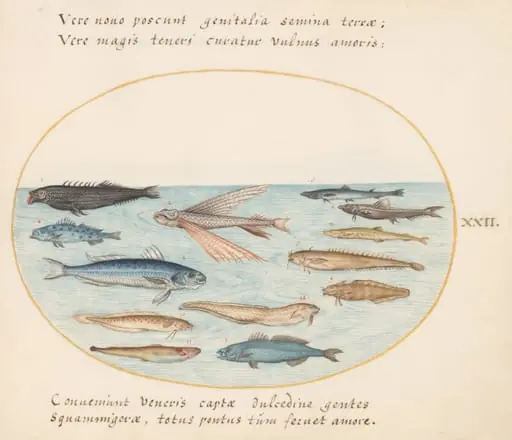 Plate 22: Mullet, Flying Fish, Eels, and Other Fish
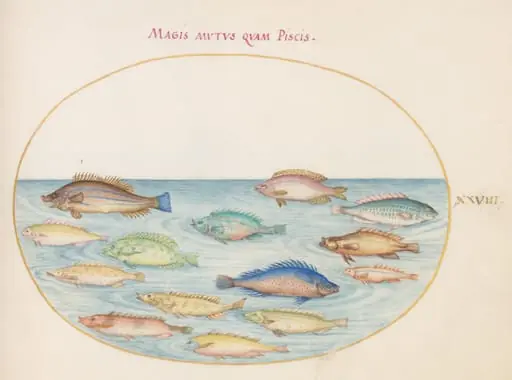 Plate 28: Sea Bream(?) and Other Fish
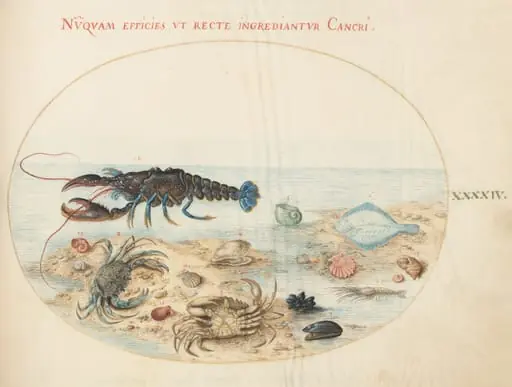 Plate 44: Lobster, Two Crabs, Scallop Shells, and Other Sea Life
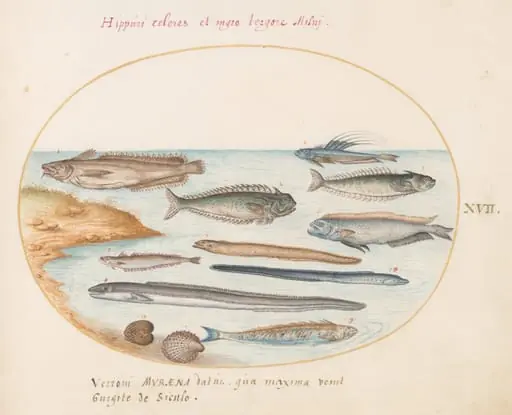 Plate 17: A Cod, Weever Fish, Eels, and Other Fish
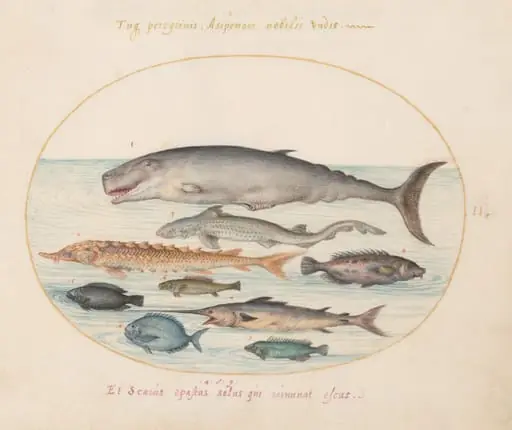 Plate 2: Sperm Whale, Sturgeon, Shark, and Other Fish