Artwork
Plate 49: Mantis Shrimp and the Claw of a European Crayfish
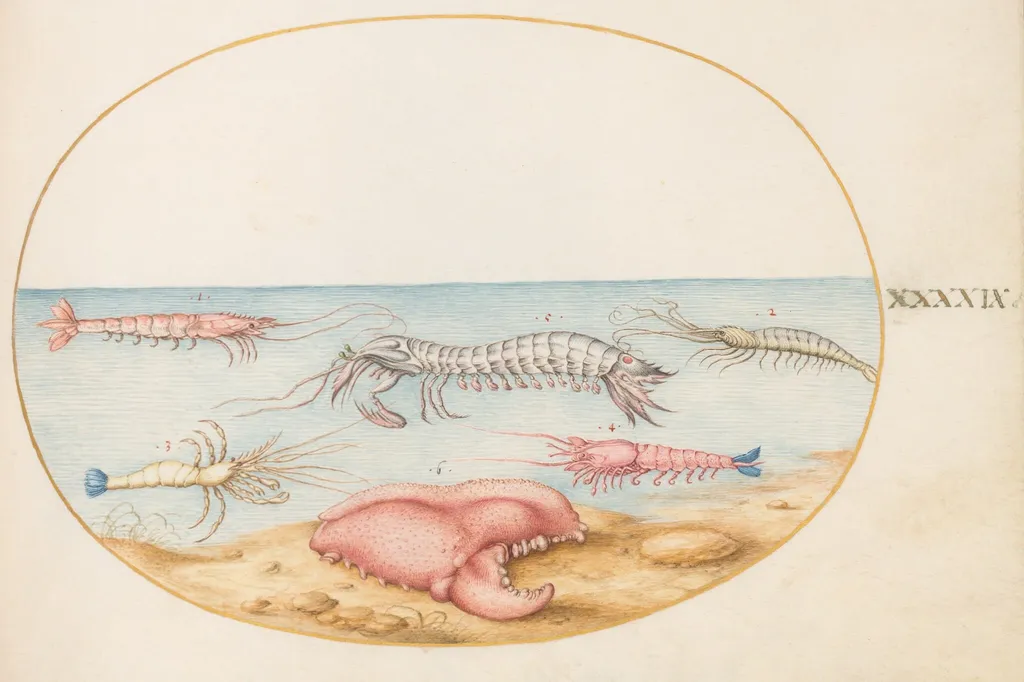
Plate 49: Mantis Shrimp and the Claw of a European Crayfish is a gouache drawing by the Renaissance artist Joris Hoefnagel. It dates from 1594 and is held in the collection of the National Gallery of Art.
About this work
Overview
Created around 1594, Plate 49: Mantis Shrimp and the Claw of a European Crayfish is a watercolor and gold-painted drawing on parchment by Joris Hoefnagel.
Created around 1594, Plate 49: Mantis Shrimp and the Claw of a European Crayfish is a watercolor and gold-painted drawing on parchment by Joris Hoefnagel. It belongs to a series of natural history illustrations that reflect the Renaissance fascination with precise observation of the natural world. Hoefnagel, a Flemish artist trained in manuscript illumination, applied the meticulous techniques of medieval book art to contemporary scientific subjects, bridging artistic tradition with emerging empirical study.
Subject & Meaning
The plate depicts a mantis shrimp alongside the claw of a European crayfish, rendered with anatomical accuracy. These marine organisms were chosen not for symbolic meaning but as objects of study, reflecting the period’s growing interest in biodiversity. Their placement side by side suggests comparative analysis, aligning with the era’s efforts to classify and document life forms. The inclusion of gold highlights elevates the specimens without romanticizing them, maintaining a tone of scholarly attention.
Technique & Style
Hoefnagel employed fine watercolor washes and delicate gold leaf on parchment to achieve both scientific clarity and visual refinement. His brushwork captures texture and form with precision—each scale, spine, and joint rendered in careful detail. The use of gold, traditionally reserved for religious manuscripts, here serves to emphasize the intrinsic value of natural specimens. This fusion of illumination techniques with naturalist subject matter marks a distinctive transition in Northern European visual culture.
History & Provenance
The plate was produced during Hoefnagel’s time in Prague, where he worked under the patronage of Emperor Rudolf II, a known collector of curiosities and scientific artifacts. It likely formed part of a larger, unpublished manuscript documenting flora and fauna. After Hoefnagel’s death, his works were dispersed, with fragments entering private and institutional collections. This plate survives as one of the few remaining examples of his naturalist drawings, valued for their rarity and technical execution.
Context
In late 16th-century Europe, natural history was evolving from allegorical representation to empirical documentation. Hoefnagel’s work emerged alongside the rise of cabinets of curiosities and early scientific journals. His illustrations contributed to a visual language that prioritized direct observation over myth. While not published in his lifetime, his drawings circulated among scholars and influenced later naturalists, helping to shape the transition from medieval manuscript culture to modern biological illustration.
Legacy
Hoefnagel’s detailed approach to natural subjects influenced subsequent generations of illustrators in both scientific and artistic domains. His integration of illumination techniques into natural history drawing helped legitimize such work as a form of knowledge production. Though overshadowed by later printed botanical and zoological texts, his manuscripts remain important for understanding the visual culture of early modern science and the role of art in the development of biological taxonomy.
Artist & collection

Artist
Joris Hoefnagel or Georg Hoefnagel (1542 – 24 July 1601) was a Flemish painter, printmaker, miniaturist, draftsman and merchant.

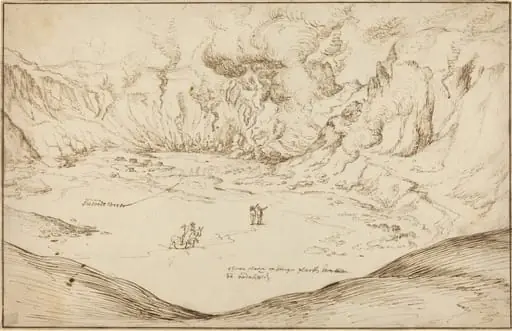 Forum Vulcani: The Hot Springs at Pozzuoli
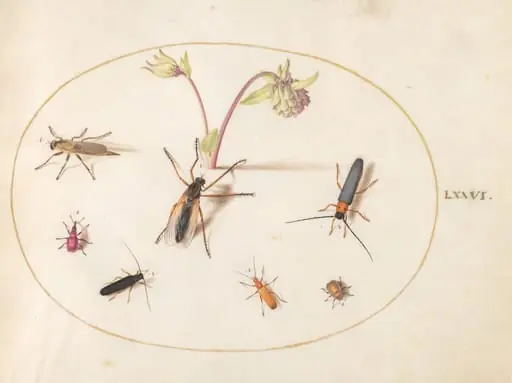 Plate 76: Insects with a Pink and Cream Columbine
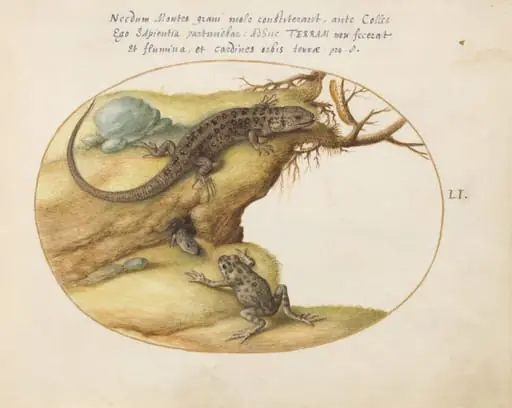 Plate 51: Two Sand Lizards, a Common Parsley Frog(?), and a Caterpillar
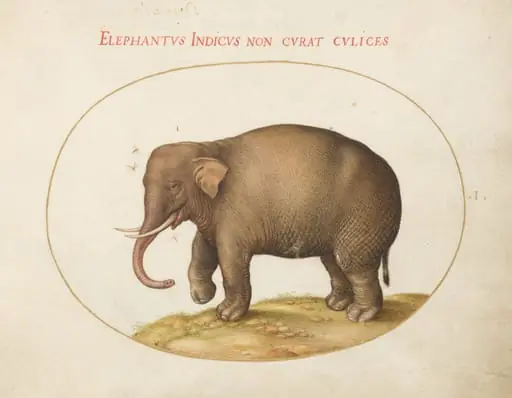 Plate 1: Elephant with Insects
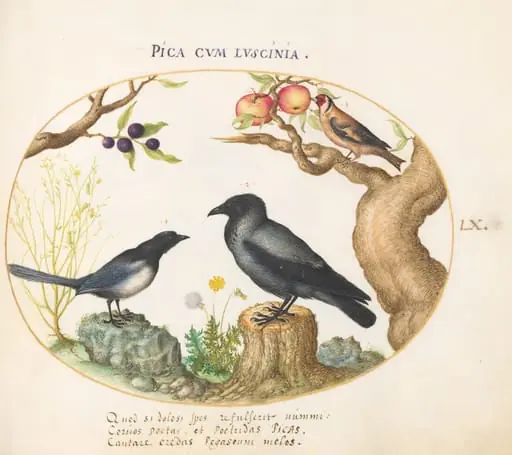 Plate 60: Magpie, Crow, and Goldfinch
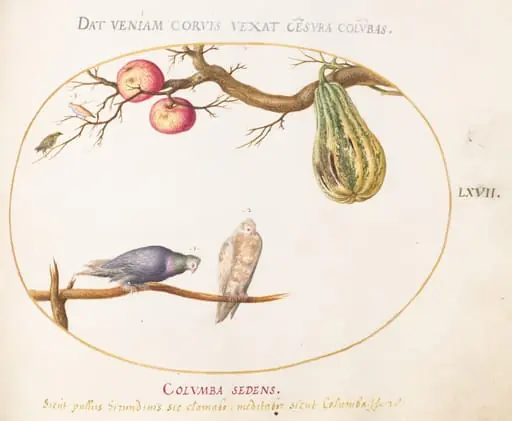 Plate 67: Two Doves beneath a Gourd and Apples
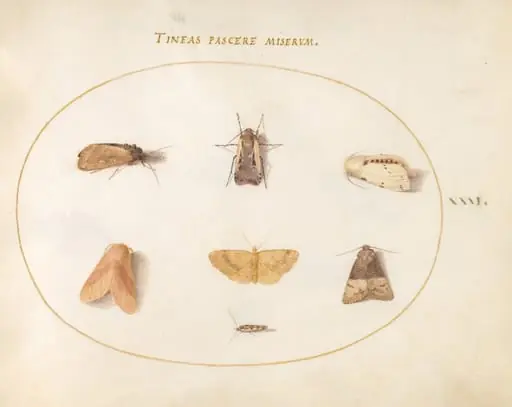 Plate 31: Seven Moths
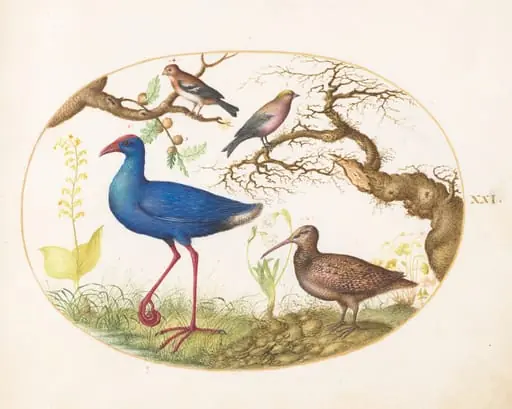 Plate 21: Swamp Hen and Woodcock with a Streaked Rosefinch, a Finch, and Oak Galls
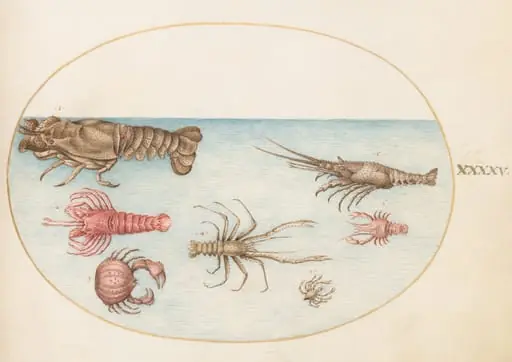 Plate 45: Lobster, Squilla Mantis, and Other Crustaceans
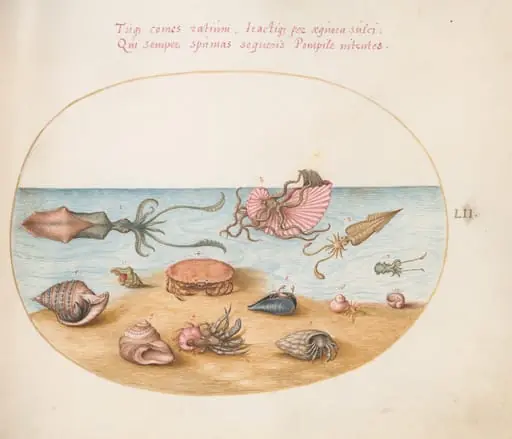 Plate 52: An Argonaut, Squid, Hermit Crabs, Shells, and a Crab
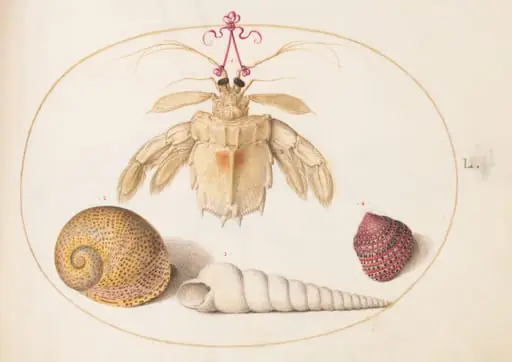 Plate 50: A Partial Mantis Shrimp with Tower Snail Shells
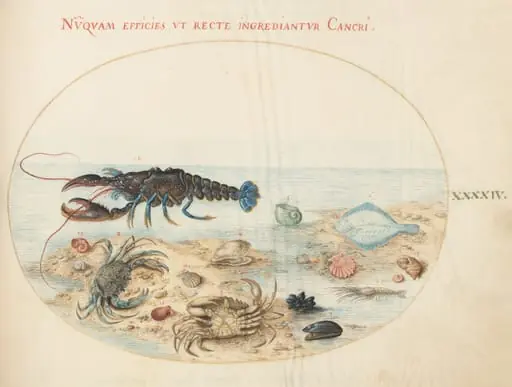 Plate 44: Lobster, Two Crabs, Scallop Shells, and Other Sea Life
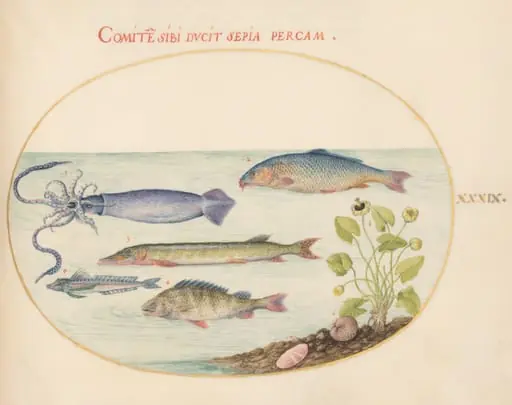 Plate 39: Squid, Gurnard, Pike, and Other Fish
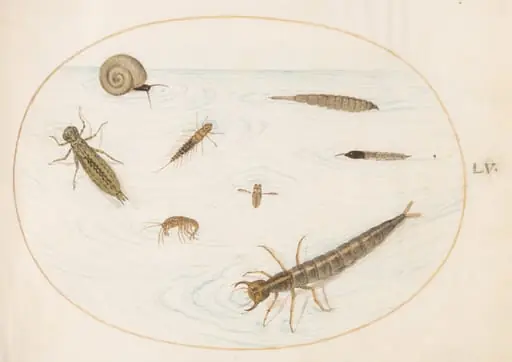 Plate 55: Aquatic Insects and Invertebrates, Including a Snail
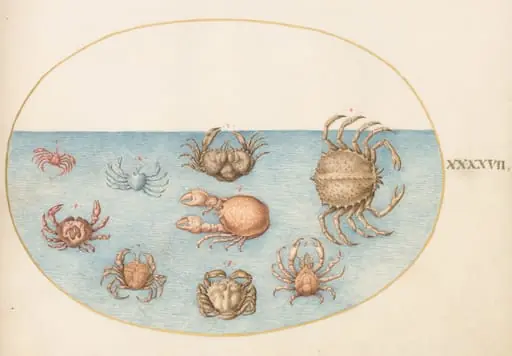 Plate 47: Nine Crabs
 Plate 33: Sole and Other Flatfish with Bandfish(?)
 Plate 53: Sea Cucumbers, Coral, Octopus, Starfish, Squid, and Other Sea Creatures