Artwork
Plate 46: Three Grasshoppers
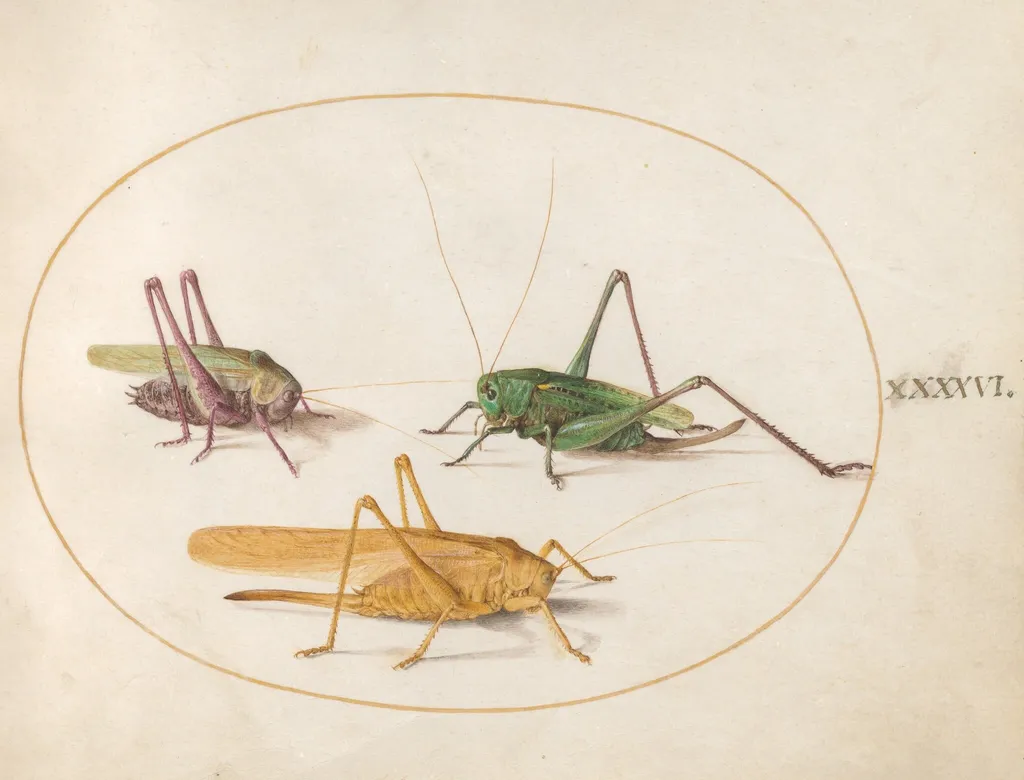
Plate 46: Three Grasshoppers is a gouache drawing by the Renaissance artist Joris Hoefnagel. It dates from 1594 and is held in the collection of the National Gallery of Art.
About this work
Overview
Created around 1594 by Joris Hoefnagel, this watercolor and gold-painted work on parchment depicts three grasshoppers with precise detail.
Created around 1594 by Joris Hoefnagel, this watercolor and gold-painted work on parchment depicts three grasshoppers with precise detail. Part of a broader series of natural studies, it exemplifies the transition from manuscript illumination to scientific observation. The use of gold highlights subtle textures, while the plain background focuses attention entirely on the insects, reflecting a shift toward empirical representation in late Renaissance art.
Subject & Meaning
The three grasshoppers, rendered with anatomical accuracy, are positioned in varying orientations—one facing right, two left—suggesting observational study rather than decorative arrangement. Their detailed limbs and wings indicate an intent to document biological form, not merely to embellish. This work functioned as a visual record, aiding naturalists in identifying and classifying species during a period when scientific illustration was emerging as a distinct discipline.
Technique & Style
Hoefnagel employed fine brushwork in watercolor to capture the delicate structure of each insect, complemented by sparing use of gold paint to suggest light on exoskeletons and wings. The parchment surface, traditionally used in illuminated manuscripts, was adapted here for scientific precision. His style merges the ornamental traditions of medieval illumination with the observational rigor of natural history, creating a hybrid aesthetic grounded in close looking.
History & Provenance
This plate originated in a larger collection of natural studies commissioned during Hoefnagel’s time in Prague, where he worked under the patronage of Emperor Rudolf II. The series was intended as a cabinet of visual curiosities, blending art and science. Though the full manuscript has since been dispersed, individual plates like this one survive in major collections, valued for their role in early entomological documentation.
Context
In late 16th-century Europe, the study of nature was increasingly systematized, and visual accuracy became essential for scientific communication. Hoefnagel’s work emerged alongside the rise of printed natural histories, offering detailed imagery that texts alone could not convey. His illustrations were used by scholars to identify species, bridging the gap between artistic tradition and the emerging methods of biological taxonomy.
Legacy
Hoefnagel’s insect studies influenced later naturalists and illustrators, setting a standard for precision in depicting small organisms. His integration of artistic technique with scientific purpose helped shape the visual language of biological illustration. Though his work predates modern entomology, it provided foundational imagery that informed early classifications and remains a reference for historians of science and art.
Artist & collection

Artist
Joris Hoefnagel or Georg Hoefnagel (1542 – 24 July 1601) was a Flemish painter, printmaker, miniaturist, draftsman and merchant.

 Forum Vulcani: The Hot Springs at Pozzuoli
 Plate 76: Insects with a Pink and Cream Columbine
 Plate 51: Two Sand Lizards, a Common Parsley Frog(?), and a Caterpillar
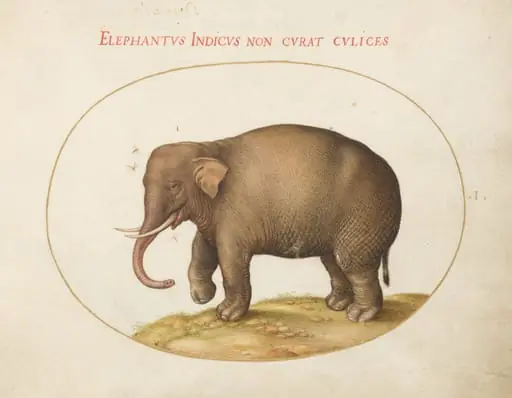 Plate 1: Elephant with Insects
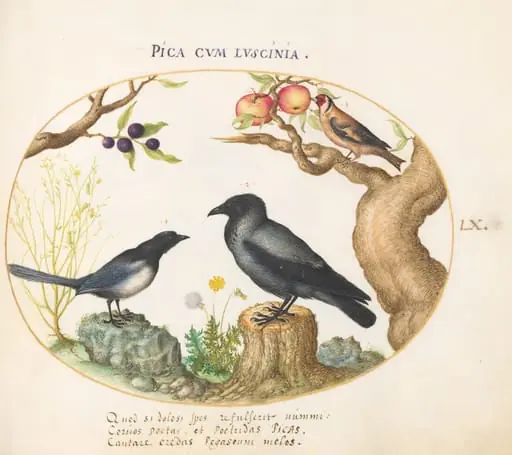 Plate 60: Magpie, Crow, and Goldfinch
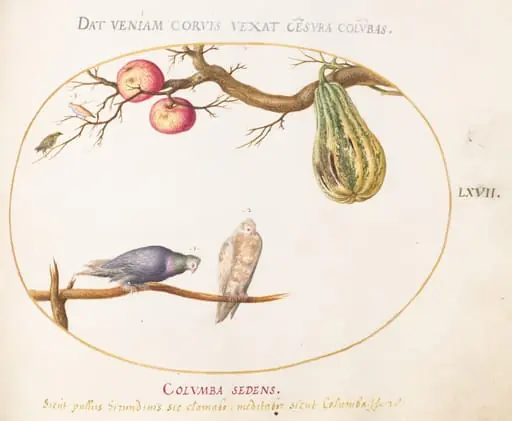 Plate 67: Two Doves beneath a Gourd and Apples
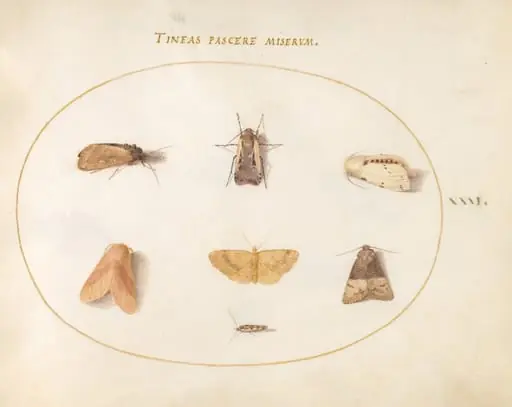 Plate 31: Seven Moths
 Plate 21: Swamp Hen and Woodcock with a Streaked Rosefinch, a Finch, and Oak Galls
 Plate 52: Four Grasshoppers
 Plate 49: A Grasshopper, a Caterpillar, a Butterfly, a Moth, and Other Insects
 Plate 45: Two Long-Headed Grasshoppers(?)
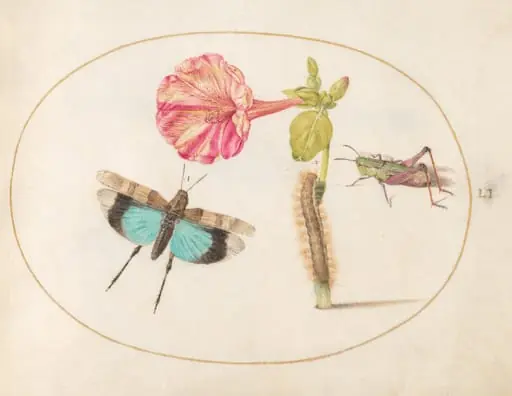 Plate 51: Grasshoppers and a Caterpillar with a Four O'Clock Flower
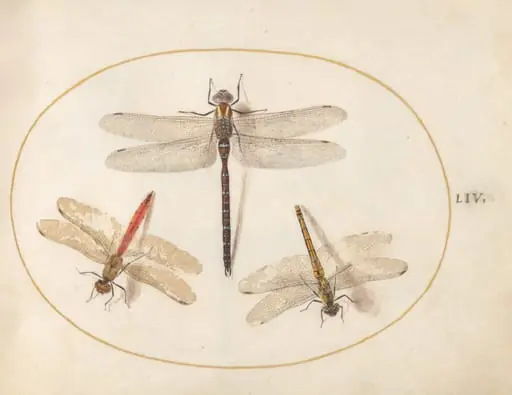 Plate 54: Hairy Dragonfly and Two Darters
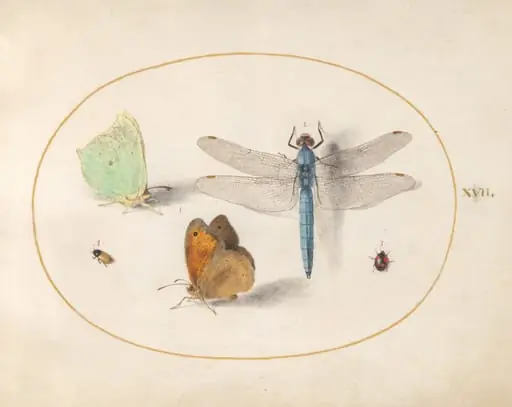 Plate 17: Brimstone and Meadow Brown(?) Butterflies, a Blue Chaser, and Two Small Insects
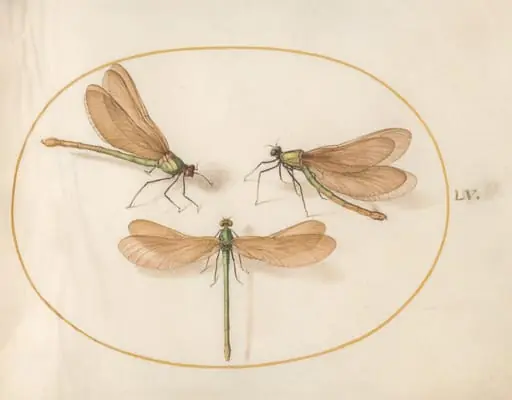 Plate 55: Three Green Damselflies with Brown Wings (Beautiful Desmoiselles?)
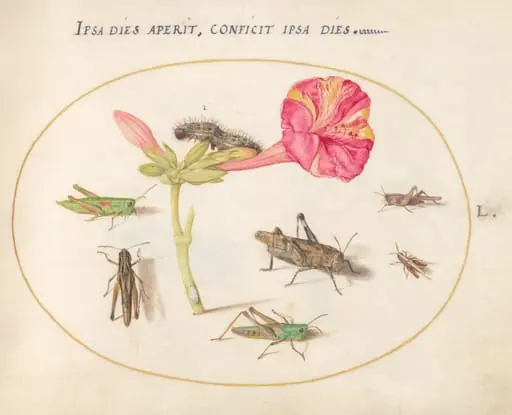 Plate 50: Grasshoppers, a Caterpillar, and a Scale Insect with a Four O'Clock Flower
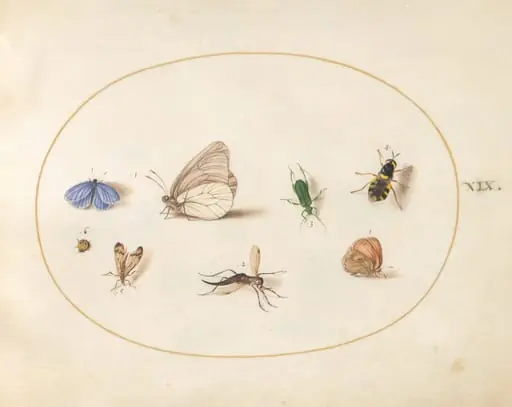 Plate 19: Two Butterflies with Five Other Insects
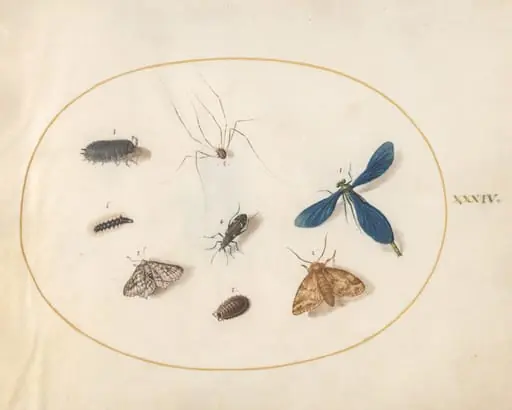 Plate 34: Two Moths with a Spider, a Caterpillar, a Damselfly, and Other Insects
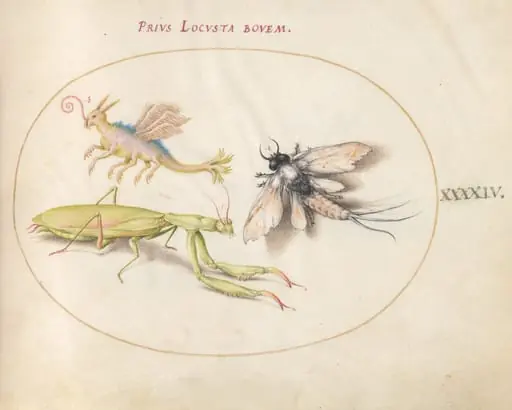 Plate 44: Mantis, Mayfly, and a Fictional Locust
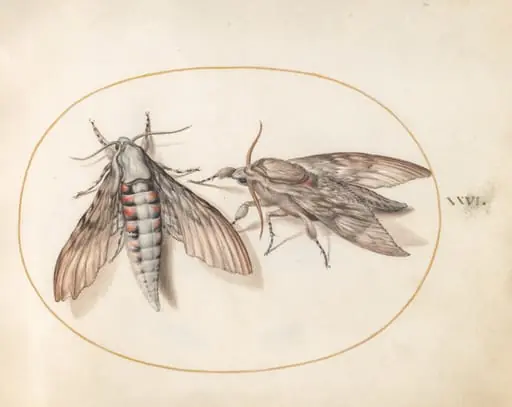 Plate 26: Two Hawk Moths