Artwork
Plate 53: Southern Hawker Dragonfly
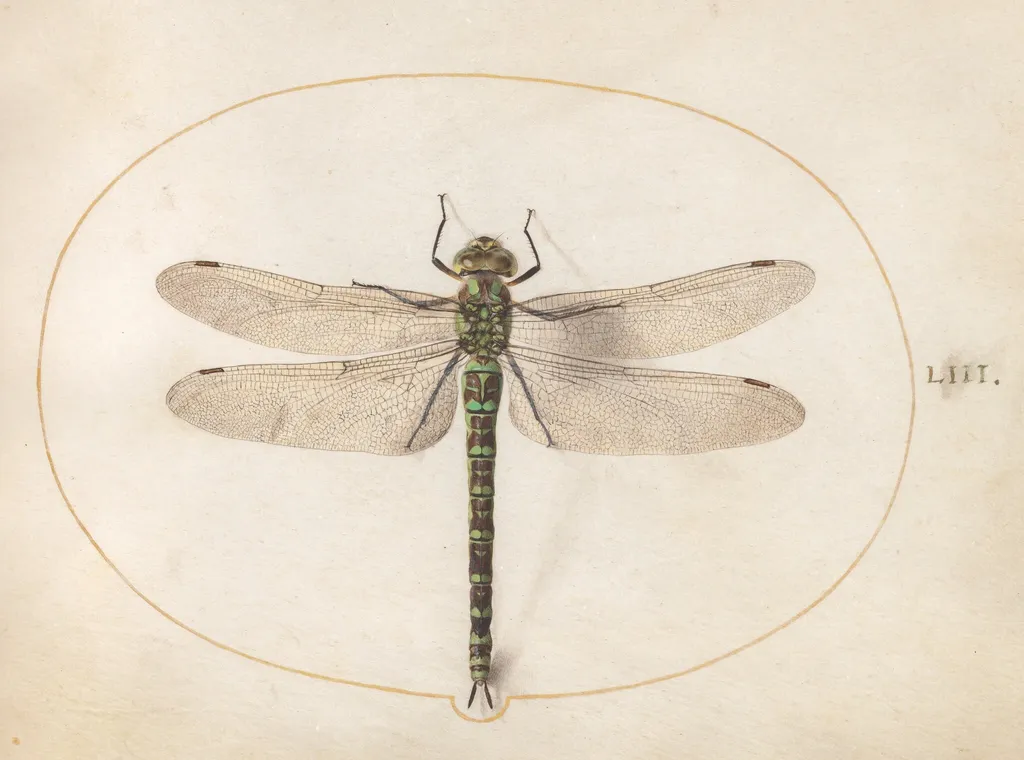
Plate 53: Southern Hawker Dragonfly is a gouache drawing by the Renaissance artist Joris Hoefnagel. It dates from 1594 and is held in the collection of the National Gallery of Art.
About this work
Overview
Created around 1594 by Joris Hoefnagel, this watercolor and gold paint drawing on parchment depicts a Southern Hawker dragonfly with meticulous precision.
Created around 1594 by Joris Hoefnagel, this watercolor and gold paint drawing on parchment depicts a Southern Hawker dragonfly with meticulous precision. As one of the final artists to practice manuscript illumination, Hoefnagel bridged medieval traditions with emerging naturalist observation. The work belongs to a series of natural studies that reflect his transition from commercial training to scientific illustration, blending artistry with empirical detail.
Subject & Meaning
The Southern Hawker dragonfly is rendered with anatomical accuracy, emphasizing its wings, body segments, and compound eyes. Rather than symbolic or decorative intent, the focus lies in documentation—capturing the insect’s form as a specimen of natural order. Gold paint highlights subtle structural features, not to glorify, but to enhance visibility and texture, aligning with Renaissance interests in observable reality.
Technique & Style
Hoefnagel applied watercolor with fine brushes on parchment, layering translucent washes to model the dragonfly’s delicate form. Gold paint was used sparingly to accentuate veins in the wings and body contours, a technique inherited from illuminated manuscripts but repurposed for natural history. His style merges the precision of miniaturist tradition with the observational rigor of emerging scientific illustration.
History & Provenance
This plate was part of a larger collection of natural studies commissioned by Holy Roman Emperor Rudolf II, whose court in Prague fostered a hub for scientific art. Hoefnagel’s works from this period were circulated among scholars and collectors, preserving his contributions to early entomological documentation. The parchment medium and pigments suggest high-quality materials typical of imperial patronage.
Context
In late 16th-century Europe, natural history illustration flourished alongside advances in optics and taxonomy. Hoefnagel’s dragonfly study reflects a broader shift from allegorical representation to direct observation. His work intersected with the rise of botanical and zoological atlases, contributing to a visual language that prioritized accuracy over ornamentation, even as traditional techniques persisted.
Legacy
Hoefnagel’s detailed insect studies influenced later naturalists and artists in northern Europe, helping to establish entomological illustration as a distinct field. Though overshadowed by later scientific publications, his integration of manuscript techniques into natural history laid groundwork for the visual standards of 17th-century zoological texts. His work remains a bridge between medieval artistry and early modern science.
Artist & collection

Artist
Joris Hoefnagel or Georg Hoefnagel (1542 – 24 July 1601) was a Flemish painter, printmaker, miniaturist, draftsman and merchant.

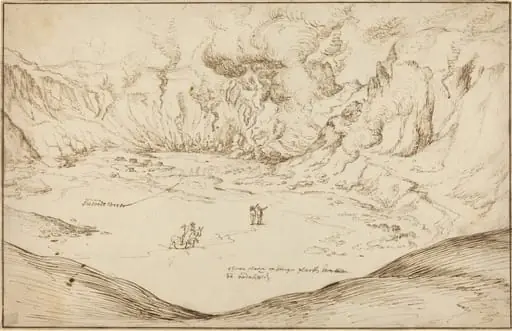 Forum Vulcani: The Hot Springs at Pozzuoli
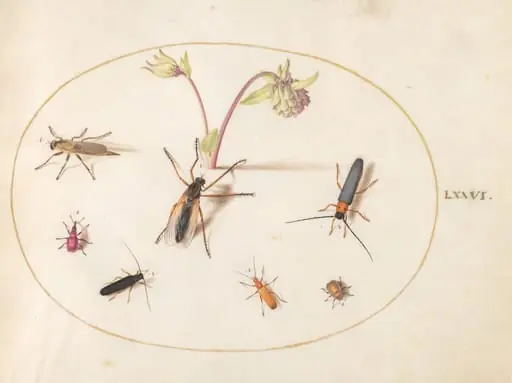 Plate 76: Insects with a Pink and Cream Columbine
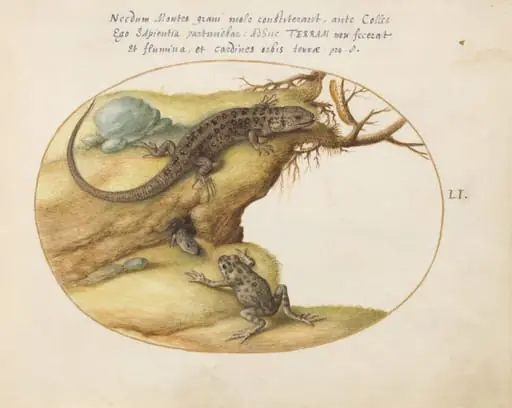 Plate 51: Two Sand Lizards, a Common Parsley Frog(?), and a Caterpillar
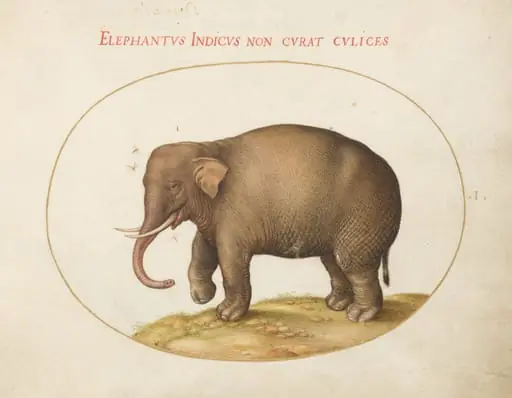 Plate 1: Elephant with Insects
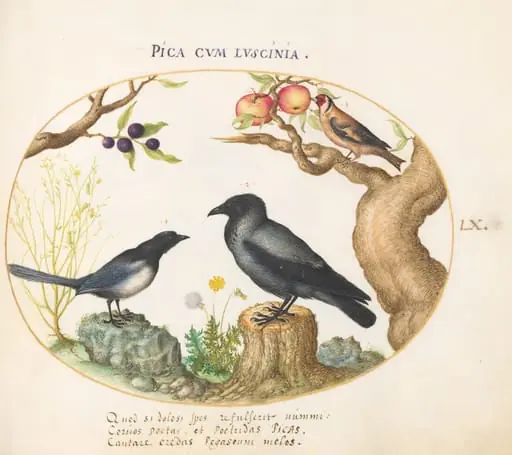 Plate 60: Magpie, Crow, and Goldfinch
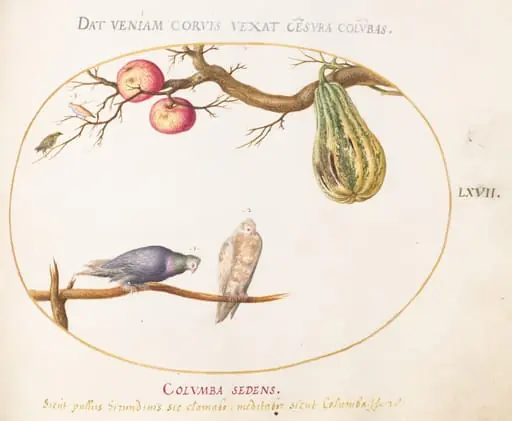 Plate 67: Two Doves beneath a Gourd and Apples
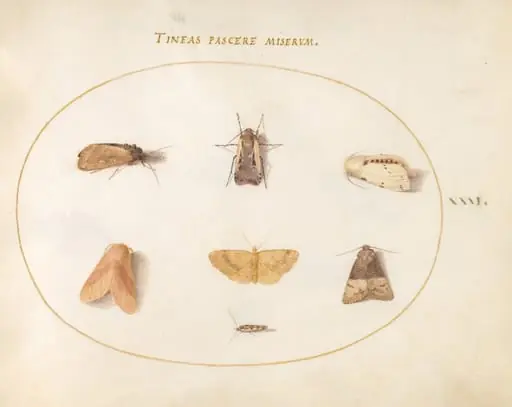 Plate 31: Seven Moths
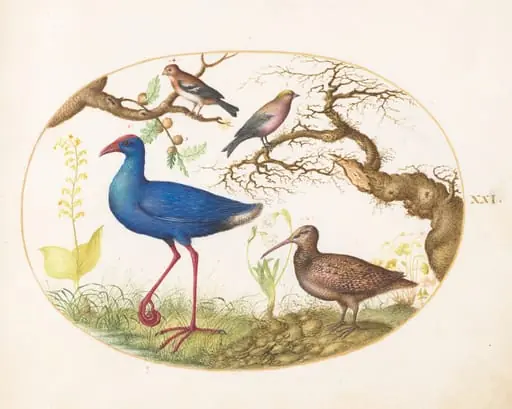 Plate 21: Swamp Hen and Woodcock with a Streaked Rosefinch, a Finch, and Oak Galls
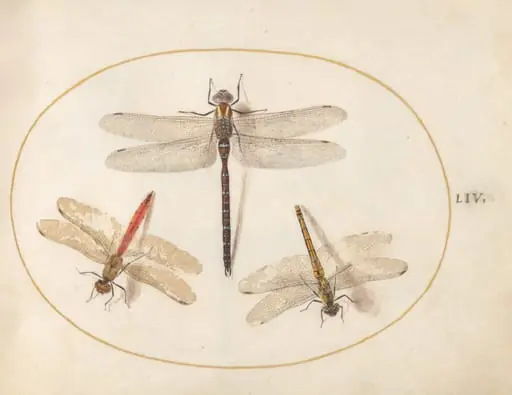 Plate 54: Hairy Dragonfly and Two Darters
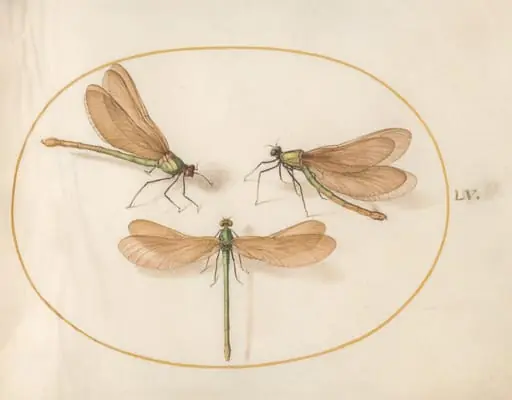 Plate 55: Three Green Damselflies with Brown Wings (Beautiful Desmoiselles?)
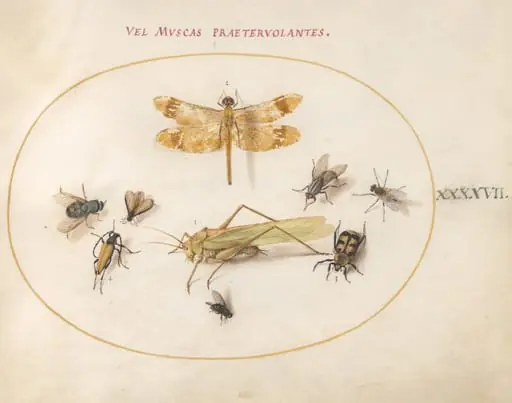 Plate 47: A Dragonfly (Banded Darter?), Grasshopper, Houseflies, a Carrion Beetle, a Flower Longhorn Beetle, and Other Insects
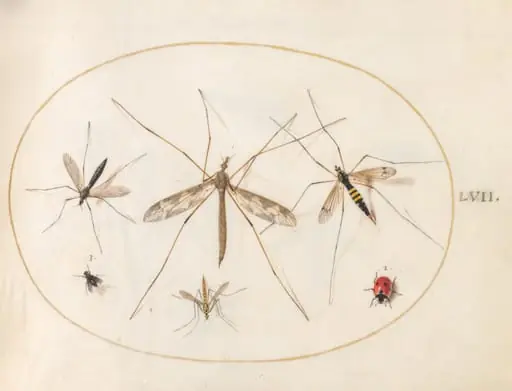 Plate 57: A Ladybug, a Fly, and Four Other Insects
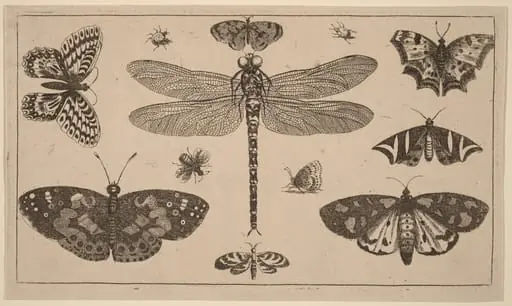 Dragonfly, Ladybirds, and Butterflies
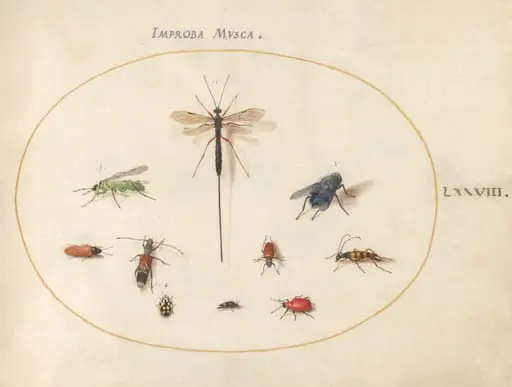 Plate 78: Ten Insects, Including a Blue Fly
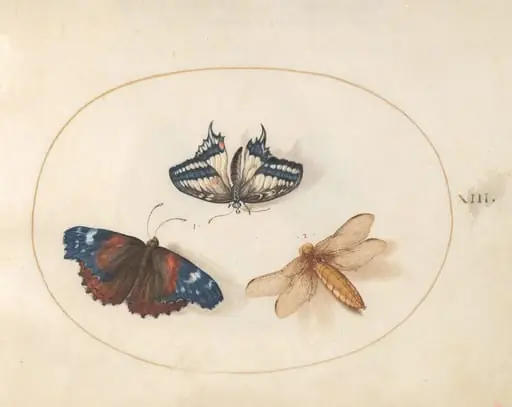 Plate 13: Yellow Swallowtail and Red Admiral Butterflies with a Dragonfly (Broad-Bodied Chaser?)
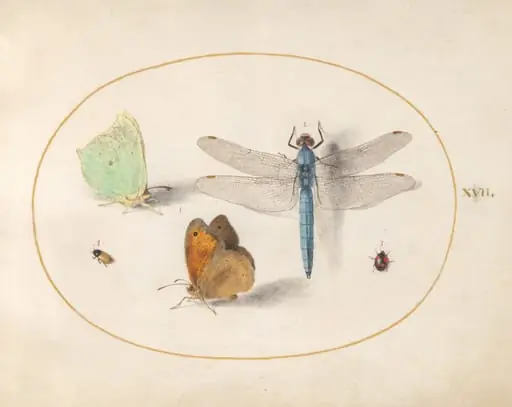 Plate 17: Brimstone and Meadow Brown(?) Butterflies, a Blue Chaser, and Two Small Insects
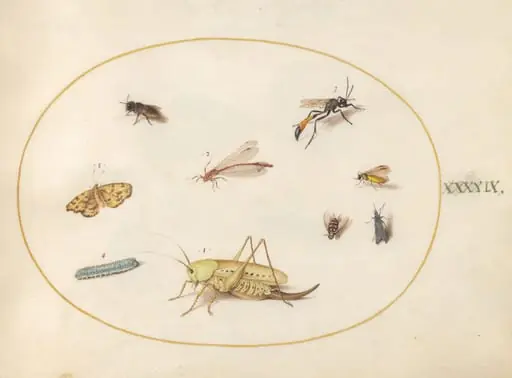 Plate 49: A Grasshopper, a Caterpillar, a Butterfly, a Moth, and Other Insects
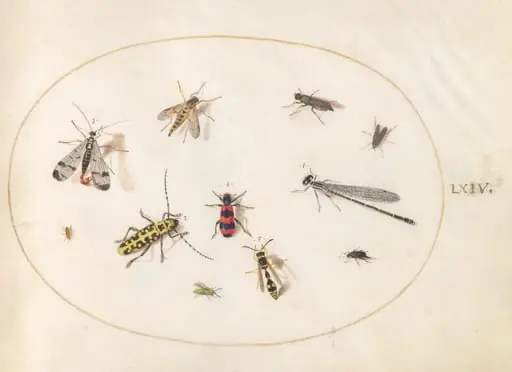 Plate 64: Eleven Insects, Including a Dragonfly and Longhorn Beetle
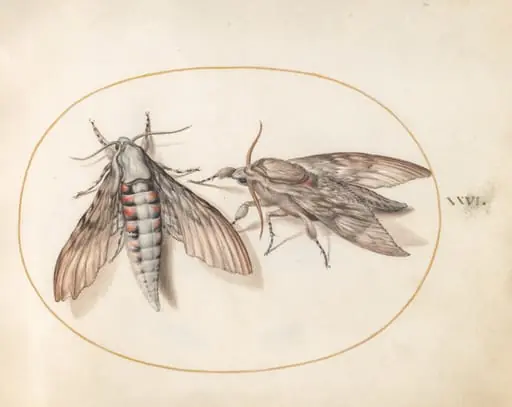 Plate 26: Two Hawk Moths
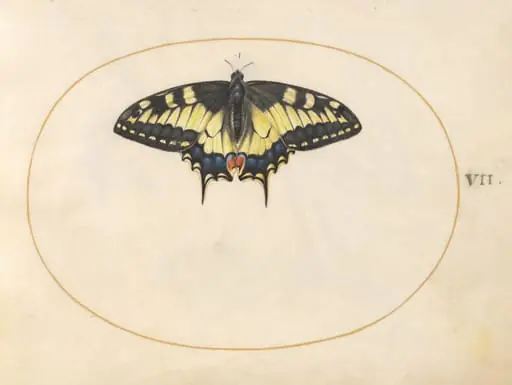 Plate 7: Swallowtail Butterfly