Artwork
Plate 57: A Ladybug, a Fly, and Four Other Insects
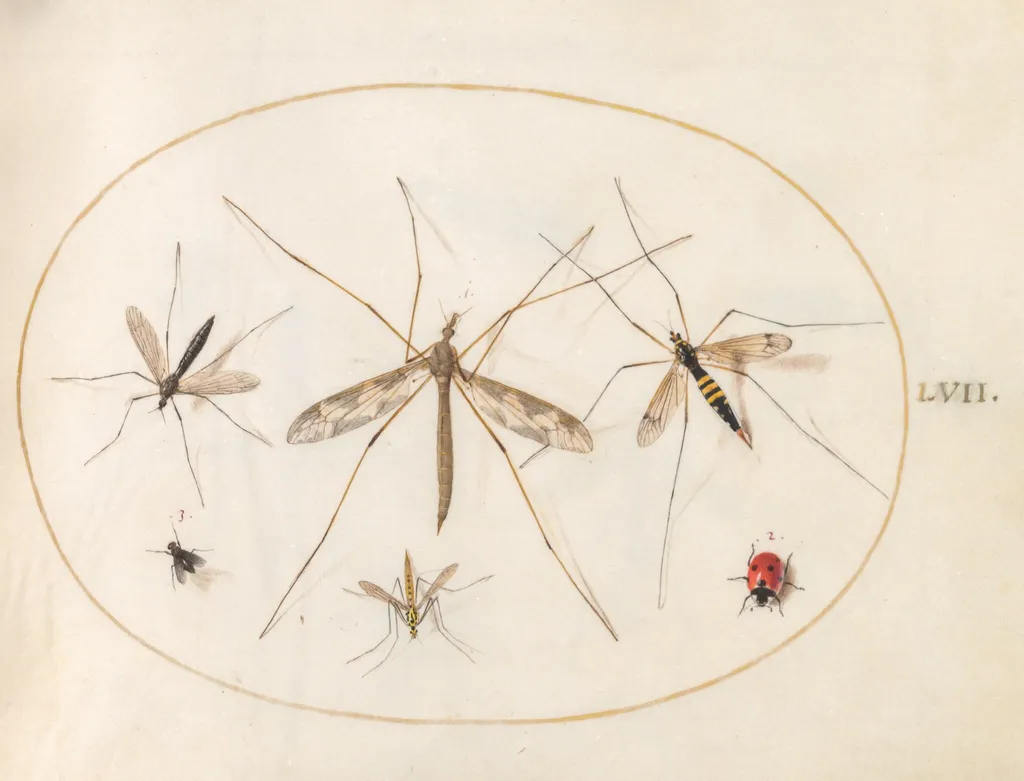
Plate 57: A Ladybug, a Fly, and Four Other Insects is a gouache drawing by the Renaissance artist Joris Hoefnagel. It dates from 1594 and is held in the collection of the National Gallery of Art. Created around 1594, this small watercolor on parchment depicts a ladybug, a fly and four additional insects.
About this work
This tiny watercolor shows a ladybug, a fly, and four other insects on pale parchment.
This tiny watercolor shows a ladybug, a fly, and four other insects on pale parchment. Gold paint outlines their delicate wings and legs. The artist shaded each bug with fine, careful strokes.
Joris Hoefnagel painted these insects around 1575. He used watercolor and added translucent glazes to make colors glow. It’s one of the earliest European insect studies done in color.
Find more like it at the National Gallery of Art, Washington.
Overview
Created around 1594, this small watercolor on parchment depicts a ladybug, a fly and four additional insects. Joris Hoefnagel, a Flemish painter and draftsman, rendered each creature with precise brushwork and highlighted the delicate wings and legs with thin gold lines, producing a luminous, miniature study of entomological subjects.
Subject & Meaning
The image presents a variety of insects arranged on a pale background, inviting close observation of their forms and colors. By treating the insects as worthy subjects of artistic attention, Hoefnagel reflects the growing interest in natural observation that characterized late‑sixteenth‑century scientific inquiry.
Technique & Style
Hoefnagel employed watercolor washes combined with translucent glazes to achieve subtle color depth, while fine gold paint outlines accentuate the insects’ exoskeletons and wing membranes. The meticulous rendering and decorative touches echo the elaborate illumination tradition even as the work moves toward a more observational, natural‑istic approach.
History & Provenance
The drawing originates from Hoefnagel’s early period, when he was active as both an artist and a merchant. It forms part of a larger corpus of his illustrated natural histories, which helped bridge manuscript illumination and the emerging genre of scientific illustration in Europe. The piece is now held in the collection of the National Gallery of Art, Washington.
Context
Produced during a time when European scholars were cataloguing flora and fauna, the work aligns with the broader movement toward empirical study of nature. Hoefnagel’s Flemish background placed him within a network of artists who combined decorative elegance with emerging scientific precision.
Artist & collection

Artist
Joris Hoefnagel or Georg Hoefnagel (1542 – 24 July 1601) was a Flemish painter, printmaker, miniaturist, draftsman and merchant.

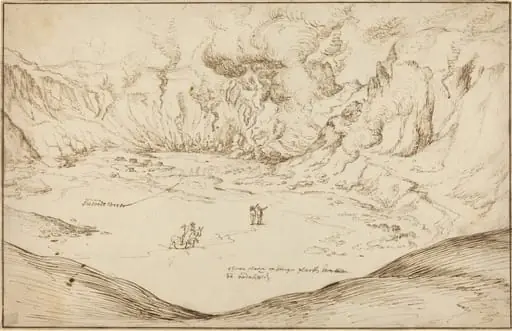 Forum Vulcani: The Hot Springs at Pozzuoli
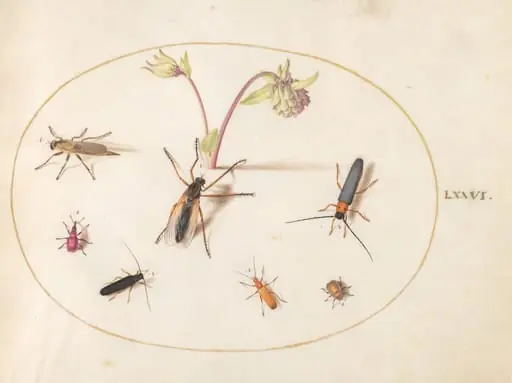 Plate 76: Insects with a Pink and Cream Columbine
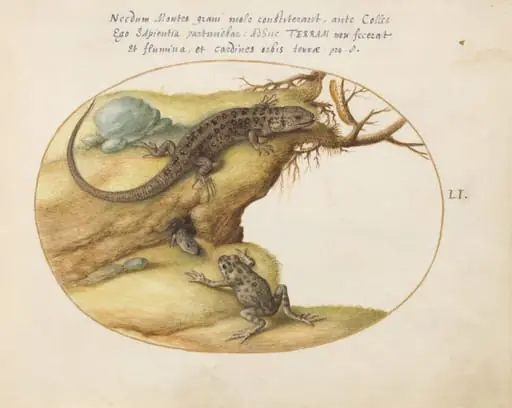 Plate 51: Two Sand Lizards, a Common Parsley Frog(?), and a Caterpillar
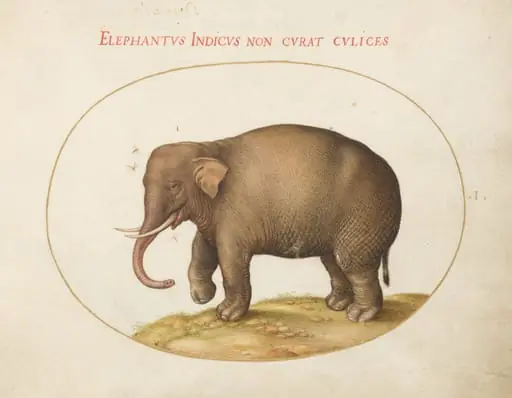 Plate 1: Elephant with Insects
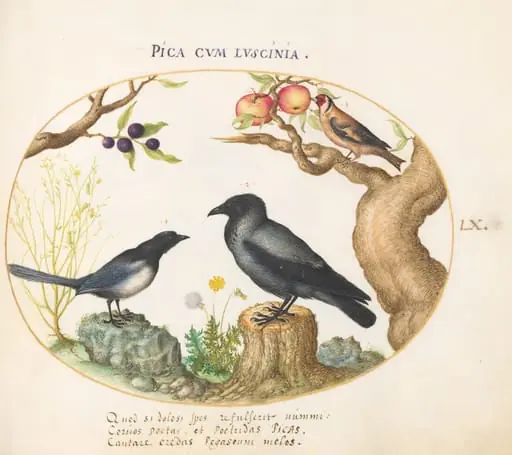 Plate 60: Magpie, Crow, and Goldfinch
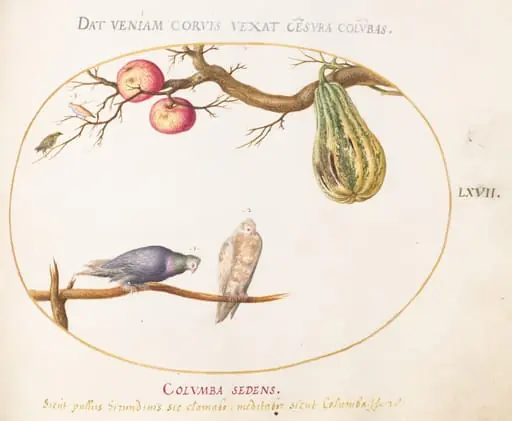 Plate 67: Two Doves beneath a Gourd and Apples
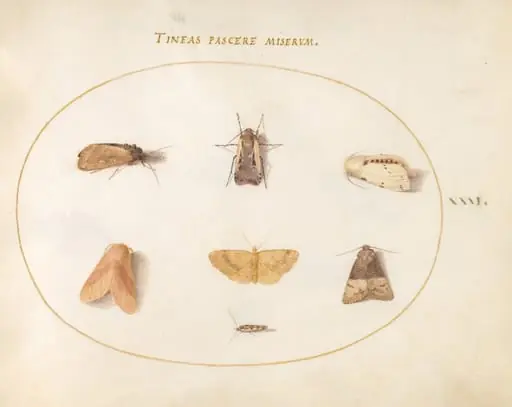 Plate 31: Seven Moths
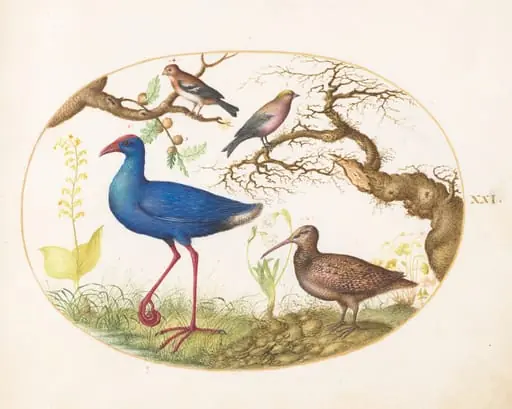 Plate 21: Swamp Hen and Woodcock with a Streaked Rosefinch, a Finch, and Oak Galls
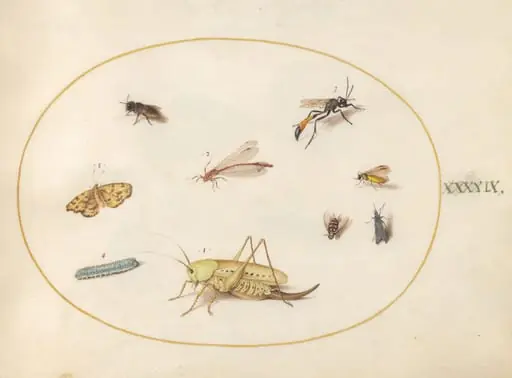 Plate 49: A Grasshopper, a Caterpillar, a Butterfly, a Moth, and Other Insects
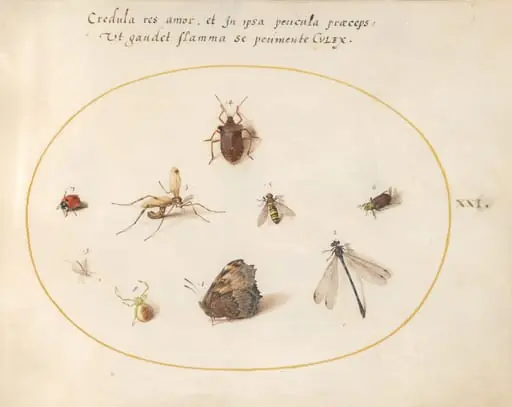 Plate 21: A Butterfly with a Dragonfly, a Ladybug, and Five other Insects
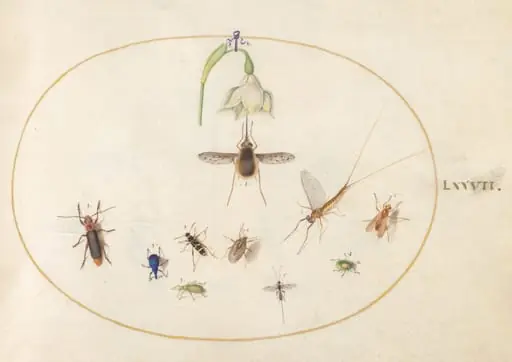 Plate 77: Dotted Bee Fly with a White Flower, a Mayfly, a Blue Weevil, and Other Insects
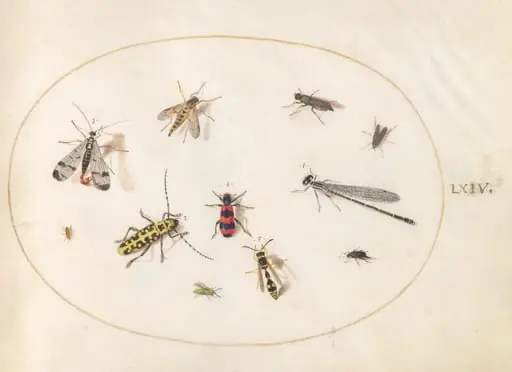 Plate 64: Eleven Insects, Including a Dragonfly and Longhorn Beetle
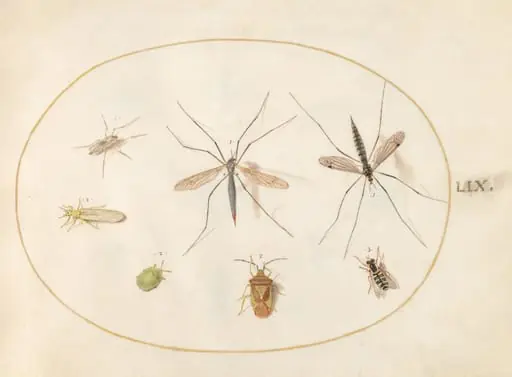 Plate 59: Seven Insects, Including a Hawthorn Shield Bug, Crane Flies, and a Hoverfly
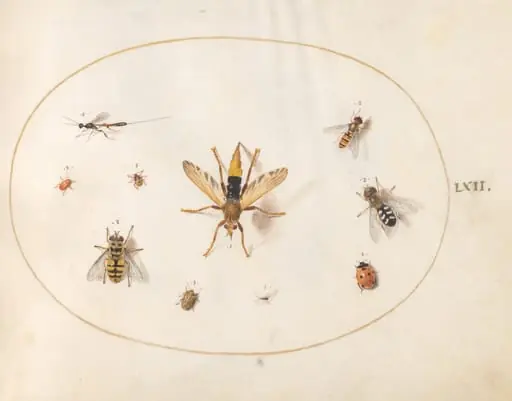 Plate 62: Ten Insects
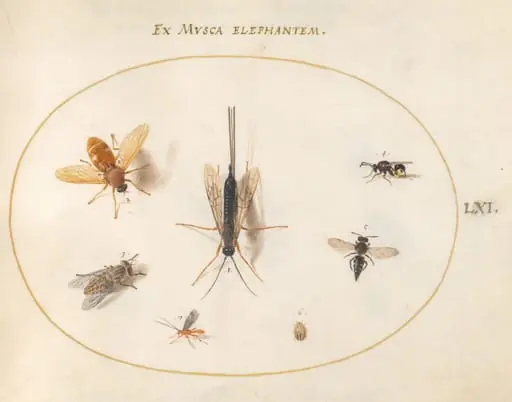 Plate 61: Seven Insects, Including Flies
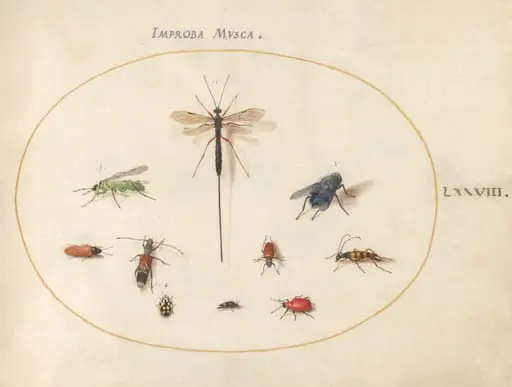 Plate 78: Ten Insects, Including a Blue Fly
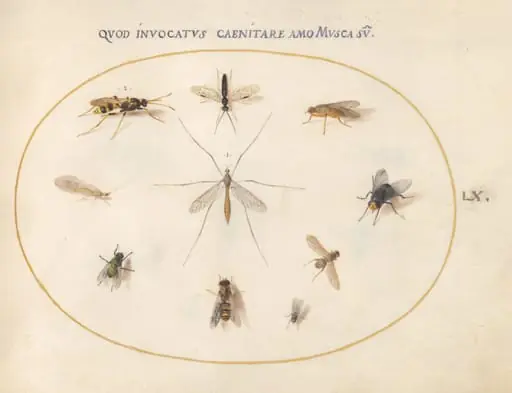 Plate 60: Flies and Other Insects
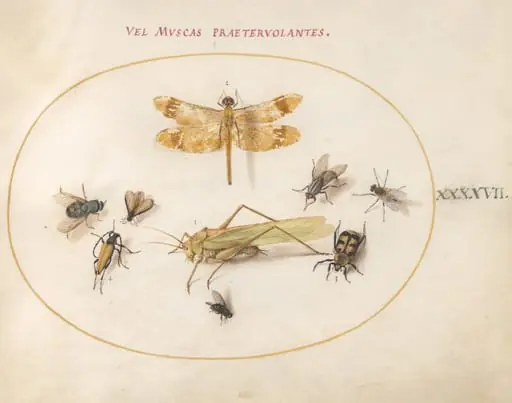 Plate 47: A Dragonfly (Banded Darter?), Grasshopper, Houseflies, a Carrion Beetle, a Flower Longhorn Beetle, and Other Insects