Artwork
Southwark Fair
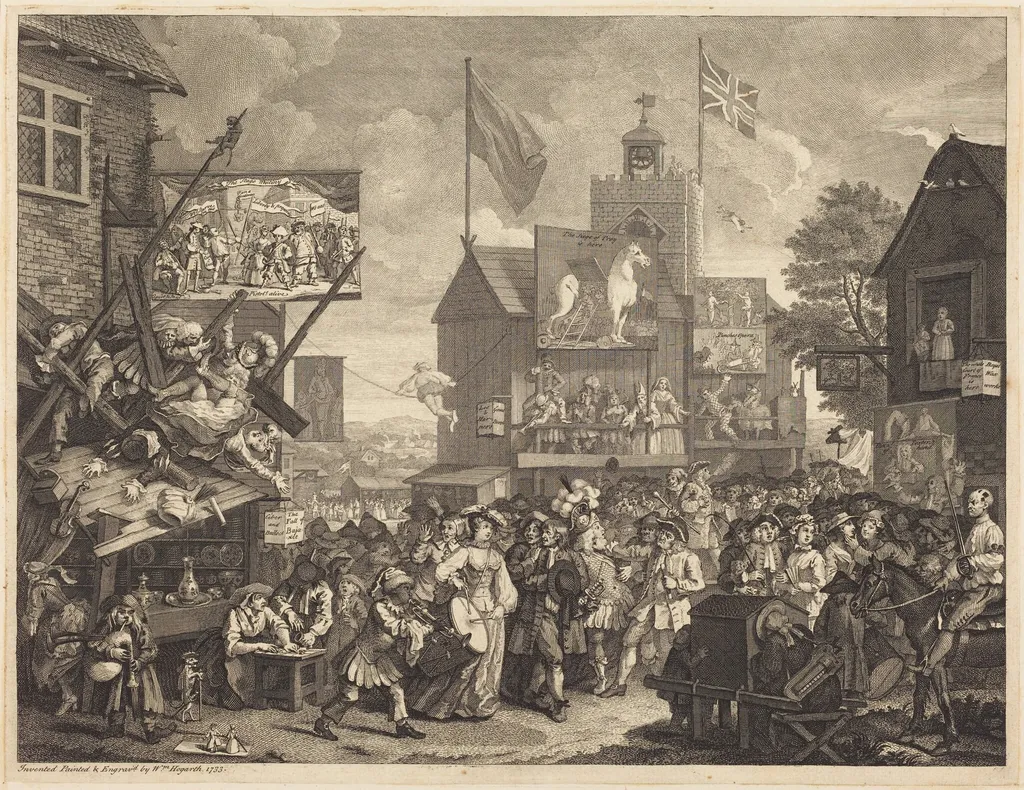
Southwark Fair is an ink print by the Baroque artist William Hogarth. It dates from 1734 and is held in the collection of the National Gallery of Art.
About this work
Overview
William Hogarth’s 1734 print, titled Southwark Fair, combines etching and engraving techniques to portray a densely populated street fair in the Southwark district of London. The composition is filled with figures and activity, presenting a vivid snapshot of a bustling public event in the early eighteenth century.
Subject & Meaning
The image records the disorderly atmosphere of the annual fair, where musicians, vendors, spectators, and performers intermingle in a cramped urban setting. Small vignettes—such as a juggler, a food seller, and a horse perched on a tower—populate the scene, suggesting Hogarth’s interest in the everyday follies and customs of city life.
Technique & Style
Hogarth employed a combination of etching and engraving, allowing him to render fine lines alongside deeper, more expressive strokes. This hybrid approach creates a richly detailed surface where foreground figures and background miniatures coexist, emphasizing the chaotic energy of the fair.
History & Provenance
Created during a prolific period of Hogarth’s career, Southwark Fair follows his series of narrative works that blend social critique with vivid storytelling. The print circulated widely in the 1730s, contributing to Hogarth’s reputation as a leading satirist of his time.
Context
The fair depicted was a popular annual event in Southwark, a district then known for its lively entertainments and mixed social classes. Hogarth’s depiction reflects contemporary concerns about public disorder and the mingling of different strata within the city’s public spaces.
Artist & collection
Artist
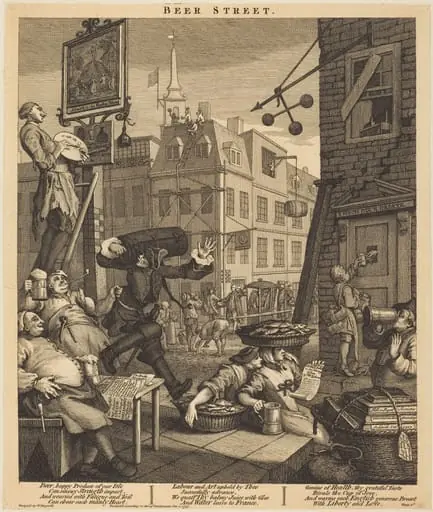
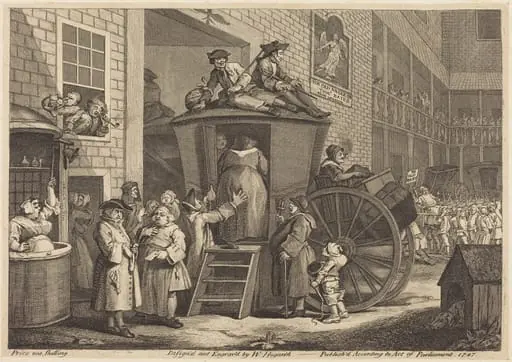
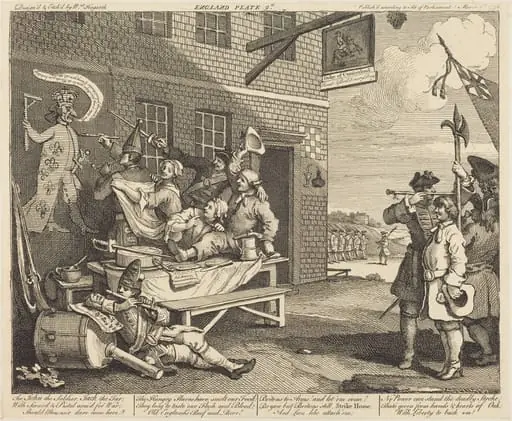
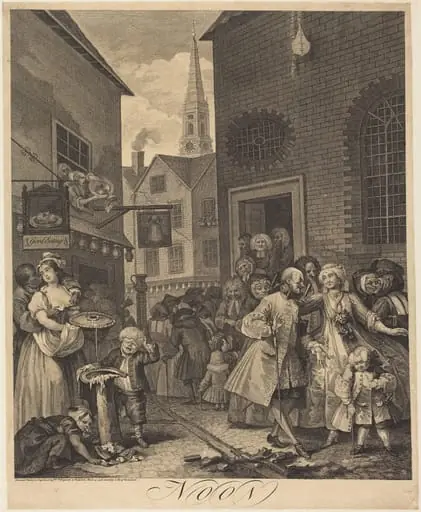
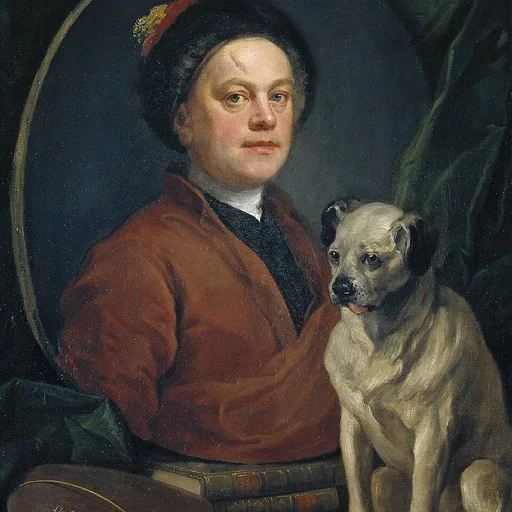
William Hogarth (; 10 November 1697 – 26 October 1764) was an English painter, engraver, satirist, cartoonist and writer.