Artwork
Village Fair
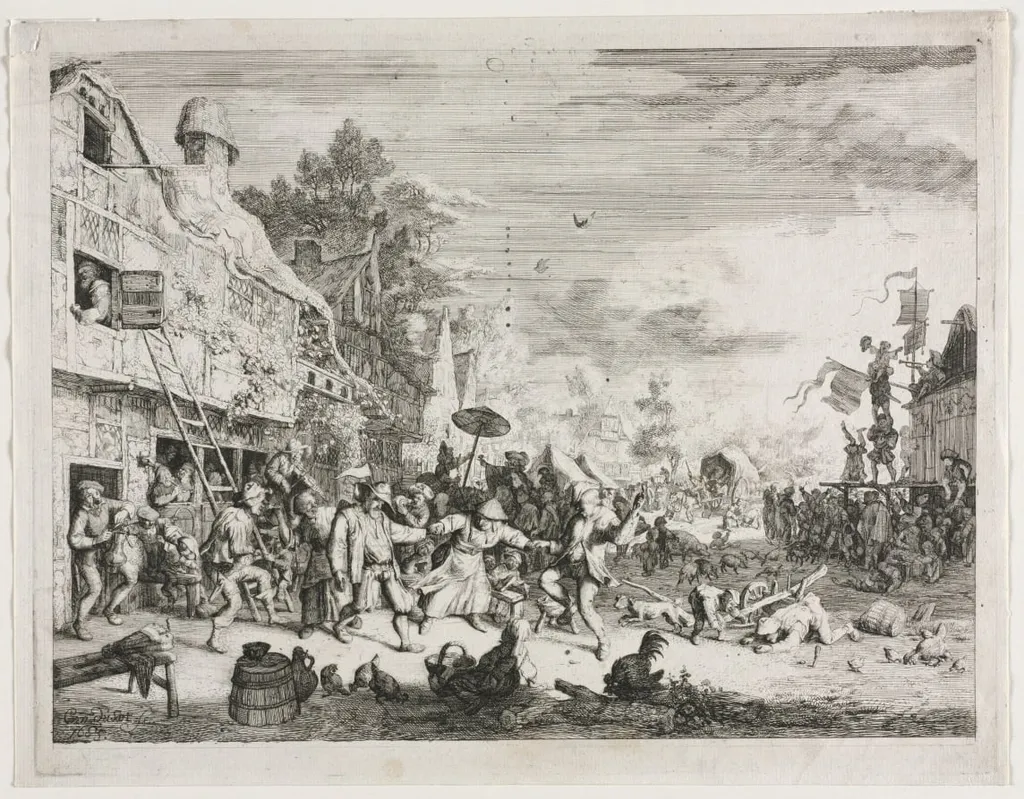
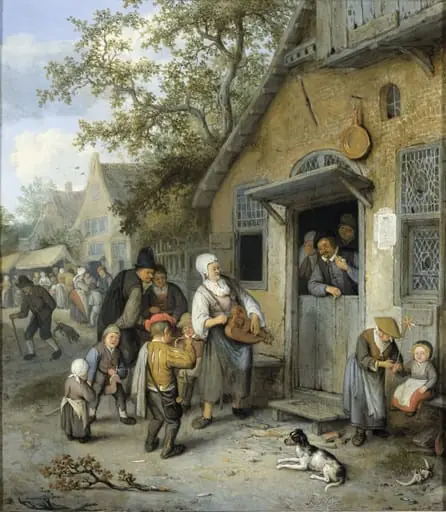
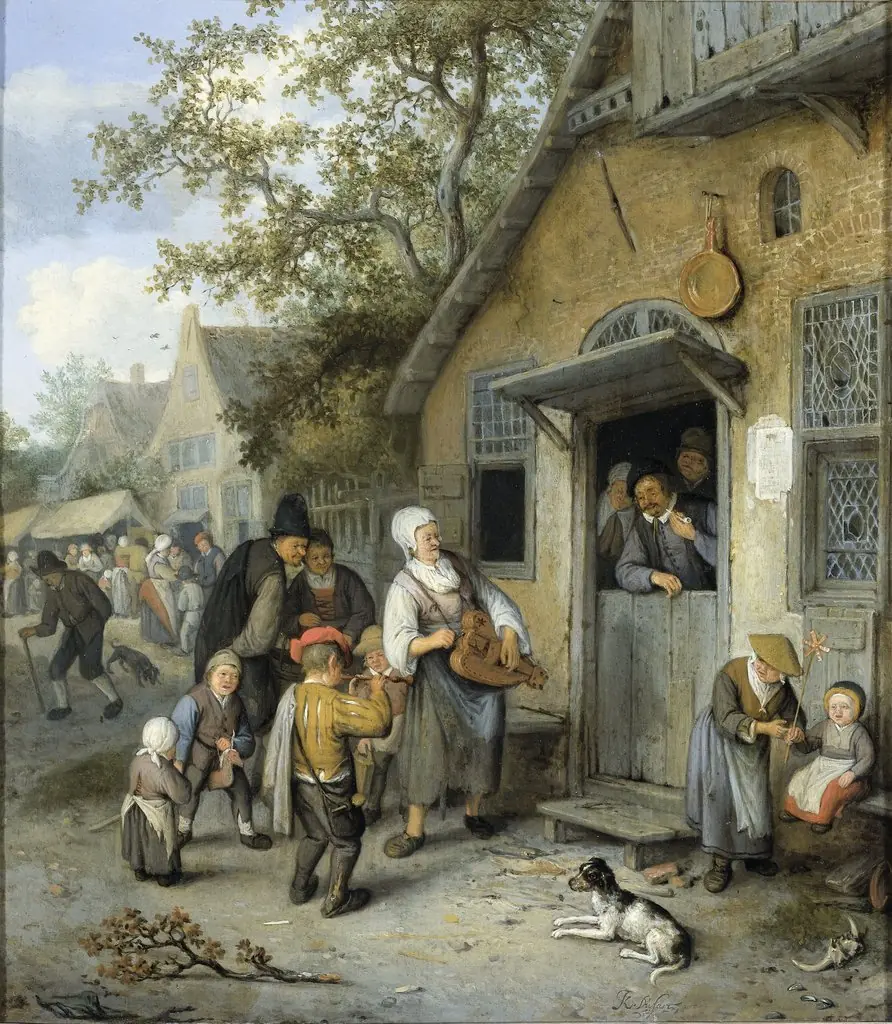
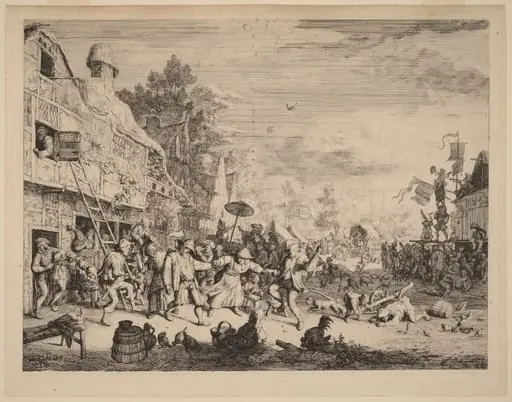
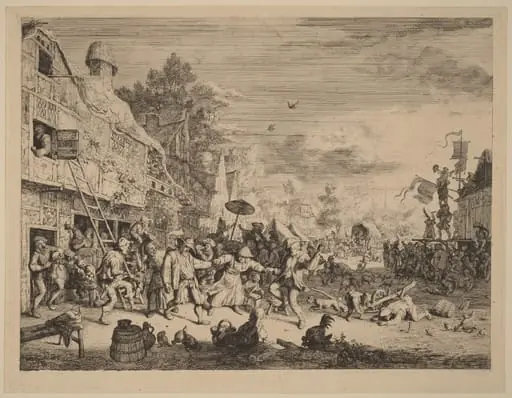
Village Fair is a print by the Baroque artist Cornelis Dusart. It dates from 1685 and is held in the collection of the Cleveland Museum of Art. This print captures a rural Dutch festival in unvarnished detail, contrasting with idealized depictions of such events.
About this work
Overview
This print captures a rural Dutch festival in unvarnished detail, contrasting with idealized depictions of such events. Rather than orderly celebration, it presents a scene of uncontrolled energy—drunkenness, conflict, and animal chaos intertwine. The composition rejects decorum, emphasizing spontaneity and disorder as inherent to the occasion.
Subject & Meaning
The scene reflects the dual role of alcohol in 17th-century Dutch society: embedded in communal rituals yet linked to social disruption. Festivals like this one, tied to church calendars or harvests, were occasions for release. The painting does not condemn nor glorify, but records the tension between tradition and excess as a lived reality.
Technique & Style
The artist employs loose, energetic lines to convey motion and clutter. Figures are rendered with minimal detail, their gestures suggesting rather than defining action. The crowded composition leaves no empty space, enhancing the sense of sensory overload. The absence of perspective or focal point reinforces the lack of control in the scene.
History & Provenance
The print originates from a period when genre scenes of peasant life gained popularity among urban collectors. While exact ownership records are sparse, its style aligns with Dutch printmakers of the late 1600s who documented everyday life outside elite circles. It likely circulated as a commercial image, appealing to viewers fascinated by rural excess.
Context
In contrast to David Teniers’ regulated village fairs, this work reflects a more raw, localized tradition. Taverns were central to rural social life, and festivals often blurred lines between celebration and disorder. The presence of livestock and children underscores the integration of daily labor and communal ritual in village economies.
Legacy
This print contributes to a broader visual record of Dutch rural life that moved beyond moralizing or picturesque ideals. Its unidealized portrayal influenced later genre artists who sought authenticity over refinement. It remains a document of how ordinary people experienced festivity, with all its unpredictability and friction.
Artist & collection
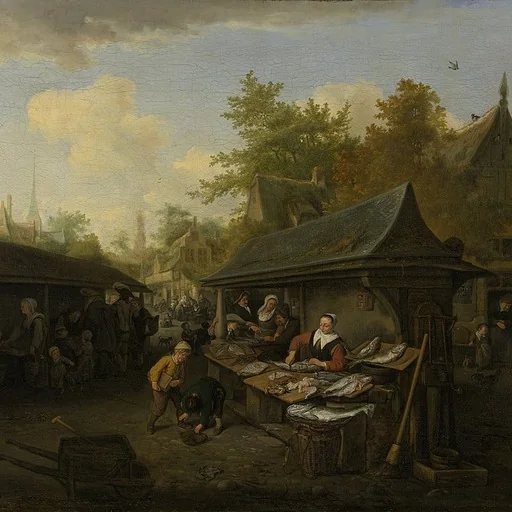
Artist
Cornelis Dusart (April 24, 1660 – October 1, 1704) was a Dutch genre painter, drawer (artists), and printmaker.

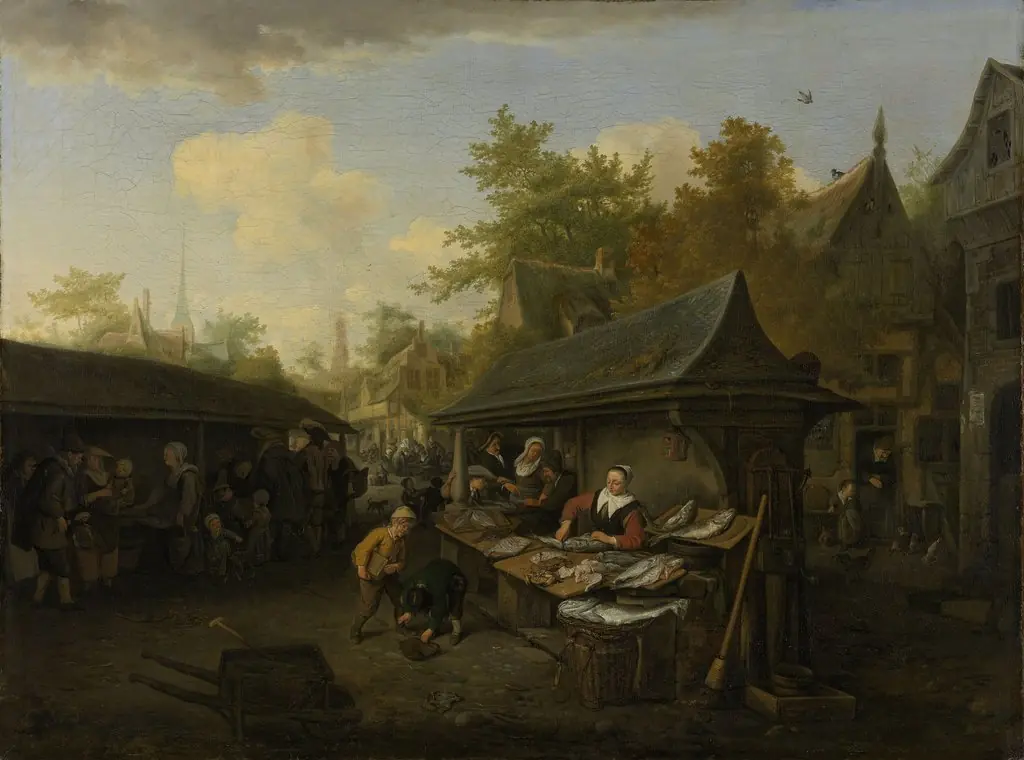
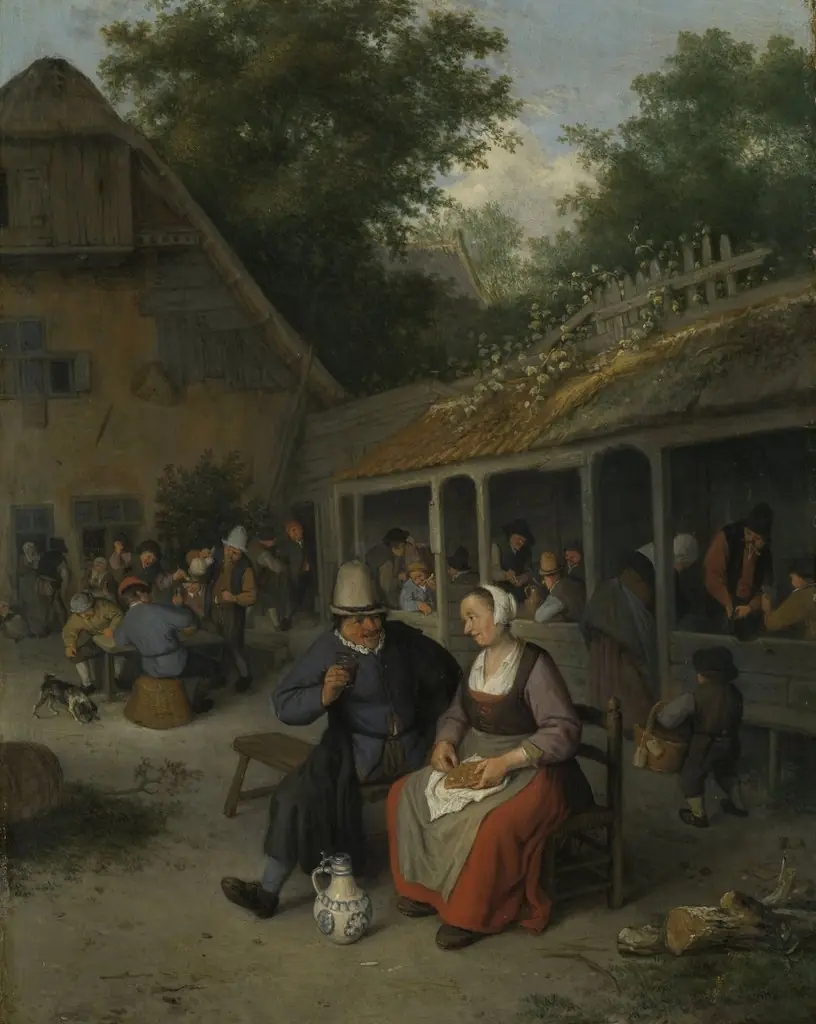
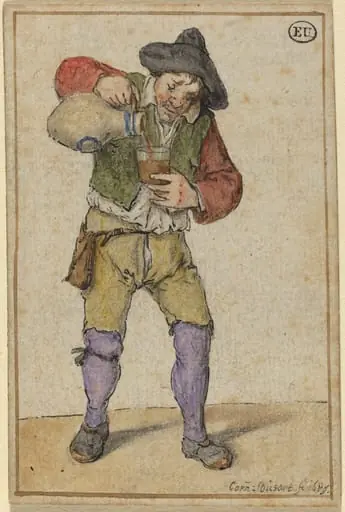
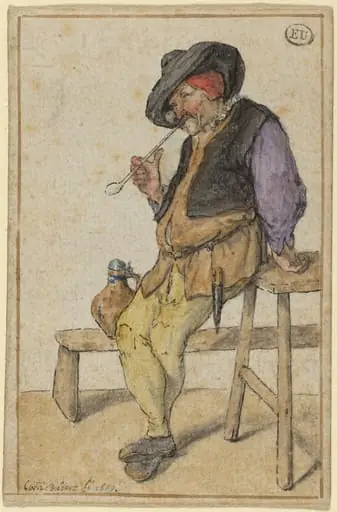
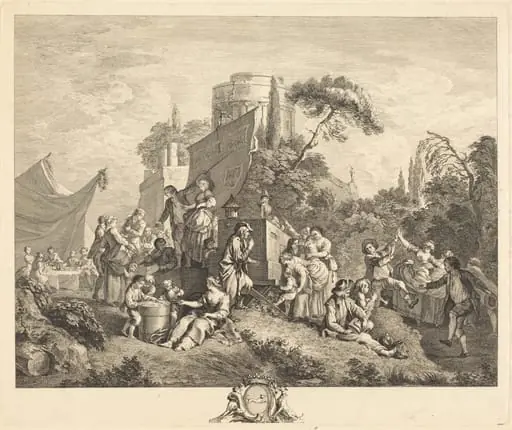 Village Fair
 Village Festival
 Village Festival
 Southwark Fair
 March to Finchley in the Year 1746 (After Hogarth)
 Scene outside an inn
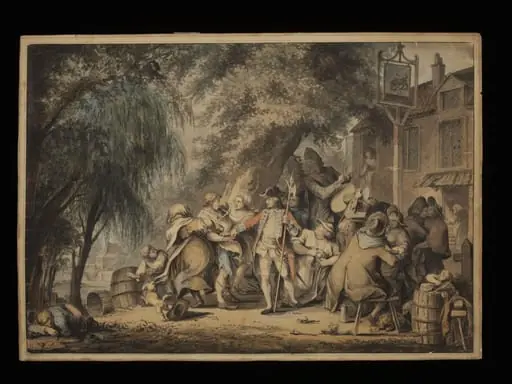 The Recruiting Sergeant
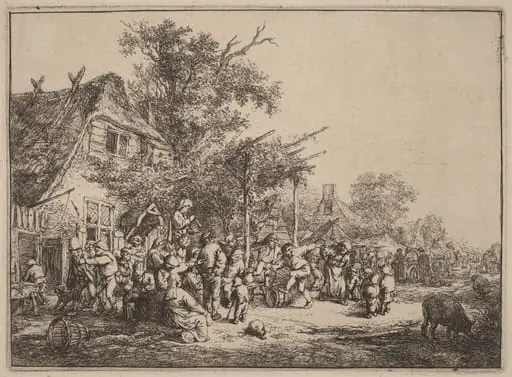 Village Kermesse with Peasants Feasting Under a Pergola
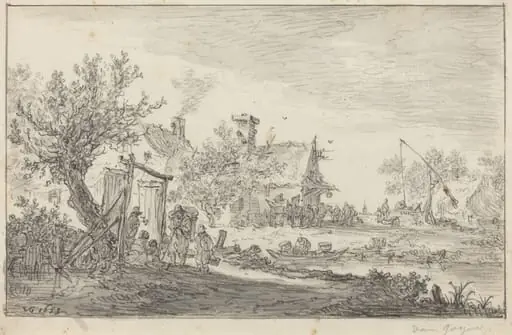 Wayside Inn
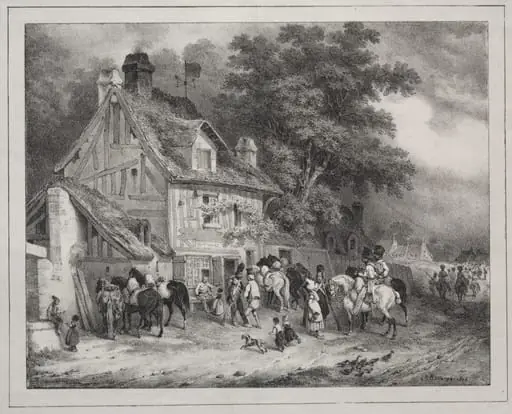 Souvenir of Normandy
 Landscape with a Woman at a Well
 View of Several Houses Facing the Port