Artwork
The Idle 'Prentice Executed at Tyburn
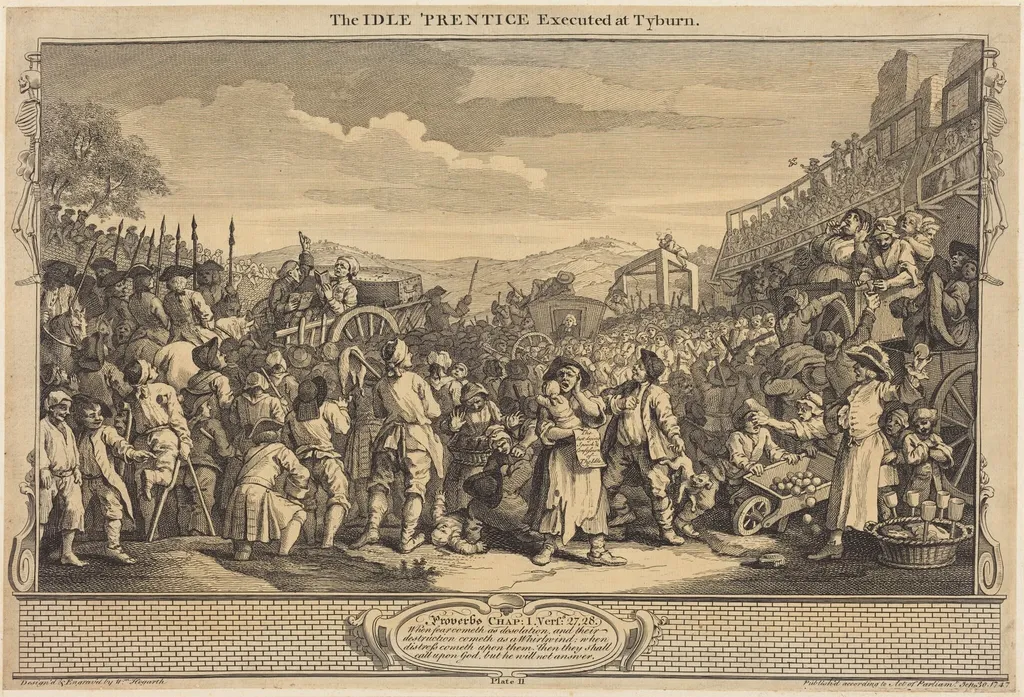
The Idle 'Prentice Executed at Tyburn is an ink print by the Baroque artist William Hogarth. It dates from 1747 and is held in the collection of the National Gallery of Art.
About this work
Overview
Created in 1747, this etching and engraving by William Hogarth is the final scene in a moralizing series about the downfall of a negligent apprentice.
Created in 1747, this etching and engraving by William Hogarth is the final scene in a moralizing series about the downfall of a negligent apprentice. Part of a larger narrative, it captures the moment of public execution at Tyburn, a site long used for capital punishment in London. Hogarth employed fine lines and tonal contrasts to convey both the gravity of the event and the complexity of the crowd’s reactions.
Subject & Meaning
The condemned man, once a promising apprentice, is led to the gallows as a consequence of his idleness and moral decay. Hogarth uses his fate to warn against laziness and vice, framing the execution as the inevitable outcome of a life squandered. The scene is not merely punitive but pedagogical, intended to provoke reflection on personal responsibility and societal consequences.
Technique & Style
Hogarth combined etching and engraving to achieve sharp, detailed lines and rich tonal variation. The crowd is rendered with individualized expressions—anger, sorrow, curiosity—each figure contributing to the narrative. Background elements like distant hills and buildings are minimized to focus attention on the central drama, while subtle shadows heighten the somber mood.
History & Provenance
The print was produced as part of Hogarth’s series *The Four Stages of Cruelty*, published in 1751, though this scene was completed earlier. It was widely distributed as a moral tract, accessible to the middle class through affordable prints. Original impressions survive in major collections, including the British Museum and the Victoria and Albert Museum, reflecting its contemporary reach and enduring documentation of 18th-century justice.
Context
Public executions at Tyburn were common spectacles in 18th-century London, drawing large crowds that included families and children. Hogarth’s work responds to the normalization of such events, critiquing both the criminal’s descent and the public’s voyeurism. His series emerged amid growing debates over crime, punishment, and social reform, positioning art as a tool for civic commentary.
Legacy
Hogarth’s series influenced later social realism in printmaking and helped establish narrative art as a vehicle for ethical instruction. While the moralizing tone may now seem didactic, the work remains a valuable record of urban life, legal practices, and public attitudes toward crime in Georgian England. Its detailed imagery continues to inform historical studies of class, punishment, and visual culture.
Artist & collection
Artist
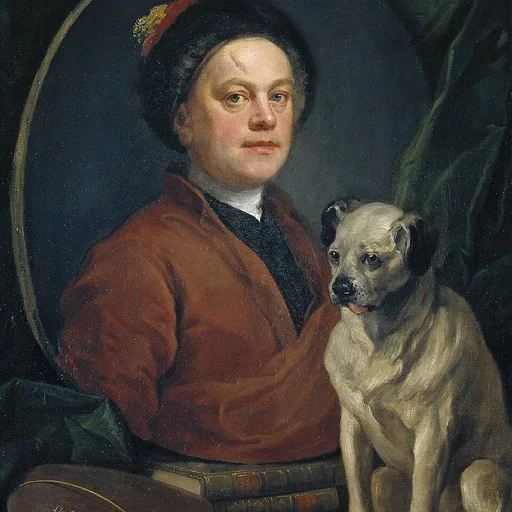
William Hogarth (; 10 November 1697 – 26 October 1764) was an English painter, engraver, satirist, cartoonist and writer.

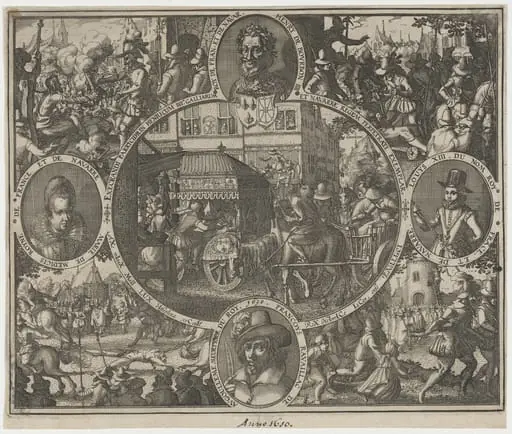 Murder of King Henry IV of France and the Execution of Francois Ravaillac
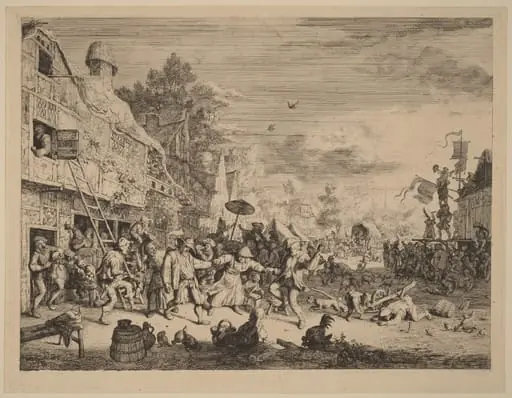 Village Festival
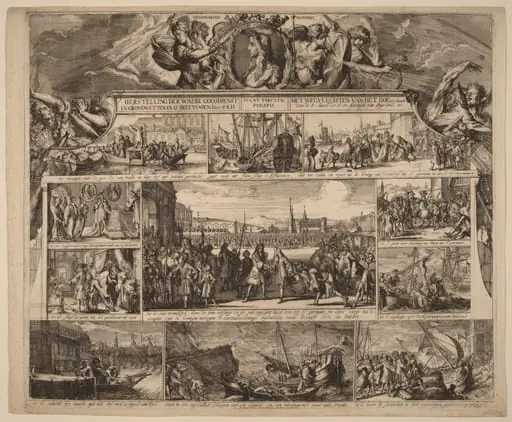 No Monarchy, No Popery
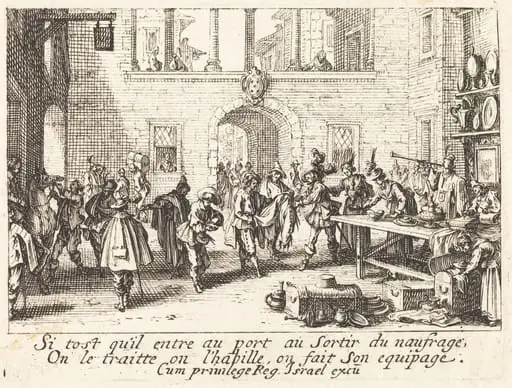 The Parents Bestow Gifts
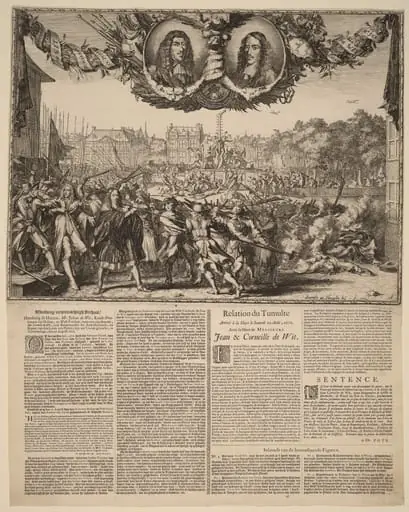 Afbeelding en waarachtigh Verhaal... (Representation of the True Story of Johan de Witt...)
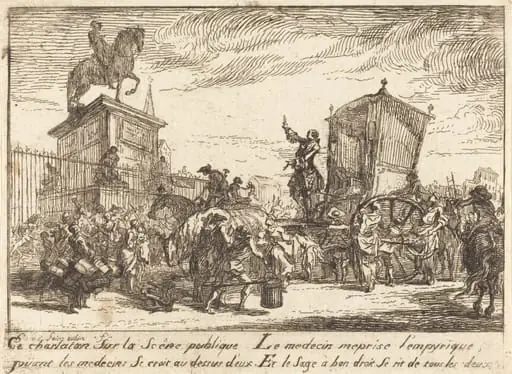 The Charlatan (Le charlatan)
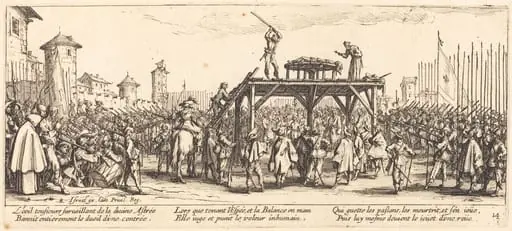 The Wheel
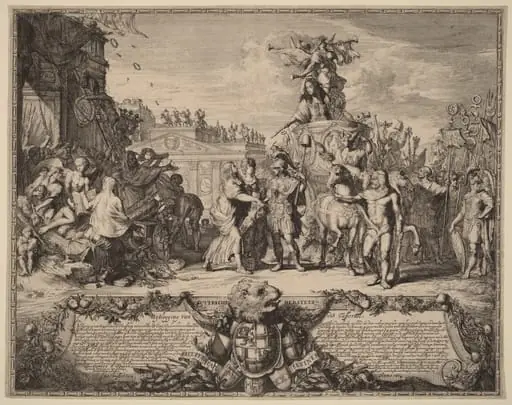 Uytrecht Herstelt (The Recapture of Utrecht, 1673)
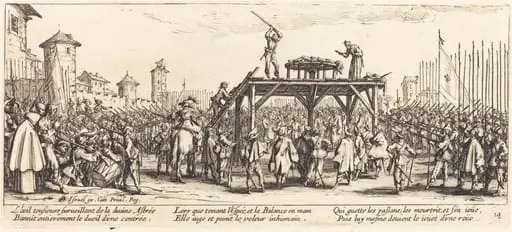 The Wheel
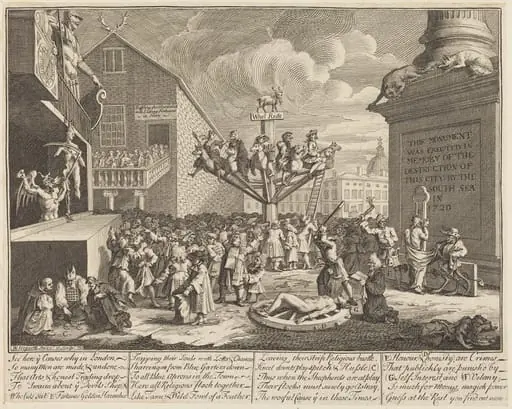 The South Sea Scheme
 Plundering and Burning a Village
 The Idle 'Prentice betray'd by his Whore, & taken in a Night Cellar with his Accomplice