Artwork
Child
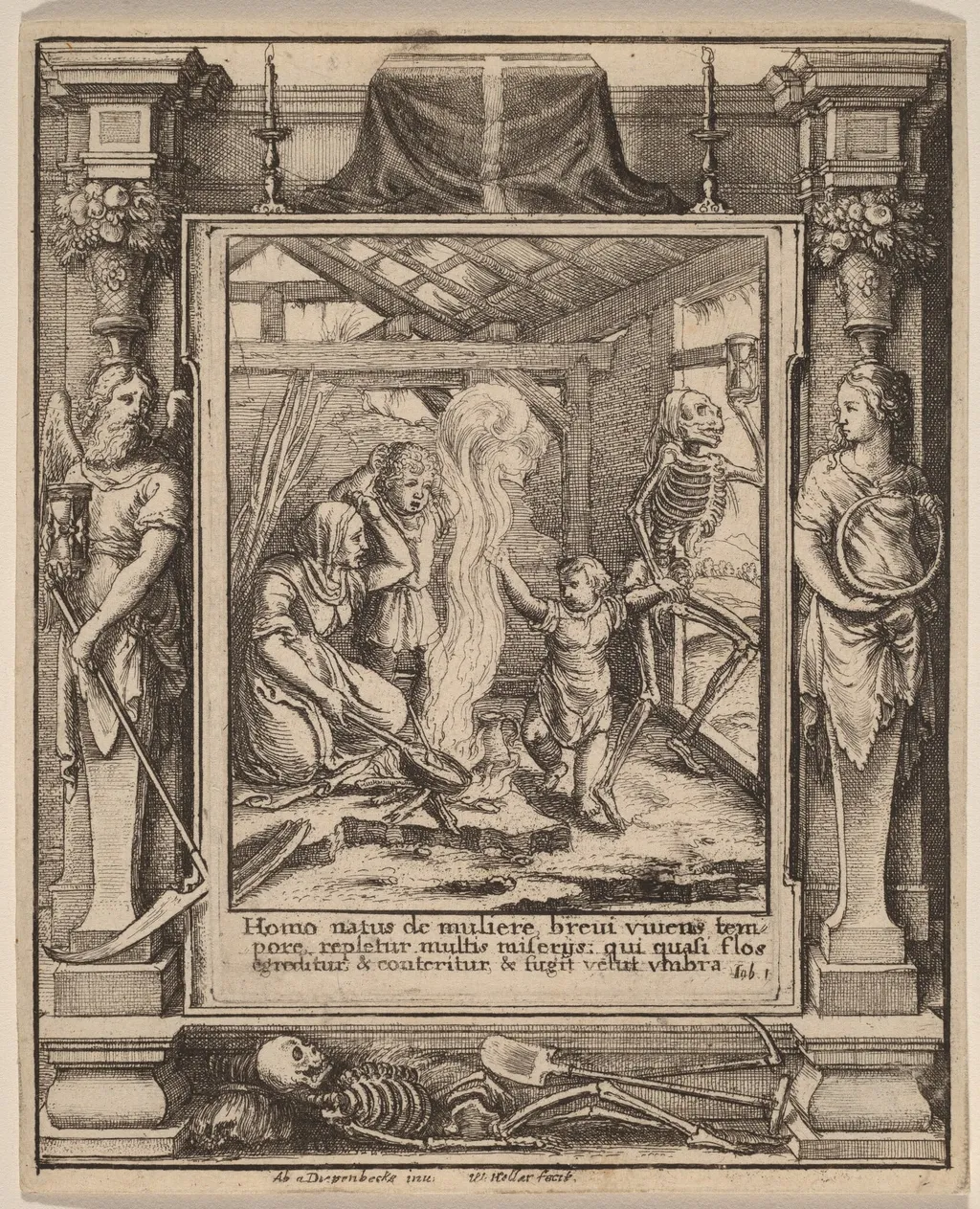
Child is an ink print by the Baroque artist Wenceslaus Hollar. It dates from 1651 and is held in the collection of the National Gallery of Art.
About this work
Overview
The composition merges a domestic moment with allegorical elements, reflecting the moral and religious concerns of mid-17th-century Europe.
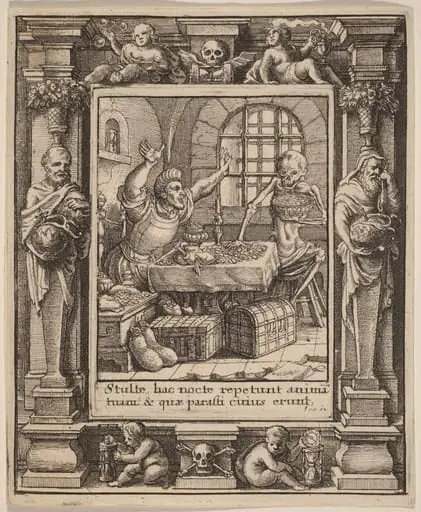
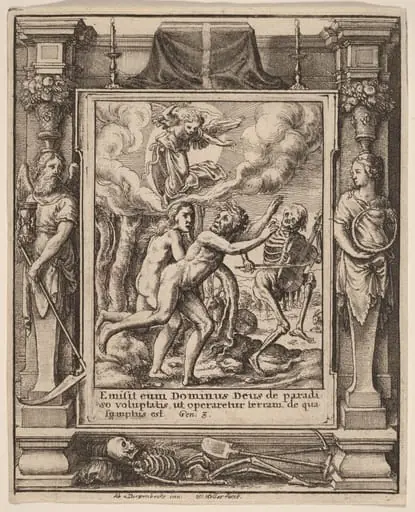
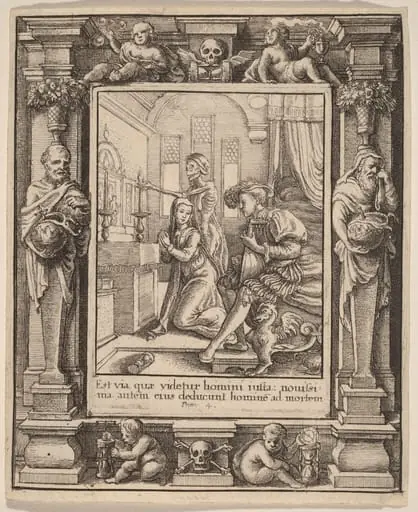
Created in 1651 by Wenceslaus Hollar, this etching presents a meditative scene centered on mortality, framed by an elaborate border inscribed with the phrase 'Time and Eternity.' Hollar, a Czech artist active in England, employed fine, precise lines to convey both intimacy and grandeur. The composition merges a domestic moment with allegorical elements, reflecting the moral and religious concerns of mid-17th-century Europe.
Subject & Meaning
A woman kneels beside a child, her gaze lifted as if in prayer, while a skeletal figure holds a glowing hourglass nearby. A second skeleton lies lifeless at her feet, and the border teems with additional skulls, hourglasses, and winged beings holding scrolls or gesturing toward the central group. The Latin inscription below underscores the transience of human life, transforming the image into a memento mori—a visual warning against earthly attachment and a call to spiritual reflection.
Technique & Style
Hollar used etching to achieve intricate detail and tonal contrast, with sharp, controlled lines defining each figure and object. The central scene is rendered with delicate precision, while the border’s dense ornamentation demonstrates his mastery of linear composition. The interplay of light and shadow, particularly in the glowing hourglass, adds symbolic weight without relying on wash or color, relying instead on the expressive potential of line alone.
History & Provenance
Hollar produced this print during his decades-long residence in England, where he worked for patrons including the Earl of Arundel. Though his landscapes and architectural views are better documented, this etching belongs to a smaller group of allegorical works reflecting his engagement with religious and philosophical themes. It was cataloged as Pennington 233C, indicating its inclusion in scholarly records of his oeuvre.
Context
Created during the aftermath of the English Civil War and amid widespread plague, the image resonates with contemporary anxieties about death and divine judgment. Such memento mori imagery was common in Protestant devotional culture, where visual reminders of mortality served to reinforce piety. Hollar’s fusion of personal tenderness with cosmic symbolism aligns with broader European traditions of vanitas art.
Legacy
While Hollar is primarily remembered for his topographical prints, this work reveals his capacity for emotional depth and symbolic complexity. It remains a rare example of his allegorical output, studied for its integration of text, image, and moral instruction. Its survival in institutional collections attests to its enduring value as a document of 17th-century thought and printmaking practice.
Artist & collection
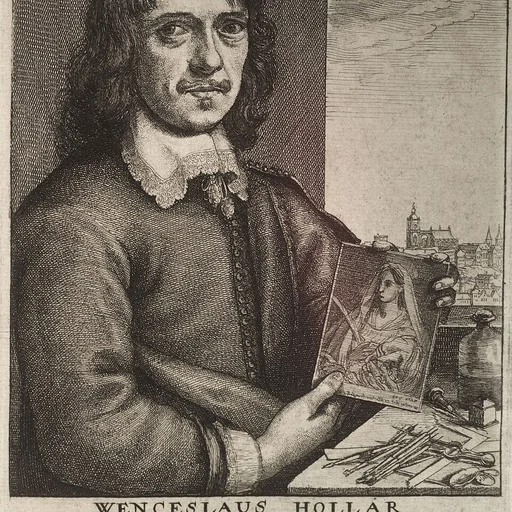
Artist
Wenceslaus Hollar (Czech: Václav Hollar (Czech pronunciation: ), German: Wenzel Hollar; 23 July 1607 – 25 March 1677) was a Czech engraver, etcher and painter.