Artwork
Ciuis vel Artificis Londinensis Vxor
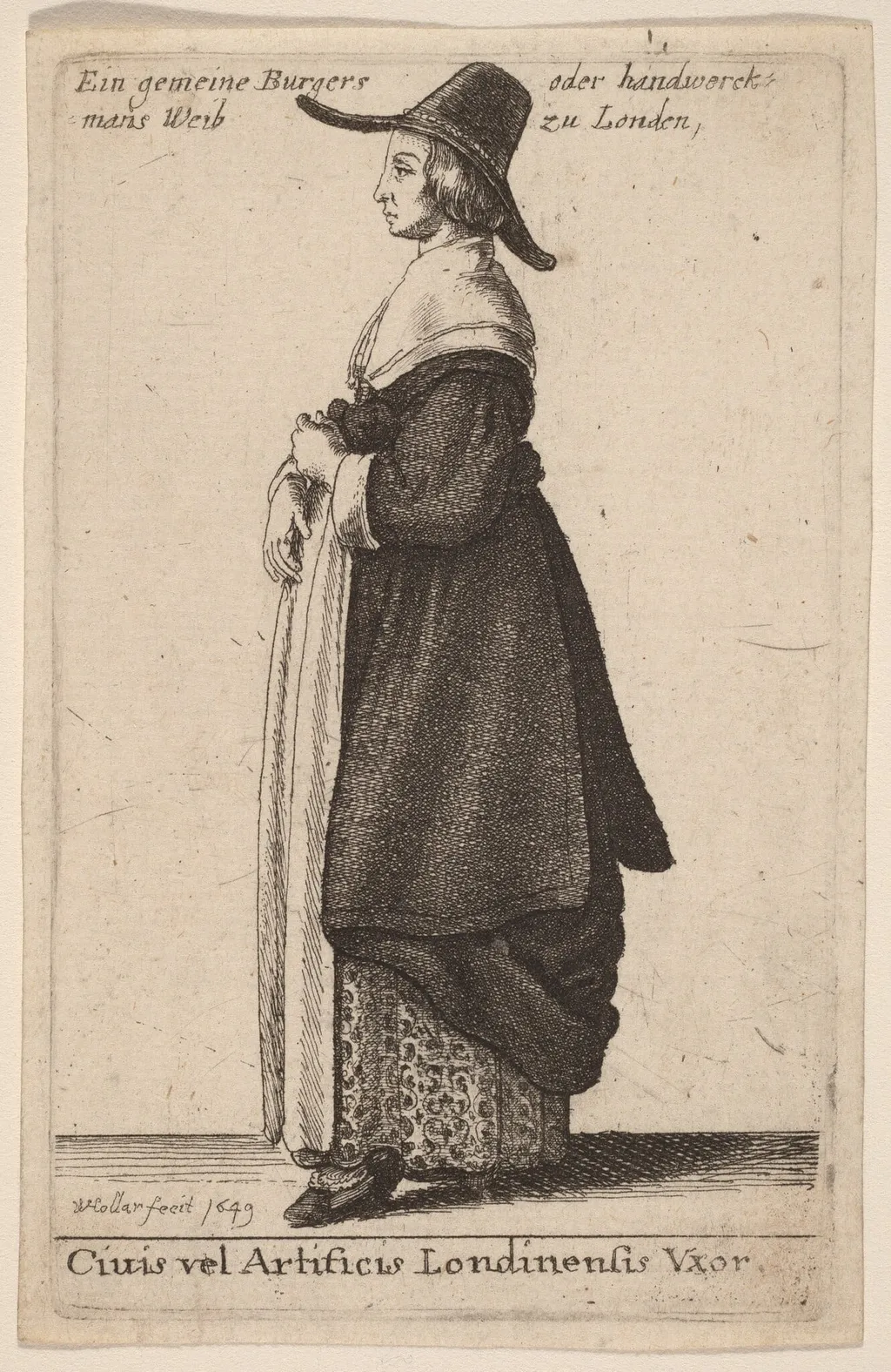
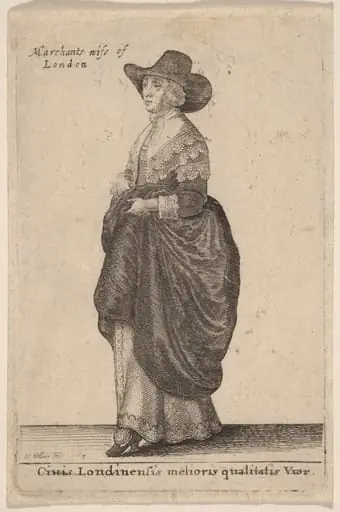
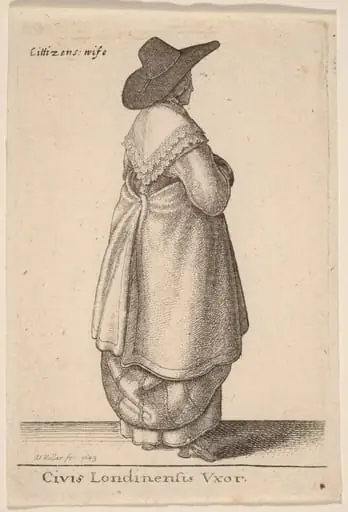
Ciuis vel Artificis Londinensis Vxor is an ink print by the Baroque artist Wenceslaus Hollar. It dates from 1649 and is held in the collection of the National Gallery of Art.
About this work
She’s wearing a wide-brimmed hat, a dark dress with a patterned skirt, and a light collar.
This is a black-and-white drawing of a woman in old-fashioned clothes. She’s wearing a wide-brimmed hat, a dark dress with a patterned skirt, and a light collar. One hand rests on her hip while the other holds a fan or small object. The background is plain, so all the focus is on her.
The title at the bottom calls her a “citizen or artisan’s wife from London.” The artist signed it in 1649, and the style looks simple but careful.
Want to know more about how this was made? Look up etching.
Overview
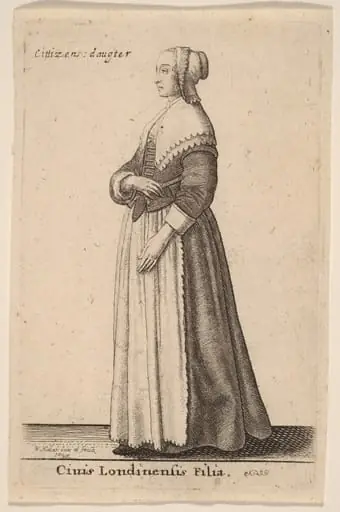
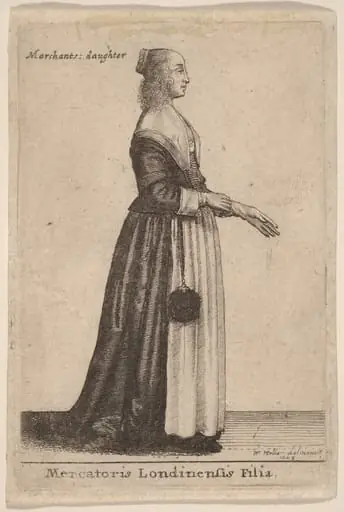
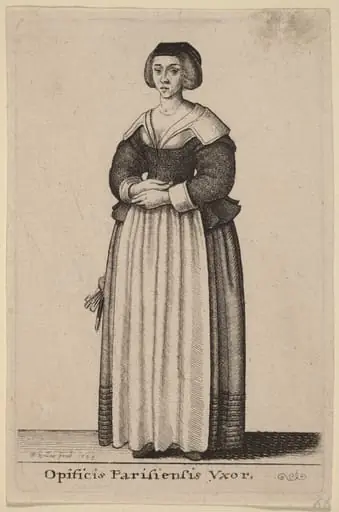
Created in 1649 by Wenceslaus Hollar, this etching portrays a London woman identified in the title as the wife of a citizen or artisan. Hollar, a Czech-born printmaker active in England, produced the work during his years in London, where he documented urban life through detailed graphic studies. The piece belongs to a series of character studies capturing the appearance and social posture of ordinary Londoners during the mid-seventeenth century.
Subject & Meaning
The figure is a woman dressed in modest, period-appropriate attire, her posture suggesting quiet dignity. Her wide-brimmed hat, patterned skirt, and lace collar reflect the dress of a middle-class Londoner. The fan or small object she holds may imply leisure or social refinement. The plain background isolates her, emphasizing identity over context, reinforcing the title’s focus on her social role rather than individual biography.
Technique & Style
Executed in etching, the image relies on fine, controlled lines to define form and texture. Hollar’s hand is precise but unadorned, avoiding dramatic contrasts in favor of subtle tonal gradations. The dress’s pattern, the hat’s brim, and the folds of fabric are rendered with careful attention, yet the overall composition remains restrained. The technique highlights the artist’s skill in translating textile and posture into monochrome line without embellishment.
History & Provenance
Hollar produced this print during a period of political upheaval in England, shortly after the execution of Charles I. Though his patrons had shifted, he continued documenting London’s populace. The work likely circulated among collectors and artisans interested in social types. Its survival reflects Hollar’s reputation for recording everyday life, and it remains part of institutional print collections today, valued for its historical record rather than artistic novelty.
Context
In 1649, London was a city in transition, with new social dynamics emerging amid civil war and republican governance. Hollar’s etchings of citizens and their families offered a visual archive of middle-class life, distinct from aristocratic portraiture. This image aligns with a broader trend in Dutch and English printmaking to depict non-royal figures with dignity, reflecting a growing interest in civic identity over noble lineage.
Legacy
Hollar’s series of London types, including this etching, contributed to the development of social portraiture in print. While not widely exhibited in his lifetime, these works later became important references for historians studying 17th-century dress, gender roles, and urban life. The piece endures not as a celebrated artwork, but as a quiet, accurate record of a woman whose name was lost, yet whose presence was carefully preserved.
Artist & collection
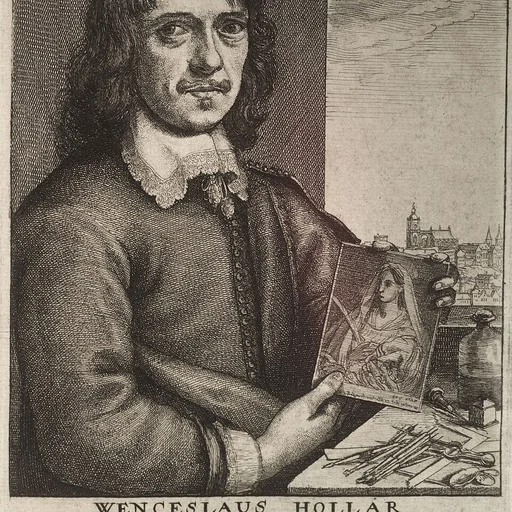
Artist
Wenceslaus Hollar (Czech: Václav Hollar (Czech pronunciation: ), German: Wenzel Hollar; 23 July 1607 – 25 March 1677) was a Czech engraver, etcher and painter.