Artwork
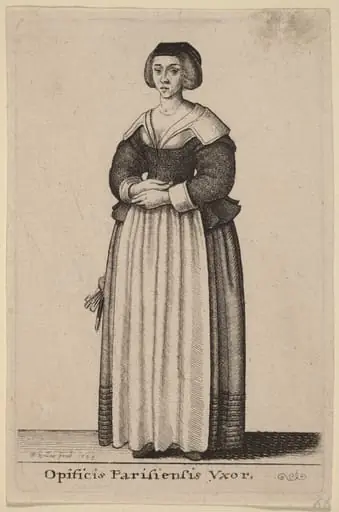
Mercatoris Parisiensis Vxor
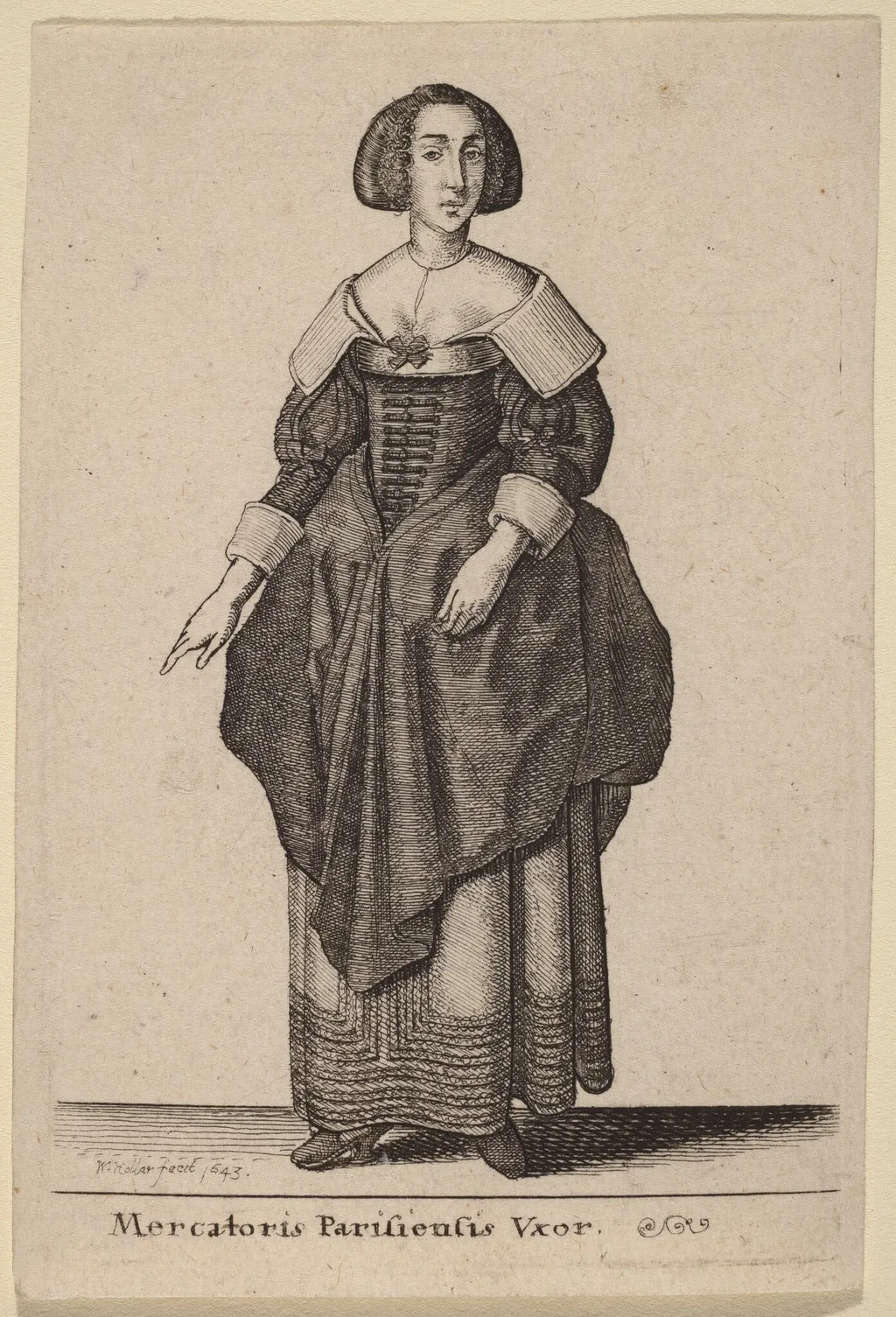
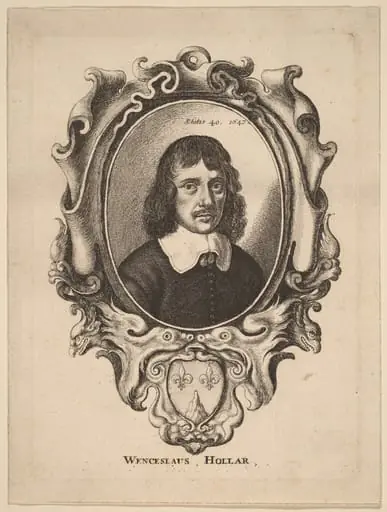
Mercatoris Parisiensis Vxor is an ink print by the Baroque artist Wenceslaus Hollar. It dates from 1643 and is held in the collection of the National Gallery of Art.
About this work
Overview
Created in 1643 by Wenceslaus Hollar, *Mercatoris Parisiensis Vxor* is an etching that captures a woman in formal attire. Hollar, a Czech artist active in England, was renowned for his precise graphic work. This piece exemplifies his mastery of fine line and texture, produced during a period when printmaking served both artistic and documentary purposes in early modern Europe.
Subject & Meaning
Her bobbed hair and centered part reflect contemporary Parisian fashion, while her poised stance and extended hand suggest a gesture of dignity or address.
The figure is a woman dressed in a long gown with a shawl, a high collar, and a single flower at her neckline. Her bobbed hair and centered part reflect contemporary Parisian fashion, while her poised stance and extended hand suggest a gesture of dignity or address. The title, meaning 'Wife of the Parisian Cartographer,' implies a connection to intellectual or civic life, though her exact identity remains unconfirmed.
Technique & Style
Hollar employed fine, controlled etching lines to render fabric folds, hair texture, and the delicate details of her accessories. The composition emphasizes clarity and restraint, avoiding theatricality despite the Baroque era’s ornamental tendencies. His technique prioritizes observational accuracy over emotional drama, aligning with his broader practice of documenting people and places with documentary precision.
History & Provenance
The print was made during Hollar’s years in London, following his departure from Prague and time spent on the continent. It likely circulated among collectors and scholars interested in European portraiture and costume. No definitive early ownership records exist, but the work survives in several institutional collections, testament to its enduring appeal among print connoisseurs.
Context
In the mid-17th century, etchings like this served as visual records of social types and regional dress. Paris was a center of fashion and intellectual life, and Hollar’s interest in capturing its inhabitants reflects broader European curiosity about urban culture. The image fits within a genre of character studies common among printmakers, offering insight into daily life beyond elite portraiture.
Legacy
Though not widely exhibited today, *Mercatoris Parisiensis Vxor* remains a representative example of Hollar’s portraiture in print. It contributes to the historical record of early modern women’s dress and the role of print in disseminating visual culture. Scholars continue to reference it for its technical finesse and its quiet, unidealized depiction of a woman in her time.
Artist & collection
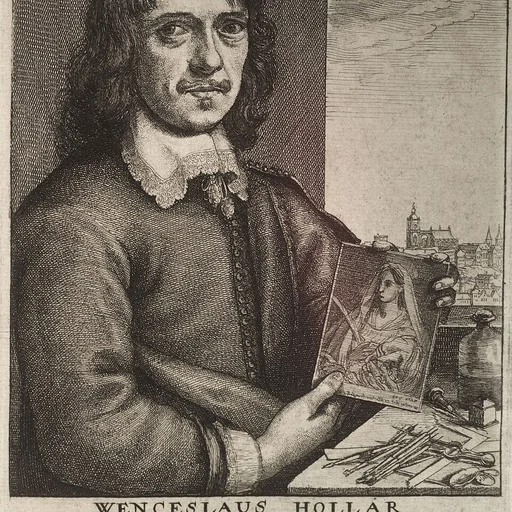
Artist
Wenceslaus Hollar (Czech: Václav Hollar (Czech pronunciation: ), German: Wenzel Hollar; 23 July 1607 – 25 March 1677) was a Czech engraver, etcher and painter.