Artwork
Duren
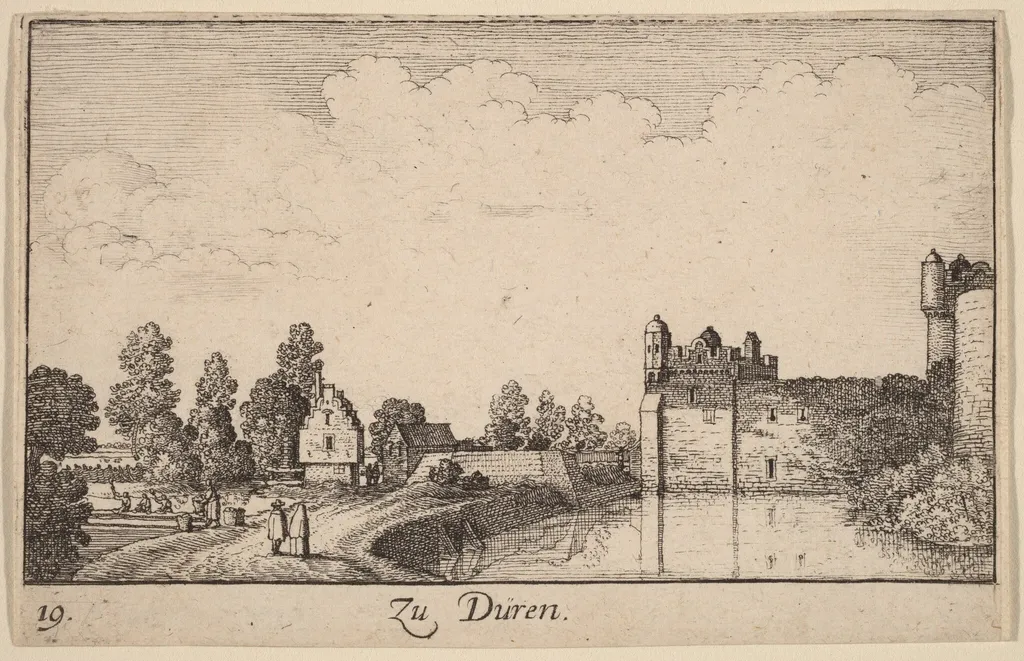
Duren is an ink print by the Baroque artist Wenceslaus Hollar. It dates from 1635 and is held in the collection of the National Gallery of Art.
About this work
Overview
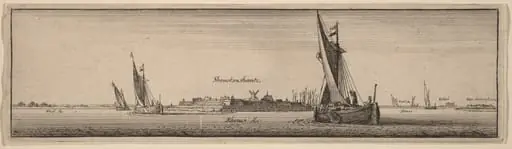
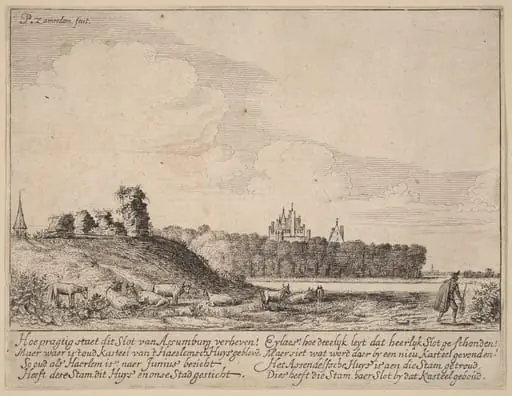
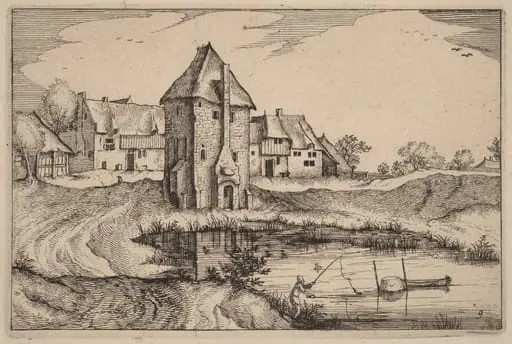
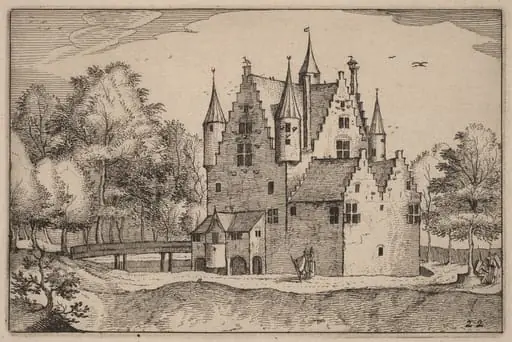
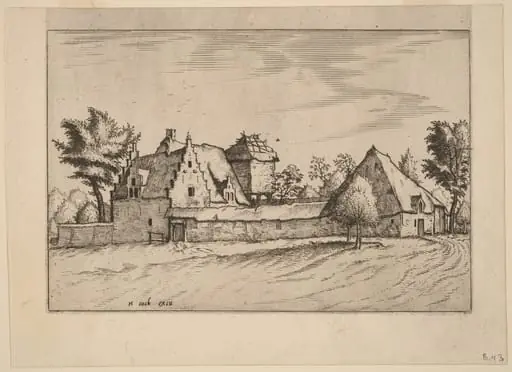
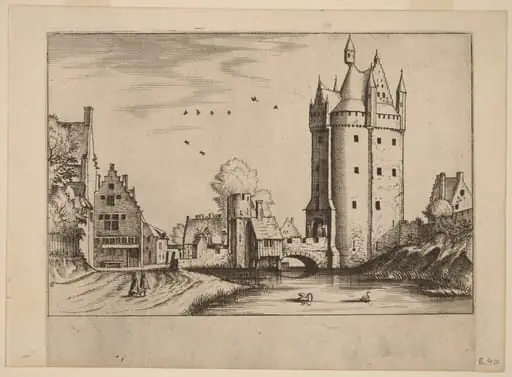
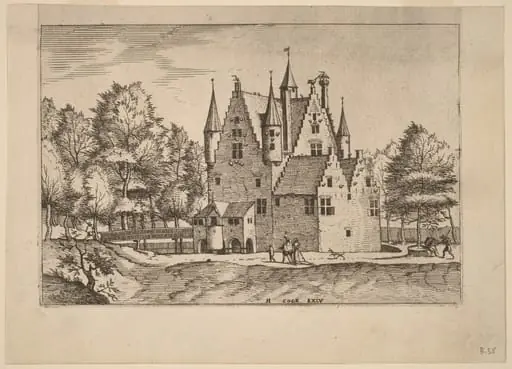
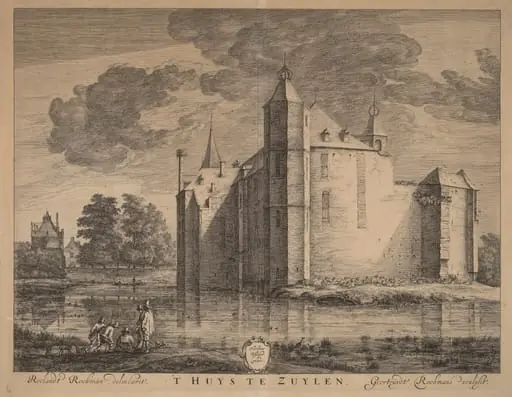
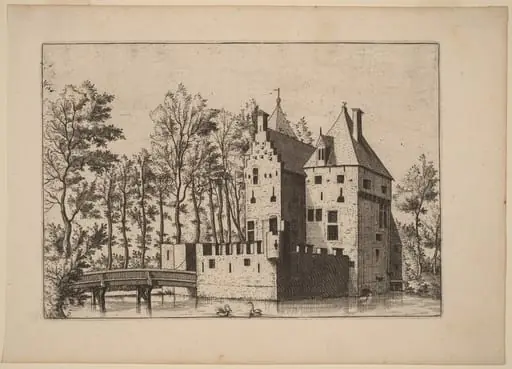
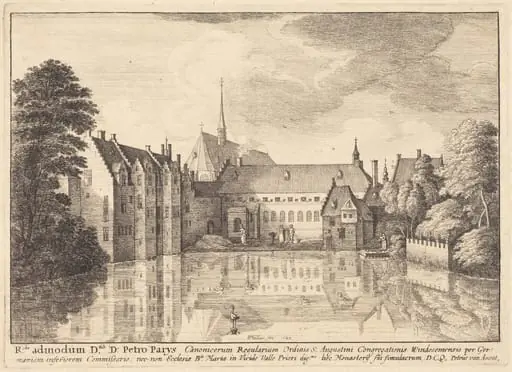
Duren is a 1635 etching by Wenceslaus Hollar, a Czech-born artist prominent in 17th-century England. The work is a detailed, black-and-white depiction of a small riverside town, characterized by a dominant stone wall with a tower and battlements on the right, and houses, trees, and figures on the left, set under a lightly etched sky.
Subject & Meaning
The subject of Duren is believed to be a representation of the real town of Düren, as indicated by the inscription. The etching showcases Hollar's ability to capture architectural and topographical accuracy, reflecting his specialty in vedutas—highly detailed, realistic urban views.
Technique & Style
Hollar employed fine lines to achieve textured effects, distinguishing elements like the rough stone wall and smooth river water. The etching demonstrates his mastery of the medium, which involves etching designs on metal plates using acid to create detailed prints.
History & Provenance
Created in 1635, Duren is part of Hollar's body of work from his time in England. Specific provenance details (ownership history) are not provided in the available information.
Context
Duren reflects the 17th-century artistic trend of detailed, realistic depictions of urban landscapes. Hollar's work, including this etching, contributed to the popularity of vedutas among European artists and collectors of the time.
Legacy
While specific legacy details of Duren are not provided, Hollar's overall contribution to the development of etching and his detailed cityscapes have influenced later generations of printmakers and landscape artists.
Artist & collection
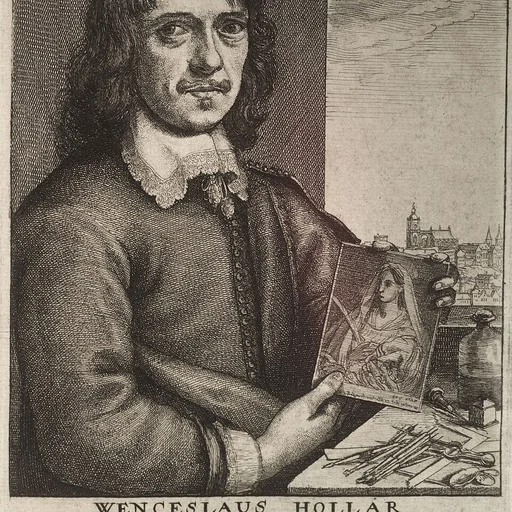
Artist
Wenceslaus Hollar (Czech: Václav Hollar (Czech pronunciation: ), German: Wenzel Hollar; 23 July 1607 – 25 March 1677) was a Czech engraver, etcher and painter.