Artwork
Mulier Habitans Algieri
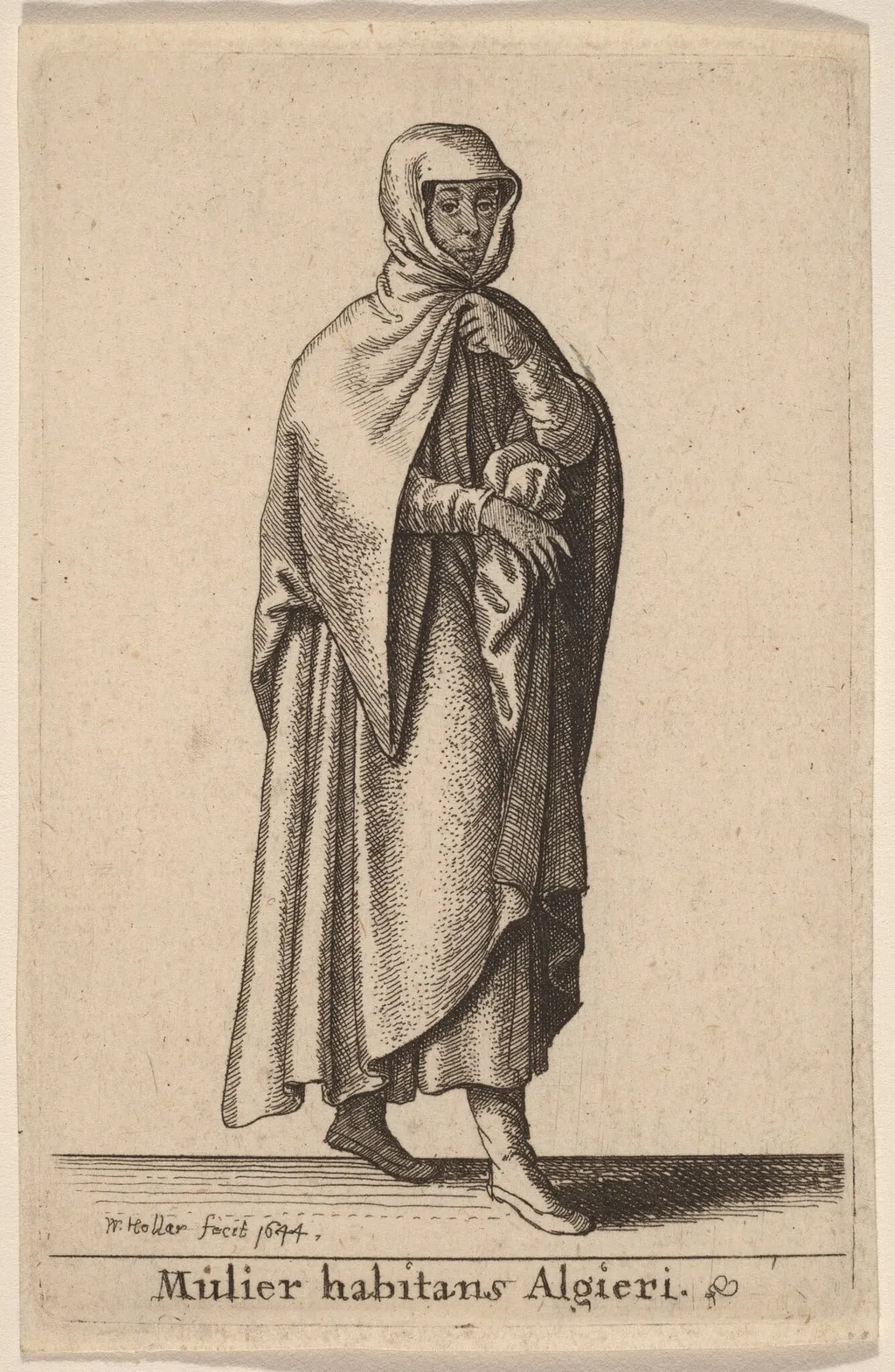
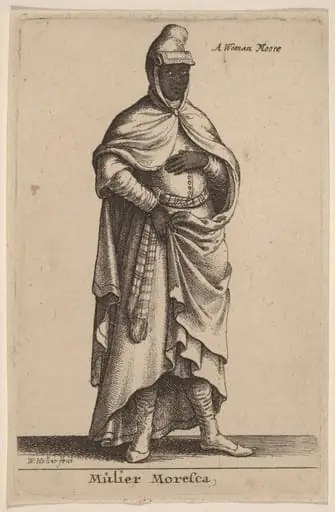
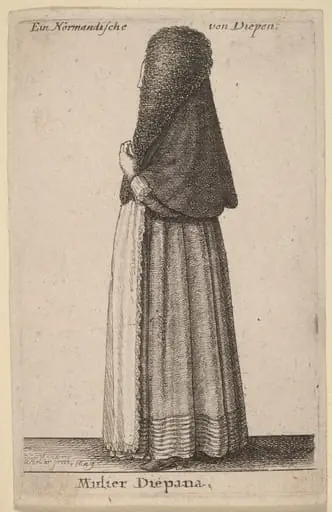
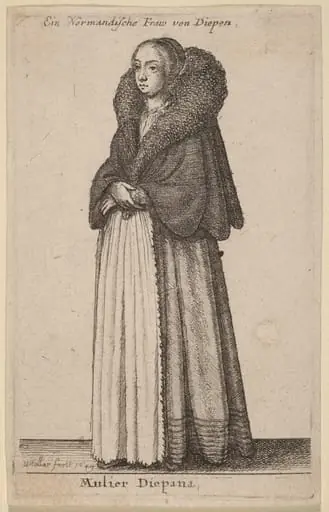
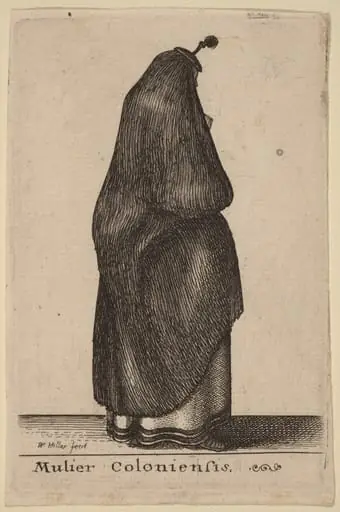
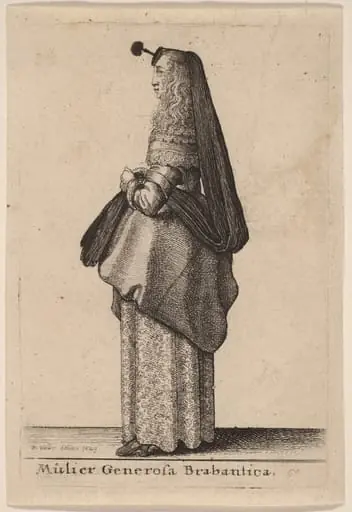
Mulier Habitans Algieri is an ink print by the Baroque artist Wenceslaus Hollar. It dates from 1644 and is held in the collection of the National Gallery of Art.
About this work
The lines are sharp, showing every fold in her clothes and the texture of her fabric.
This is a black-and-white drawing of a woman standing still. She wears a long, loose robe and a head covering that hides her hair. One hand rests on her chest, holding what looks like a small object. The lines are sharp, showing every fold in her clothes and the texture of her fabric.
The artist signed it in 1644, and the title means "Woman from Algiers." The way the lines create depth and detail is typical of the time.
Next, look up etching to see how this technique works.
Overview
Created in 1644, *Mulier Habitans Algieri* is an etching by Wenceslaus Hollar, a Czech-born printmaker who worked extensively in England. The monochrome image portrays a solitary woman in a flowing robe and head covering, her hand resting on her chest while she holds a small object. The work exemplifies Hollar’s precise line work and his focus on everyday figures.
Subject & Meaning
The title, translating to “Woman from Algiers,” identifies the sitter as an Algerian female, suggesting an interest in exotic or foreign subjects within 17th‑century European art. The modest attire and concealed hair reflect contemporary cultural norms, while the object she grasps may hint at personal or ritual significance, though its exact nature remains ambiguous.
Technique & Style
Hollar employed the etching process, incising lines into a copper plate with acid to produce fine, controlled marks. His handling of line creates a crisp rendering of fabric folds and texture, achieving a subtle sense of depth through varied line density. The stark black‑and‑white palette underscores the work’s emphasis on detail rather than color.
History & Provenance
Signed and dated by Hollar in 1644, the print aligns with a prolific period in his career when he produced numerous cityscapes and genre scenes. While specific ownership records are scarce, the piece reflects Hollar’s broader output for the English market, where his prints were widely circulated among collectors of the time.
Context
During the mid‑17th century, European interest in North African peoples grew, fueled by trade and diplomatic contacts. Hollar’s depiction of an Algerian woman fits within this curiosity, offering a visual document of perceived foreign dress and demeanor, while also showcasing the era’s fascination with detailed, observational printmaking.
Artist & collection
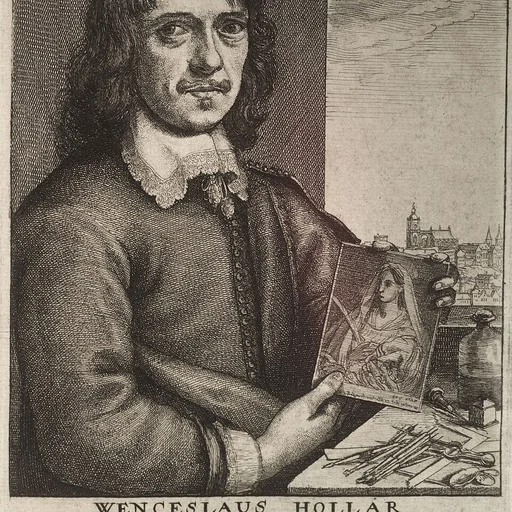
Artist
Wenceslaus Hollar (Czech: Václav Hollar (Czech pronunciation: ), German: Wenzel Hollar; 23 July 1607 – 25 March 1677) was a Czech engraver, etcher and painter.