Artwork
Mulier Diepana
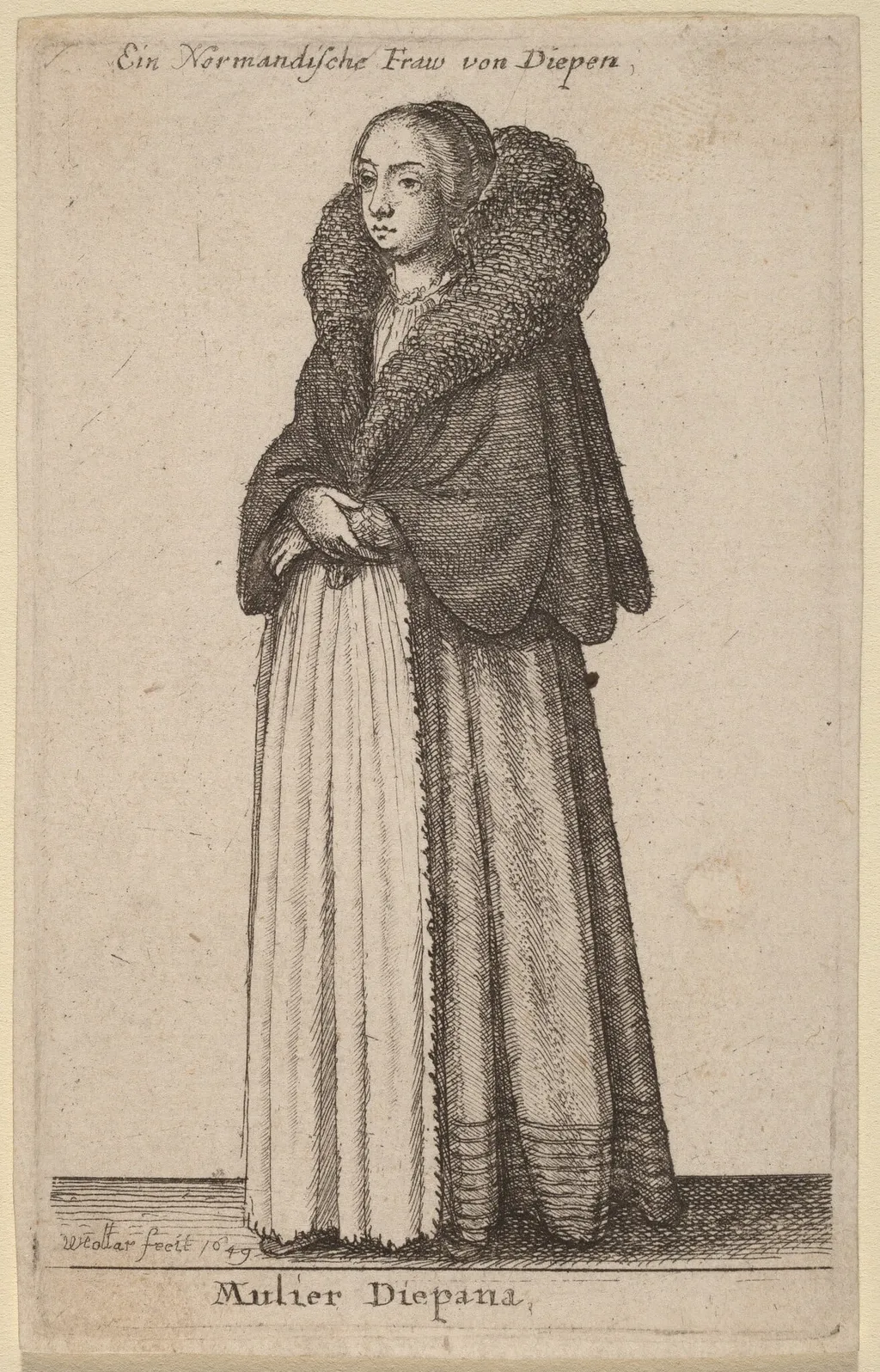
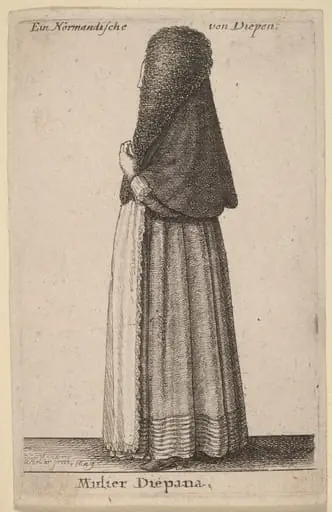
Mulier Diepana is an ink print by the Baroque artist Wenceslaus Hollar. It dates from 1649 and is held in the collection of the National Gallery of Art.
About this work
The title at the top calls her a "Normandische Frau von Diepen," which means she might be from a place called Diepen.
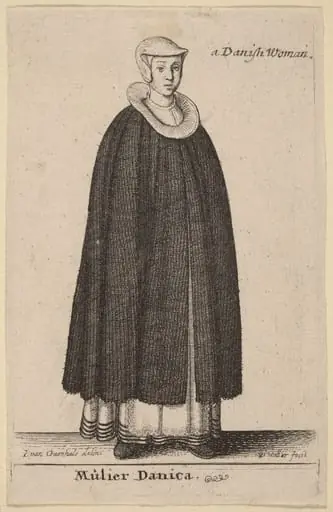
This is a black-and-white drawing of a woman standing still. She wears a long, ruffled skirt and a dark cloak draped over her shoulders. Her hands rest together in front of her, and her face looks calm but serious.
The title at the top calls her a "Normandische Frau von Diepen," which means she might be from a place called Diepen. The artist signed it in 1649, so it’s from that year.
Want to learn more? Check out the technique: etching.
Overview
Created in 1649 by Wenceslaus Hollar, *Mulier Diepana* is a black-and-white etching depicting a solitary woman in quiet repose. Hollar, a Czech artist active in England, produced this work during his years in London, where he became known for meticulous topographical prints. The piece exemplifies his skill in fine line work and his interest in capturing individual portraiture alongside his more famous architectural studies.
Subject & Meaning
The figure is identified by the title as a woman from Diepen, likely a place in Normandy. She stands still, dressed in a long, ruffled skirt and a draped cloak, her hands folded before her. Her expression is composed, neither emotive nor theatrical, suggesting a quiet dignity. The inscription implies an ethnographic interest—perhaps documenting regional dress or social type—common among Northern European printmakers of the period.
Technique & Style
Hollar employed etching to achieve fine, controlled lines that define texture and form with precision. The ruffles of the skirt, the folds of the cloak, and the subtle modeling of the face are rendered through delicate hatching and cross-hatching. The absence of tone or shading emphasizes line as the primary vehicle of expression, aligning with the Northern European tradition of detailed, linear printmaking.
History & Provenance
Hollar produced this etching during his extended stay in England, where he worked for patrons including the Earl of Arundel. Though the specific commission or ownership history of *Mulier Diepana* is unrecorded, it appears among his broader corpus of figure studies and costume prints. The work was signed and dated 1649, placing it within a productive phase of his career before the disruptions of the English Civil War.
Context
In mid-17th century Europe, printmakers often documented regional dress and customs as part of a growing interest in cultural observation. Hollar’s work reflects this trend, situating *Mulier Diepana* alongside other studies of costume and character. His prints circulated widely, serving both artistic and documentary purposes, and contributed to the visual record of European society during a time of political and social change.
Legacy
Though not among Hollar’s most widely reproduced works, *Mulier Diepana* remains a representative example of his ability to convey individual presence through technical restraint. It contributes to the understanding of how printmakers engaged with identity and regionalism in early modern Europe. The piece continues to be studied for its craftsmanship and its place within the broader tradition of Northern European graphic art.
Artist & collection
Artist
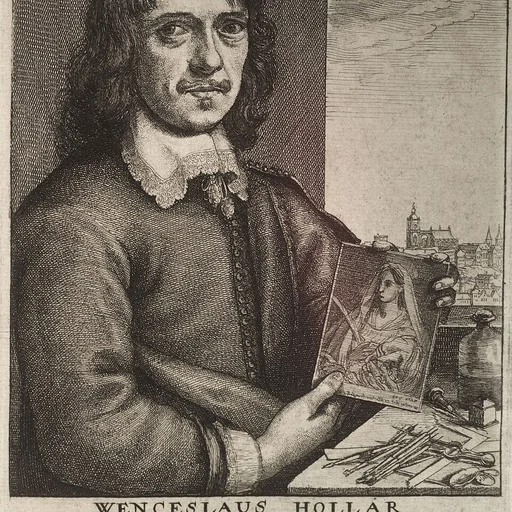
Wenceslaus Hollar (Czech: Václav Hollar (Czech pronunciation: ), German: Wenzel Hollar; 23 July 1607 – 25 March 1677) was a Czech engraver, etcher and painter.