Artwork
Mulier Nobilis Hispanica (Spanish Noblewoman)
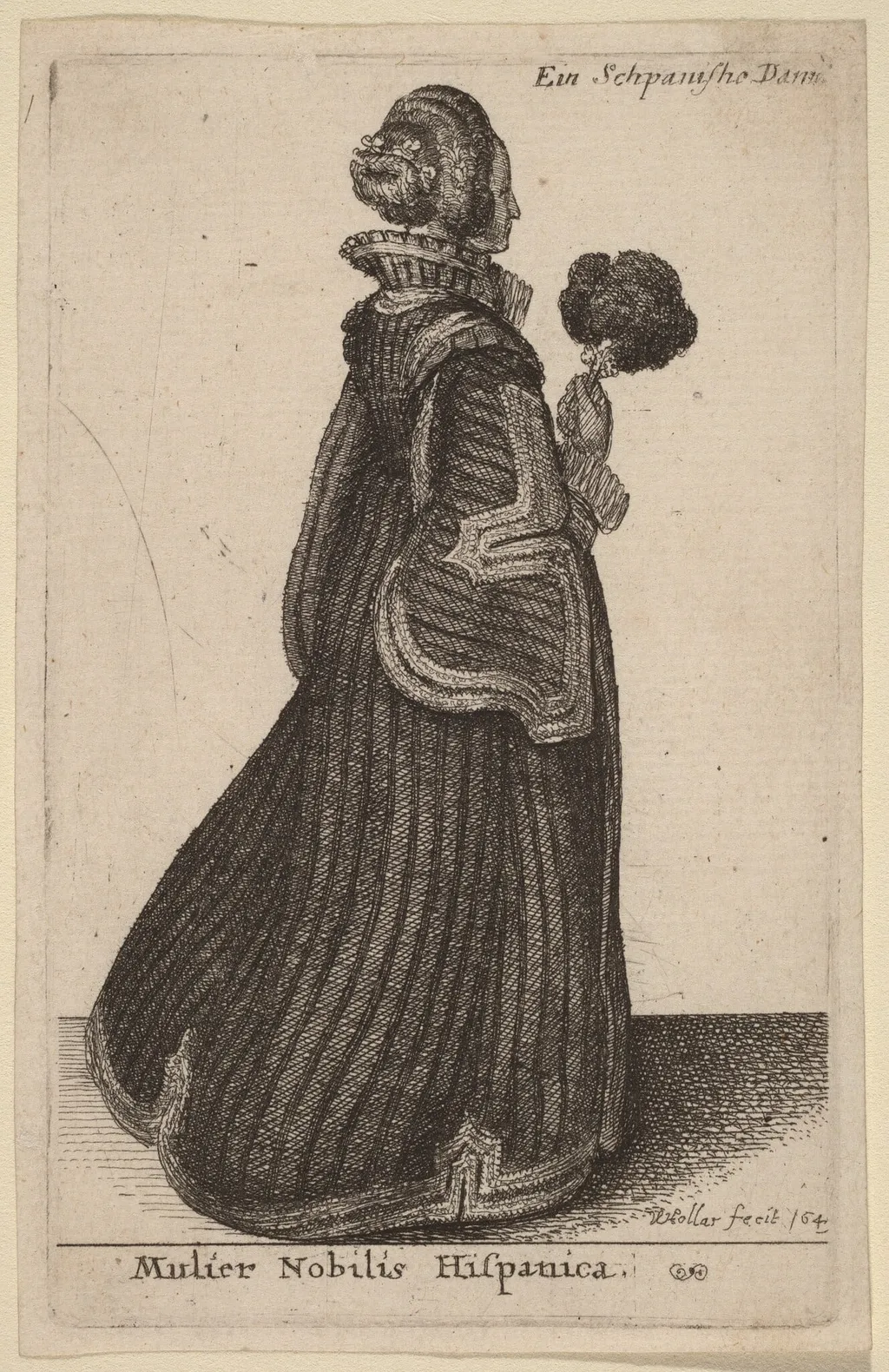
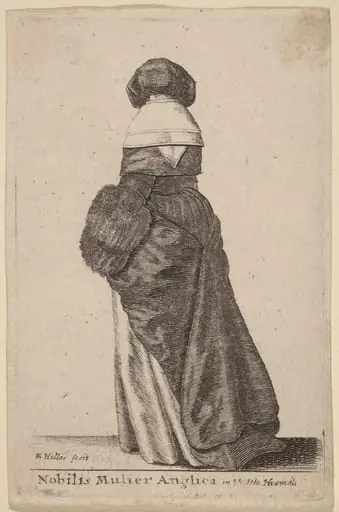
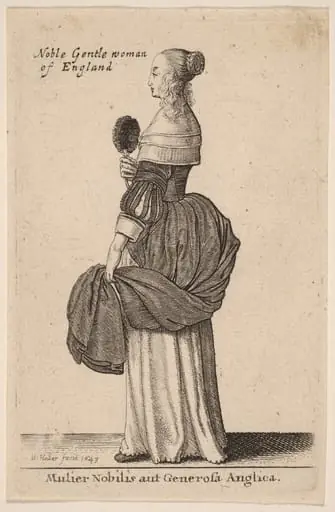
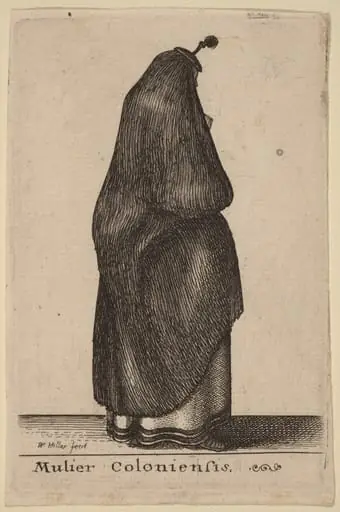
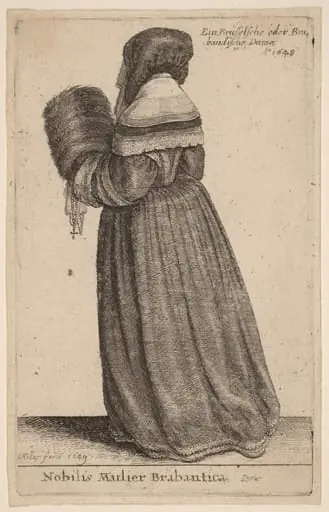
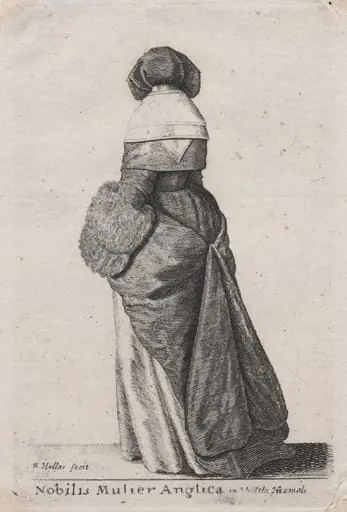
Mulier Nobilis Hispanica (Spanish Noblewoman) is an ink print by the Baroque artist Wenceslaus Hollar. It dates from 1649 and is held in the collection of the National Gallery of Art.
About this work
Overview
Created in 1649 by Wenceslaus Hollar, a Czech artist active in England, this etching portrays a Spanish noblewoman with restrained formality. Executed on laid paper, the work reflects Hollar’s technical mastery in fine line work and tonal gradation. Though best known for topographical views, he turned his precision to portraiture during his years in London, where he lived and was later interred.
Subject & Meaning
The plain background eliminates distraction, emphasizing her presence and the symbolic weight of her dress as a marker of rank and cultural identity.
The figure is a woman of aristocratic Spanish origin, dressed in somber, elaborate garments typical of high-status attire in the mid-17th century. Her turned gaze and clasped hand suggest quiet composure, possibly indicating a portrait commissioned for personal or diplomatic purposes. The plain background eliminates distraction, emphasizing her presence and the symbolic weight of her dress as a marker of rank and cultural identity.
Technique & Style
Hollar employed fine, controlled etching lines to render the texture of lace, fabric folds, and the sheen of dark silk. The contrast between the dense shadows of her dress and the softly lit face creates subtle volume, aligning with Baroque conventions of chiaroscuro. The composition’s simplicity and attention to minute surface details reflect both Northern European engraving traditions and the influence of Spanish courtly portraiture.
History & Provenance
Produced during Hollar’s London residency, the print likely circulated among collectors interested in European fashion and portraiture. No definitive early ownership records are known, but its survival in multiple institutional collections suggests it was valued for its craftsmanship. Hollar’s own financial struggles and the dispersal of his estate after his death in 1677 complicate its early provenance.
Context
In 1649, England was under Commonwealth rule, and cultural ties with Catholic Europe, including Spain, were strained. Yet artistic interest in foreign nobility persisted among English elites. Hollar’s depiction of a Spanish noblewoman may reflect a fascination with continental dress and status symbols, even amid political tensions, serving as a quiet testament to transnational artistic exchange.
Legacy
Though not among Hollar’s most widely reproduced works, this etching exemplifies his ability to convey dignity through meticulous line. It remains a reference for scholars studying 17th-century portraiture, textile representation in print, and the role of foreign figures in English visual culture. Its quiet intensity continues to inform studies of identity and representation in early modern printmaking.
Artist & collection
Artist
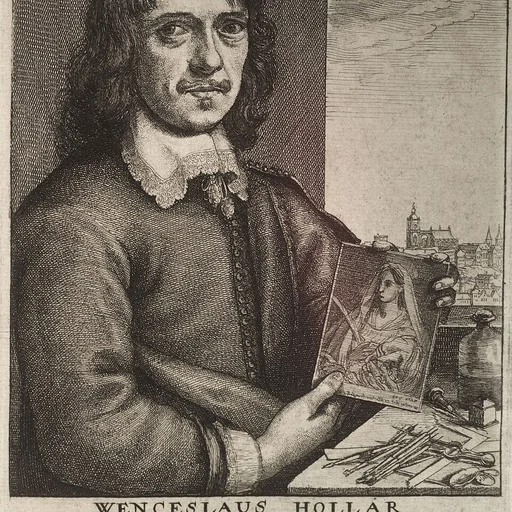
Wenceslaus Hollar (Czech: Václav Hollar (Czech pronunciation: ), German: Wenzel Hollar; 23 July 1607 – 25 March 1677) was a Czech engraver, etcher and painter.