Artwork
Mulier Persiana
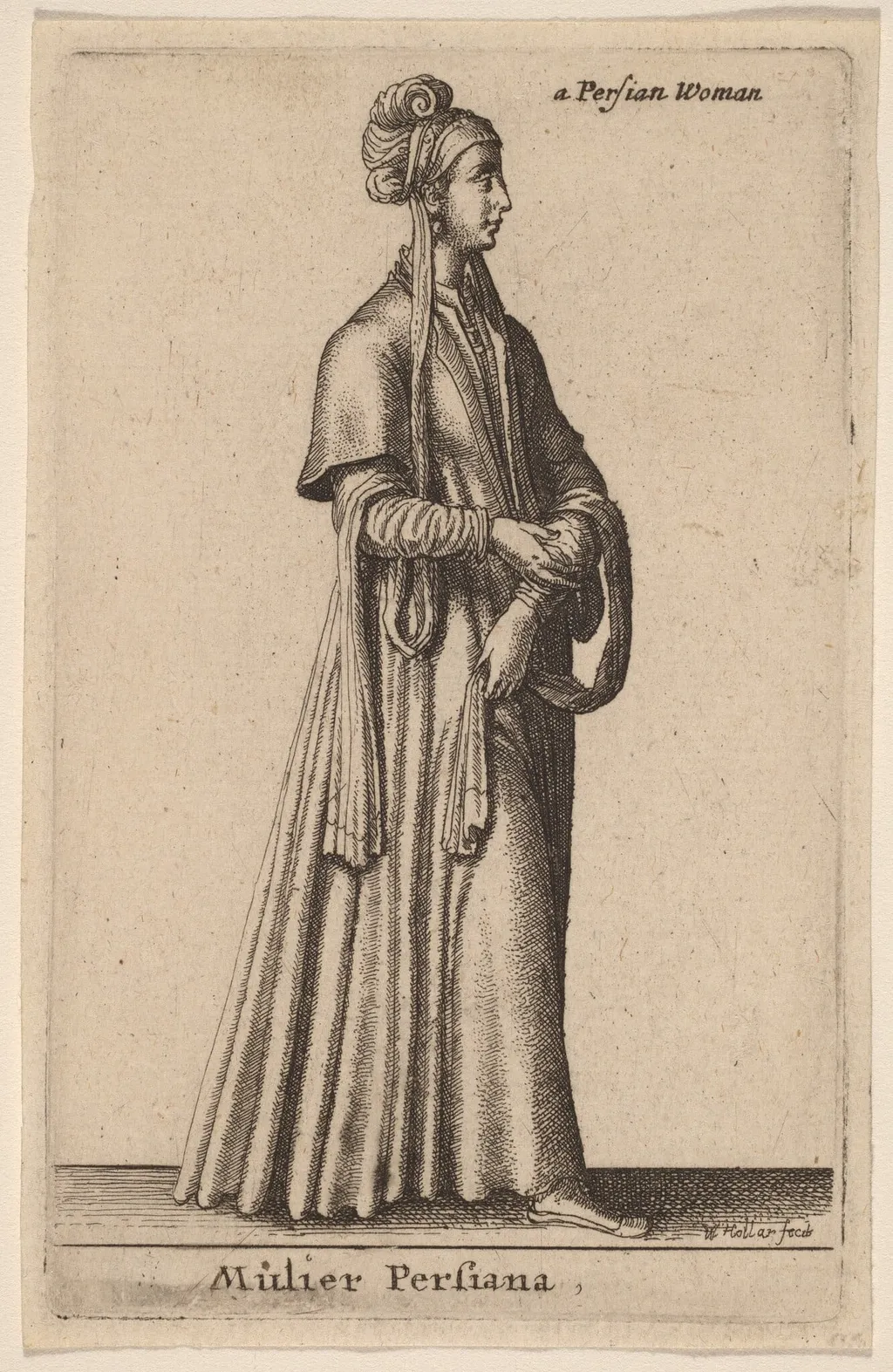
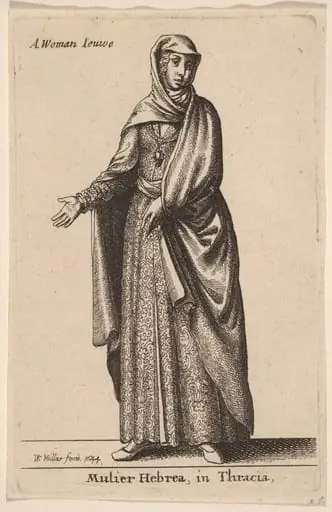
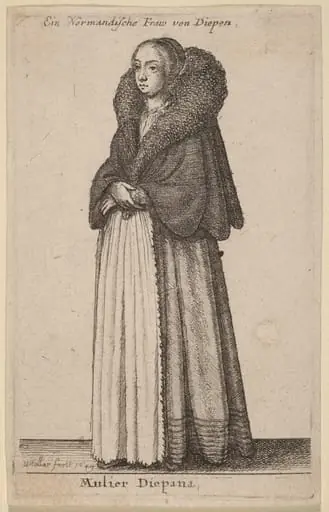
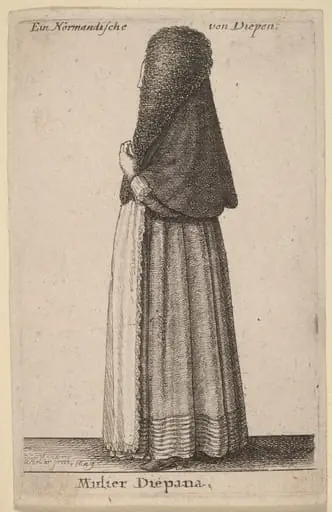
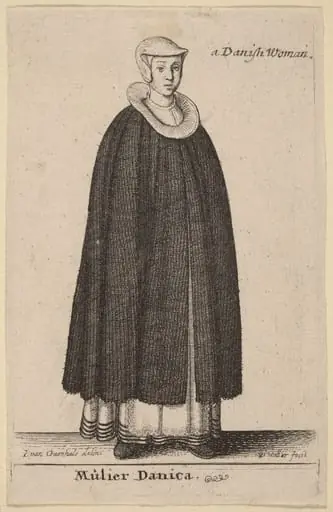
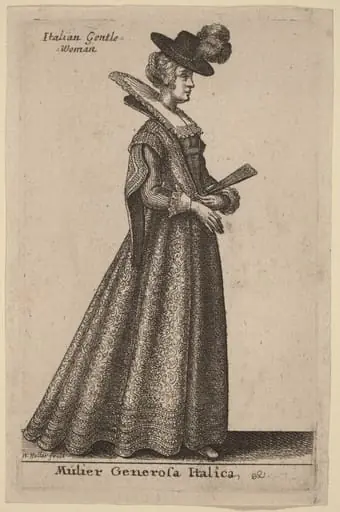
Mulier Persiana is an ink print by the Baroque artist Wenceslaus Hollar. It dates from 1644 and is held in the collection of the National Gallery of Art.
About this work
Overview
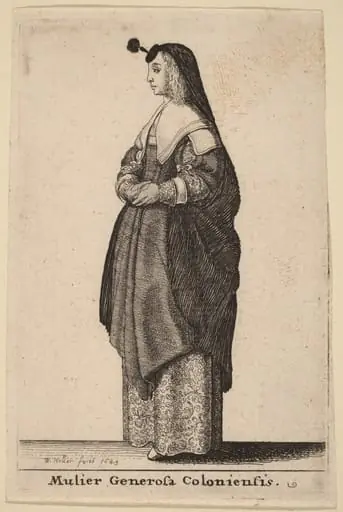
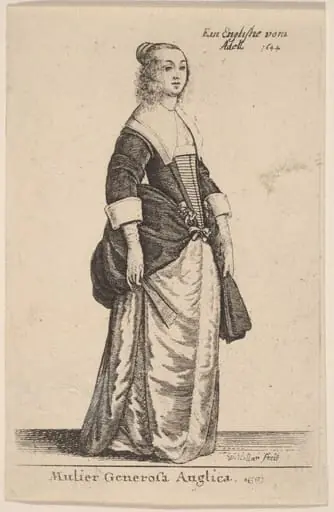
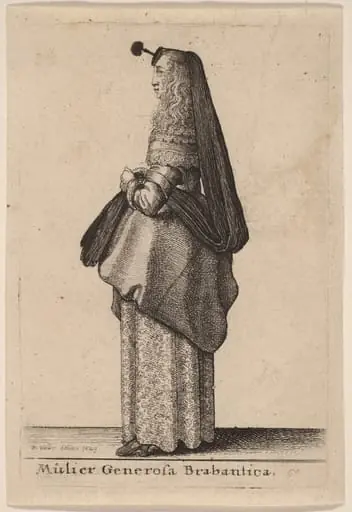
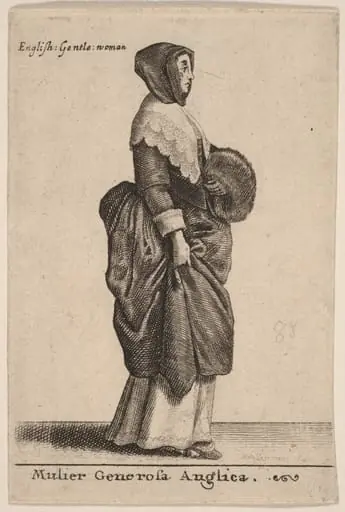
Created circa 1644, *Mulier Persiana* is an etching by the Czech-born artist Wenceslaus Hollar, who spent the bulk of his professional life in England. Executed in black and white, the print presents a solitary female figure rendered in profile, her attire and posture captured through delicate line work that emphasizes the texture of the fabric.
Subject & Meaning
The composition portrays a woman identified by the Latin title as a "Persian woman," though her dress—a long flowing gown with a draped cape—bears a stronger resemblance to contemporary European fashion. The figure holds a cloth or shawl, and her high coiffure adds a decorative element, suggesting Hollar’s curiosity about exotic identities filtered through familiar visual conventions.
Technique & Style
Hollar employed the etching process, incising fine lines into a copper plate that were then inked and pressed onto paper. The resulting image is distinguished by intricate hatching that models the folds of the garment and delineates the figure’s silhouette, reflecting the artist’s reputation for meticulous detail in his prints and his skill in rendering texture without colour.
History & Provenance
Active in the mid‑seventeenth century, Hollar was noted for his cityscapes and landscapes, yet this work demonstrates his broader interest in varied subjects. While the print’s early ownership records are scarce, it remains associated with Hollar’s English period, illustrating the range of his output beyond topographical studies.
Artist & collection
Artist
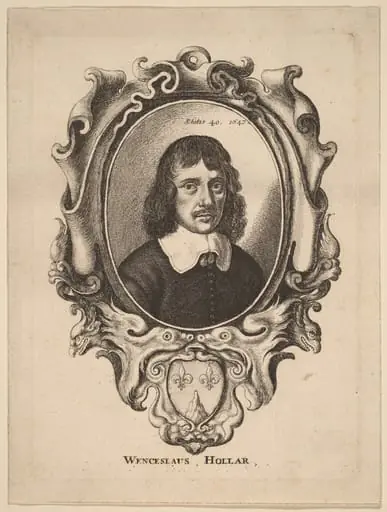
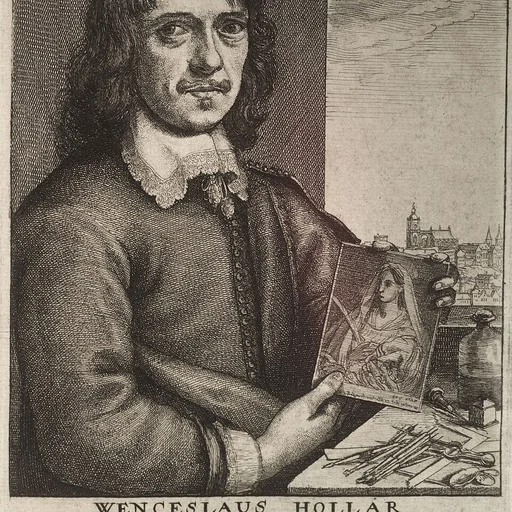
Wenceslaus Hollar (Czech: Václav Hollar (Czech pronunciation: ), German: Wenzel Hollar; 23 July 1607 – 25 March 1677) was a Czech engraver, etcher and painter.