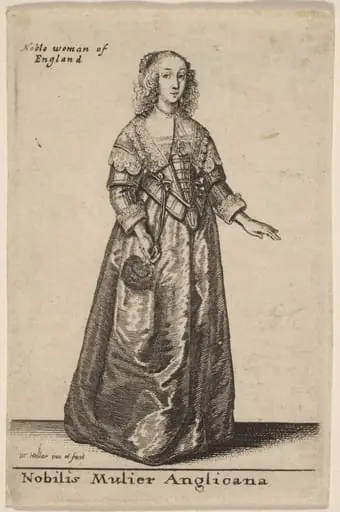
Artwork
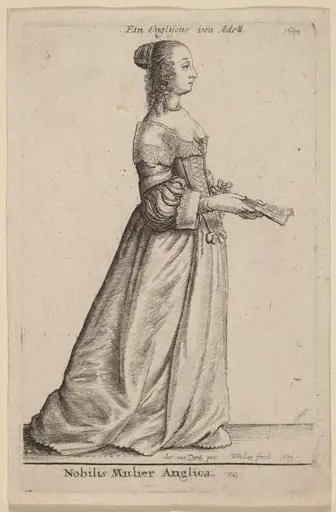
Nobilis Mulier Aulica Anglicana
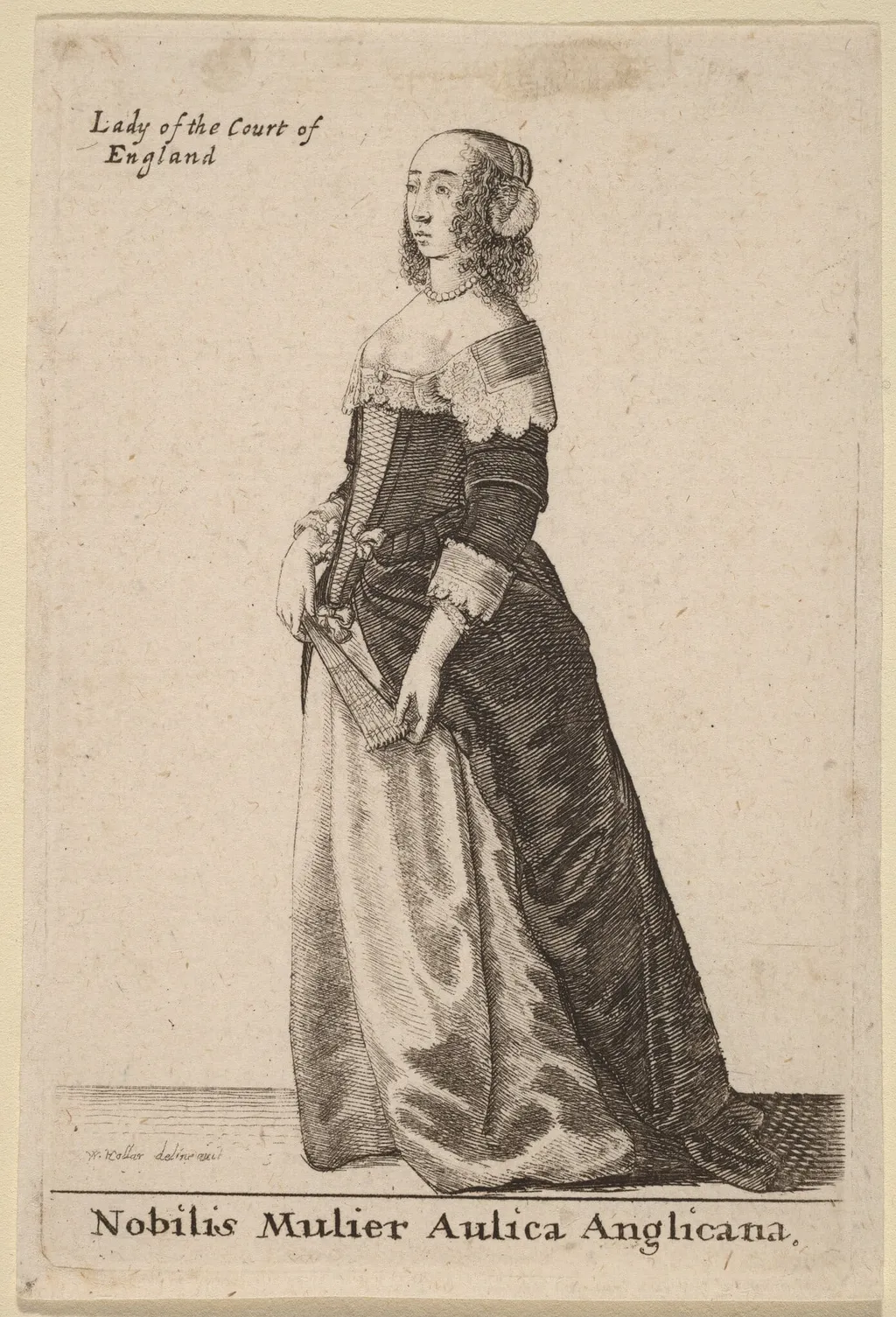
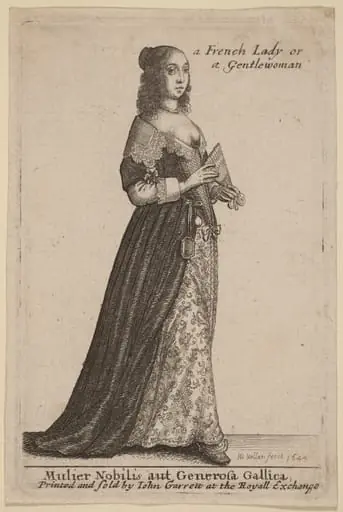
Nobilis Mulier Aulica Anglicana is an ink print by the Baroque artist Wenceslaus Hollar. It dates from 1643 and is held in the collection of the National Gallery of Art.
About this work
Overview
Created in 1643, this black‑and‑white print by Wenceslaus Hollar portrays a woman in elaborate English court dress. The composition centers the figure, whose folded skirt, high ruffled collar, and poised hand convey a formal, aristocratic presence. The title, *Nobilis Mulier Aulica Anglicana*, identifies her as an English noble lady.
Subject & Meaning
The sitter is rendered in full court attire, suggesting status and refinement within the 17th‑century English aristocracy. Her hand placed on the hip and the object she holds—interpreted as a fan or small book—reinforce the conventions of genteel femininity and the cultural importance of courtly display.
Technique & Style
Executed as an etching, the work relies on fine, incised lines to model the texture of fabric, hair, and accessories. Hollar’s characteristic precision yields delicate shading and a clear sense of depth, allowing the intricate folds of the skirt and the delicate ruffles of the collar to emerge from the monochrome surface.
History & Provenance
Wenceslaus Hollar, a Czech‑born engraver who spent most of his professional life in England, produced this piece during his prolific period of portrait and social subject work. He died and was interred in London, where his prints continued to circulate among collectors of English court imagery.
Context
The print reflects mid‑17th‑century English court culture, a time when portraiture served both personal commemoration and the reinforcement of social hierarchy. Hollar’s focus on detailed representation aligns with contemporary expectations for accuracy in depicting rank and fashion.
Artist & collection
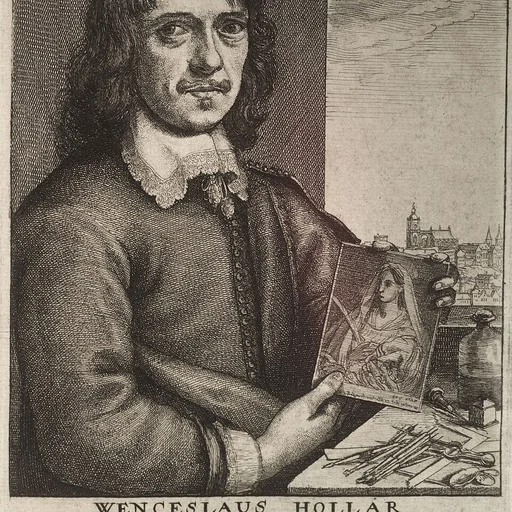
Artist
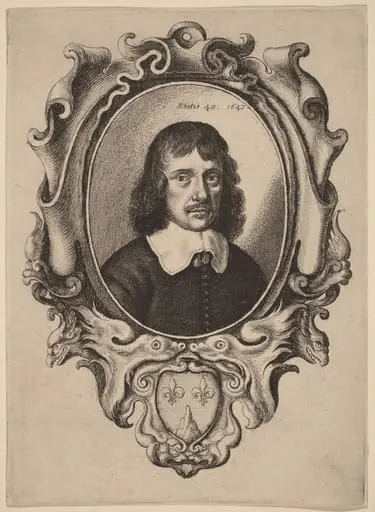
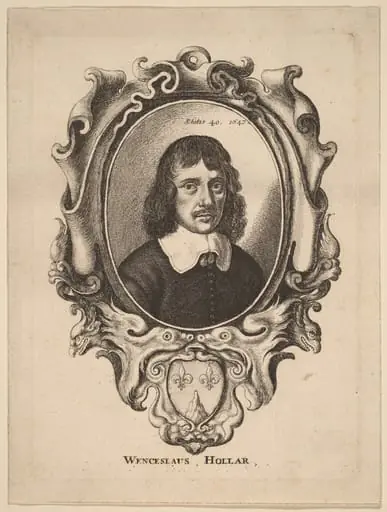
Wenceslaus Hollar (Czech: Václav Hollar (Czech pronunciation: ), German: Wenzel Hollar; 23 July 1607 – 25 March 1677) was a Czech engraver, etcher and painter.