Artwork
Nobilis Mulier Anglicana
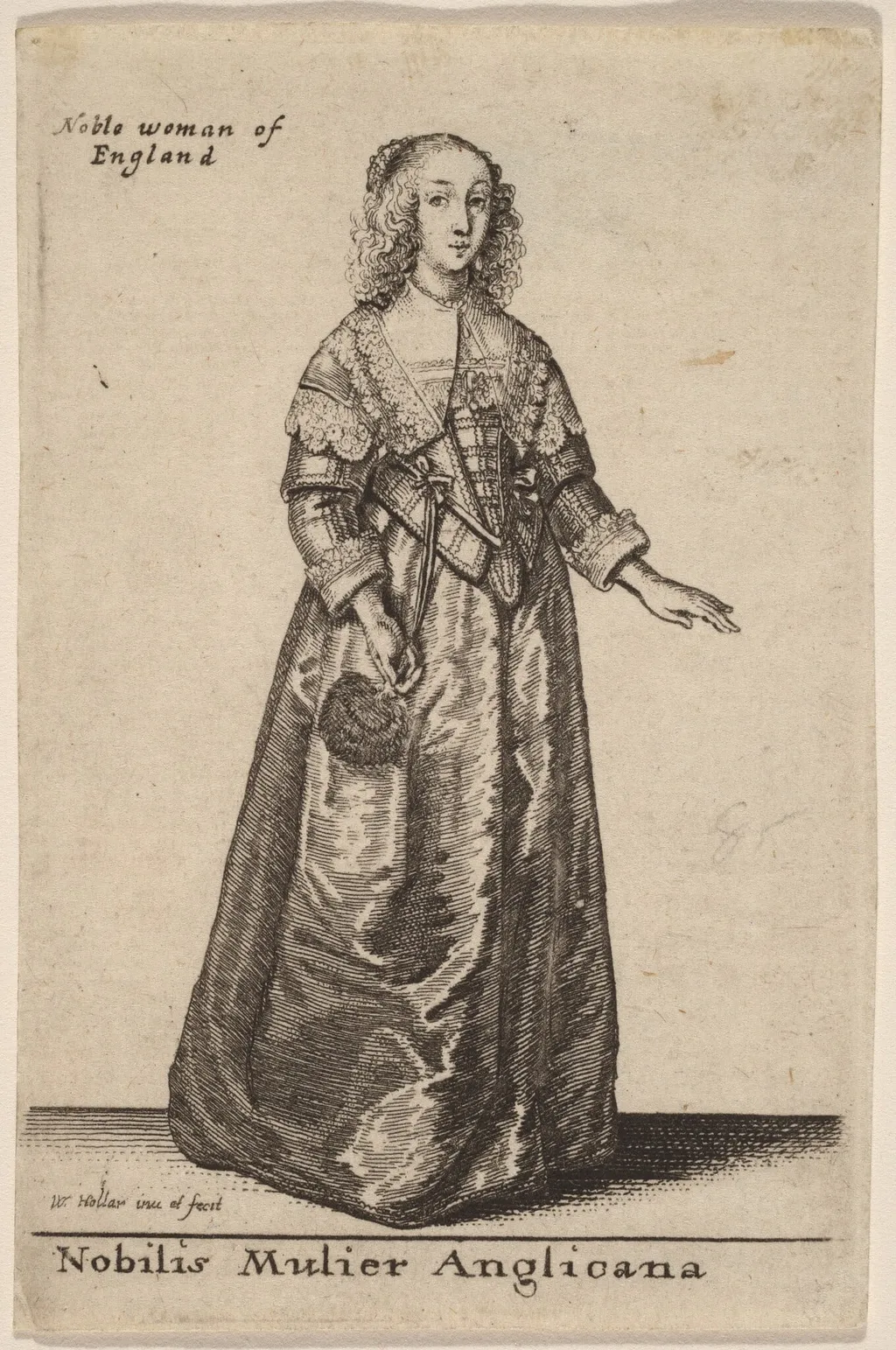
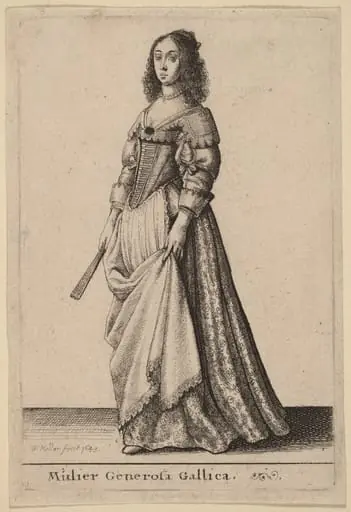
Nobilis Mulier Anglicana is an ink print by the Baroque artist Wenceslaus Hollar. It dates from 1643 and is held in the collection of the National Gallery of Art.
About this work
Overview
Nobilis Mulier Anglicana is a 1643 etching by Wenceslaus Hollar, a Czech-born engraver active primarily in England. The work portrays a noble Englishwoman in contemporary attire, characteristic of Hollar's period focus on portraiture and costume.
Subject & Meaning
The etching depicts a noblewoman in English dress, emphasizing elegance and refinement through her curly hairstyle, lace-trimmed cloak, and long dress. Her left arm is extended, set against a plain background that highlights her features and expression.
Technique & Style
Executed in etching, the piece showcases Hollar's attention to detail, typical of his work in various genres. The simple, unadorned background contrasts with the intricate rendering of the subject's clothing and hair.
History & Provenance
Created in 1643, the etching is part of Hollar's output during his time in London, where he spent most of his career until his death.
Context
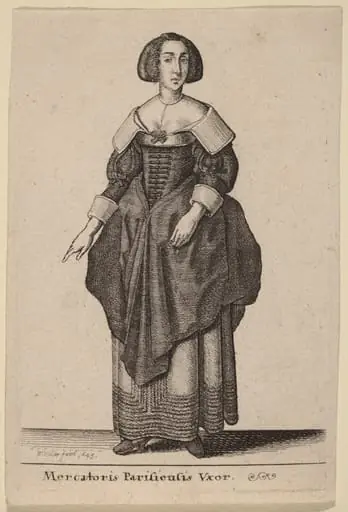
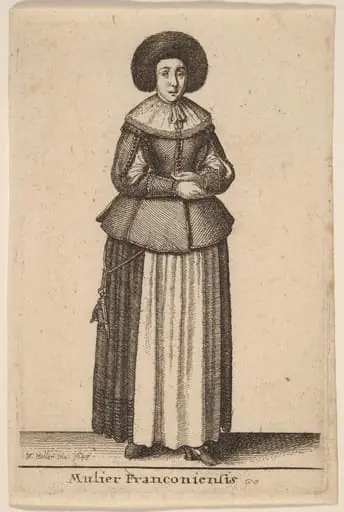
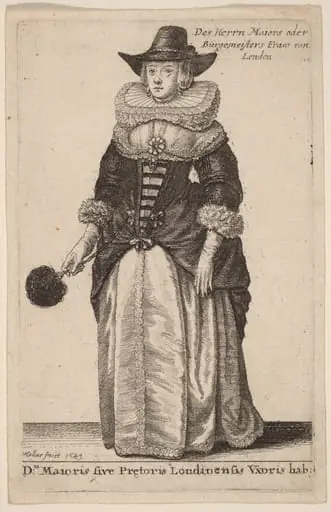
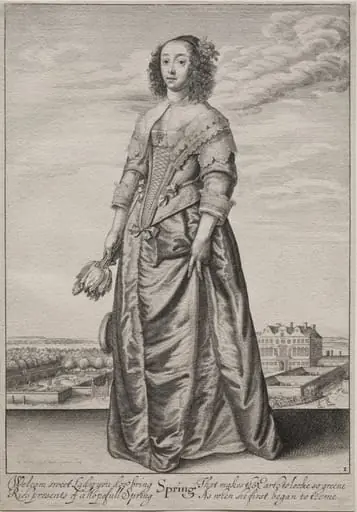
Nobilis Mulier Anglicana reflects 17th-century English nobility's attire and Hollar's adaptation to local subjects during his English residency, diverging from his more common landscapes and cityscapes.
Legacy
While specific legacy details of *Nobilis Mulier Anglicana* are not highlighted, it contributes to Hollar's broader reputation for detailed, observant prints of his time, including portraits and costumes.
Artist & collection
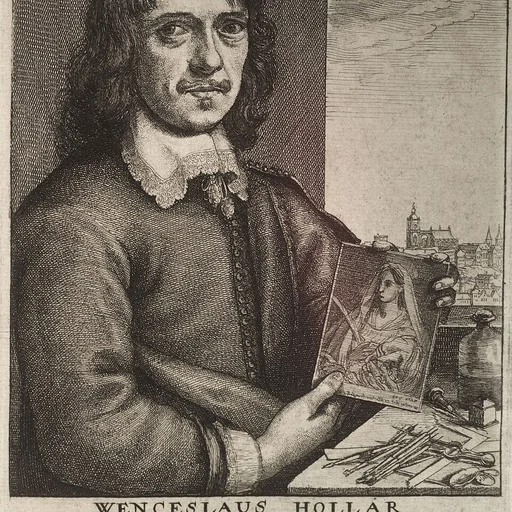
Artist
Wenceslaus Hollar (Czech: Václav Hollar (Czech pronunciation: ), German: Wenzel Hollar; 23 July 1607 – 25 March 1677) was a Czech engraver, etcher and painter.