Artwork
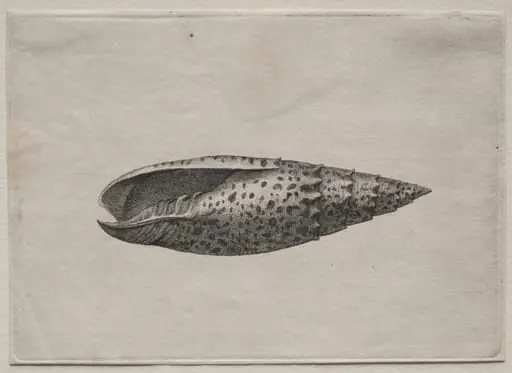
Shell (Murex brandaris)
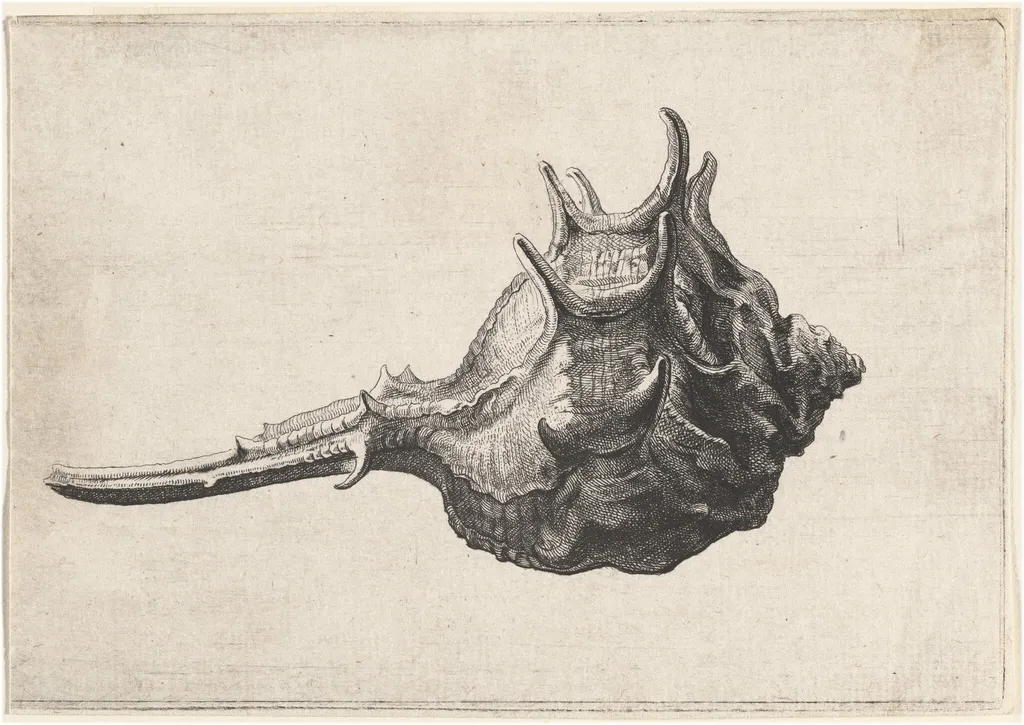
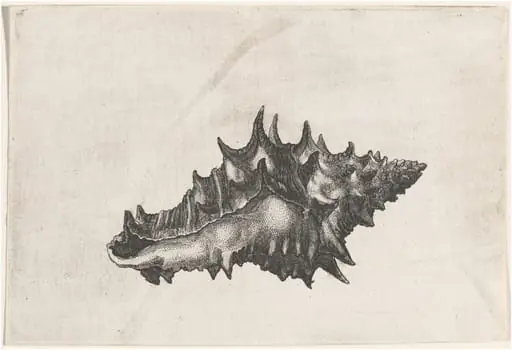
Shell (Murex brandaris) is an ink print by the Baroque artist Wenceslaus Hollar. It dates from 1645 and is held in the collection of the National Gallery of Art.
About this work
Overview
The print belongs to a body of observational studies that emerged during a period of growing scientific curiosity about the natural world.
Created around 1645 by Wenceslaus Hollar, *Shell (Murex brandaris)* is a black-and-white etching on laid paper that captures a single marine gastropod with meticulous precision. Hollar, a Czech artist active in England, employed the etching technique to render fine surface details, reflecting his broader interest in natural forms alongside his more famous topographical works. The print belongs to a body of observational studies that emerged during a period of growing scientific curiosity about the natural world.
Subject & Meaning
The subject is *Murex brandaris*, a predatory sea snail known for producing a rare purple dye in antiquity. Hollar’s depiction focuses on the shell’s physical structure—its ridged surface, curved spire, and elongated siphonal canals—without symbolic embellishment. The image functions as a neutral record, aligning with 17th-century empirical interests in taxonomy and natural history, where accurate representation served scientific and aesthetic ends alike.
Technique & Style
Hollar used etching to incise fine lines into a metal plate, which was then inked and pressed onto paper. The resulting image reveals sharp, controlled strokes that define the shell’s textured surface and three-dimensional form. His style emphasizes clarity and detail over expressive flourish, with careful hatching to suggest weight and depth. The use of laid paper, with its visible chain lines, further grounds the work in the material practices of mid-17th-century printmaking.
History & Provenance
Hollar produced this etching during his years in England, where he worked under the patronage of the Earl of Arundel and other collectors interested in natural specimens. While the exact provenance of this specific impression is undocumented, it likely circulated among scholars and artists who valued precise natural studies. Hollar remained in London until his death in 1677 and was interred at St Margaret’s Church, Westminster, a testament to his established presence in English artistic circles.
Context
In the mid-1600s, European intellectuals increasingly turned to direct observation of nature, influenced by emerging scientific methods. Hollar’s shell study fits within this trend, paralleling the work of naturalists compiling illustrated catalogs of flora and fauna. Unlike decorative shell images of earlier periods, this etching avoids ornamentation, instead prioritizing anatomical accuracy—a shift reflecting the growing authority of empirical science over symbolic representation.
Legacy
Hollar’s *Shell (Murex brandaris)* contributes to a legacy of printmaking that bridged art and science. Though not widely exhibited today, such works informed later natural history illustrations and demonstrated the potential of etching as a tool for precise documentation. His approach influenced subsequent generations of artists and engravers who sought to render the natural world with fidelity, laying groundwork for the illustrated scientific texts of the 18th century.
Artist & collection
Artist
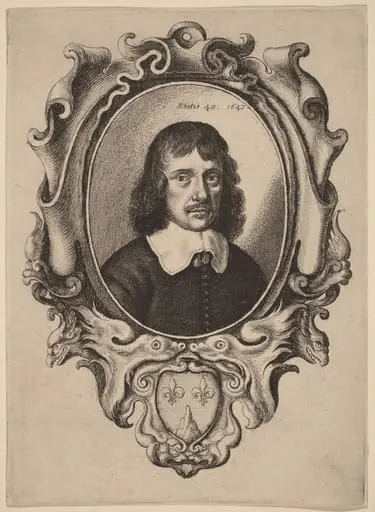
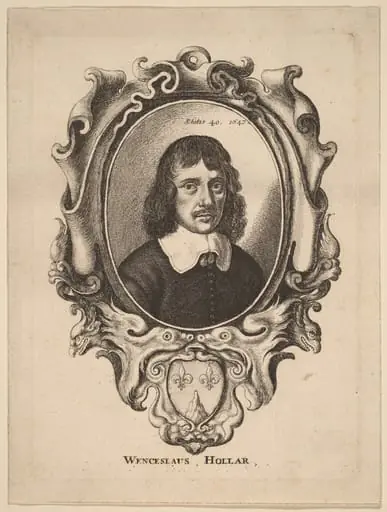
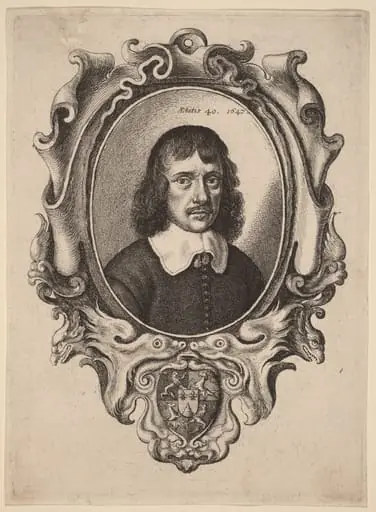
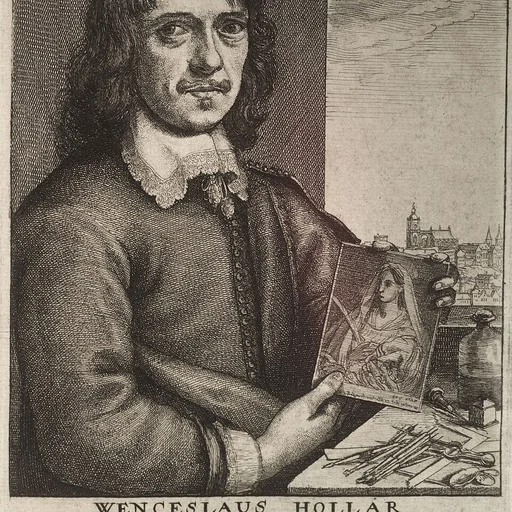
Wenceslaus Hollar (Czech: Václav Hollar (Czech pronunciation: ), German: Wenzel Hollar; 23 July 1607 – 25 March 1677) was a Czech engraver, etcher and painter.