Artwork
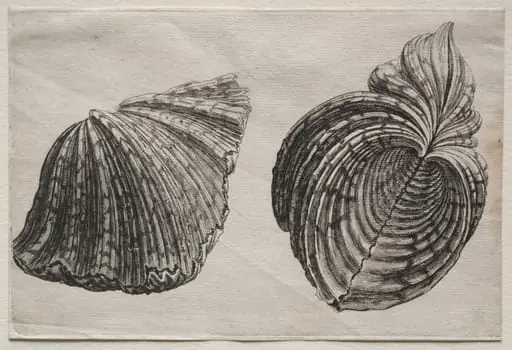
Shells: Mitra papalis L
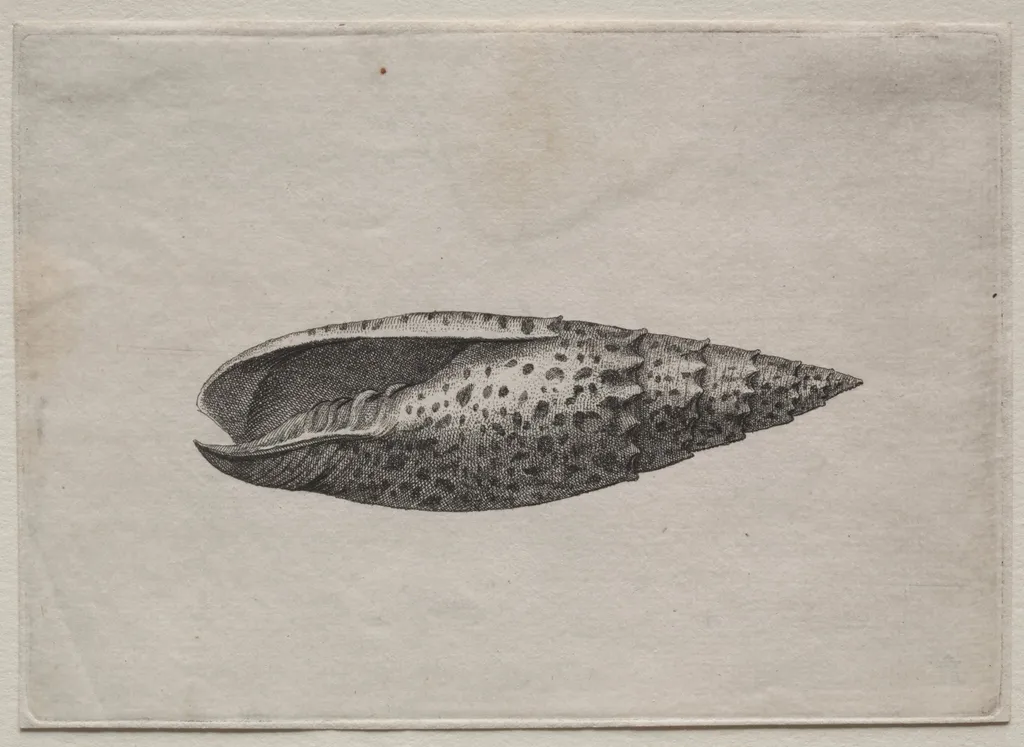
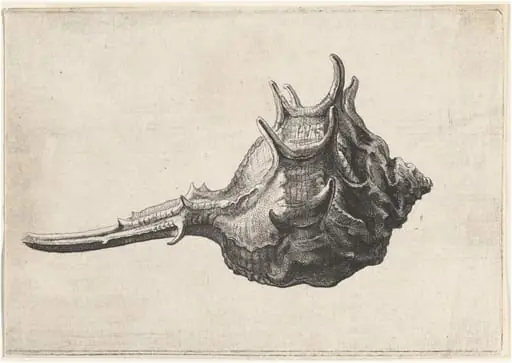
Shells: Mitra papalis L is a print by the Baroque artist Wenceslaus Hollar. It dates from 1644 and is held in the collection of the Cleveland Museum of Art.
About this work
Overview
Wenceslaus Hollar, a Bohemian artist active in 17th-century England, produced this engraved study of a marine shell around 1644. Though best known for topographical views, he also turned his meticulous draftsmanship to natural specimens. This print is one of several such observations, reflecting a broader interest in documenting the natural world through precise graphic means.
Subject & Meaning
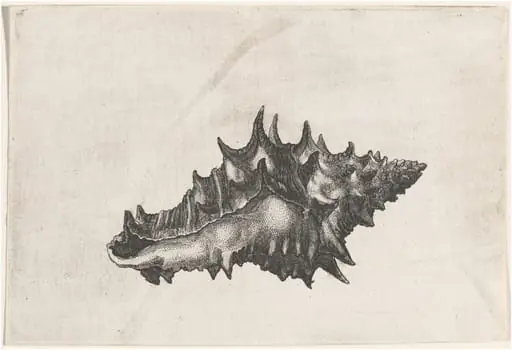
The print focuses on a single specimen of Mitra papalis, a type of sea snail shell. Rendered without context or background, the emphasis lies in its form and surface texture. The image functions as a visual record, aligning with contemporary scientific curiosity about natural history, rather than as symbolic or decorative art.
Technique & Style
Hollar employed fine, controlled etching lines to capture the shell’s ridges, spirals, and subtle surface variations. His technique prioritizes accuracy over embellishment, with delicate hatching defining volume and shadow. The composition is tightly framed, isolating the object to highlight its structural complexity and natural detail.
History & Provenance
Created during Hollar’s time in England, the print was likely made for private or scholarly circulation rather than public display. It entered the Cleveland Museum of Art’s collection as part of a broader group of Hollar’s natural studies, preserved for their technical precision and historical value in early scientific illustration.
Context
In the mid-17th century, European collectors and naturalists increasingly documented flora and fauna through detailed imagery. Hollar’s shell studies fit within this trend, paralleling the work of contemporaries who sought to classify and understand nature through visual precision, prior to the formalization of modern biology.
Legacy
Hollar’s shell engravings remain significant as early examples of scientific observation in print. While not widely exhibited today, they contribute to the understanding of how natural history was visually recorded before photographic technology, offering insight into the intersection of art and empirical study in the early modern period.
Artist & collection
Artist
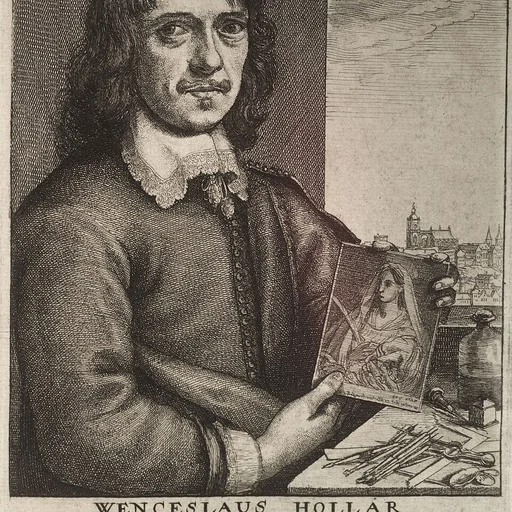
Wenceslaus Hollar (Czech: Václav Hollar (Czech pronunciation: ), German: Wenzel Hollar; 23 July 1607 – 25 March 1677) was a Czech engraver, etcher and painter.