Artwork
The Four Windmills
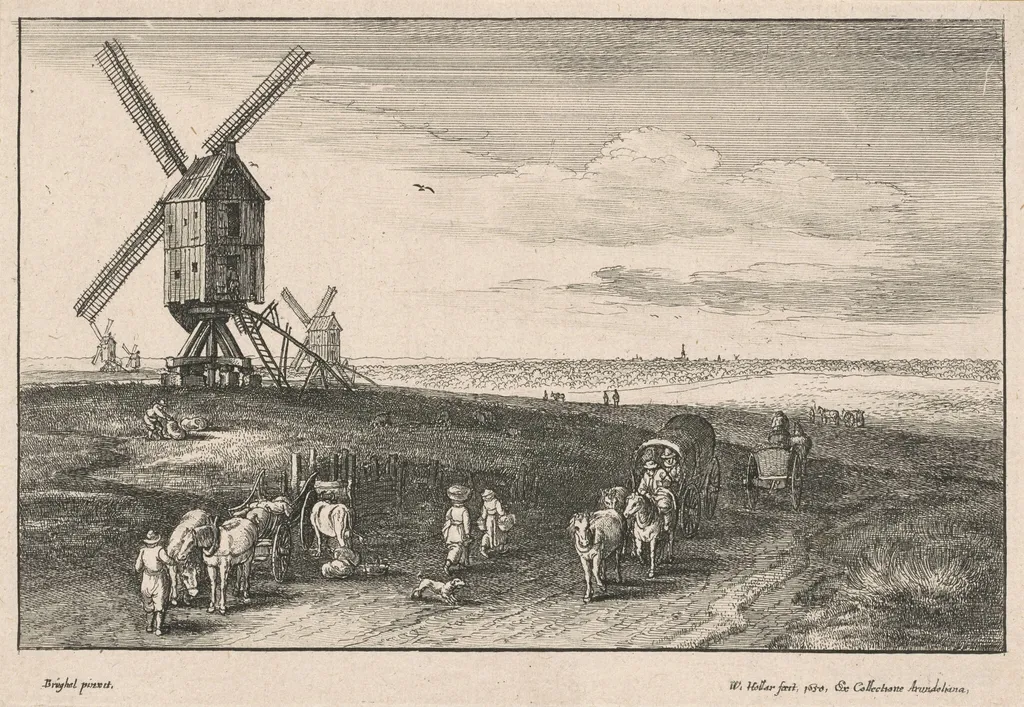
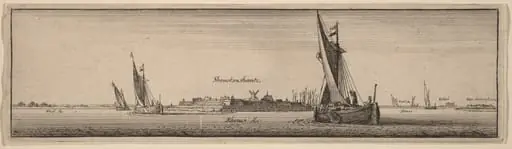
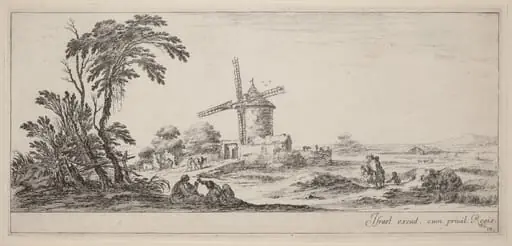
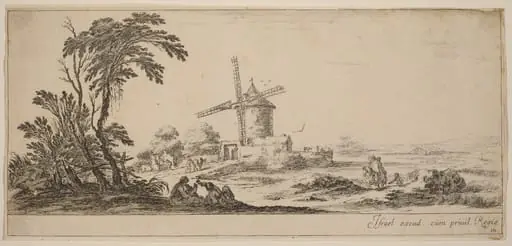
The Four Windmills is an ink print by the Baroque artist Wenceslaus Hollar. It dates from 1650 and is held in the collection of the National Gallery of Art.
About this work
Overview
Created in 1650, *The Four Windmills* is an etching by Wenceslaus Hollar, a Czech-born artist who worked largely in England. The print depicts a linear landscape of four windmills receding into distance, rendered in monochrome with precise line work that emphasizes form and shadow. The piece is part of the National Gallery of Art’s collection in Washington, D.C.
Subject & Meaning
The composition presents a flat, open terrain punctuated by four windmills, each rendered with diminishing scale to convey depth. Small human figures placed at the base of the structures provide a sense of proportion, inviting viewers to consider the relationship between architecture and the surrounding landscape.
Technique & Style
Hollar employed the etching process, incising the image onto a copper plate before printing. His characteristic attention to architectural detail is evident in the Dutch-inspired windmill designs, while the stark black‑and‑white palette highlights the crispness of his line work and the subtle gradations of shadow.
History & Provenance
Hollar produced the work during his travels, integrating observations of foreign scenery into his repertoire of cityscapes and vedute. After changing hands over the centuries, the etching entered the National Gallery of Art, where it remains accessible to the public.
Artist & collection
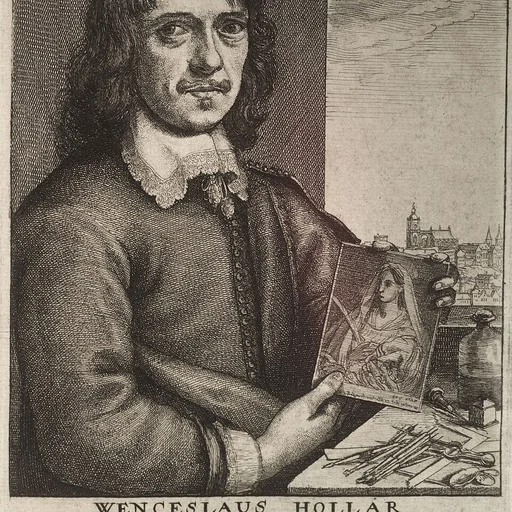
Artist
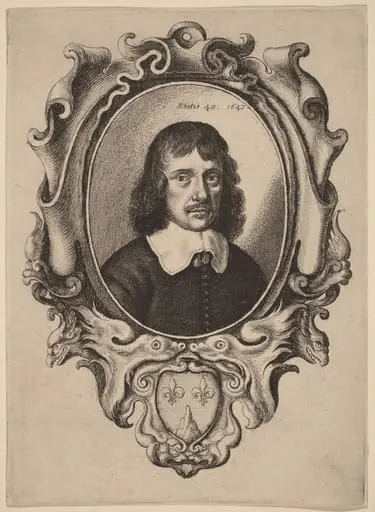
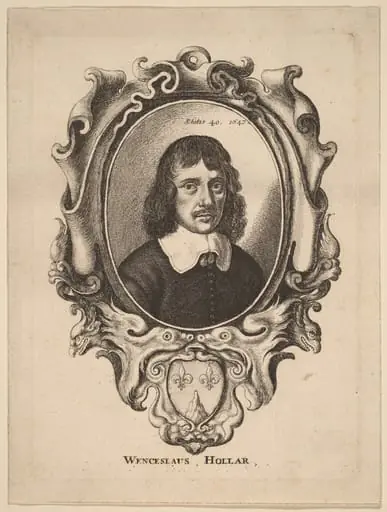
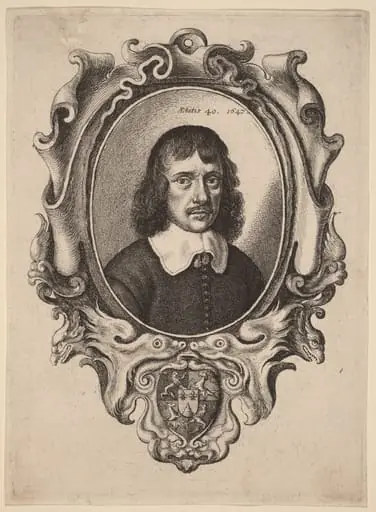
Wenceslaus Hollar (Czech: Václav Hollar (Czech pronunciation: ), German: Wenzel Hollar; 23 July 1607 – 25 March 1677) was a Czech engraver, etcher and painter.