Artwork
Waggoner
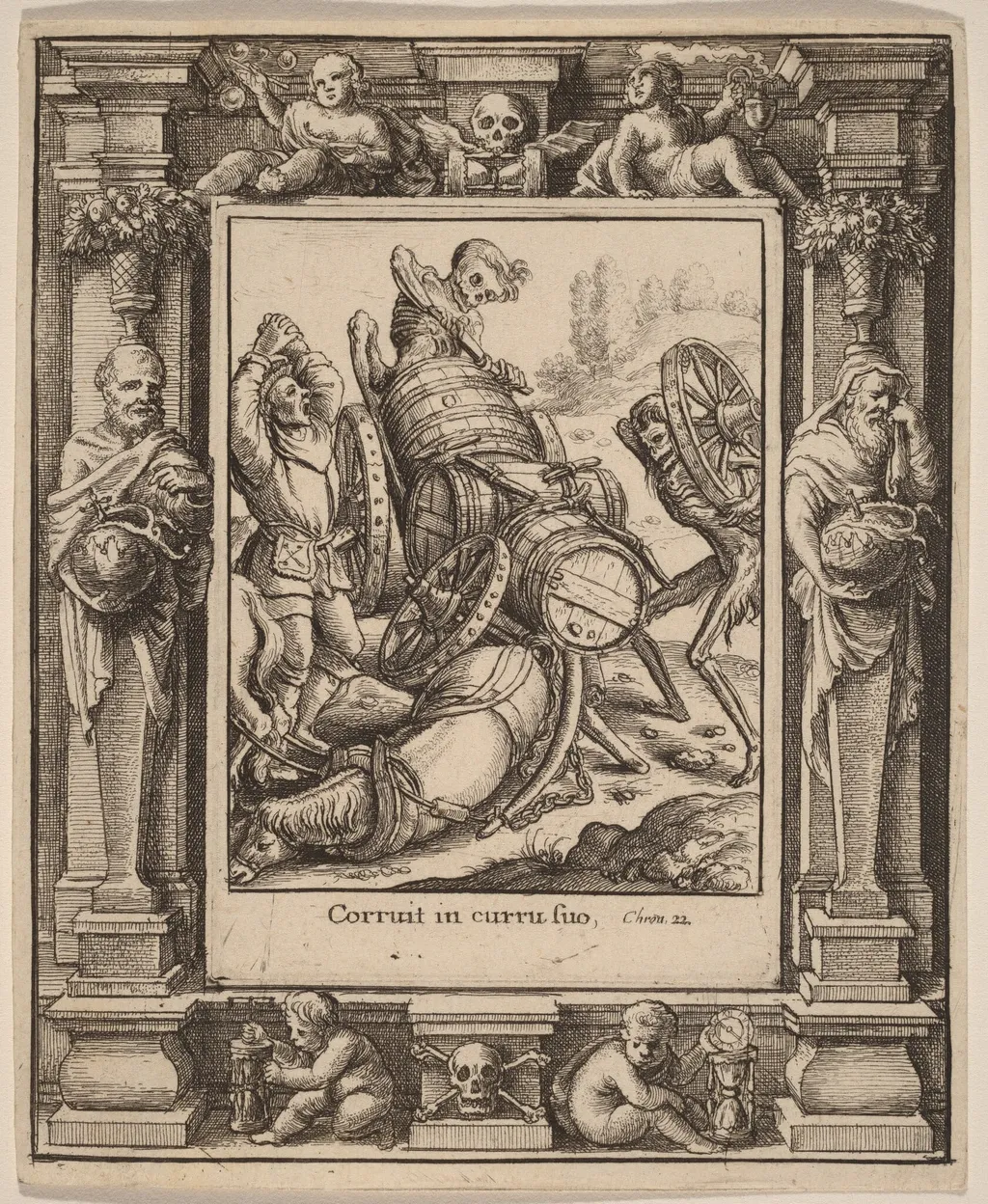
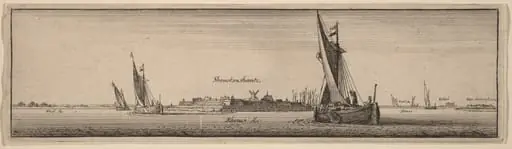
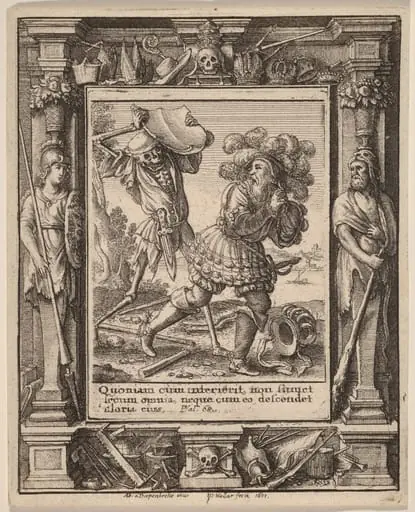
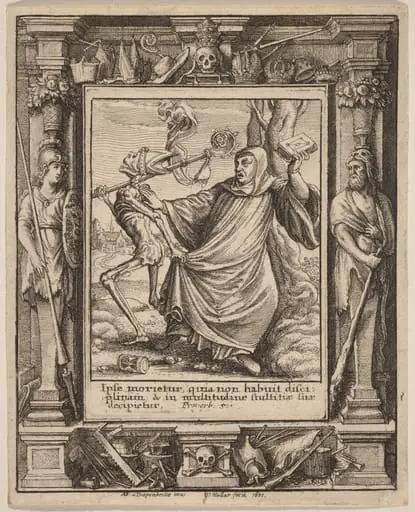
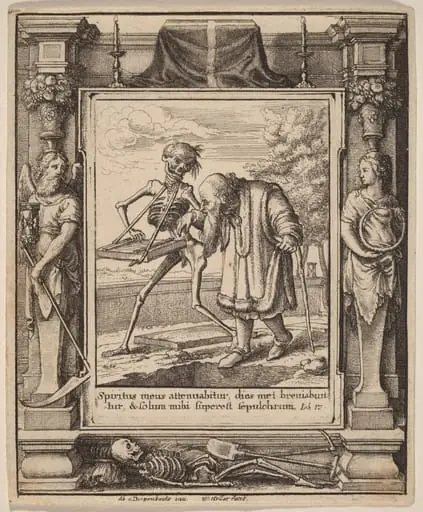
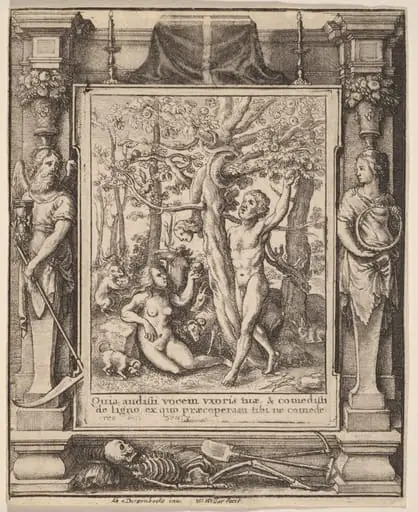
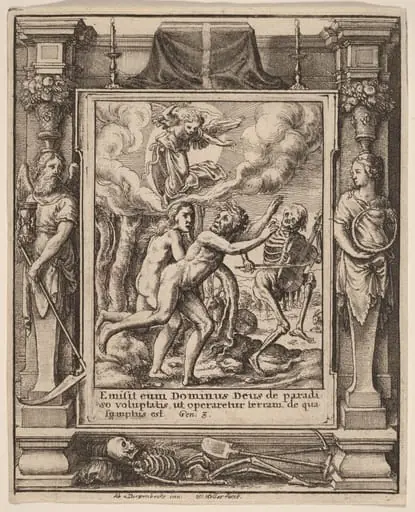
Waggoner is an ink print by the Baroque artist Wenceslaus Hollar. It dates from 1651 and is held in the collection of the National Gallery of Art.
About this work
Overview
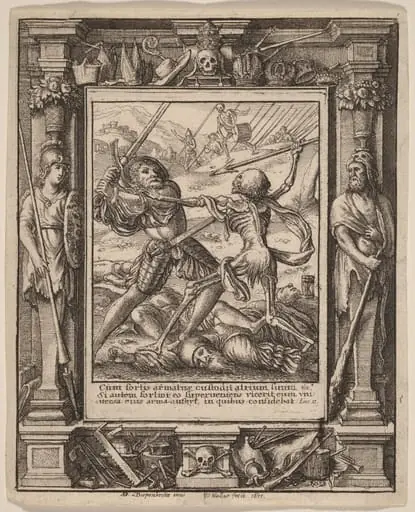
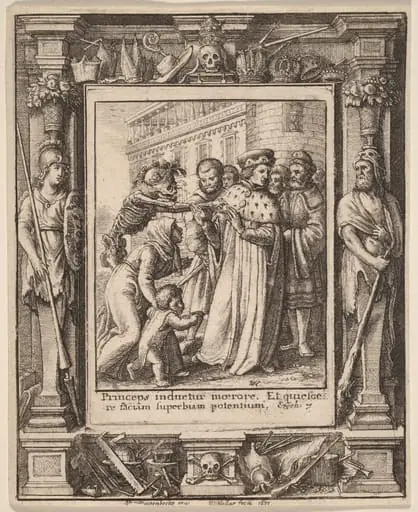
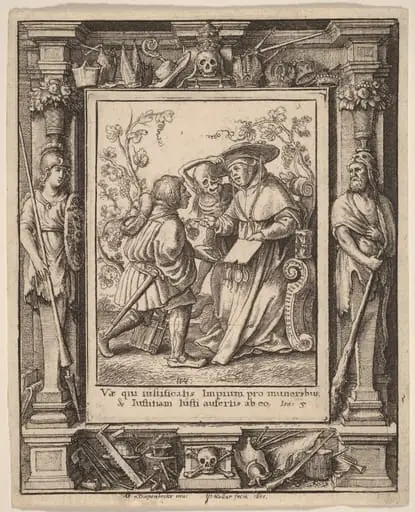
Created in 1651, *Waggoner* is an etching by the Czech-born printmaker Wenceslaus Hollar, executed with a decorative frame titled *Democritus and Heraclitus*.
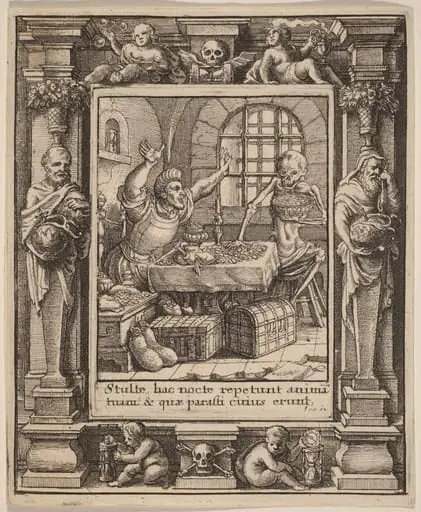
Created in 1651, *Waggoner* is an etching by the Czech-born printmaker Wenceslaus Hollar, executed with a decorative frame titled *Democritus and Heraclitus*. The central image presents a tangled, half‑buried skeletal figure surrounded by struggling figures, while cherubic motifs bearing skulls and hourglasses cap the composition. The work exemplifies Hollar’s meticulous approach to crowded, narrative scenes within a richly ornamented border.
Subject & Meaning
The central motif of a skeletal body ensnared in ropes, accompanied by onlookers pulling at the cords, evokes a visual allegory of ruin. The Latin inscription “Corruit in curru suo” (“He fell from his chariot”) reinforces a moral warning about the sudden collapse of status or ambition. The cherubs with symbols of mortality and time frame the drama, underscoring the Baroque preoccupation with transience and moral instruction.
Technique & Style
Hollar employed fine, layered lines characteristic of his etching practice, achieving intricate detail in both the crowded foreground and the elaborate border. The contrast between sharply rendered figures and the softer, ornamental architecture of columns and miniature scenes demonstrates his skill in balancing narrative density with decorative composition, a hallmark of his topographical and veduta prints.
History & Provenance
Wenceslaus Hollar (1607‑1677) was born in Prague and spent the majority of his professional life in England, where he produced a prolific output of prints documenting urban and rural vistas. *Waggoner* is catalogued as Pennington 233A, reflecting its inclusion in the comprehensive Pennington collection of Hollar’s works. The print has remained in museum holdings since the 19th century, illustrating the artist’s enduring scholarly interest.
Context
The etching belongs to the Baroque period, a time when visual art often combined dramatic action with moralizing themes. The inclusion of the philosophical figures Democritus and Heraclitus in the border connects the image to contemporary debates about change and permanence, echoing the central allegory of downfall and the fleeting nature of worldly power.
Artist & collection
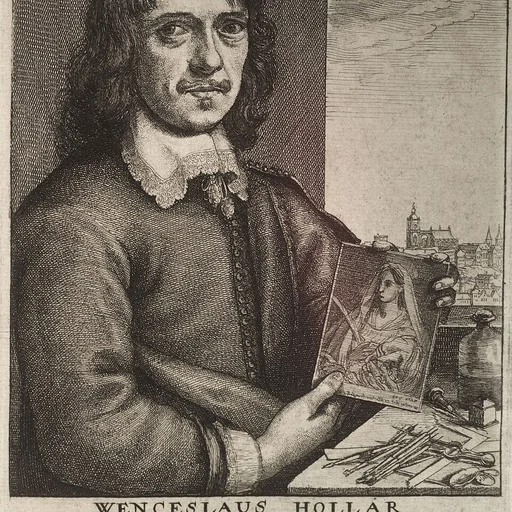
Artist
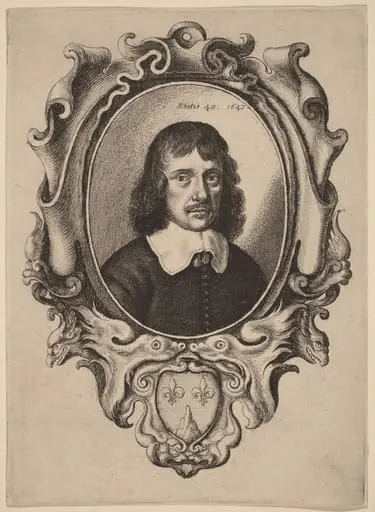
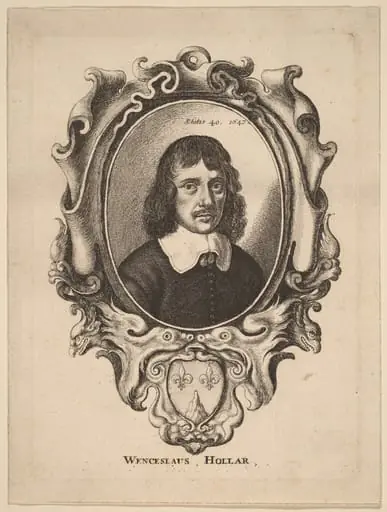
Wenceslaus Hollar (Czech: Václav Hollar (Czech pronunciation: ), German: Wenzel Hollar; 23 July 1607 – 25 March 1677) was a Czech engraver, etcher and painter.