Artwork
Convicted for having sold crushed sandstone instead of brown sugar
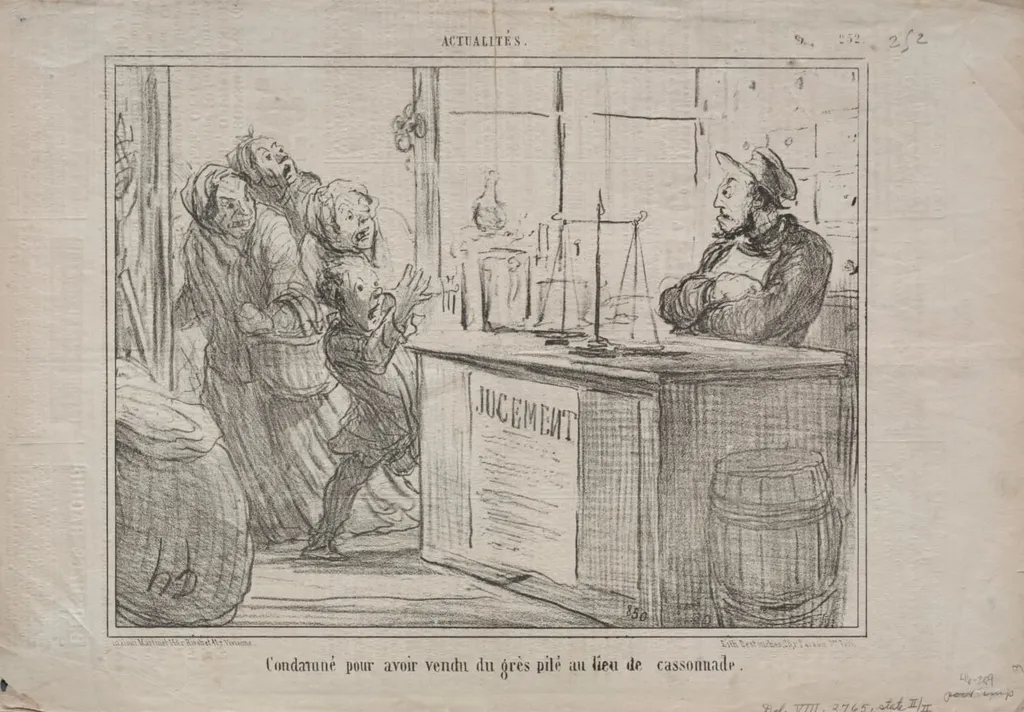
Convicted for having sold crushed sandstone instead of brown sugar is a print by the Impressionist artist Honoré Daumier. It dates from 1855 and is held in the collection of the Cleveland Museum of Art. This print, published in Le Charivari on December 7, 1855, is part of a weekly series documenting contemporary events through satire.
About this work
Overview
This print, published in Le Charivari on December 7, 1855, is part of a weekly series documenting contemporary events through satire. It depicts a courtroom scene in which a man is convicted for substituting crushed sandstone for brown sugar. The image functions as social commentary, using absurdity to highlight perceived injustices in legal proceedings and regulatory enforcement of the time.
Subject & Meaning
The satire targets the rigidity of authorities who punish minor or dubious offenses with disproportionate severity, questioning the fairness of legal outcomes.
The man on trial is portrayed with visible distress, emphasizing the irrationality of his conviction. The charge—selling inert stone as food—exaggerates real concerns about food adulteration, turning a legitimate public health issue into a farce. The satire targets the rigidity of authorities who punish minor or dubious offenses with disproportionate severity, questioning the fairness of legal outcomes.
Technique & Style
Rendered in fine line etching, the image employs sharp contrasts and detailed facial expressions to convey emotion. The courtroom setting is minimally furnished, focusing attention on the central figure and the absurdity of the charge. The artist uses exaggerated gestures and sparse background elements to amplify the comedic tone, characteristic of French satirical printmaking of the mid-nineteenth century.
History & Provenance
The print originated in Le Charivari, a Parisian illustrated newspaper known for its political and social caricatures. It was issued as plate 252 in the series 'News of the Day,' which compiled daily events through humorous illustrations. The work entered the collection of The Cleveland Museum of Art through documented acquisitions of 19th-century French prints, preserving its role as a historical document of public discourse.
Context
In 1850s France, food safety regulations were newly enforced amid rising urbanization and commercial fraud. Authorities cracked down on adulterated goods, sometimes with questionable evidence. This print reflects public skepticism toward these efforts, suggesting that legal actions could be arbitrary or overly zealous. Satire served as a tool to critique institutional overreach during a period of political instability.
Legacy
The print remains a representative example of how visual satire engaged with legal and civic life in 19th-century France. It contributed to a broader tradition of illustrated journalism that held power to account through humor. While not widely known outside specialized collections, it continues to inform studies of media, law, and public perception in the modern era.
Artist & collection
Artist
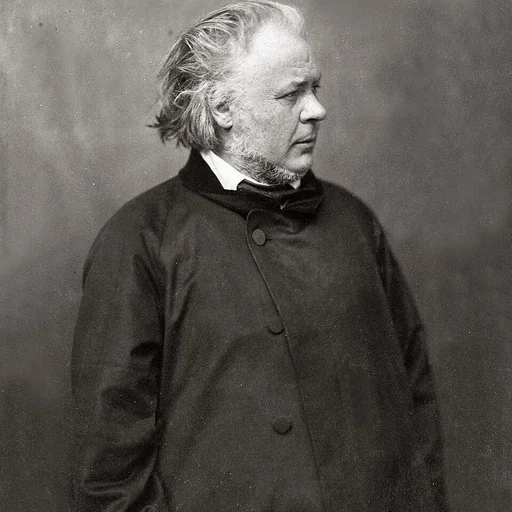
Honoré-Victorin Daumier was a French painter, sculptor, and printmaker, whose many works offer commentary on the social and political life in France, from the Revolution of 1830 to the fall of the Second French Empire in 1870.

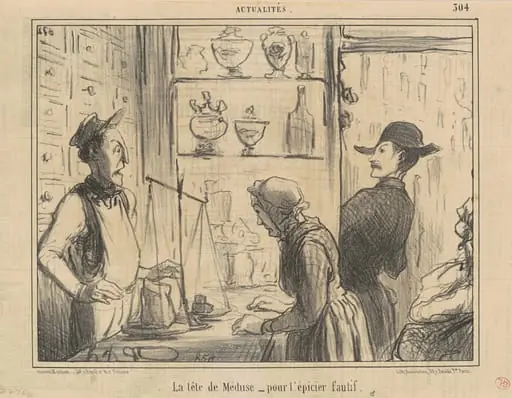 La tête de Méduse pour l'épicier fautif
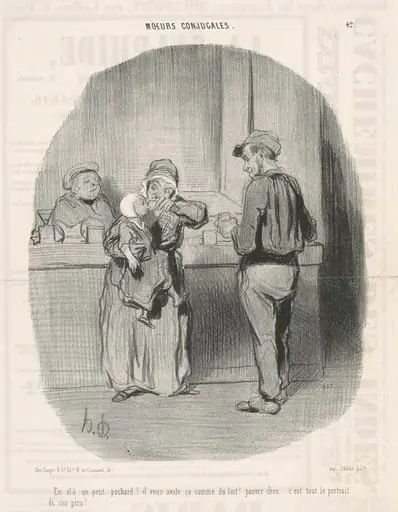 En v'là un petit pochard!
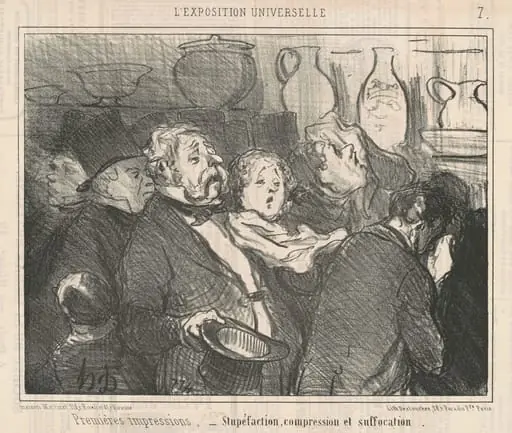 Premières impressions...Stupefaction ...
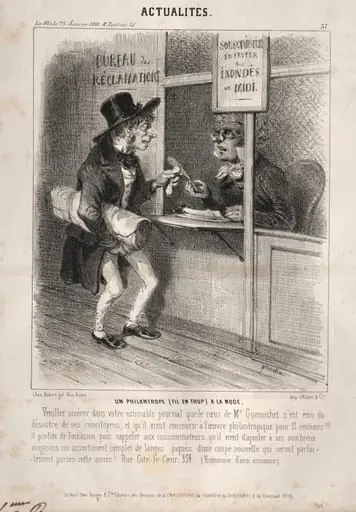 Actualités: Un Philantrope à la mode
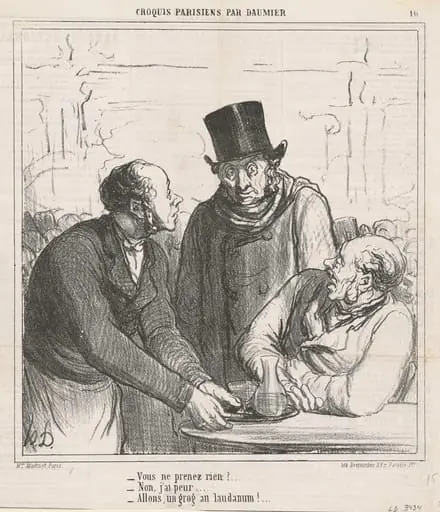 Vous ne prenez rien?
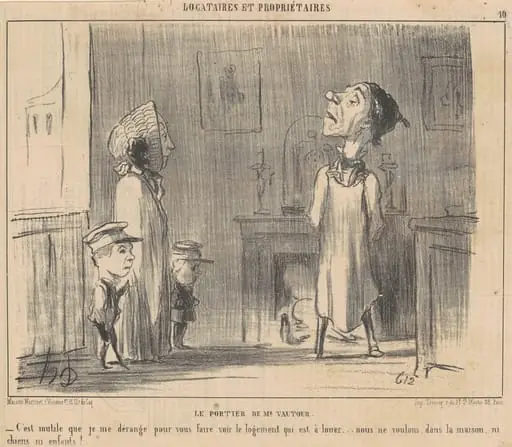 Le portier de Mr Vautour
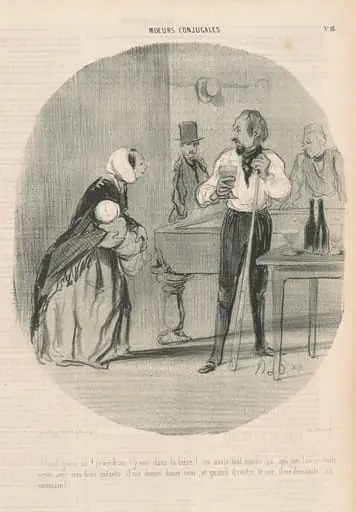 Grand Gueux va! je voudrais t'y voir
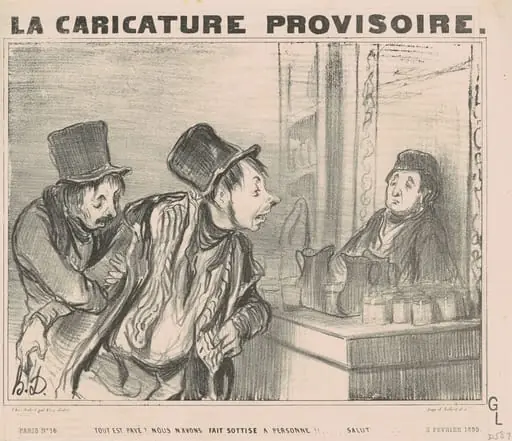 Tout est payé? Nous n'avons fait...salut
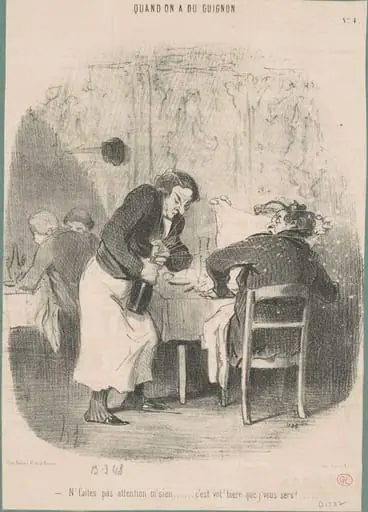 N'faites pas attention m'sieu ...
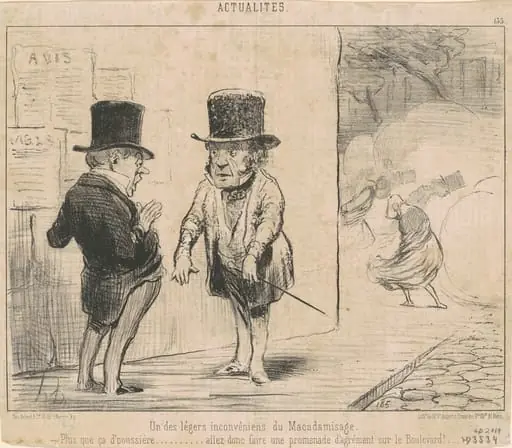 Un des ... inconvéniens du macadamisage ...