Artwork
A Street at Midnight: Coming out of a drama. Coming out of a variety show
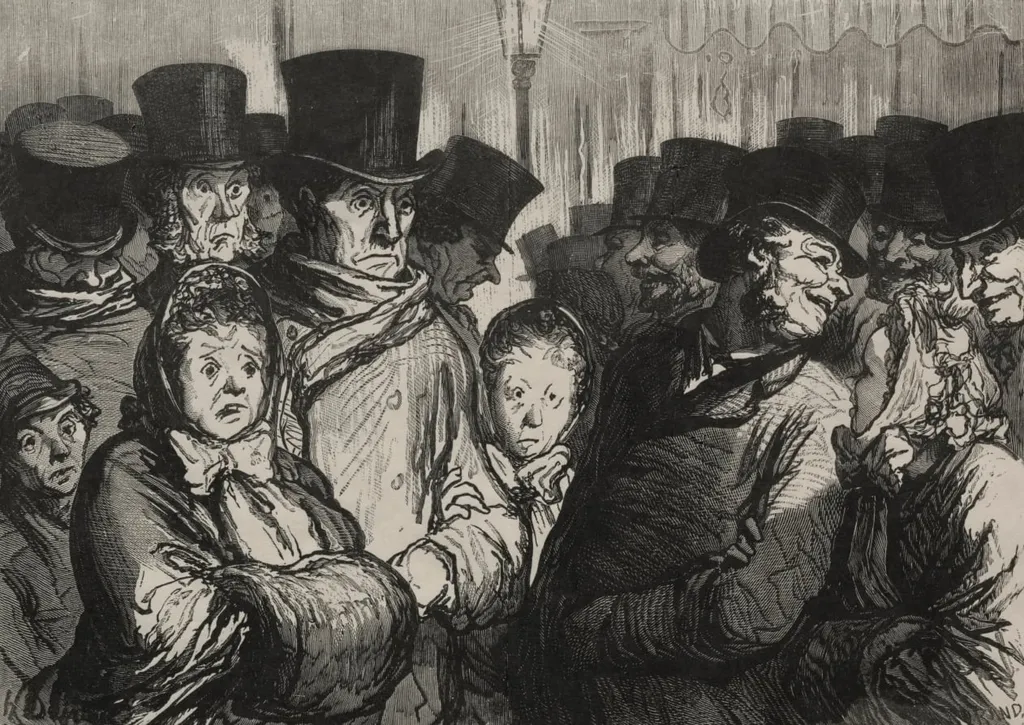
A Street at Midnight: Coming out of a drama. Coming out of a variety show is a print by the Impressionist artist Honoré Daumier. It dates from 1863 and is held in the collection of the Cleveland Museum of Art.
About this work
Overview
Created in 1863 by Honoré Daumier, this lithograph captures a moment of transition as theatergoers emerge into a nocturnal street. Rendered in quick, expressive lines, the composition conveys the energy and disarray of a crowd exiting a performance. The work belongs to the collection of The Cleveland Museum of Art and exemplifies Daumier’s interest in urban life and public behavior.
Subject & Meaning
The scene depicts a heterogeneous group of spectators leaving either a dramatic play or a variety show, their reactions ranging from bewilderment to exhaustion.
The scene depicts a heterogeneous group of spectators leaving either a dramatic play or a variety show, their reactions ranging from bewilderment to exhaustion. Daumier does not idealize the figures; instead, he emphasizes their individuality through exaggerated facial expressions and postures. The work reflects the emotional residue of performance, suggesting how art infiltrates and alters the ordinary lives of its audience.
Technique & Style
Daumier employed rapid, loose lithographic lines to suggest motion and texture, avoiding fine detail in favor of emotional immediacy. The figures are densely packed, their heavy coats and hats forming a chaotic mass, while the background dissolves into shadow with only a faint, ambiguous glow hinting at the theater’s exit. This sketchlike approach prioritizes atmosphere over precision, aligning with the spontaneity of street observation.
History & Provenance
Produced during Daumier’s mature period, the print was likely made for publication in a periodical, as was common for his social commentaries. It entered the Cleveland Museum of Art’s collection through established acquisition channels, preserving its original state. The work’s survival reflects its significance within 19th-century French graphic art, though its exact publication history remains undocumented.
Context
In 1860s Paris, theater attendance was a widespread social activity, and Daumier frequently observed audiences as subjects of his art. This print emerges from a cultural moment when public entertainment was both a refuge and a mirror for urban life. Daumier’s focus on the crowd, rather than the stage, subverted traditional artistic priorities, aligning with broader Realist tendencies to depict ordinary experience without embellishment.
Legacy
Daumier’s unvarnished portrayal of public gatherings influenced later artists interested in urban realism and the psychology of crowds. His ability to convey collective emotion through minimal, dynamic marks set a precedent for modern graphic art. Though not widely exhibited during his lifetime, this work now stands as a quiet testament to the quiet dramas of everyday transit and shared experience.
Artist & collection
Artist
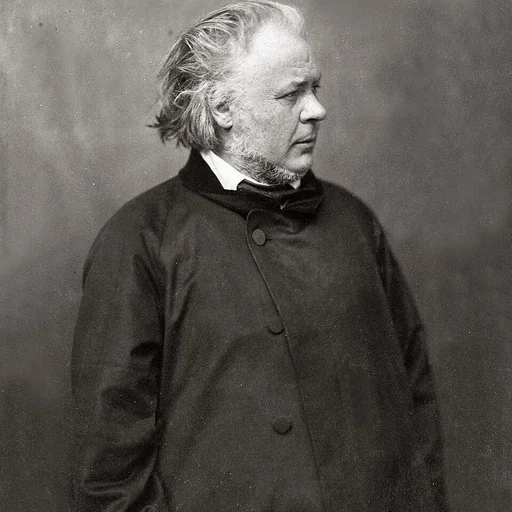
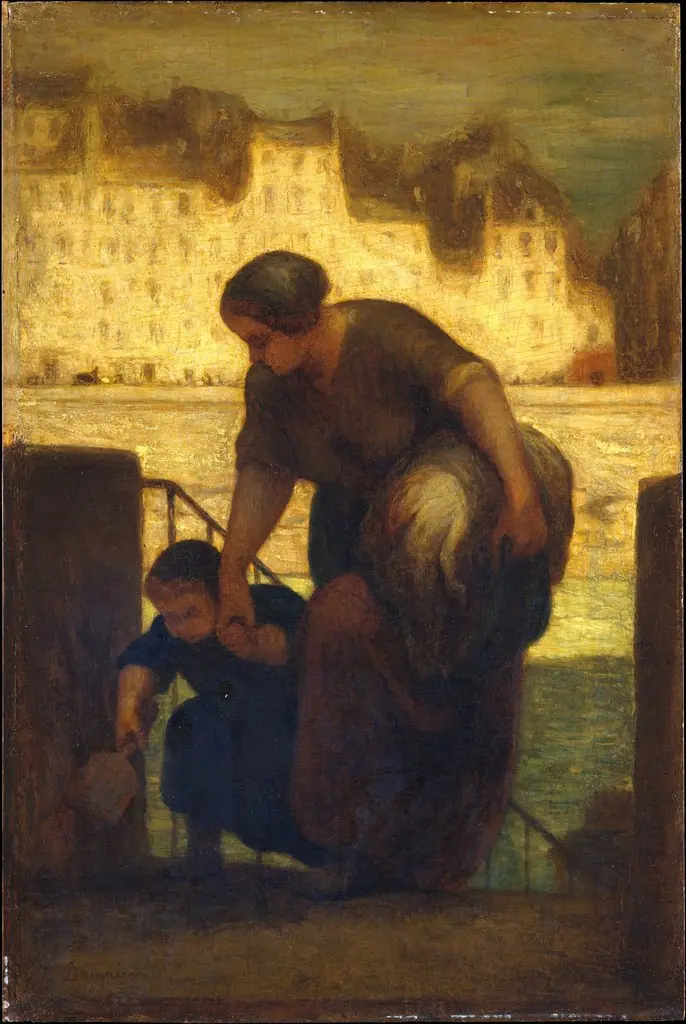
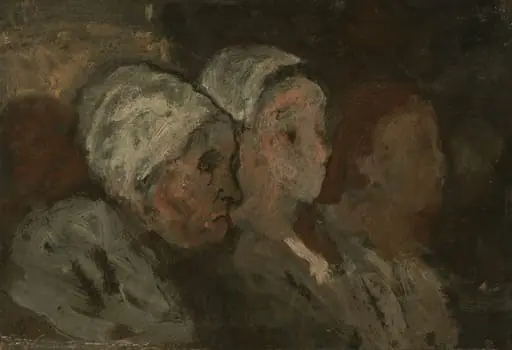
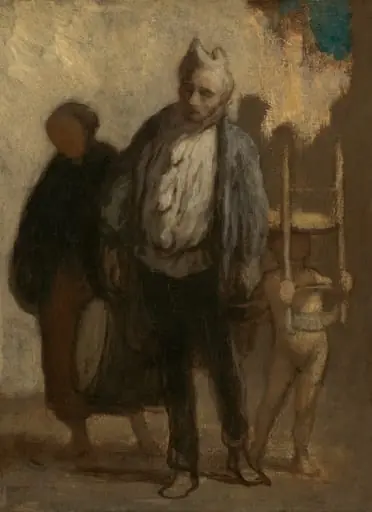
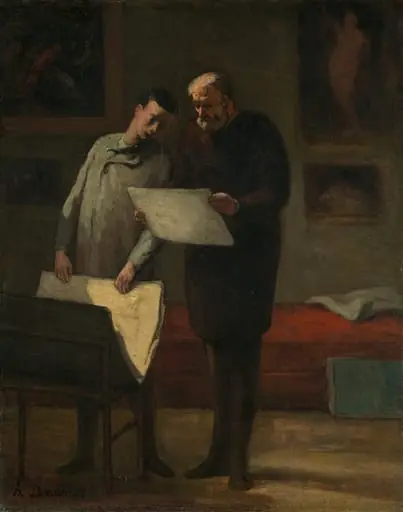
Honoré-Victorin Daumier was a French painter, sculptor, and printmaker, whose many works offer commentary on the social and political life in France, from the Revolution of 1830 to the fall of the Second French Empire in 1870.

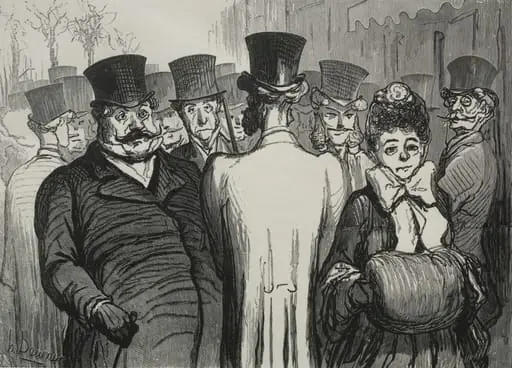 The Boulevard des Italiens
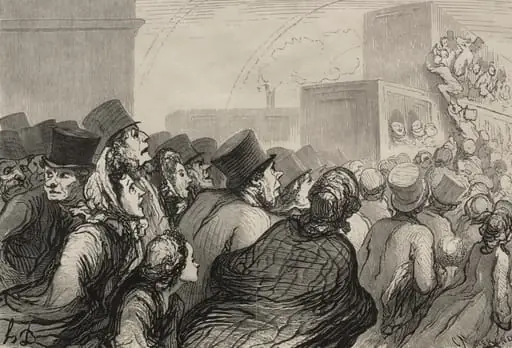 The Railway: The Sunday Excursion
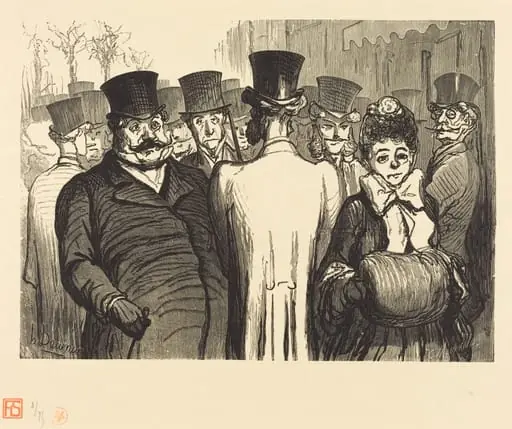 Le Boulevard des Italiens
 The Living Stream at London Bridge - On the Bridge
 Holiday Train: Ten Degrees of Boredom and Bad Mood
 An Omnibus Waiting Room
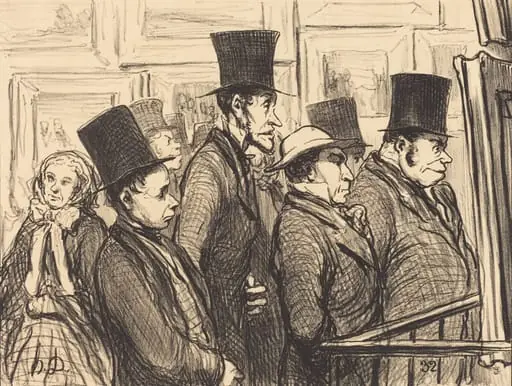 Cristi... v'la-t-y un boeuf qui est bien fait!...
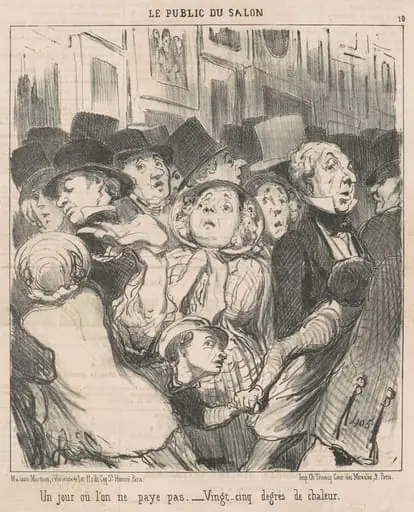 Un jour ou l'on ne paye pas
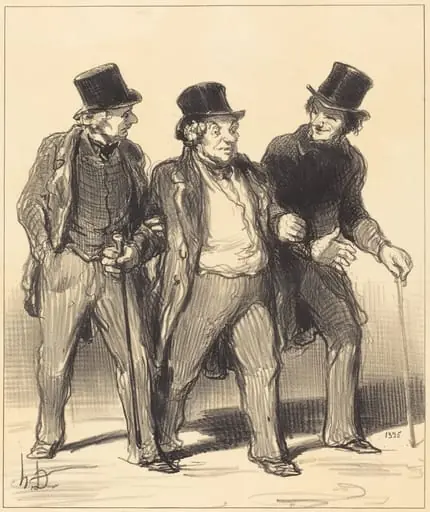 Il me semble que j'aperçois... un... chien... pas muselé!...
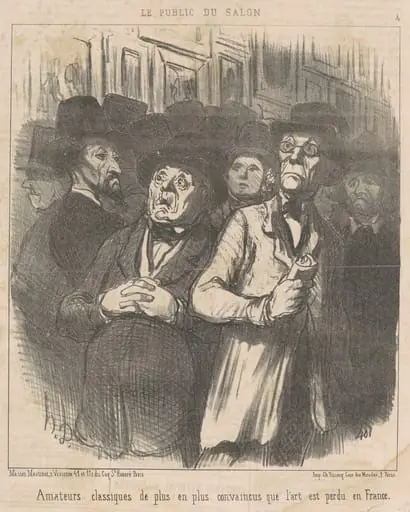 Amateurs classiques ... convaincus ...
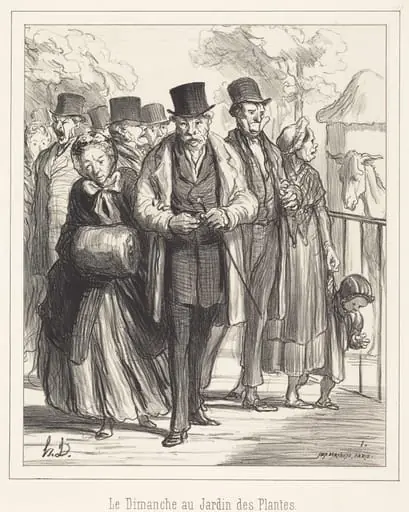 Le Dimanche au Jardin des Plantes
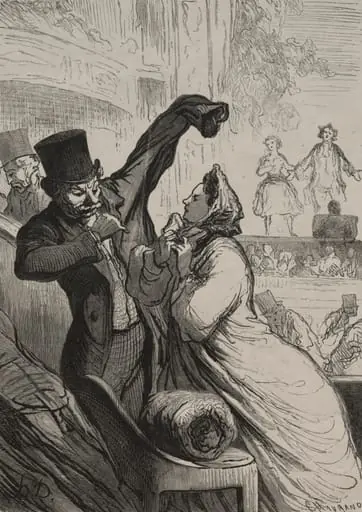 The Theatre: The Last Scene