Artwork
Le Coup de vent
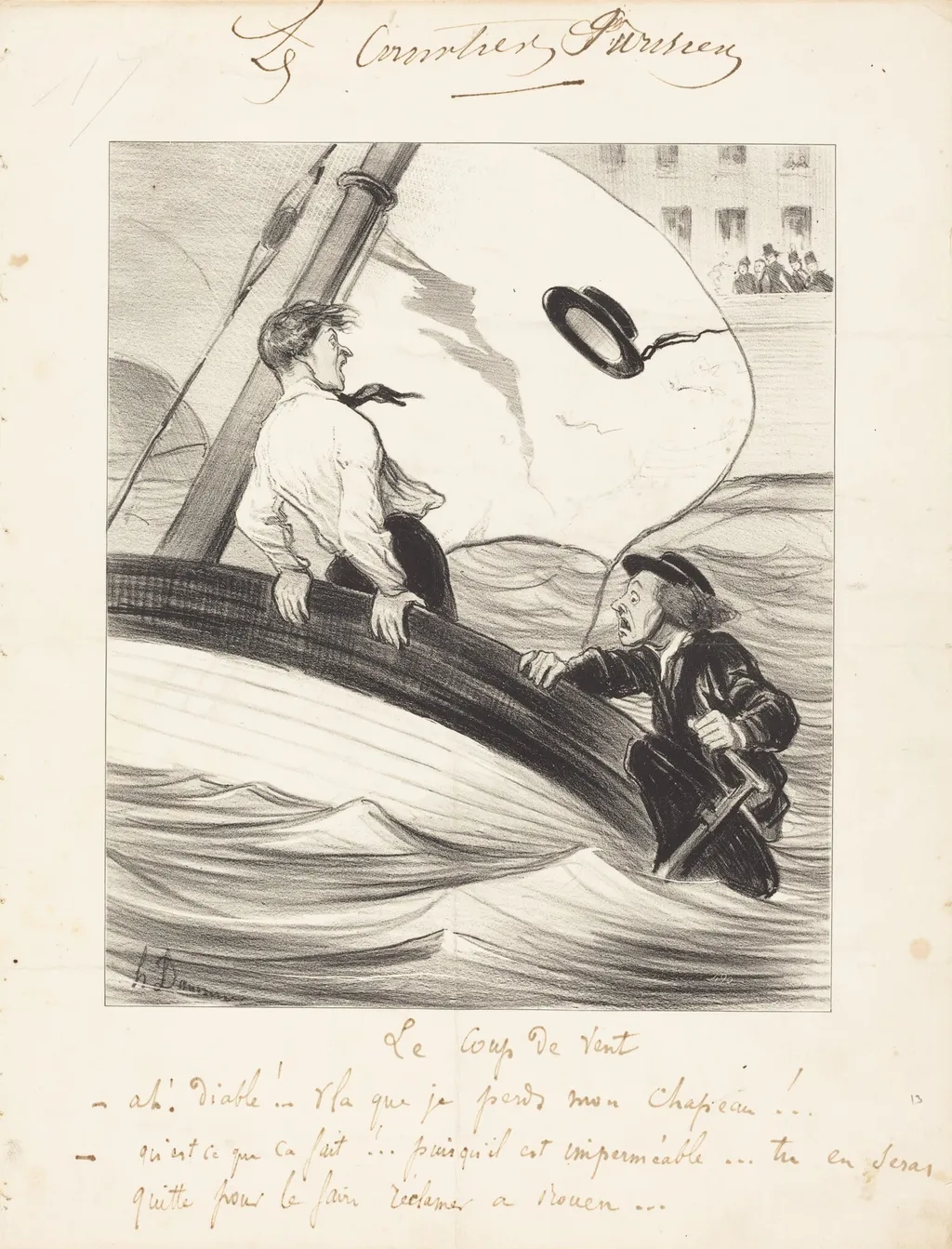
Le Coup de vent is an ink print by the Romanticist artist Honoré Daumier. It dates from 1843 and is held in the collection of the National Gallery of Art.
About this work
Overview
Created in 1843, *Le Coup de vent* is a lithograph by French artist Honoré Daumier, produced during a period of intense political upheaval in France.
Created in 1843, *Le Coup de vent* is a lithograph by French artist Honoré Daumier, produced during a period of intense political upheaval in France. As a prolific printmaker for satirical journals, Daumier used the medium to capture everyday life with sharp observation. This work exemplifies his ability to convey tension and motion through minimal, expressive lines, transforming a fleeting moment into a resonant image of human vulnerability.
Subject & Meaning
The scene depicts two men in a small boat caught in a sudden storm. One leans over the side in alarm, while the other gestures toward a hat drifting away. The trivial loss of a hat amid life-threatening conditions underscores the absurdity of human preoccupations. Daumier often used such moments to critique social pretensions, suggesting how even in crisis, people fixate on the insignificant, revealing deeper ironies in human behavior.
Technique & Style
Daumier employed rapid, fluid lithographic lines to simulate the chaos of wind and water. The sketch-like quality of the composition conveys immediacy and motion, with minimal shading and no detailed rendering of figures or environment. The rough texture of the stone and the contrast between dark ink and blank paper heighten the sense of instability. His technique prioritizes emotional impact over realism, aligning with the spontaneity of journalistic illustration.
History & Provenance
The print was made for publication in a periodical, likely *Le Charivari*, where Daumier regularly contributed political and social caricatures. Though originally intended for mass circulation, *Le Coup de vent* was later collected as part of broader efforts to preserve Daumier’s graphic work. Its survival reflects growing recognition of lithography as a legitimate art form, distinct from mere satire, by the late 19th century.
Context
Produced during the July Monarchy, the work emerged amid rising tensions between the state and the public. Daumier’s prints often mocked the ruling class, and while this image lacks overt political figures, its depiction of disorder and helplessness resonated with broader anxieties about authority and societal fragility. The storm becomes a metaphor for the unpredictable forces shaping French life after the 1830 Revolution.
Legacy
Daumier’s ability to distill complex social commentary into simple, dynamic compositions influenced generations of illustrators and modern artists. *Le Coup de vent* exemplifies how everyday scenes could carry layered meaning without explicit symbolism. Its enduring presence in museum collections attests to its role in redefining printmaking as a vehicle for both artistic expression and social critique.
Artist & collection

Artist
Honoré-Victorin Daumier was a French painter, sculptor, and printmaker, whose many works offer commentary on the social and political life in France, from the Revolution of 1830 to the fall of the Second French Empire in 1870.









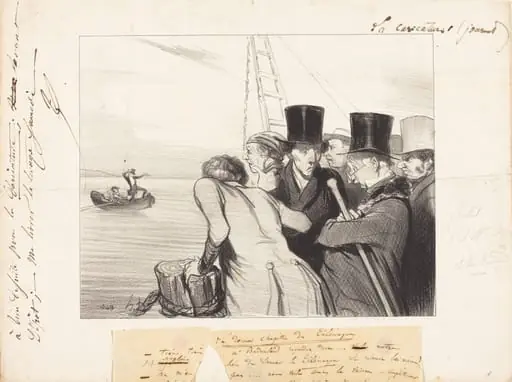 Le Dernier du Télémaque
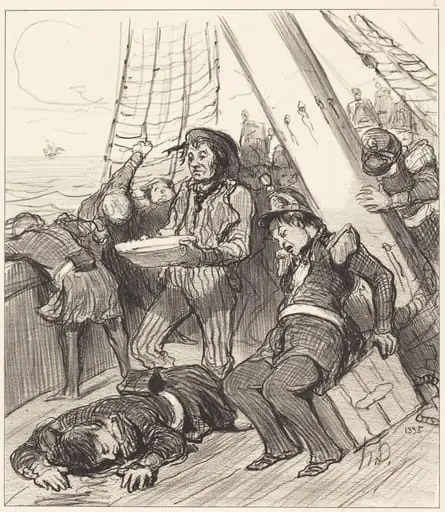 Plusieurs gardes nationaux qui n'avaient pas songé...
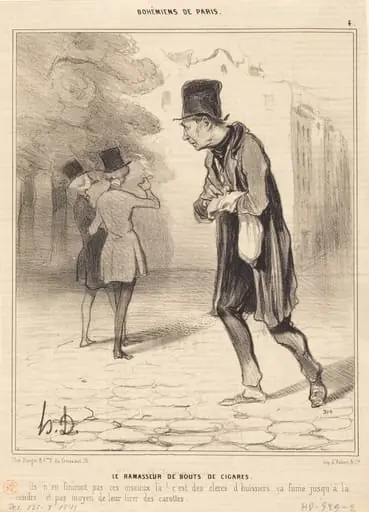 Le Ramasseur de bouts de cigares
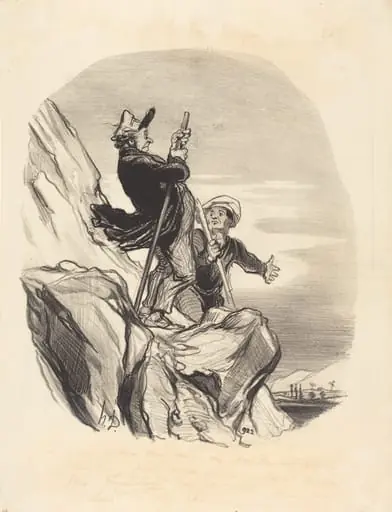 Guide, allons-nous-en... au nom du ciel...
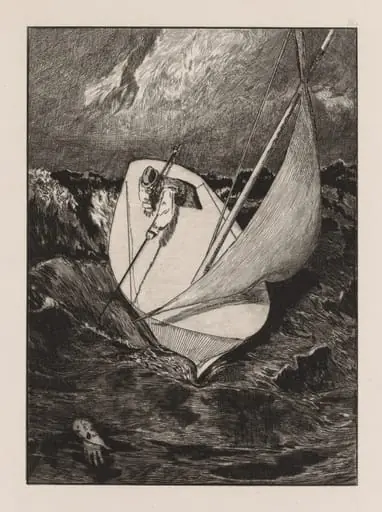 A Glove: The Rescue
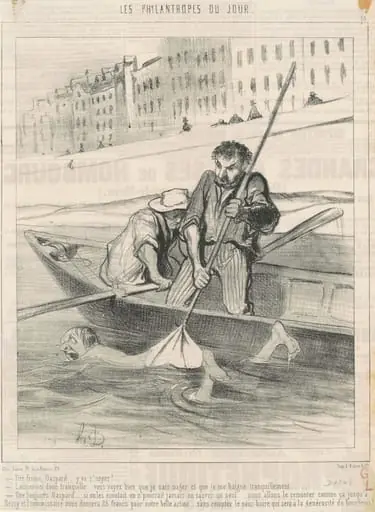 Tire ferme, Gaspard ... y va s'neyer ...
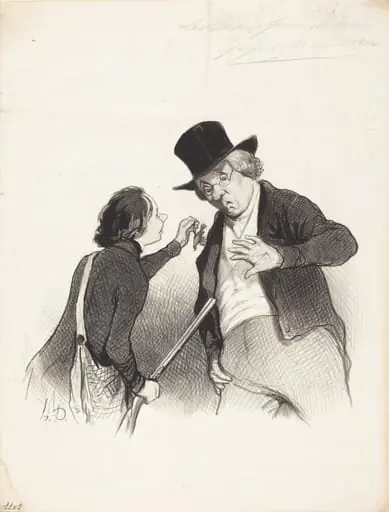 Un Début a la chasse
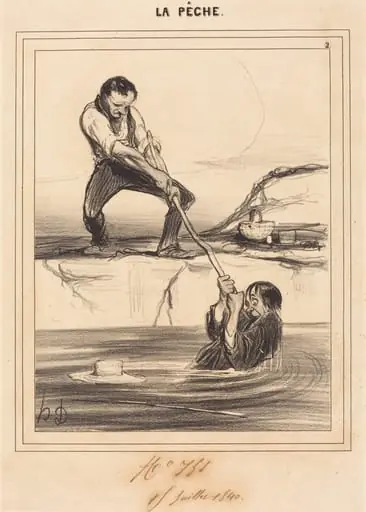 Le Barbillon entraine...
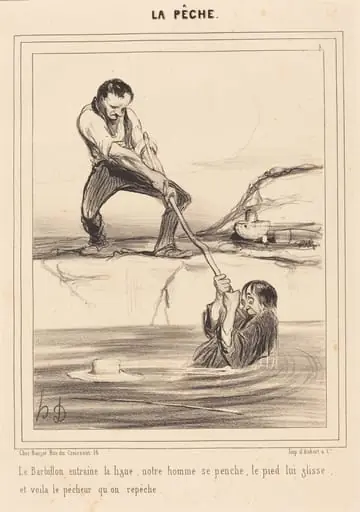 Le Barbillon entraine...
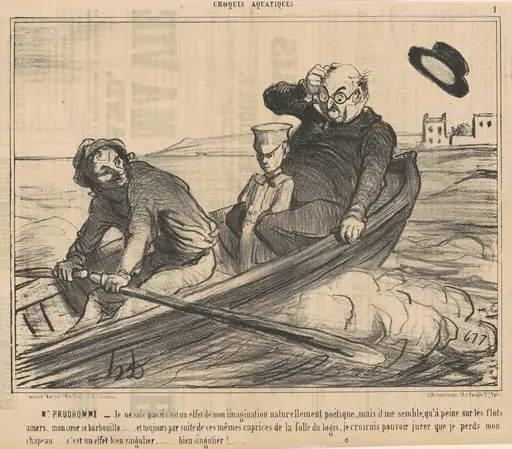 M. Prud'homme ... Je ne sais pas si ...