Artwork
Untitled
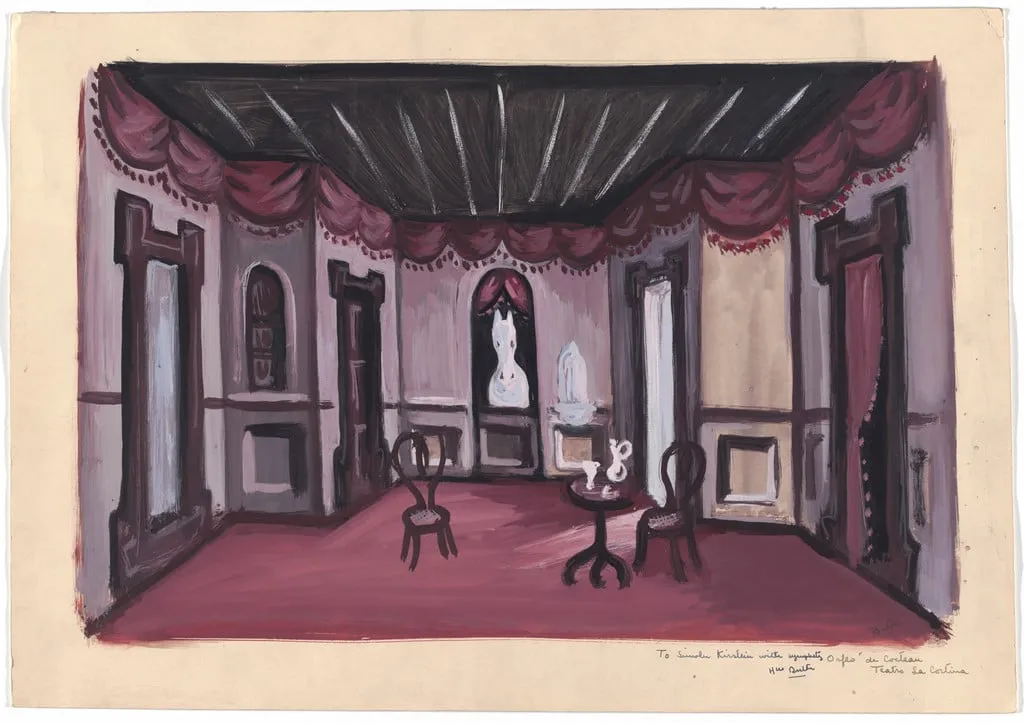
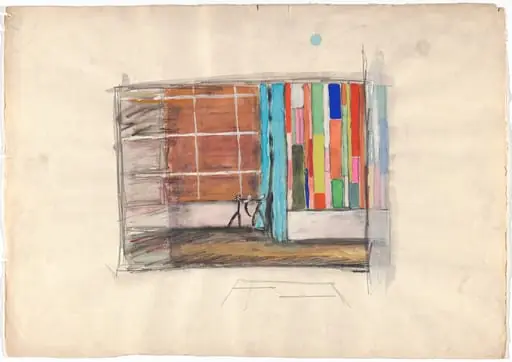
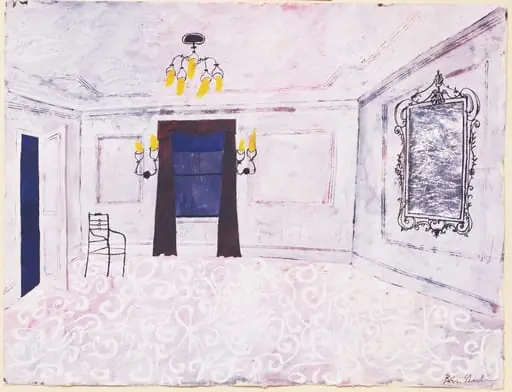
Untitled is a gouache drawing by Horacio A. Butler. It dates from 1939 and is held in the collection of the Museum of Modern Art. Created in 1939, this gouache on paper drawing by Horacio A.
About this work
Overview
Its composition suggests a theatrical space rendered with minimal detail, emphasizing structure over realism.
Created in 1939, this gouache on paper drawing by Horacio A. Butler is part of The Museum of Modern Art’s collection. Its composition suggests a theatrical space rendered with minimal detail, emphasizing structure over realism. The work’s restrained palette and simplified forms reflect an interest in spatial arrangement rather than narrative, positioning it as a study in environment and atmosphere.
Subject & Meaning
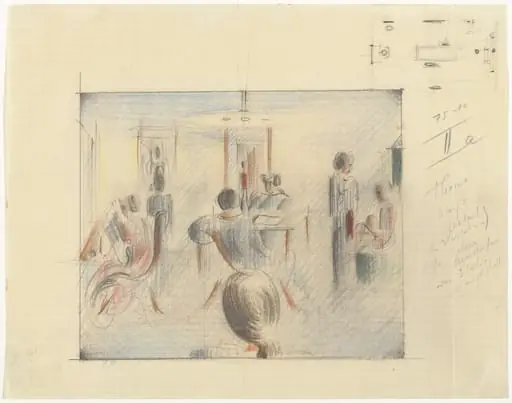
The scene depicts an empty room resembling a stage: two chairs face a table with a lamp and vase, while a tall mirror in the background reflects a faint, indistinct figure. The absence of people heightens a sense of anticipation or aftermath. The setting evokes theatricality without action, suggesting themes of solitude, observation, or the lingering presence of unseen characters.
Technique & Style
Butler employed gouache for its opaque, matte finish, allowing bold, flat areas of color to define architectural elements. Walls, curtains, and floor are rendered with clean edges and minimal shading, resembling a schematic or stage design. The lack of perspective and texture reinforces the work’s abstract, blueprint-like quality, prioritizing form over naturalism.
History & Provenance
The work entered The Museum of Modern Art’s collection as part of its broader interest in modernist drawings and experimental media from the 1930s. While little is documented about its early ownership, its inclusion in the museum’s holdings reflects institutional recognition of Butler’s contribution to American modernism during a period of artistic exploration in theater and design.
Context
Made during the late 1930s, the piece aligns with a broader interest among artists in the relationship between painting and performance. Theatrical sets, interior spaces, and staged environments were common subjects as modernists sought to explore perception and illusion. Butler’s work resonates with contemporaries investigating abstraction in everyday or constructed spaces.
Legacy
Though not widely exhibited, this drawing contributes to understanding how mid-century artists used drawing as a tool for spatial inquiry. Its quiet, architectural quality influenced later generations interested in the intersection of painting, set design, and psychological space. The work remains a quiet example of how simplicity can evoke complex emotional environments.
Artist & collection

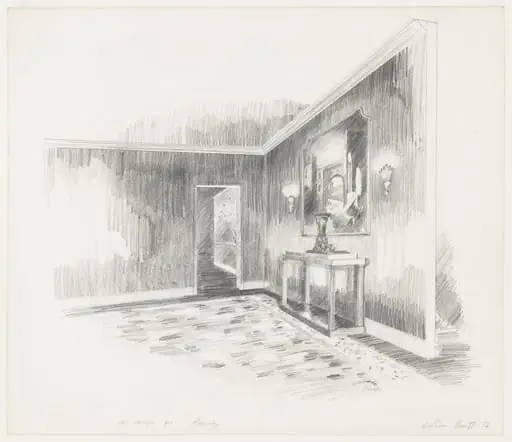 Untitled
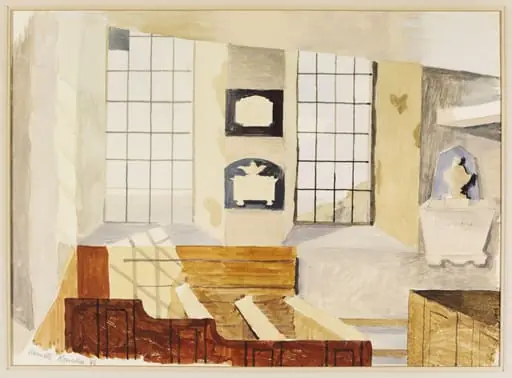 Interior of St. Mary's Church, Whitby
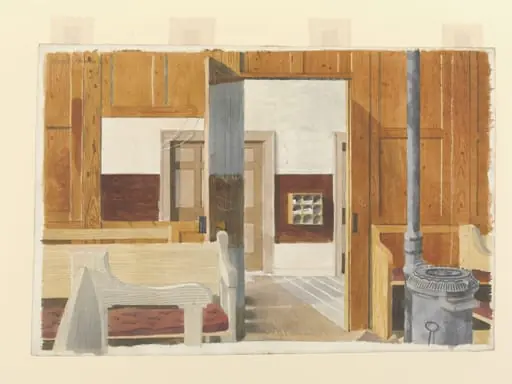 Interior of the Friends Meeting House, Great Bardfield
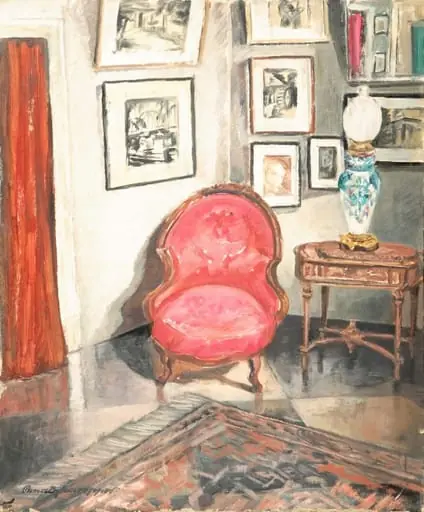 Interior
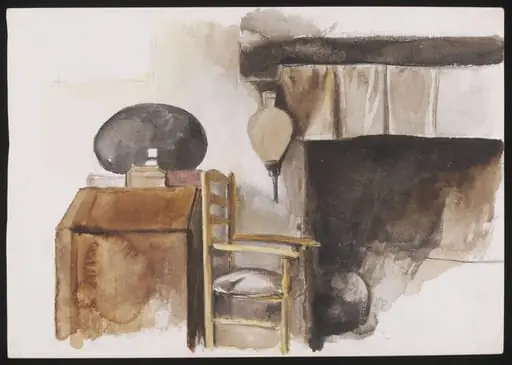 Study of a fireplace, a writing desk and a rush-seated ladderback chair
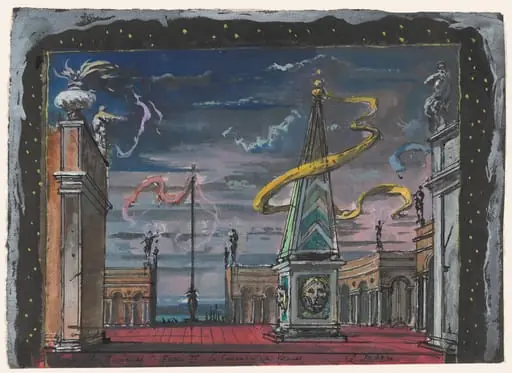 Untitled
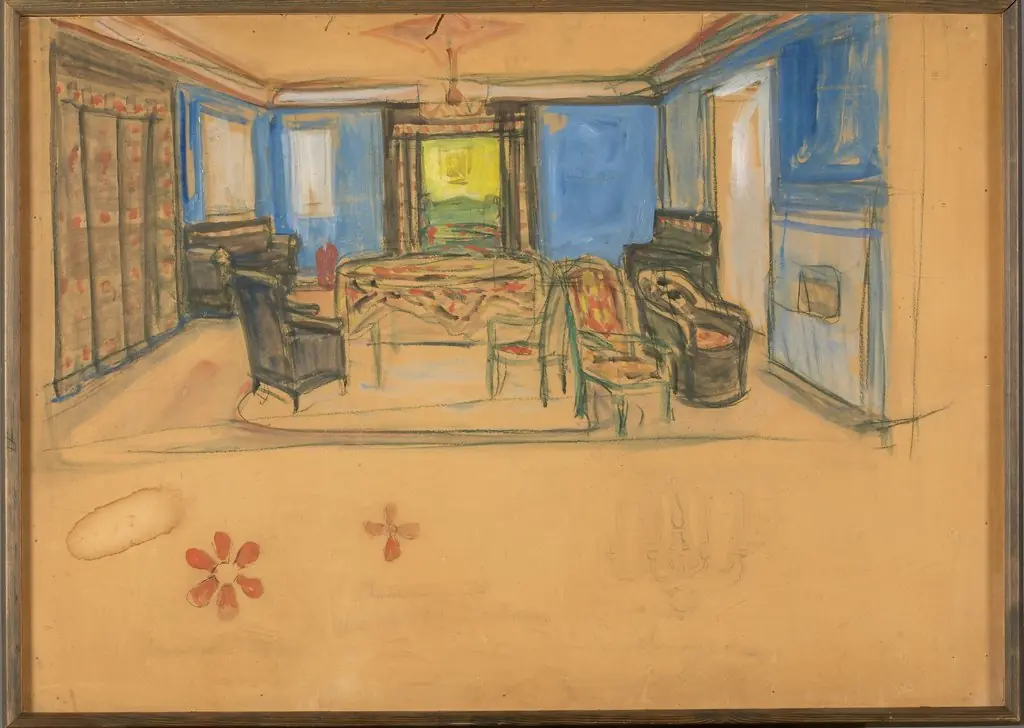 Set Design for Henrik Ibsen's "Hedda Gabler"
 Untitled
 Sisäkuva pohjalaisesta tuvasta
 Untitled
 Bed Room, Stenton
 Untitled