Artwork
Margaret, Wife of Philip III of Spain
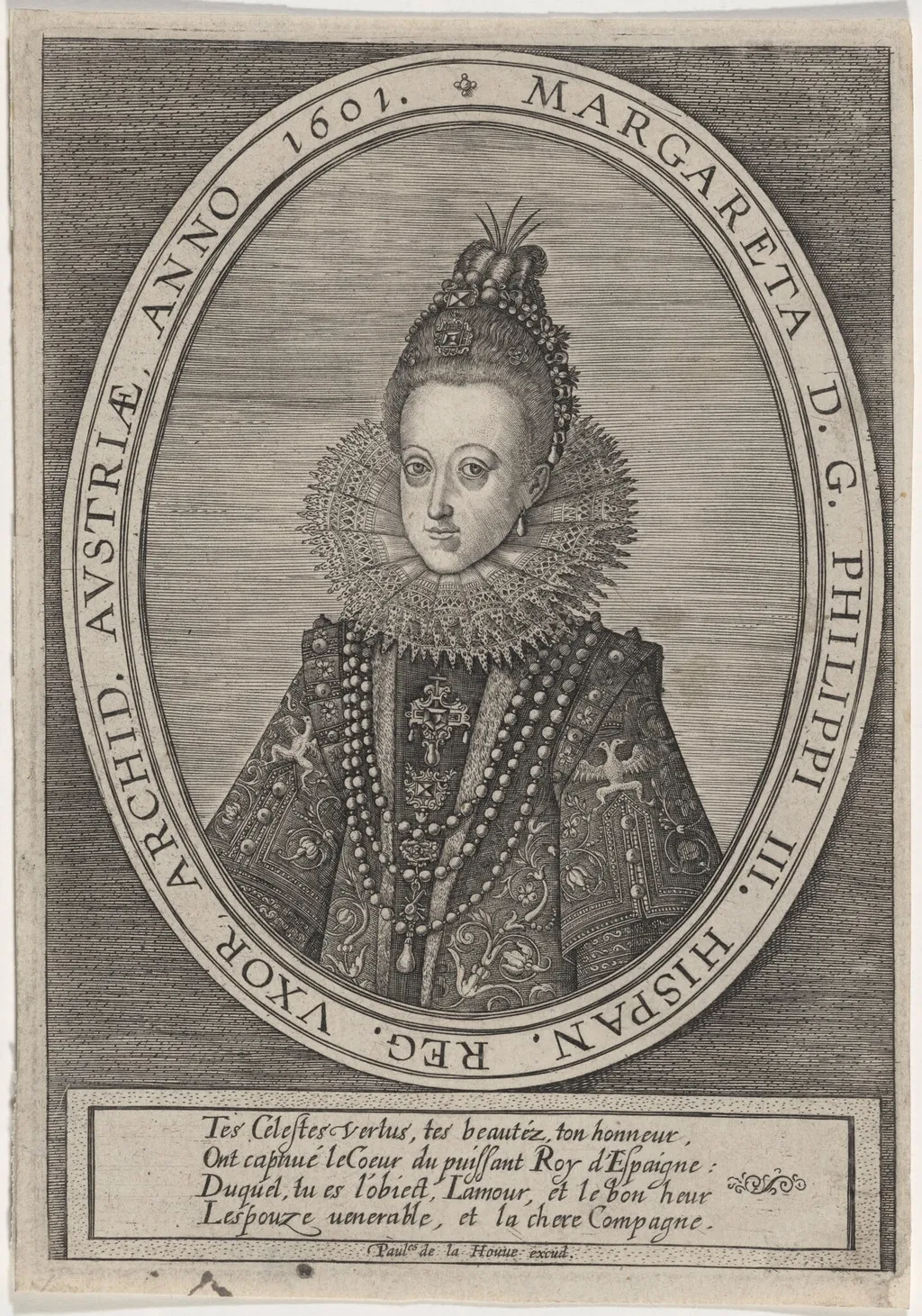
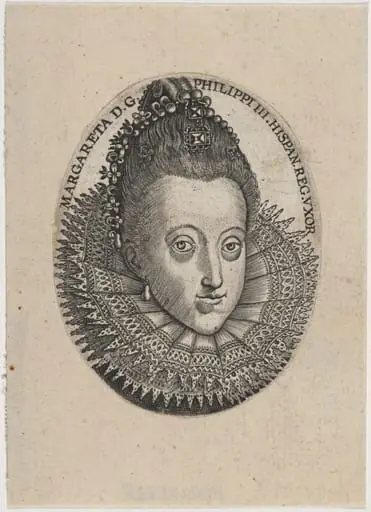
Margaret, Wife of Philip III of Spain is an ink print by the Baroque artist Paul de la Houve. It dates from 1601 and is held in the collection of the National Gallery of Art. This 1601 engraving presents Margaret, the consort of Philip III of Spain, in a formal portrait.
About this work
The artist signed it in the corner, and the whole image looks like it was carved into metal instead of painted.
This is a black-and-white portrait of a woman with a tall, fancy wig and a ruffled collar. She’s wearing a dark dress covered in detailed embroidery and pearls. The background is plain, but her face is framed by a round border with text around it.
The text calls her "Margaret, Wife of Philip III of Spain," and the year 1601 is written at the top. The artist signed it in the corner, and the whole image looks like it was carved into metal instead of painted.
If you like this style, look up engraving to see how artists created detailed prints like this.
Overview
This 1601 engraving presents Margaret, the consort of Philip III of Spain, in a formal portrait. Rendered in monochrome, the image shows her against a plain backdrop, her face encircled by a decorative border that includes identifying text. The composition emphasizes her status through elaborate dress and accessories, while the stark contrast of line work defines the overall visual impact.
Subject & Meaning
The sitter is Margaret of Austria, queen consort to Philip III, depicted with the regalia befitting a royal wife. Her elevated wig, ruffled collar, and richly embroidered gown studded with pearls signal her noble rank and the courtly fashion of early‑17th‑century Spain. The surrounding inscription serves both as identification and as a reminder of her political alliance within the Habsburg dynasty.
Technique & Style
Executed as an engraving, the work was incised on a metal plate, allowing fine linear detail and a range of tonal values through hatching and cross‑hatching. The artist’s hand is evident in the precise rendering of textile patterns and the delicate modeling of facial features, typical of Northern European printmaking practices of the period.
History & Provenance
Created by Paul de la Houve, a French engraver active in the early 1600s, the print was likely produced for circulation among courtly patrons or collectors interested in royal portraiture. The artist’s signature appears in the lower corner, confirming authorship, and the dated inscription anchors the work within the early reign of Philip III.
Context
Portrait engravings of monarchs and their consorts were common in the early modern era, serving both propagandistic and commemorative functions. This image aligns with contemporary conventions that highlighted regal attire and insignia, while the plain background directs focus to the sitter’s visage and status symbols.
Legacy
While not as widely reproduced as later royal prints, this engraving contributes to the visual record of Spanish Habsburg court culture. It exemplifies the role of print media in disseminating images of sovereigns across Europe, influencing how contemporaries and later audiences visualized royal personages.
Artist & collection

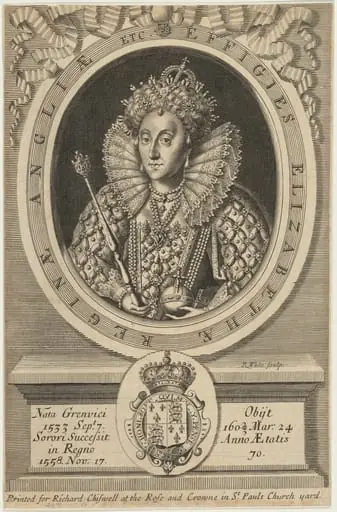 Queen Elizabeth
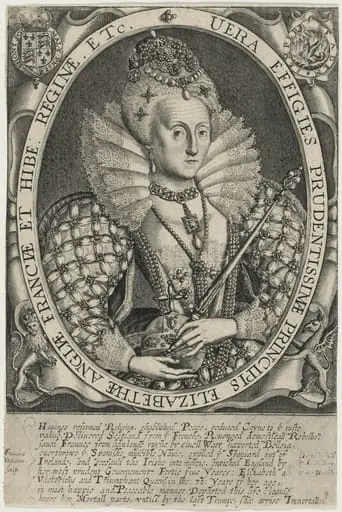 Elizabetha Anglia et Francae et Hibe. Reginae(Queen Elizabeth)
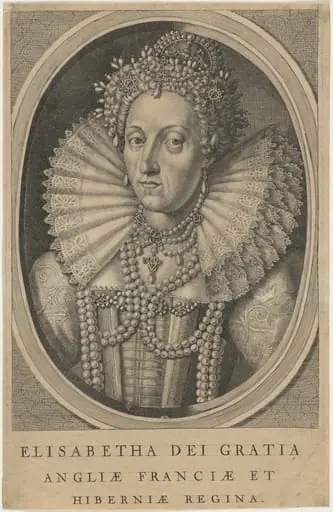 Queen Elizabeth
![Elizabeth, Queen of England [right half], by Simon van de Passe](https://artifactworldgallery.com/img/simon-van-de-passe--elizabeth-queen-of-england-right-half--c9ae54c2d0f8ade2-w320.webp) Elizabeth, Queen of England [right half]
Elizabeth, Queen of England [right half]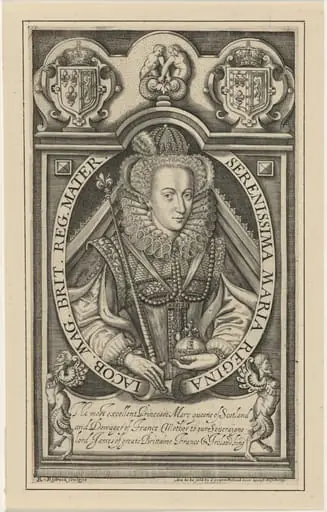 Mary, Queen of Scots
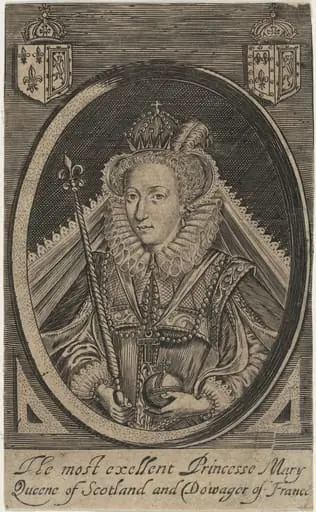 Mary, Queen of Scots
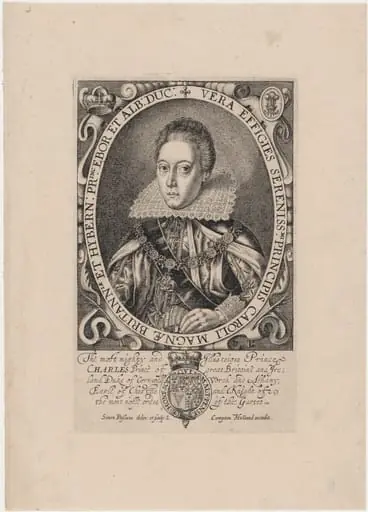 Charles I, Prince of Great Britain and Ireland, Duc of Cornwall and Yorck
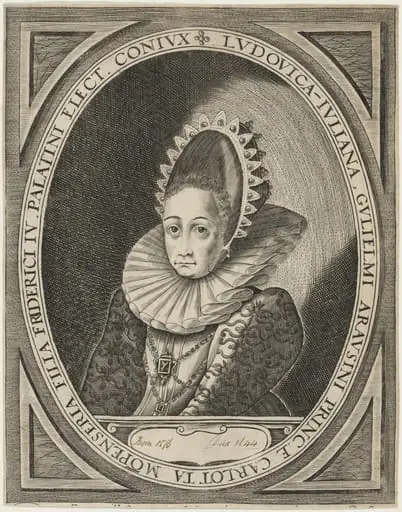 Louise Juliana, Wife of Frederick IV
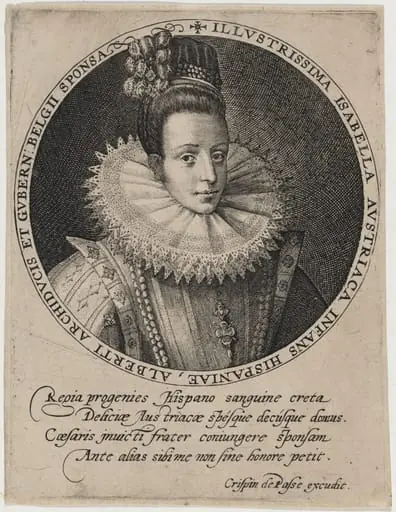 Isabella Clara Eugenia, Infanta
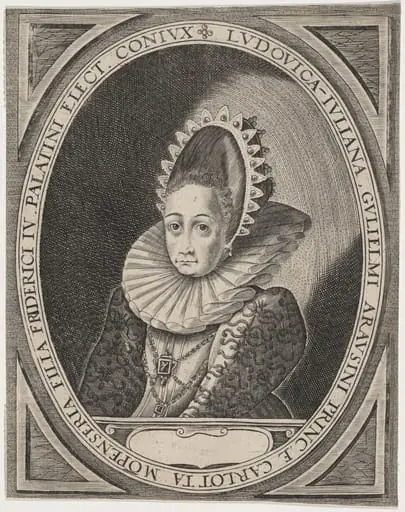 Louise Juliana, Wife of Frederick IV
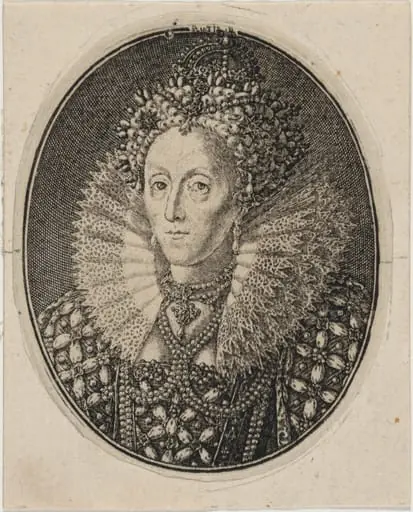 Elizabeth, Queen of England
 Margaret, Wife of Philip III of Spain