Artwork
Hierapolis - Natural Hot Spring. Phrygia
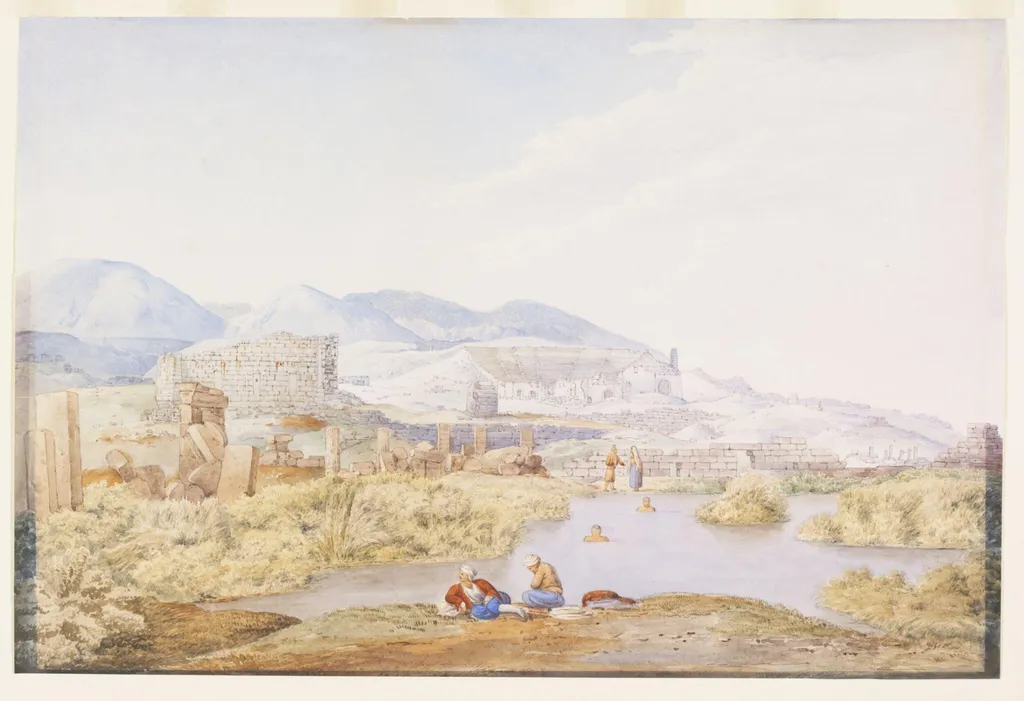
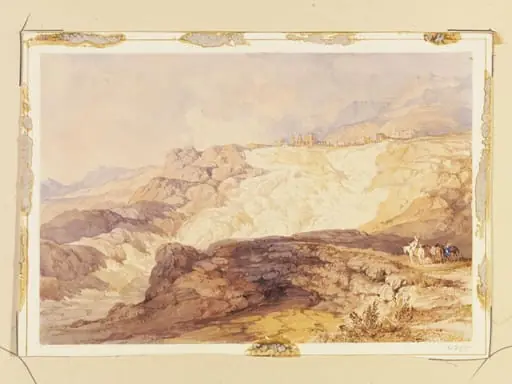
Hierapolis - Natural Hot Spring. Phrygia is a watercolor work on paper by the Romanticist artist Antonio or Anton Schranz. It dates from 1837 and is held in the collection of the Victoria and Albert Museum. Antonio Schranz’s 1837 watercolour depicts the famed thermal terraces of Hierapolis, now known as Pamukkale in western Turkey.
About this work
This watercolour shows a view of Hierapolis, a place famous for its natural hot springs. It was painted in 1837 by Antonio Schranz, a landscape artist who often traveled the Mediterranean.
Schranz was part of a family of artists who ran a print shop in Malta. He made many trips to Turkey and Egypt for British travelers who wanted drawings of their trips.
Look up the Victoria and Albert Museum.
Overview
Antonio Schranz’s 1837 watercolour depicts the famed thermal terraces of Hierapolis, now known as Pamukkale in western Turkey. The composition presents the cascading white travertine formations and the series of shallow pools fed by mineral‑rich hot springs, offering a visual record of the site’s distinctive landscape during the early nineteenth century.
Subject & Meaning
Hierapolis was celebrated in antiquity as a spa town, its therapeutic waters drawing pilgrims to the surrounding temples. Schranz’s view emphasizes the natural architecture of the calcium‑carbonate terraces, highlighting the interplay between the mineral deposits and the constructed bathing facilities that defined the locale’s cultural and religious significance.
Technique & Style
Executed in watercolor, the work combines precise draftsmanship with a light, atmospheric palette. Schranz’s handling of washes captures the luminous quality of the white cliffs and the reflective surface of the pools, while fine linear details convey the surrounding topography, reflecting the artist’s training as a landscape and marine painter.
History & Provenance
The Hierapolis watercolour was likely created as a souvenir for an unnamed patron during his 1836‑37 travels.
Born into a German‑origin artistic family that settled in Malta in 1818, Schranz worked alongside his brother Giovanni in a family lithographic firm that issued prints marked “Schranz Brothers.” Between 1823 and 1847 he undertook numerous voyages across the eastern Mediterranean, producing drawings for British travelers such as Robert Pashley and Viscount Castlereagh. The Hierapolis watercolour was likely created as a souvenir for an unnamed patron during his 1836‑37 travels.
Context
The image anticipates the format of later picture postcards, offering a compact, generalized vista intended for personal recollection. At the time, European interest in the Ottoman Empire’s natural wonders and classical sites was high, and artists like Schranz supplied visual documentation for the burgeoning travel literature market.
Legacy
Schranz’s depiction contributes to the visual archive of Pamukkale before modern tourism altered the landscape. The work, now held by the Victoria and Albert Museum, remains a reference point for scholars studying early nineteenth‑century travel art and the transmission of Mediterranean scenery to a European audience.
Artist & collection
Artist
Antonio Schranz made watercolours of Egyptian and Levantine sites in the 1830s–40s.

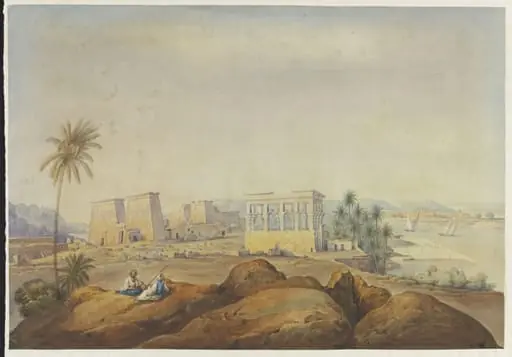 The Temple of Isis and Kiosk of Trajan on the Island of Philae
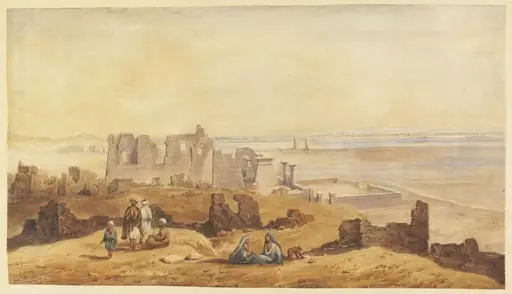 Luxor: the West Bank, with the Temple of Ramesses III at Madinat Habu; looking east towards the Nile
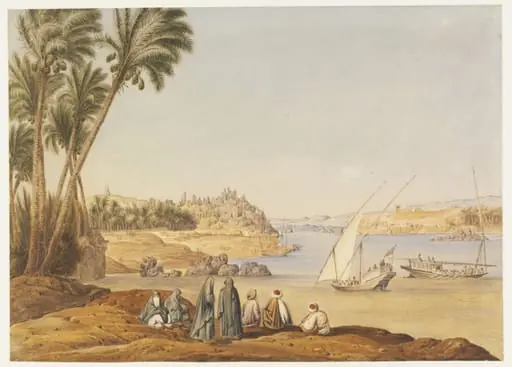 Aswan; looking south up the Nile
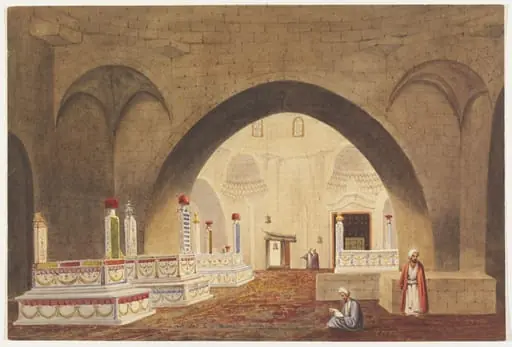 Mausoleum of Mehmet Ali and his family at Cairo
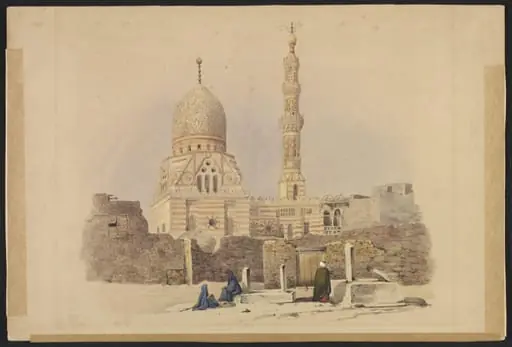 Mosk of Kaed Bey Cairo -
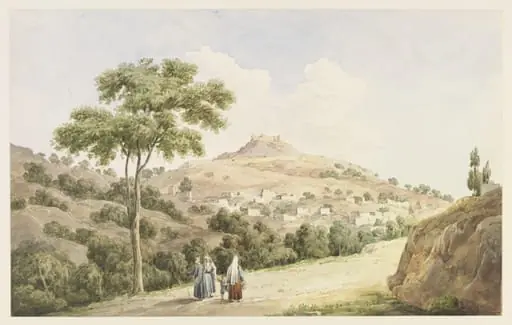 Saffed
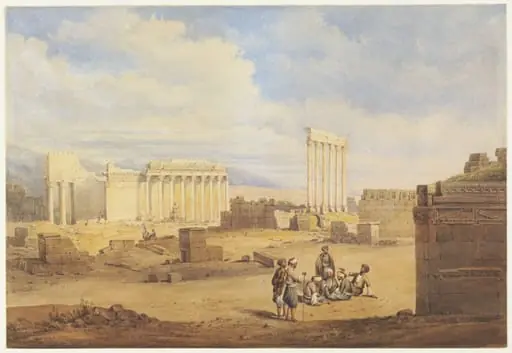 Baalbek
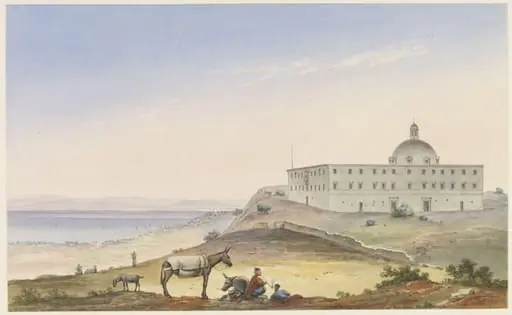 Convent on Mount Carmel
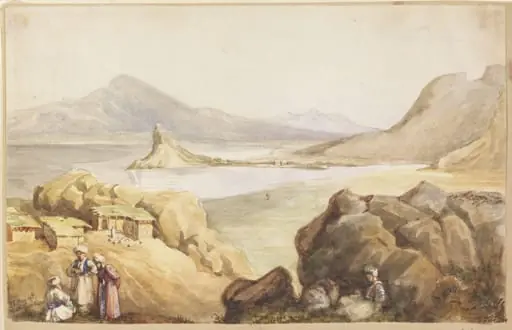 Gule-Hissa Ovassy in the Northern part of Lycia
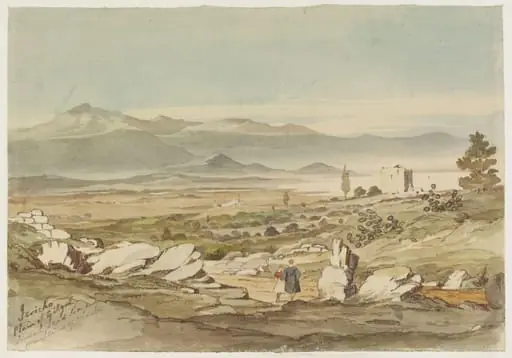 Jericho Plain of Gilgal, Jordan, Dead Sea, and Mountains of Moab
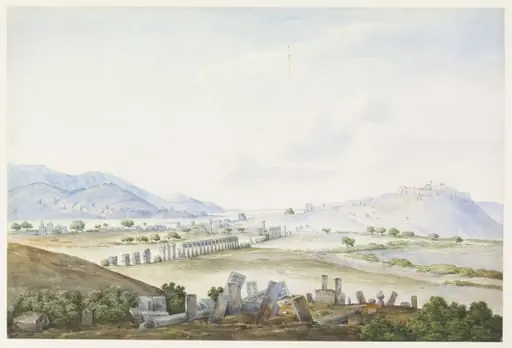 Ephesus
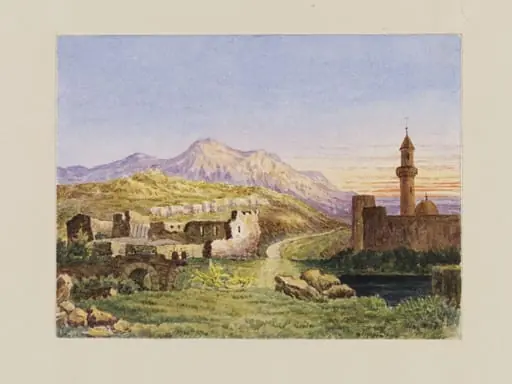 Emmaus
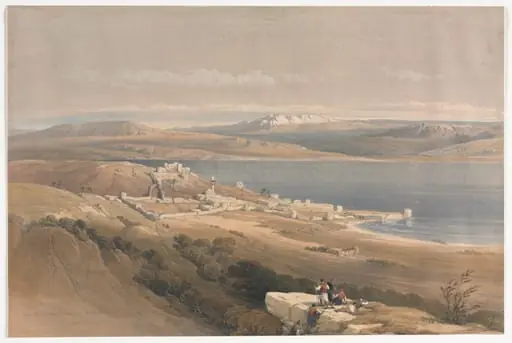 City of Tiberias on the Sea of Galilee, looking towards Hebron
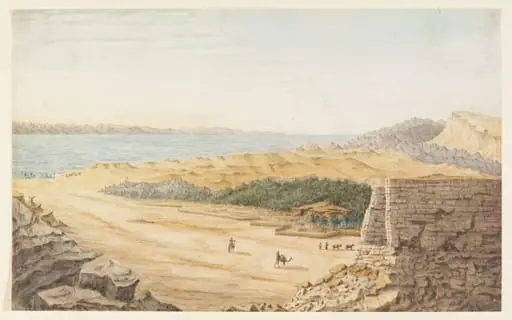 Ancient Ruins in the land of Edom above the bed of a valley and Arab Date gardens
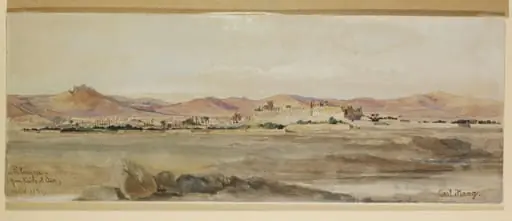 Palmyra (from Kasr el Ain)
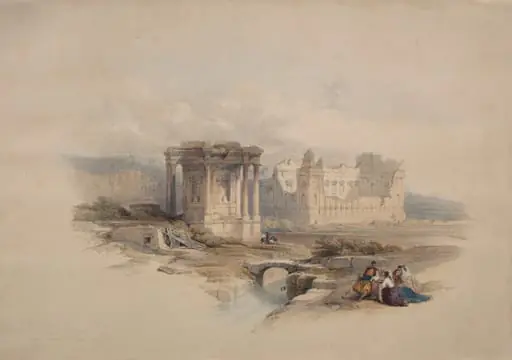 Circular Temple at Baalbec
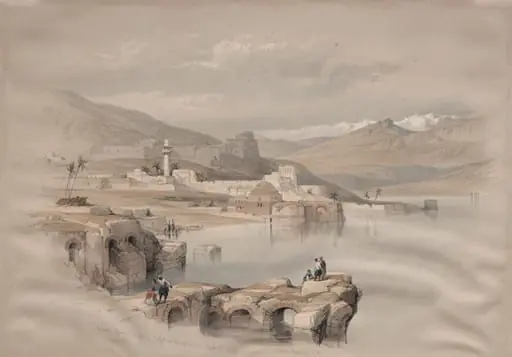 Tiberias, from the Walls, Safet in the Distance
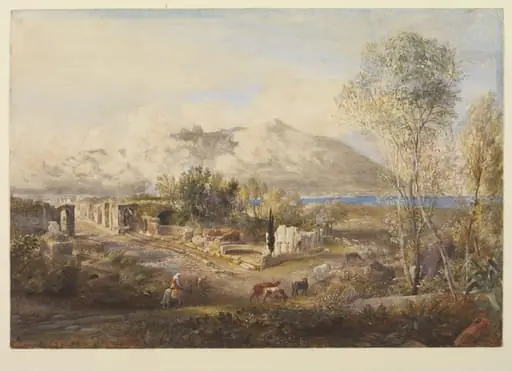 Street of the Tombs, Pompeii
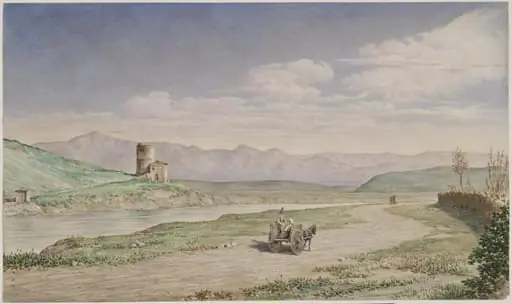 Parti ved Ponte Molle i Roms Campagne
 The Ruins of Hierapolis