Artwork
Interior cu femeie
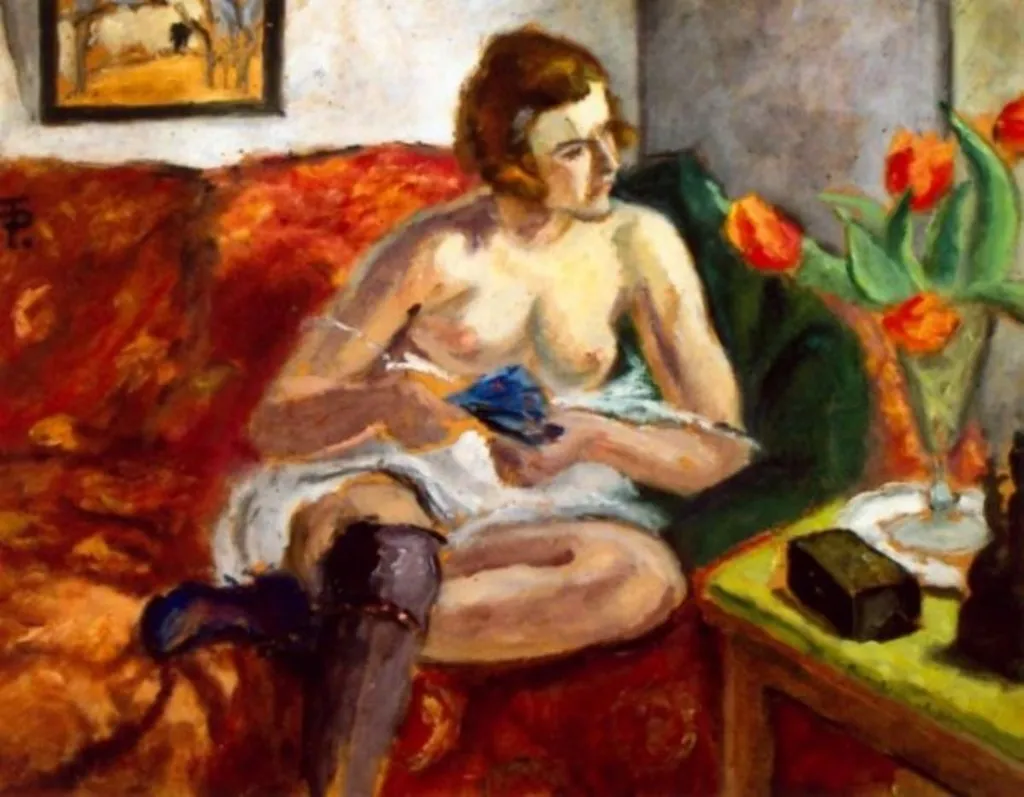
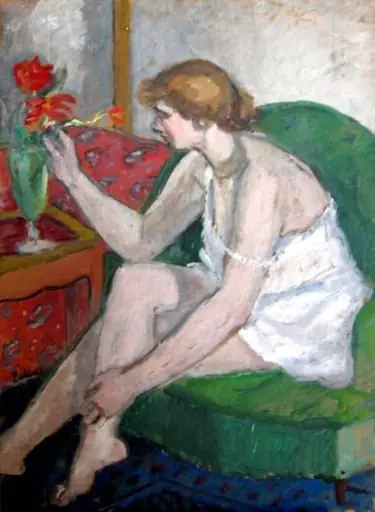
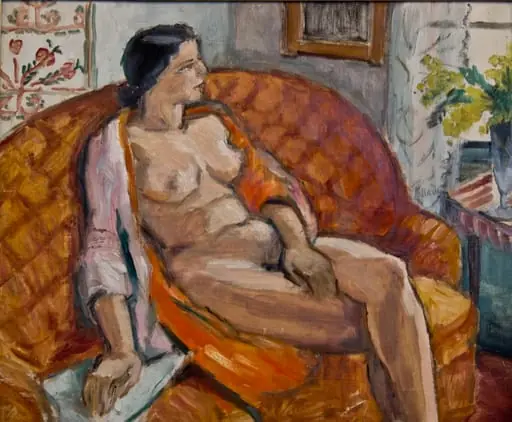
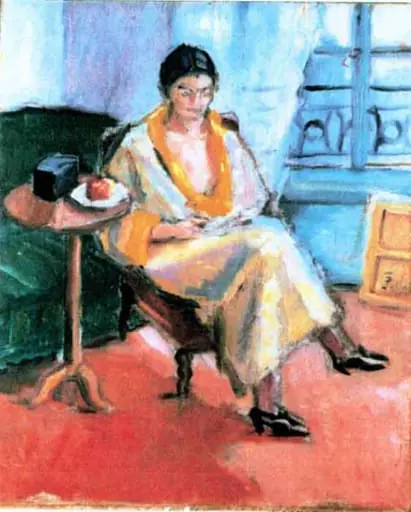
Interior cu femeie is an unspecified painting by Theodor Pallady. It is held in the collection of the Argeș County Museum. This painting presents a quiet domestic scene centered on a woman seated on a red couch.
About this work
Overview
This painting presents a quiet domestic scene centered on a woman seated on a red couch. Her posture is relaxed, legs crossed, and her expression is composed, contributing to an atmosphere of stillness. The composition is restrained, with minimal furnishings—a white wall, a hanging artwork, a side table with flowers—each element placed to emphasize calm rather than narrative.
Subject & Meaning
The woman, dressed in a white skirt and dark brown hair, is depicted without overt emotion or action, suggesting introspection or repose. The blue object she holds remains ambiguous, neither identified nor emphasized, reinforcing the painting’s focus on presence over story. The stillness of the scene invites contemplation rather than interpretation.
Technique & Style
Brushwork is subdued and precise, with soft transitions between tones. The red of the couch contrasts gently with the white wall and the muted palette of the surrounding objects. Light falls evenly, eliminating dramatic shadows, and the surface is rendered with quiet attention to texture rather than bold definition.
History & Provenance
The work is attributed to Theodor Pallady, a Romanian painter active in the early 20th century. While specific details of its creation or early ownership are not documented here, it aligns with his known interest in interior scenes and intimate, contemplative figures, often rendered with restrained color and quiet composition.
Context
Pallady’s work emerged from a European tradition of domestic realism, influenced by French and Romanian academic training. This painting reflects a broader trend among early modernists who turned away from grand narratives toward private, everyday moments, valuing atmosphere and subtlety over spectacle.
Legacy
Though not widely exhibited, works like this contribute to an understanding of Pallady’s role in Romanian modernism. His interiors, characterized by calm and restraint, offer a counterpoint to the expressive movements of his time, preserving a quiet dignity in ordinary moments.
Artist & collection
Artist
Theodor Pallady made still lifes and interiors in early 20th-century Bucharest. His Place Dauphine shows a quiet Parisian square, while Natură moartă (Ulcică cu flori și chibrituri) piles everyday objects on a table.…