Artwork
Peisaj
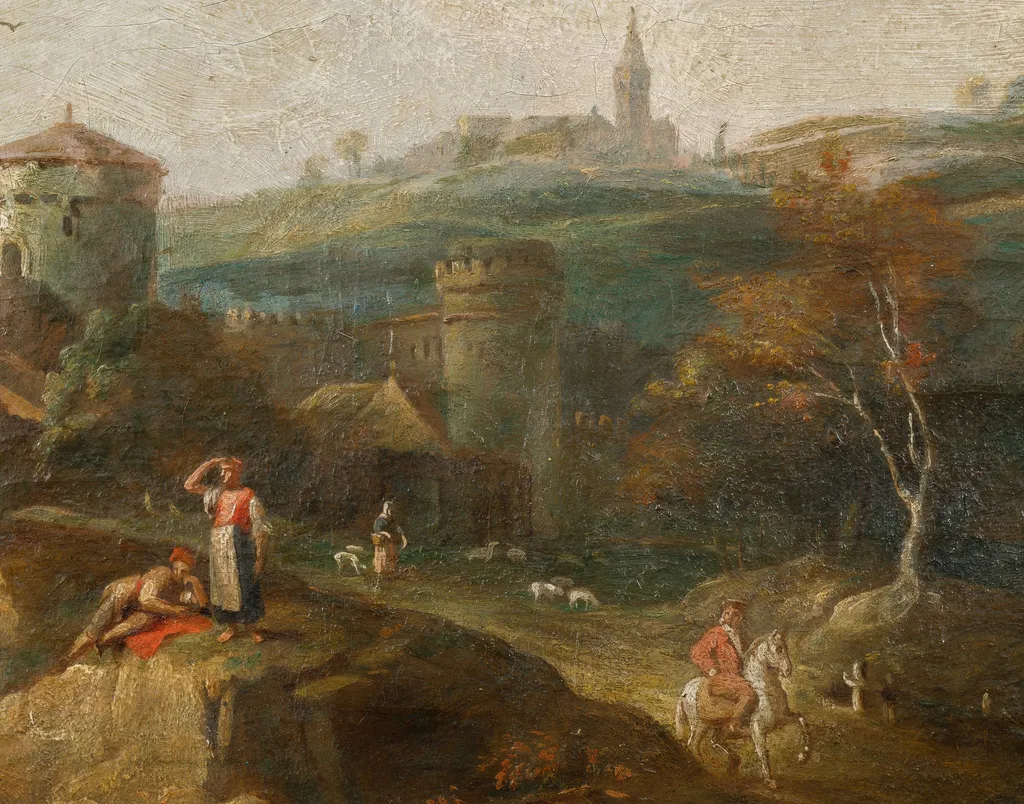
Peisaj is an unspecified painting by Hugo Kołłątaj. It dates from 1850 and is held in the collection of the National Museum of Art of Romania.
About this work
Overview
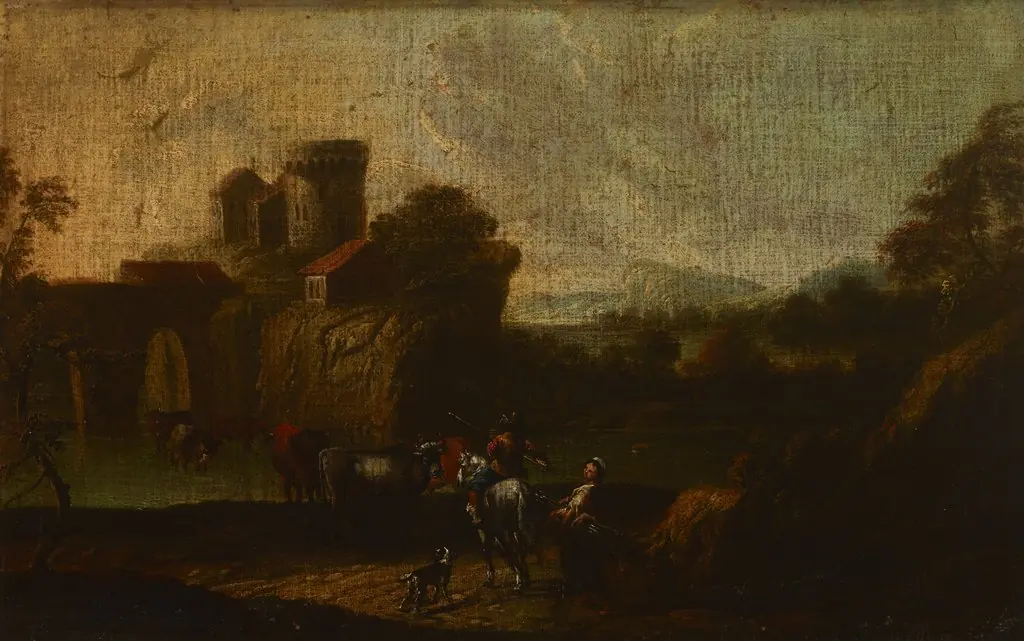
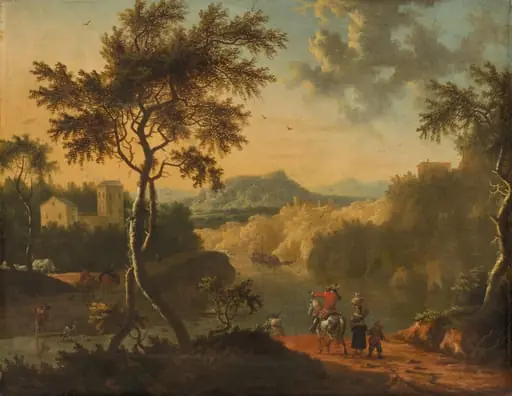
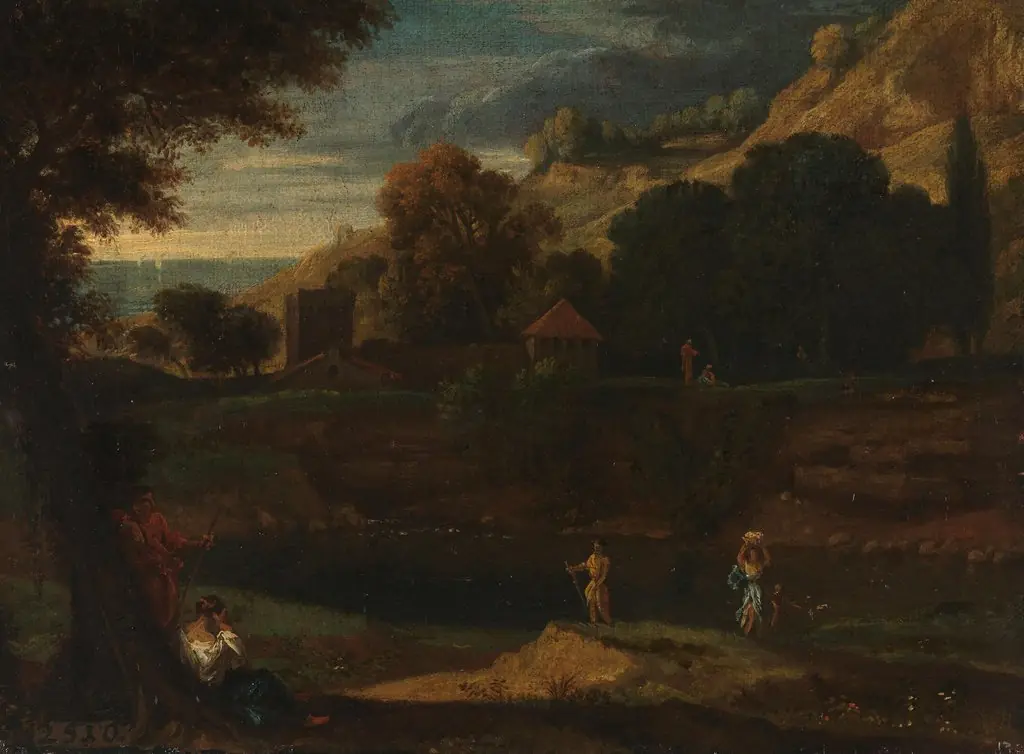
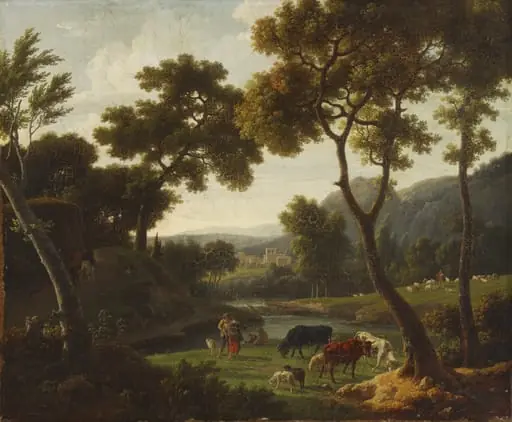
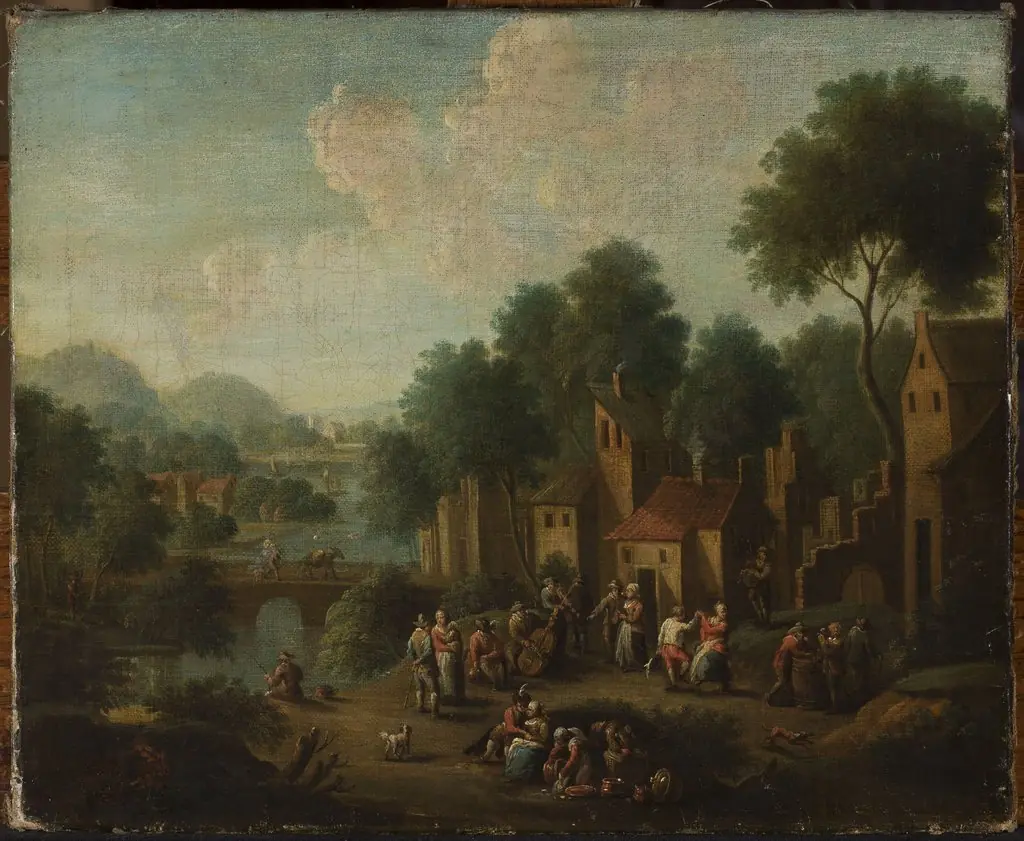
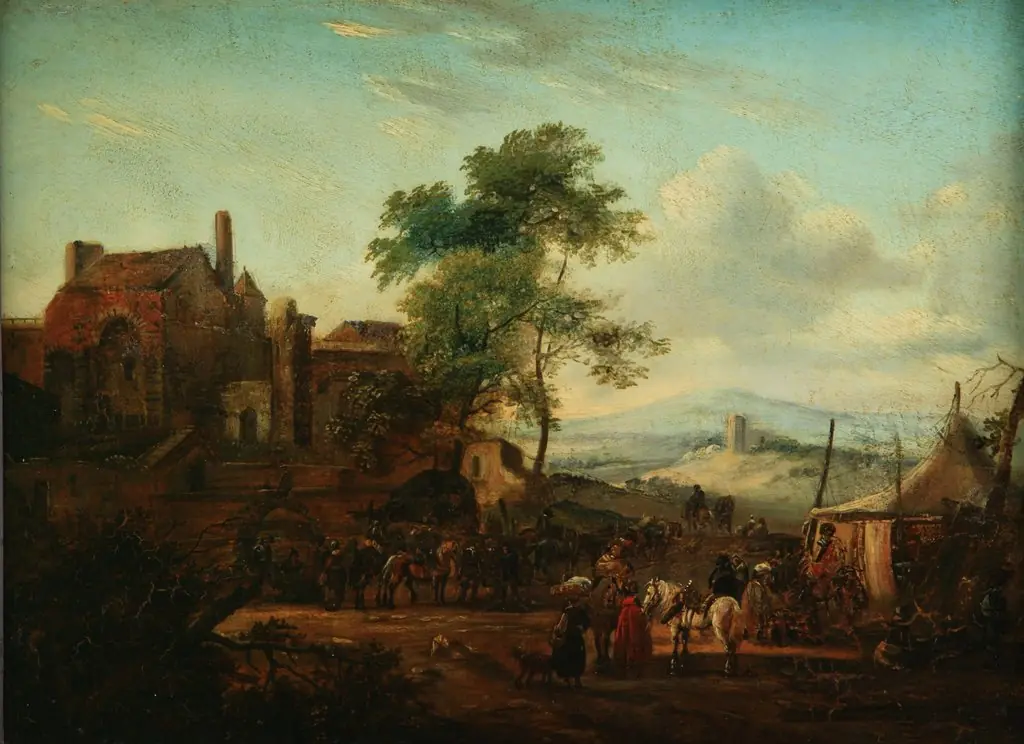
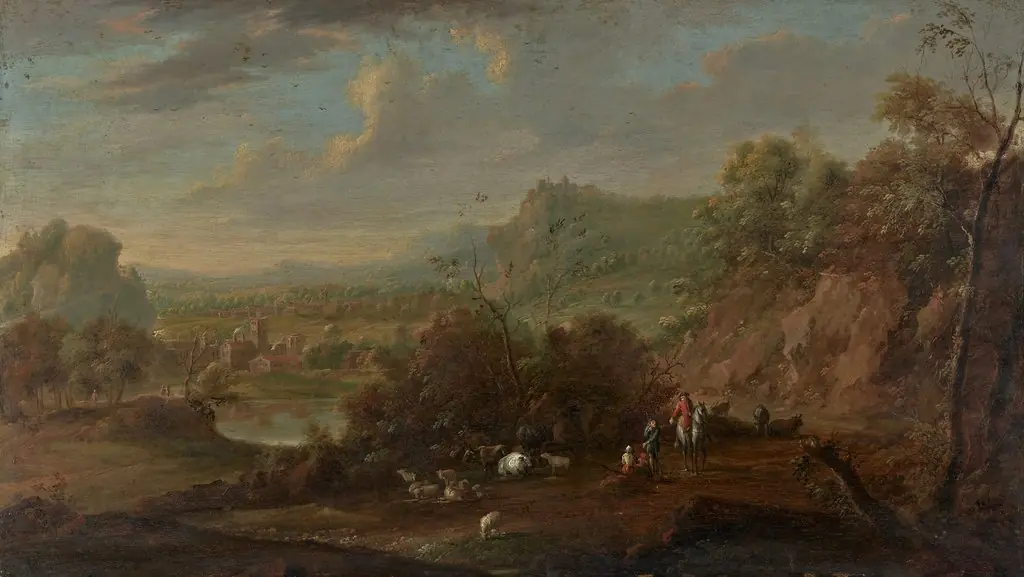
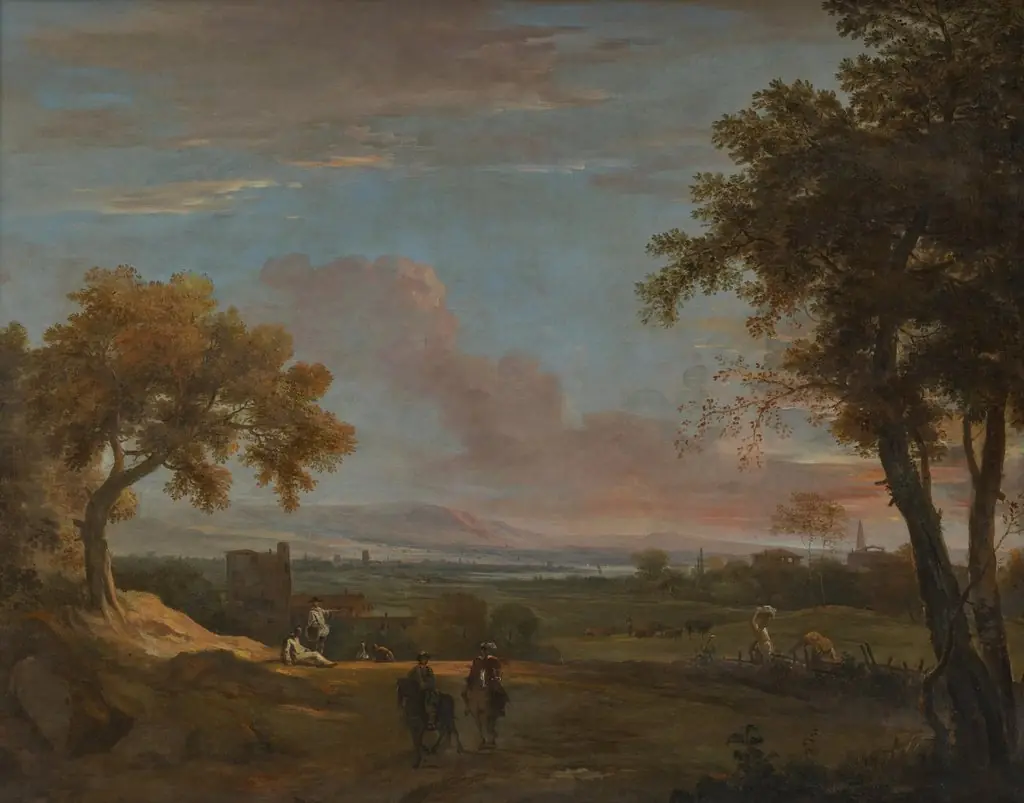
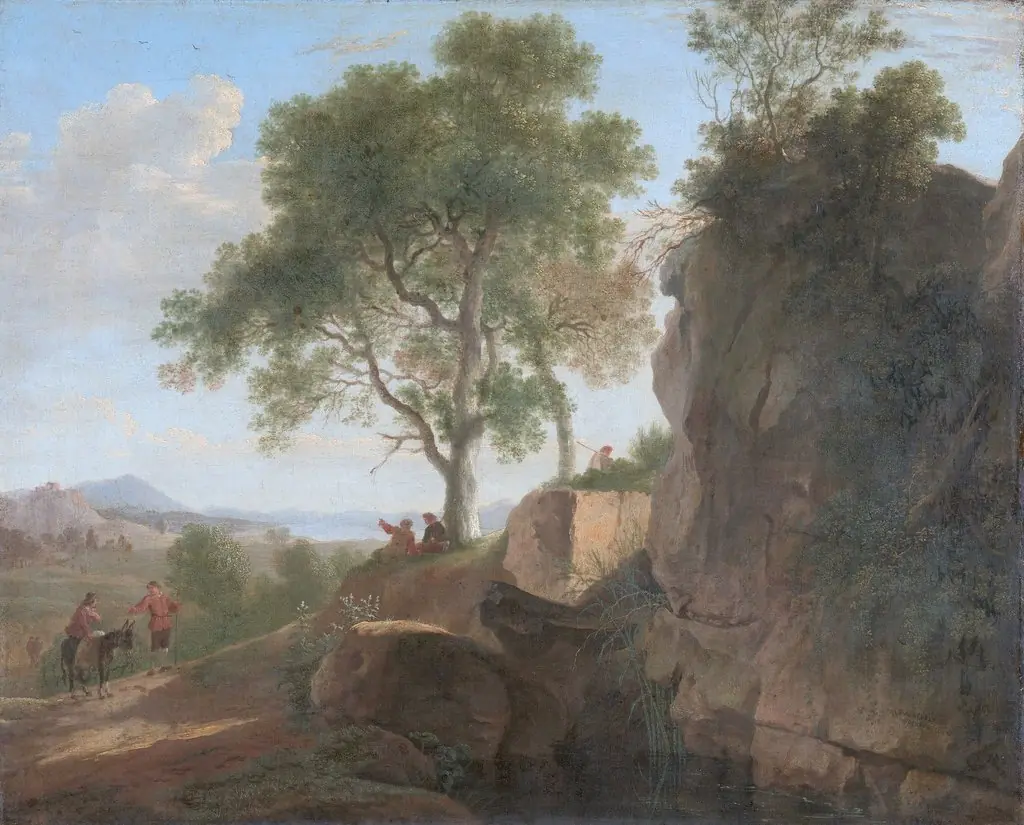
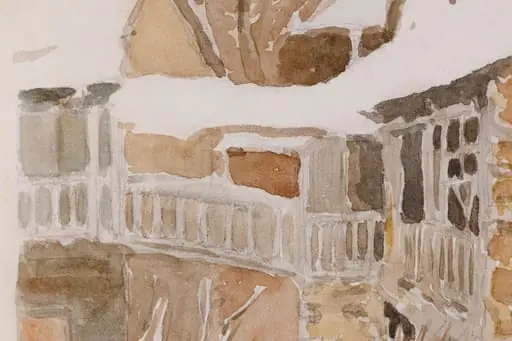
Peisaj, attributed to Hugo Kołłątaj and dated to around 1850, presents a tranquil rural tableau. The composition balances figures and landscape, depicting a woman with an umbrella, a seated figure, a horseback rider, and a shepherd attending his flock, all set against a modest village with a church steeple perched on a hill.
Subject & Meaning
The scene captures everyday life in a countryside setting, emphasizing the harmony between human activity and the natural environment. The inclusion of domestic figures alongside agricultural labor suggests a narrative of communal routine and the interdependence of village inhabitants and their surrounding landscape.
Technique & Style
Kołłątaj employs a thick, textured application of paint that lends the surface a tactile, almost sketch‑like quality. The palette is restrained, dominated by muted earth tones of green and brown, reinforcing the work’s subdued atmosphere. This impasto‑like handling emphasizes the materiality of the medium while maintaining a cohesive visual rhythm.
History & Provenance
Created circa 1850, Peisaj belongs to the mid‑nineteenth‑century period of Polish landscape painting. While specific ownership records are scarce, the work is recognized as part of Kołłątaj’s oeuvre, reflecting his interest in rural subjects during a time of growing national interest in depicting native scenery.
Own this work as a print
Artist & collection
Artist
This Polish folk painter worked in the late eighteenth and early nineteenth centuries, creating religious scenes with bold colors and simple shapes.

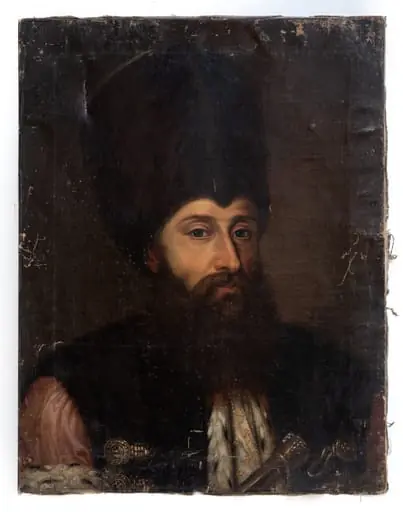 Alexandru Ipsilanti
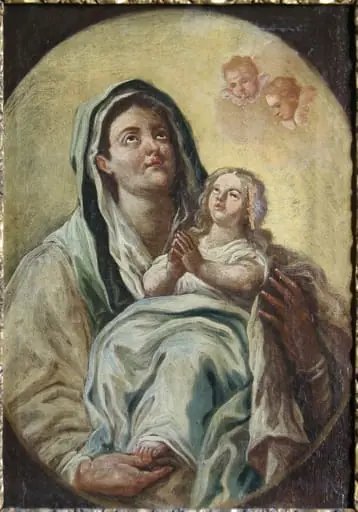 Fecioara Maria cu Pruncul Isus (în Reg. Inv.: Maria cu copilul Isus)
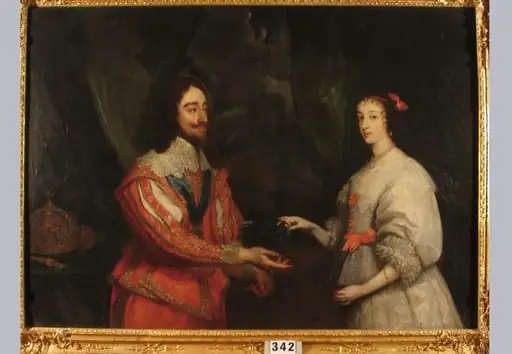 Regele Charles I Stuart al Angliei și soția sa Henrietta Maria de Franța (în Reg. Inv.: Carol I al Angliei și soția sa Henriette din Franța)
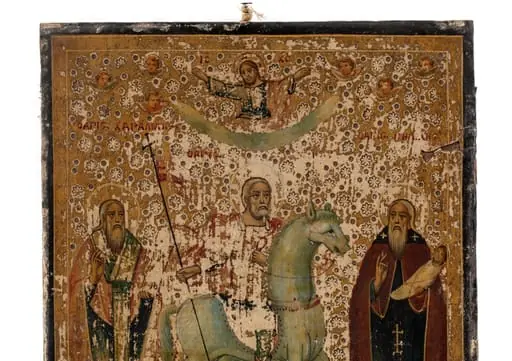 Sfântul Haralambie cu alți doi sfinți
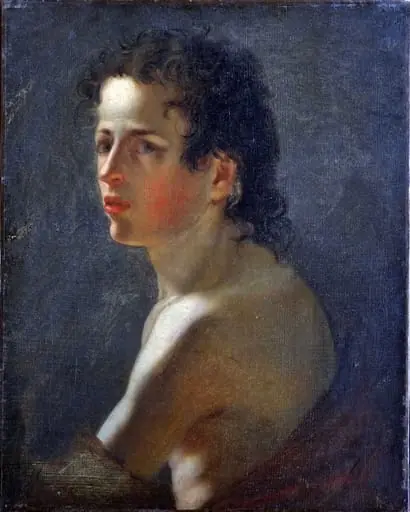 Portret de bărbat
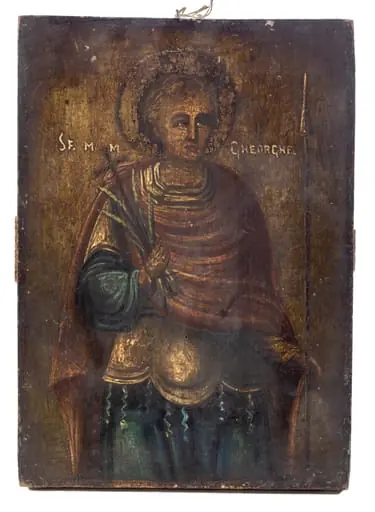 Sfântul Gheorghe
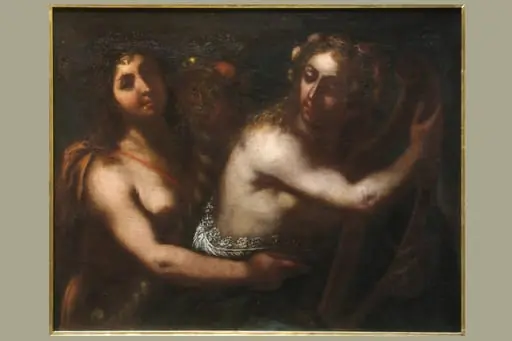 Vertumnus și Pomona (în Reg. Inv.: Vertumnus și Flora)
 Iarnă
Iarnă