Artwork
Sfinții împărați Constantin și Elena sunt redați conform erminiilor, de o parte și de alta a crucii răstignirii(aici de tip rusesc, cu 6 brațe), cruce găsită de împărăteasa Elena la Ierusalim. La baza crucii, craniul lui Adam, sugerând răscumpărarea păcatelor omenirii prin jertfa lui Iisus. Cei doi poartă coroane și veșminte împărătești, bogat decorate cu motive fitomorfe, la împărat în volute mari, la sfânta Elena mici, punctiforme. Gestul mâinilor, de arătare a crucii. În partea stângă a crucii, pe latura de sus, imediat sub chenar, chipul lui Iisus, așa cum s-a imprimat pe mahrama Veronicăi. Cromatica specifică, tonuri de roșu, brun, valorate de fondul foiței(aplicată în partea de sus, incluzând coroanele celor doi sfinți. Bordura roșiatică o înscrie în categoria icoanelor de tip krasnushka, caracteristice pentru centrul Holui. Pe spatele icoanei lipit un timbru al miliției RPR cu numele Zoe Apostolescu cu cerneală neagră..
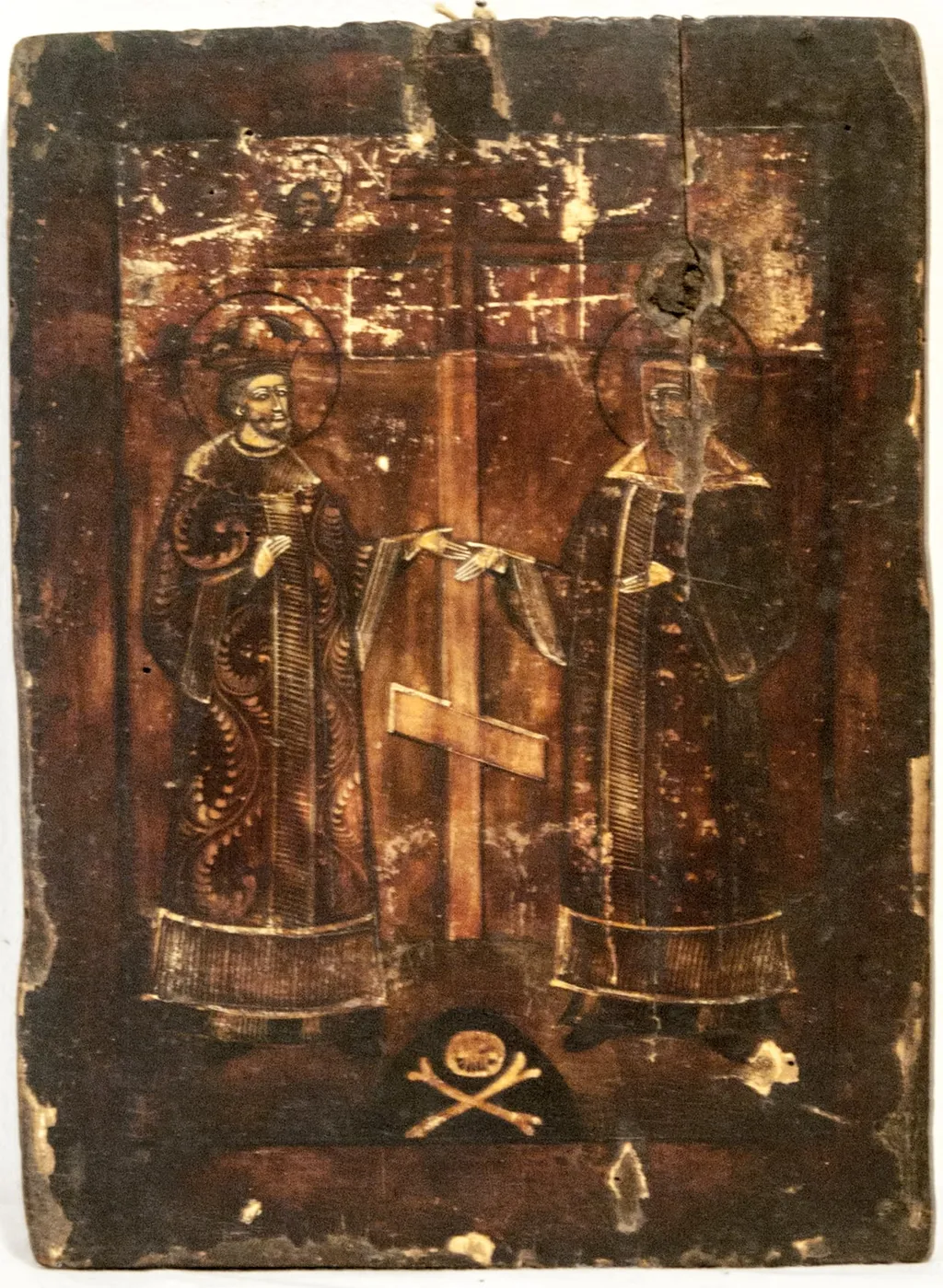
Sfinții împărați Constantin și Elena sunt redați conform erminiilor, de o parte și de alta a crucii răstignirii(aici de tip rusesc, cu 6 brațe), cruce găsită de împărăteasa Elena la Ierusalim. La baza crucii, craniul lui Adam, sugerând răscumpărarea păcatelor omenirii prin jertfa lui Iisus. Cei doi poartă coroane și veșminte împărătești, bogat decorate cu motive fitomorfe, la împărat în volute mari, la sfânta Elena mici, punctiforme. Gestul mâinilor, de arătare a crucii. În partea stângă a crucii, pe latura de sus, imediat sub chenar, chipul lui Iisus, așa cum s-a imprimat pe mahrama Veronicăi. Cromatica specifică, tonuri de roșu, brun, valorate de fondul foiței(aplicată în partea de sus, incluzând coroanele celor doi sfinți. Bordura roșiatică o înscrie în categoria icoanelor de tip krasnushka, caracteristice pentru centrul Holui. Pe spatele icoanei lipit un timbru al miliției RPR cu numele Zoe Apostolescu cu cerneală neagră.. is a drawing by Hugo Kołłątaj. It is held in the collection of the "Dimitrie Gusti" National Village Museum. This icon depicts Emperor Constantine and Empress Helena flanking a six-armed cross, a form associated with Eastern Christian tradition.
About this work
Overview
The figures, rendered in imperial regalia, gesture toward the cross, while a faint facial image appears above it, referencing the Veil of Veronica.
This icon depicts Emperor Constantine and Empress Helena flanking a six-armed cross, a form associated with Eastern Christian tradition. At its base lies a skull, symbolizing Adam’s burial site and the redemptive power of Christ’s sacrifice. The figures, rendered in imperial regalia, gesture toward the cross, while a faint facial image appears above it, referencing the Veil of Veronica. The surface is adorned with gold leaf and stippled ornamentation, characteristic of Romanian krasnushka icons.
Subject & Meaning
The composition conveys theological continuity: Constantine and Helena, credited with discovering the True Cross in Jerusalem, serve as earthly witnesses to divine redemption. The skull beneath the cross alludes to Christ’s victory over death through Adam’s sin. The Veronica image above reinforces the idea of Christ’s presence made manifest. Together, these elements frame the cross not merely as an instrument of execution but as the axis of salvation history.
Technique & Style
The figures are rendered with meticulous stippling—tiny dots of pigment creating texture in their robes and crowns. The floral motifs differ subtly between the emperor’s larger volutes and Helena’s finer, punctate patterns, signaling gendered symbolism. Gold leaf is applied selectively, especially on the crowns and upper border, enhancing luminosity. The background, partially gilded, contributes to the icon’s devotional intensity while anchoring it within the krasnushka tradition of central Moldavia.
History & Provenance
The icon originates from the Moldavian cultural sphere, likely produced in the 18th or early 19th century. Its stylistic features align with local workshops specializing in krasnushka icons. A black-ink stamp on the reverse, bearing the name Zoe Apostolescu and the seal of the RPR militia, indicates 20th-century state inventory practices, suggesting the piece entered public collection during Romania’s communist era.
Context
Krasnushka icons emerged in Moldavia as devotional objects for domestic and small church use, distinguished by rich color, gold leaf, and dense ornamentation. The inclusion of Constantine and Helena reflects widespread veneration of imperial saints in Orthodox communities. The six-armed cross and Veronica image were standard iconographic elements in Eastern Christian art, reinforcing doctrinal narratives through visual repetition and regional variation.
Legacy
This icon exemplifies the persistence of Byzantine-derived imagery in Romanian folk orthodoxy, adapted through local craftsmanship and material constraints. Its survival, marked by both religious and bureaucratic inscriptions, reflects layers of cultural memory—from medieval piety to 20th-century state control. It remains a tangible link between imperial hagiography, artisanal technique, and the shifting political landscapes of Eastern Europe.
Artist & collection
Artist
This Polish folk painter worked in the late eighteenth and early nineteenth centuries, creating religious scenes with bold colors and simple shapes.
Museum
"Dimitrie Gusti" National Village Museum
Continue through works from the same source collection.
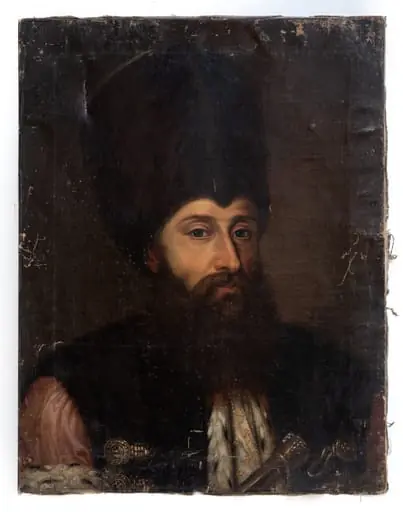 Alexandru Ipsilanti
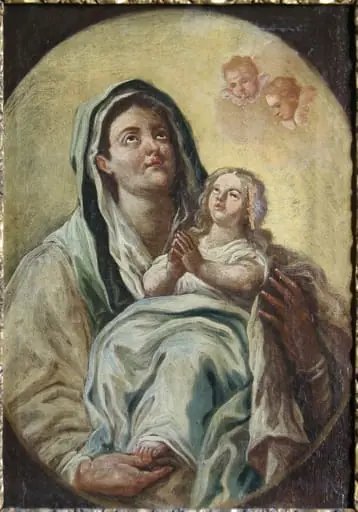 Fecioara Maria cu Pruncul Isus (în Reg. Inv.: Maria cu copilul Isus)
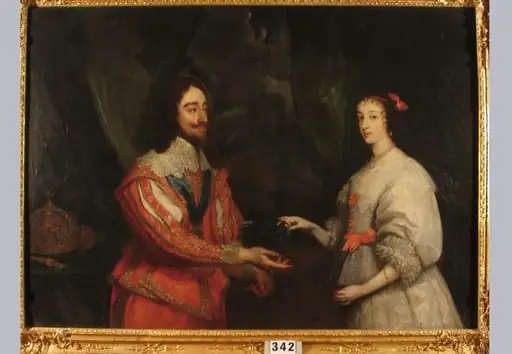 Regele Charles I Stuart al Angliei și soția sa Henrietta Maria de Franța (în Reg. Inv.: Carol I al Angliei și soția sa Henriette din Franța)
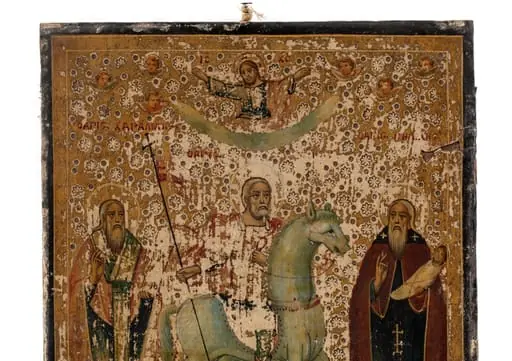 Sfântul Haralambie cu alți doi sfinți
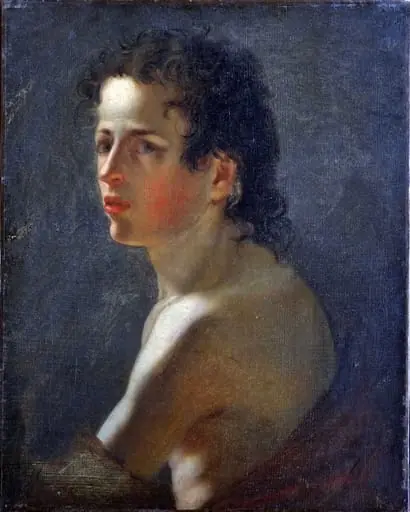 Portret de bărbat
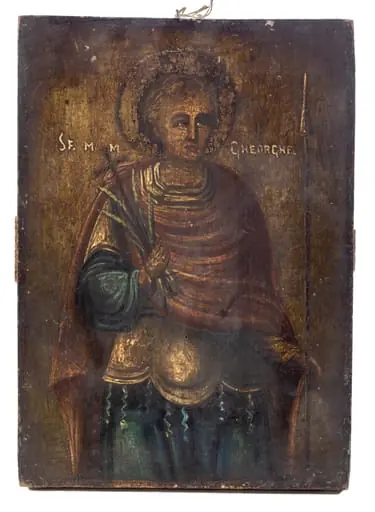 Sfântul Gheorghe
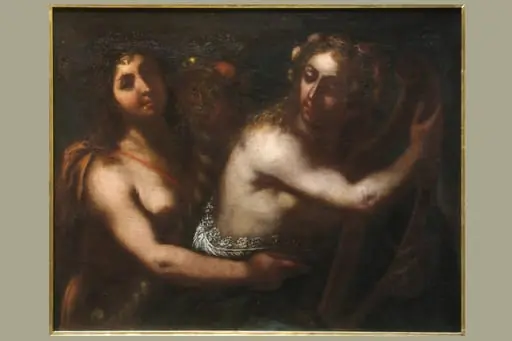 Vertumnus și Pomona (în Reg. Inv.: Vertumnus și Flora)
 Iarnă
Iarnă
 The Christ Child with Saints Boris and Gleb
 Cina de la Mamvri
 Răstshka
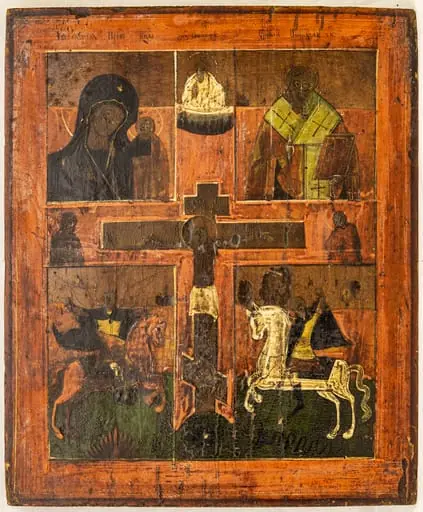 Icoană în patru registre, în centru Iisus Crucificat
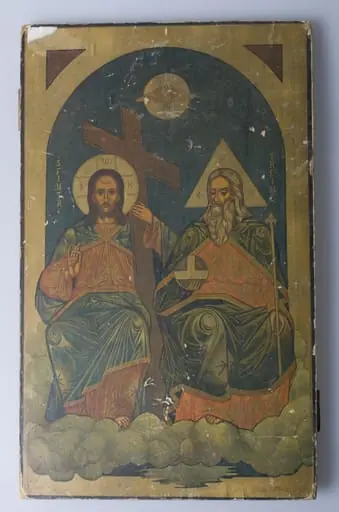 În icoană este reprezentată Sfânta Treime în variantă „noutestamentară”. Fiul ține crucea cu mâna stângă, cu mâna dreaptă binecuvântând, Tatăl (reprezentat ca bătrân, cu aureolă triunghiulară) ține în mâna stângă sceptrul, iar în dreapta globul spre care și privește, iar Duhul Sfânt apare în chip de porumbel în registrul superior. Cromatică: albastru, bej, roșu, maro, gri, purpuriu.
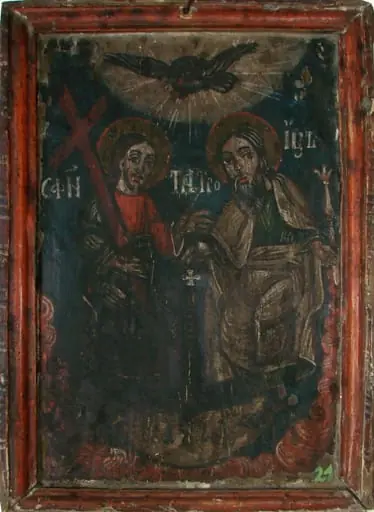 Sf. Treime nou-testamentară
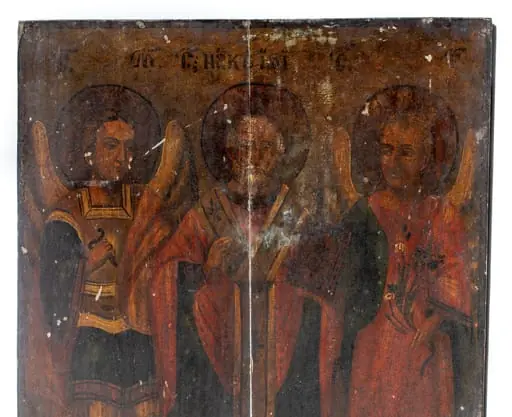 Sfinții Nicolae, Mihail și Gavriil
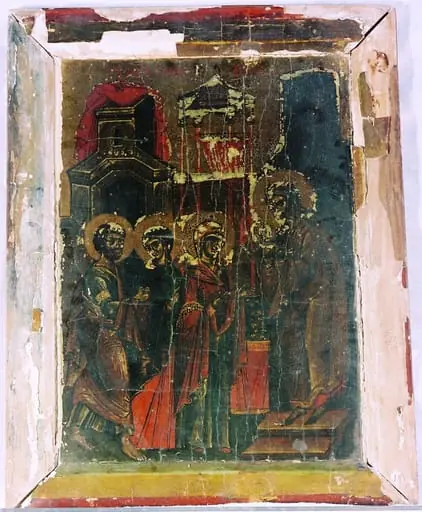 Prezentarea la templu
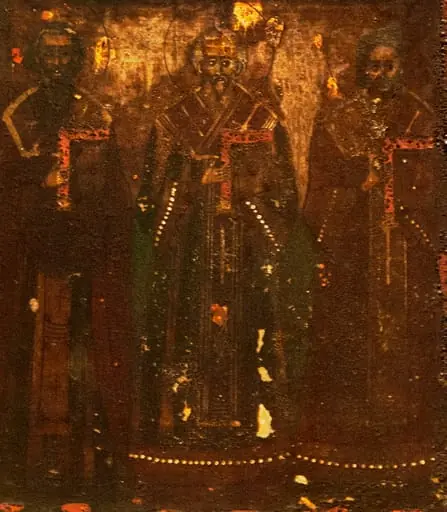 În spațiul dreptunghiular creat prin scobire(rezultă o ramă de 3 cm lățime), sunt pictați, în ax vertical, Sfinții trei ierarhi Vasile, Grigorie și Ioan. Stratul pictural fiind înnegrit, nu se pot identifica exact fiecare din cei trei sfinți. Probabil ca cel din centru să fie Sf. Ioan Gură de Aur, cu părul și barba albe, în stânga fiind sf. Vasile cel Mare iar în dreapta sf. Grigorie Noul Teolog, toți în picioare. Toți trei țin în mîini cartea Sfântă.Veșmintele sunt arhierești, patrafirele au cruci în linii subțiri, doi dintre ei au veșmântul împodobit cu șiruri de puncte albe. Fondul este aurit, aureolele trasate cu linii subțiri, negre, în stilul icoanelor lipovenești. Pe partea de sus a ramei o inscripție în același stil. La mijloc chipul lui Isus și monogramul Acestuia.