Artwork
În icoană este reprezentată Sfânta Treime în variantă „noutestamentară”. Fiul ține crucea cu mâna stângă, cu mâna dreaptă binecuvântând, Tatăl (reprezentat ca bătrân, cu aureolă triunghiulară) ține în mâna stângă sceptrul, iar în dreapta globul spre care și privește, iar Duhul Sfânt apare în chip de porumbel în registrul superior. Cromatică: albastru, bej, roșu, maro, gri, purpuriu.
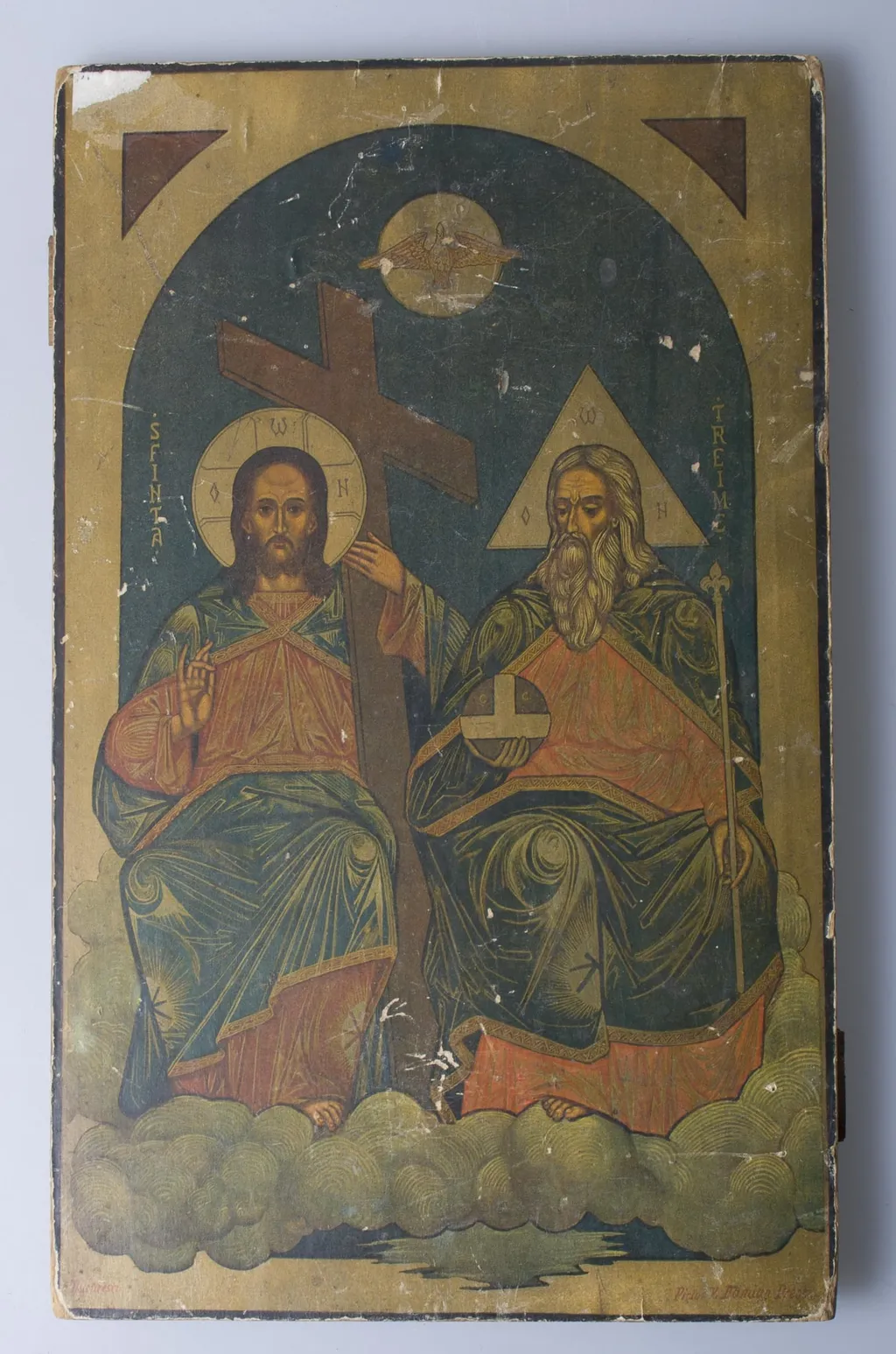
În icoană este reprezentată Sfânta Treime în variantă „noutestamentară”. Fiul ține crucea cu mâna stângă, cu mâna dreaptă binecuvântând, Tatăl (reprezentat ca bătrân, cu aureolă triunghiulară) ține în mâna stângă sceptrul, iar în dreapta globul spre care și privește, iar Duhul Sfânt apare în chip de porumbel în registrul superior. Cromatică: albastru, bej, roșu, maro, gri, purpuriu. is a drawing by Unknown. It dates from 1850 and is held in the collection of the ASTRA National Museum Complex.
About this work
Overview
This icon depicts the Holy Trinity in a New Testament interpretation, presenting the Father, the Son, and the Holy Spirit as three distinct yet unified figures.
This icon depicts the Holy Trinity in a New Testament interpretation, presenting the Father, the Son, and the Holy Spirit as three distinct yet unified figures. The composition centers on two seated divine beings beneath a golden arch, with the Holy Spirit represented as a dove above. The figures are rendered with solemn dignity, their postures and gestures conveying theological meaning through quiet restraint rather than dramatic expression.
Subject & Meaning
The Son is shown holding the cross in his left hand and offering a blessing with his right, symbolizing his sacrificial role and divine authority. The Father, identified by his long beard and triangular halo, holds a scepter and a globe, signifying sovereignty over creation. The dove between them represents the Holy Spirit, completing the triune unity. Together, the imagery affirms the Christian doctrine of one God in three persons, expressed through symbolic attributes rather than narrative action.
Technique & Style
The figures are rendered with precise, linear detailing, particularly in the folds of their robes and the texture of their beards. Shading is achieved through fine cross-hatching, adding depth without heavy modeling. Gold leaf highlights halos and edges, enhancing spiritual luminosity. The palette—deep blues, warm reds, earthy browns, and muted purples—creates a harmonious, contemplative atmosphere, typical of Eastern Orthodox iconography that prioritizes symbolic clarity over naturalism.
History & Provenance
This icon belongs to a tradition of Eastern Christian devotional art, likely produced in a monastic workshop in the Romanian principalities during the late medieval or early modern period. Its style reflects Byzantine influences adapted to local aesthetics. While its exact origin and early ownership are undocumented, its iconographic consistency with regional examples suggests it was created for private or ecclesiastical veneration, possibly within a church or noble household.
Context
In Orthodox theology, the Trinity is a mystery not to be illustrated literally but symbolically. This icon follows established conventions where each person is distinguished by attributes: the cross for Christ, the globe and scepter for the Father, the dove for the Spirit. Such images served as aids to prayer and teaching, reinforcing doctrinal truths for congregations with limited literacy. The use of gold and restrained color reflects a spiritual rather than earthly realm.
Legacy
This icon exemplifies the enduring continuity of Byzantine iconographic principles in Eastern European religious art. Its adherence to symbolic representation, rather than emotional or naturalistic expression, aligns it with centuries of Orthodox visual theology. Though not widely known outside regional collections, it remains a quiet testament to the devotional discipline and theological precision that defined sacred art in its cultural context.
Artist & collection

 Domestic Scene
 Giacomo and Cardinal Marco, investing Andrea, Abbot of San Zeno, with his Benefice
 The Nymph of Fontainebleau
 Portrait of a Woman
 Madonna and Child with Saints in the Enclosed Garden
 Venus and Minerva
 Family Group of Four on Sofa
 Wall painting from Room H of the Villa of P. Fannius Synistor at Boscoreale
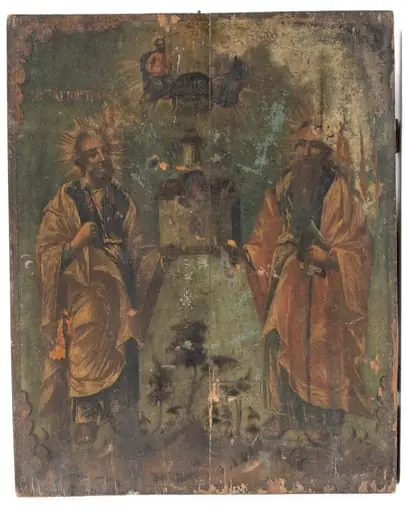 Sfinții Andrei și Haralambie
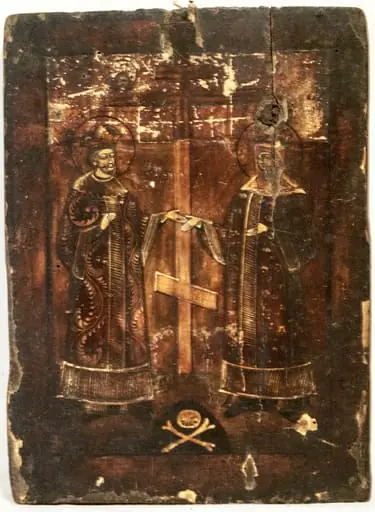 Sfinții împărați Constantin și Elena sunt redați conform erminiilor, de o parte și de alta a crucii răstignirii(aici de tip rusesc, cu 6 brațe), cruce găsită de împărăteasa Elena la Ierusalim. La baza crucii, craniul lui Adam, sugerând răscumpărarea păcatelor omenirii prin jertfa lui Iisus. Cei doi poartă coroane și veșminte împărătești, bogat decorate cu motive fitomorfe, la împărat în volute mari, la sfânta Elena mici, punctiforme. Gestul mâinilor, de arătare a crucii. În partea stângă a crucii, pe latura de sus, imediat sub chenar, chipul lui Iisus, așa cum s-a imprimat pe mahrama Veronicăi. Cromatica specifică, tonuri de roșu, brun, valorate de fondul foiței(aplicată în partea de sus, incluzând coroanele celor doi sfinți. Bordura roșiatică o înscrie în categoria icoanelor de tip krasnushka, caracteristice pentru centrul Holui. Pe spatele icoanei lipit un timbru al miliției RPR cu numele Zoe Apostolescu cu cerneală neagră..
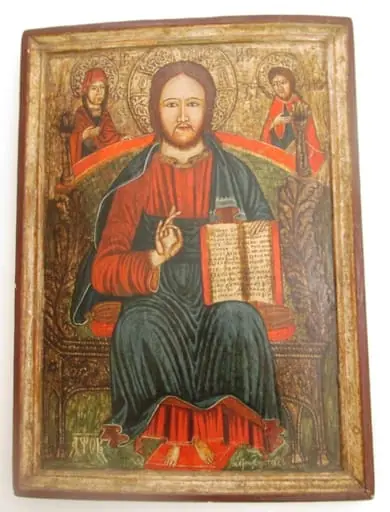 Iisus Binecuvântând
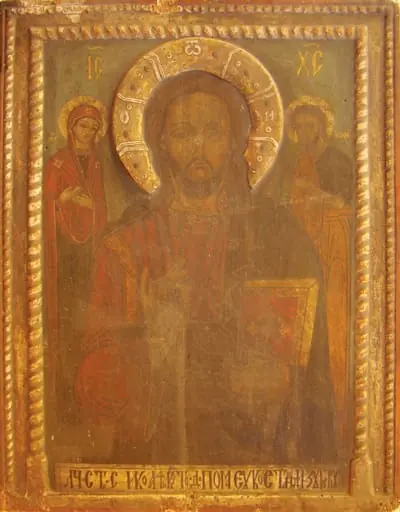 Deisis
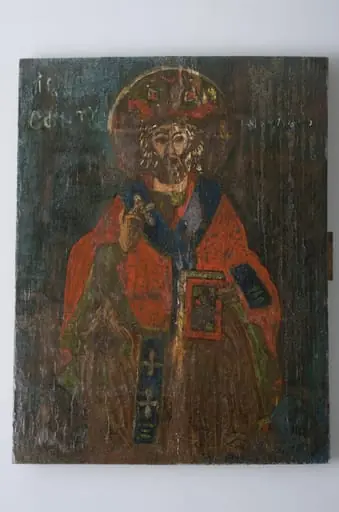 Icoana este pictată pe lemn, reprezentându-l pe Sfântul Nicolae cu veșminte arhierești (felon roșu, omofor albastru și mitră pe cap), ținând Evanghelia închisă cu mâna stângă și binecuvântând cu mâna dreaptă. Cromatică: roșu, albastru, verde, maro închis.
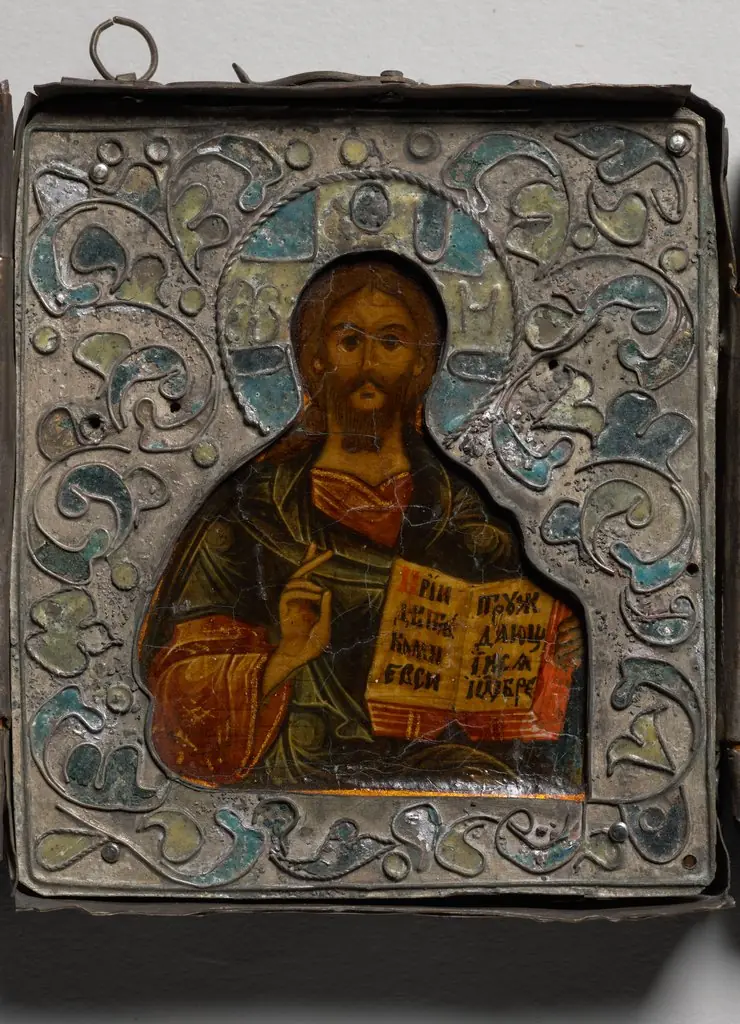 Christ
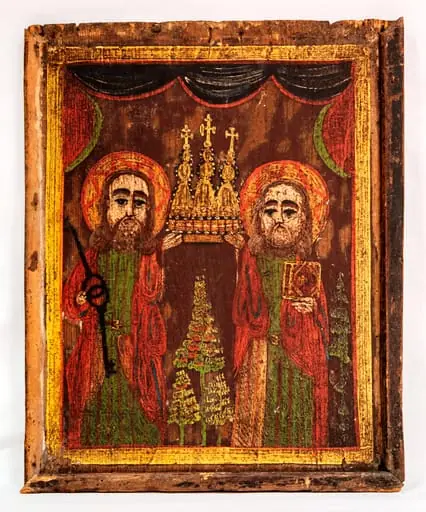 Icoana pictată în ax vertical , manieră populară. Sfinții Apostoli Petru și Pavel sunt redați frontal, în picioare, susținând chivotul unei biserici. Compoziția, proiectată să fie simetrică, are ușoare asimetrii pe care meșterul le-a rezolvat prin completarea spațiilor libere. Sfinții au plete de lungime medie, castaniu deschis, lăsate pe umeri, mustăți lungi, bărbi medii, fruntea înaltă, privire expresivă, sprâncene groase, cu umbre realizate prin tușe groase.Mâinile disproporționate, mici. Sfântul Petru ține în dreapta două chei negre, mari(cheile raiului în concepția populară), iar apostolul Pavel o carte închisă. Înveșmântați aproape identic, cu tunici lungi, verzi, strânse la mijloc cu centuri cu cataramă, și mantii roșii. Falduri realizate prin linii. Aureole galbene cu margine roșie decorate cu câte o linie frântă. Cu mâna liberă susțin chivotul unei biserici redusă în principal la trei turle de inspirație rusească, cu câte o cruce mare deasupra fiecăreia. Fond brun, arbori de conifere în minatură( în spațiul dintre cei doi sfinți, trei brăduți, unul în spațiul liber din spatele sf. Pavel, culori diferite) Latura de sus - draperie neagră cu margini roșii, continuată cu câte un fald roșu cu margine verde lateral. Compoziția este încadrată un chenar compus dintr-o linie roșie subțire și o bandă galbenă mai lată(1,5 cm). În continuarea acestuia este montată rama îngustă, bătută în cuie de fier. Stinghia din stânga și cea de sus lipsesc.
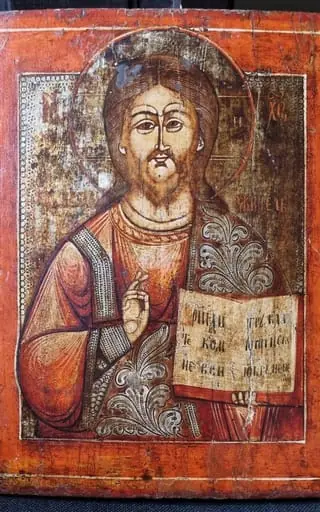 Isus Hristos Pantocrator
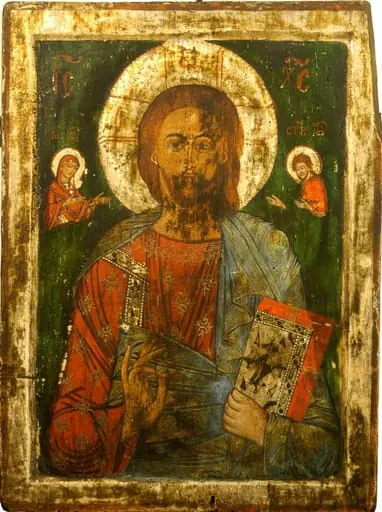 Deisis
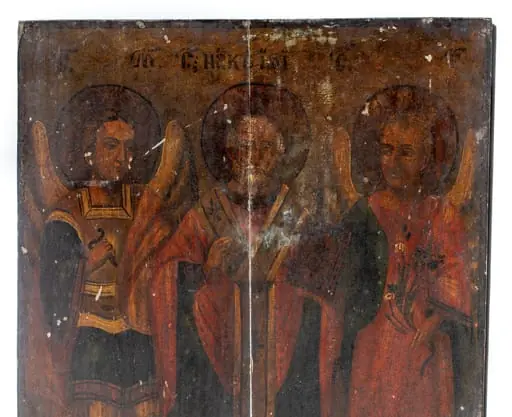 Sfinții Nicolae, Mihail și Gavriil
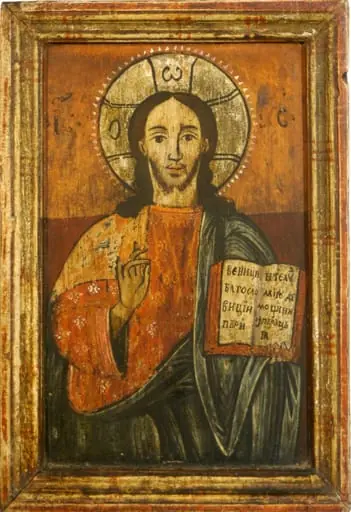 Iisus Hristos Pantocrator
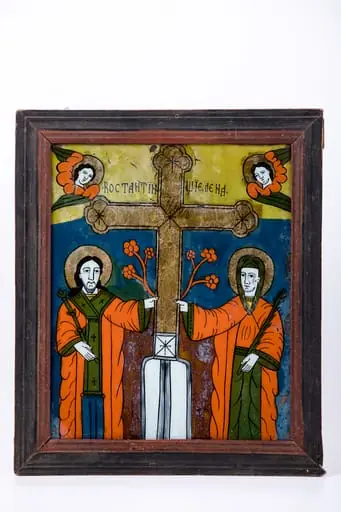 În centrul icoanei este Crucea albă la bază și bronzie în rest, cu capetele brațelor împodobite trilobat, iar în dreapta crucii este Sfântul Împărat Constantin, și în stânga este Împărăteasa Elena, mama sa. În spatele Crucii, sunt flori roșii agățătoare și unduitoare dintr-o grhirlandă de trandafiri. Crucea găsită este susținută cu bucurie de cei doi sfinți. Veșmintele Sfinților Constantin și Elena sunt într-o combinație de roșu vermillon și verde-iarbă de vară. Spațiul albastru-galben de lumină, din fondul icoanei, duce gândul la Crucea de lumină apărută pe cer In hoc signo vinces - prin acest semn vei învinge. Fondul icoanei este cerul albastru cobalt, lumina galbenă și o panglică albă, în josul crucii. În registrul superior, în colțurile stânga-dreapta sunt 2 îngeri serafimi. Cromatica este armonioasă, bogată și senină: roșu vermillon, galben-ocru, albastru cobalt, verde-iarbă de vară nuanță spanac-avocado, alb, negru. Icoana este de Nicula. Inscripția din româno-chirilică se traduce Constantin Elena.