Artwork
Icoaocto
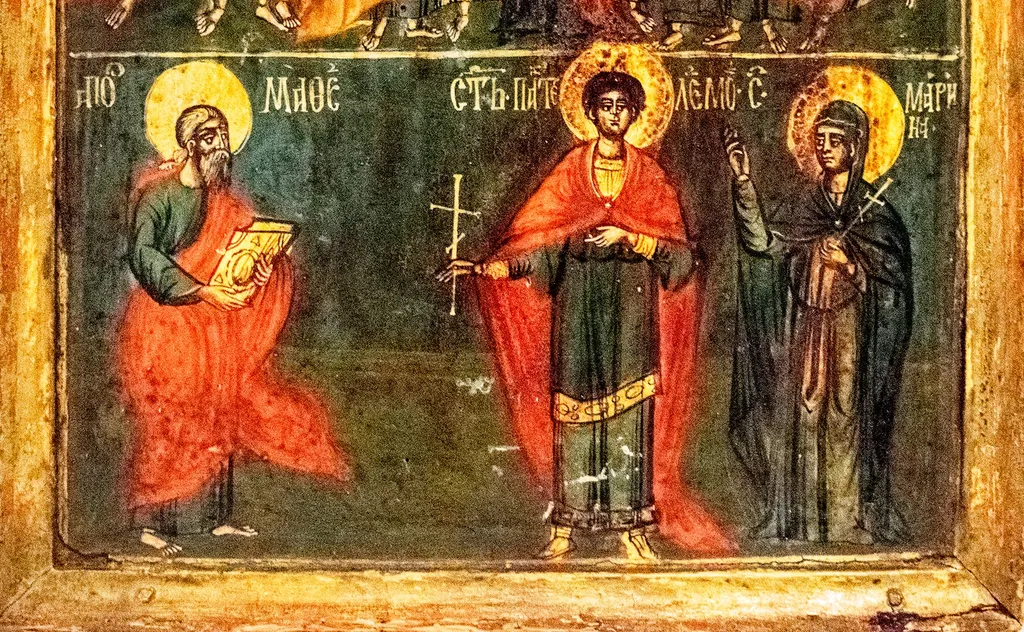
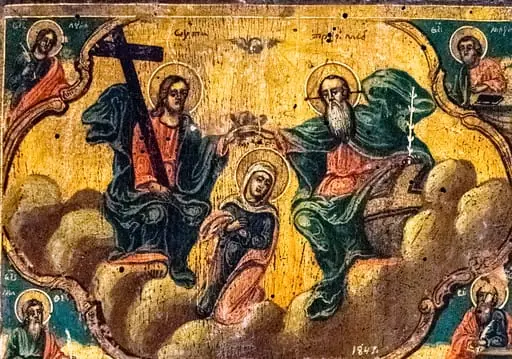
Icoaocto is a drawing by Hugo Kołłątaj. It is held in the collection of the "Dimitrie Gusti" National Village Museum.
About this work
Overview
The central figure, clad in a red robe with a yellow trim, holds a cross, while a man to his left holds a book and a woman to his right holds another cross.
"Icoaocto" is a religious painting featuring three figures arranged in a solemn grouping. The central figure, clad in a red robe with a yellow trim, holds a cross, while a man to his left holds a book and a woman to his right holds another cross. The background is muted and shadowed, with faint text at the upper edge. The composition directs focus toward the central figure, enhancing the painting’s meditative tone.
Subject & Meaning
The figures suggest a sacred moment, possibly a revelation or invocation. The central figure’s cross and the secondary crosses held by others imply shared spiritual authority or witness. The book in the left figure’s hand may denote scripture or sacred law. The absence of narrative context invites interpretation as a moment of quiet devotion rather than a specific biblical event.
Technique & Style
The figures are rendered with meticulous attention to fabric texture, showing deep, naturalistic folds in the robes. Facial expressions are subtly nuanced, conveying introspection rather than drama. The dark background isolates the subjects, while restrained lighting enhances volume and emotional gravity. Color is used deliberately—red for centrality, green for contrast, and dark tones for solemnity.
History & Provenance
No verifiable records exist regarding the artist, date, or original commission of "Icoaocto." The title appears non-standard and may be a placeholder or misattribution. The work’s origin remains undocumented, and its early ownership or exhibition history is untraced in available sources.
Context
The painting’s style aligns with late Renaissance or early Baroque devotional art, particularly in its emphasis on realism and emotional restraint. Similar compositions appear in Catholic and Orthodox traditions, where figures are arranged to signify spiritual hierarchy. The inclusion of text in the background may reference liturgical inscriptions common in religious imagery of the period.
Legacy
"Icoaocto" has not been widely studied or reproduced in scholarly literature. Its obscurity suggests it may have been a private commission or regional work, never entering major collections. Despite its technical skill, it remains outside the canon of recognized religious art, preserved only as an isolated example of devotional representation.
Artist & collection
Artist
This Polish folk painter worked in the late eighteenth and early nineteenth centuries, creating religious scenes with bold colors and simple shapes.
Museum
"Dimitrie Gusti" National Village Museum
Continue through works from the same source collection.
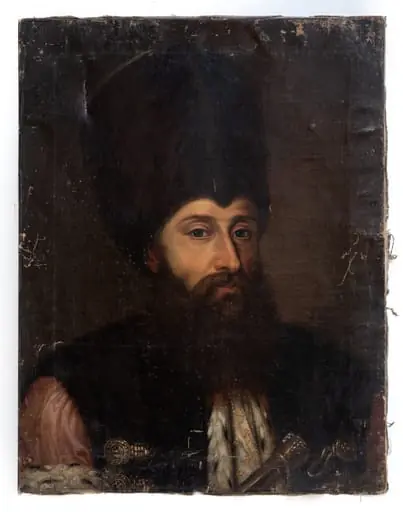 Alexandru Ipsilanti
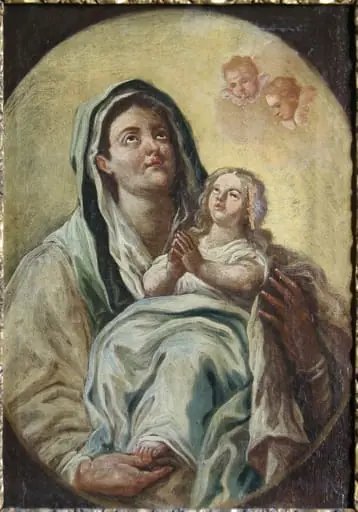 Fecioara Maria cu Pruncul Isus (în Reg. Inv.: Maria cu copilul Isus)
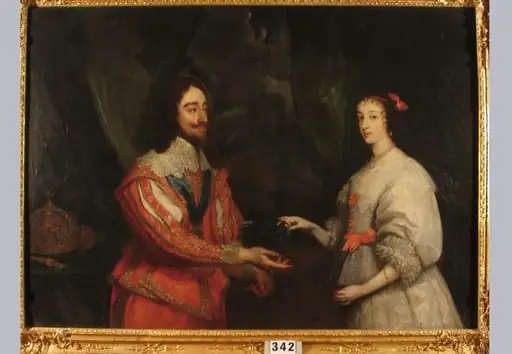 Regele Charles I Stuart al Angliei și soția sa Henrietta Maria de Franța (în Reg. Inv.: Carol I al Angliei și soția sa Henriette din Franța)
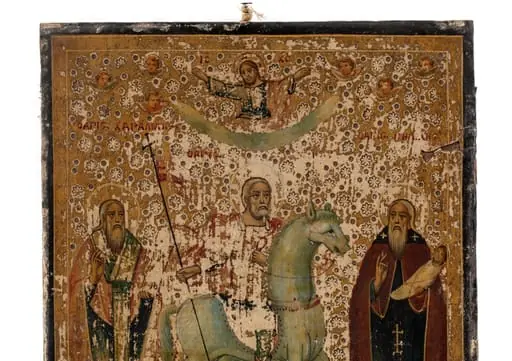 Sfântul Haralambie cu alți doi sfinți
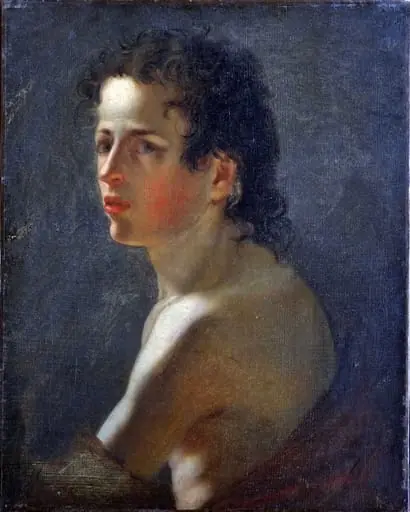 Portret de bărbat
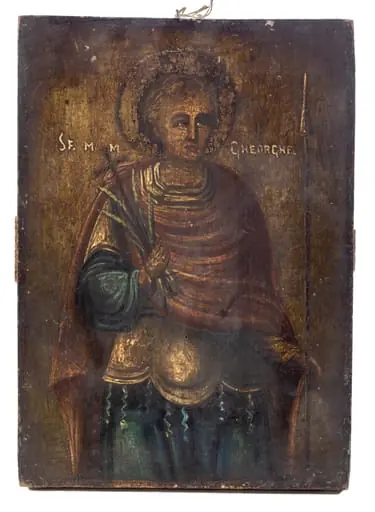 Sfântul Gheorghe
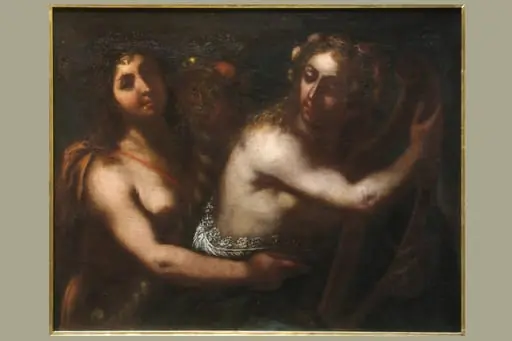 Vertumnus și Pomona (în Reg. Inv.: Vertumnus și Flora)
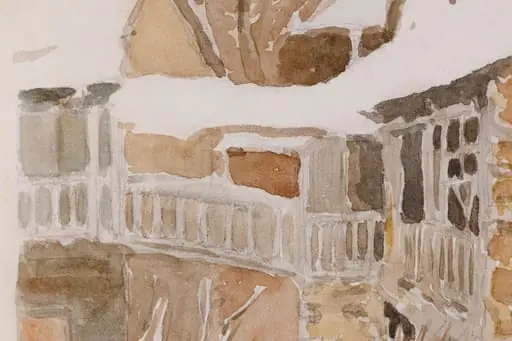 Iarnă
Iarnă
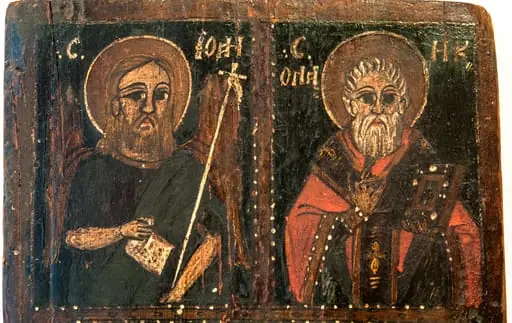 Câmpul icoanei este împărțit în patru casete dreptunghiulare în care sunt redati 3/4: Sfântul Ioan Botezătorul(ipostaza de înger al pustiului, în stânga cu o cruce, în dreapta un rotulus, mantie verde peste blana de cămilă), sfântul Nicolae ierarh(sacos roșu, capul desoperit, binecuvântând cu stânga, în dreapta Evanghelia), Arghanghelul Mihail(cu sabia de foc în stânga, în dreapta un înscris), Arhanghelul Gavriil(cu o floare în dreapta, cruce în stânga). Pictură de factură populară, naivă, fețele expresive, amintind de icoana coptă. Cromatica sobră, fond întunecat, inscripții cu alb, chenare dublate cu șiruri de puncte albe.
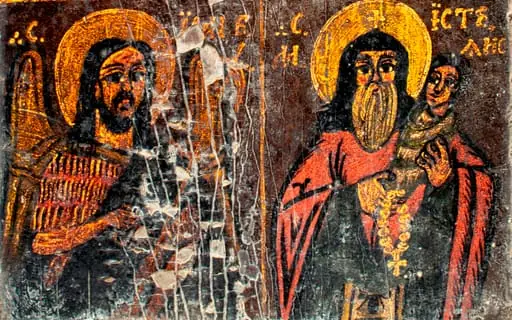 Suprinii
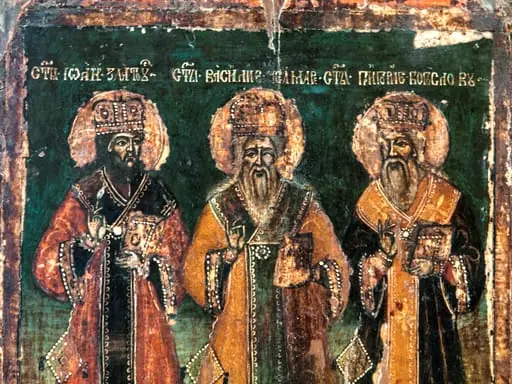 Tema icoanei este "Sfinții trei ierarhi, Vasile, Grigorie, și Ioan". Ordinea din icoană este, de la stânga la dreapta : Ioan Gură de aur(Zlotul), Vasile cel Mare și Grigore Teologul(Bogoslovul).Cei trei sfinți sunt pictați în picioare, Sf. Ioan și Grigorie ușor întorși către Sf Vasile plasat central. Redați în veșminte arhierești, cu însemne episcopale. Pe cap toți poartă mitră împodobită cu pietre scumpe, în mâna stângă țin Evanghelia iar cu dreapta binecuvintează prin atingerea degetului inelar de cel mare.De mâna dreaptă le atârnă bedernița, un veșmânt arhieresc în formă de romb. Reprezentarea celor trei respectă în mare indicațiile Erminiei, ceea ce arată că zugravul o studiase; Doar Sfântul Ioan este redat cu părul și barba negre, ceea ce nu corespunde descrierilor. Veșmintele sunt destul de simple, Sacosurile de culori diferite(roșu cărămiziu, galben ocru, brun închis) au în parte de jos o bordură lată, aurită decorată cu motive geometrice. Peste acestea este așezat omoforul mare, simplu, cu chenar pe margine . La gât poartă câte un engolpion rotund.În partea de jos se vede capătul epitrahilului deasemenea decorat cu motive geometrice și franjuri, așezat peste stihar. Aureolele sunt realizate cu foiță,delimitate de o linie albă, fină. Trăsăturile sunt foarte fine, cu aceent pe detalii, ceea ce denotă un iconar cu experiență și probabil școală. Proporțiile sunt respectate paleta cromatică dominată de culori calde valorate prin contraste cu culorile complementare și nuanțe. Fondul este realizat într-o trecere treptată, de la o culoare mai deschisă în partea de jos la un verde-albastru sus, ceea ce scoate în evidență figurile celor trei. Scrisul este caligrafic, foarte fin și ordonat, realizat cu o linie fină de culoare albă. Chenar dublu, roșu la exterior, auriu la interior. Icoana prezintă crăpături și lacune pe margine.
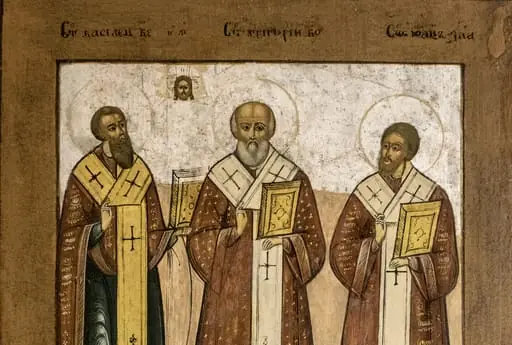 Ordinea din icoană este, de la stânga la dreapta : Vasile cel Mare, Grigore Teologul și Ioan Gură de aur. Cei trei sfinți sunt redați în picioare, central fiind sfântul Grigore, lateral Vasile și Ioan, ușor întorși către acesta. Toți binecuvintează cu dreapta, în stânga țin Evanghelia. Sfântul Griogore este în vârstă, ceilalți doi redați tineri, conform Erminiilor. Sfântul Vasile înveșmântat simplu, stihar albastru, felon purpuriu cu motive discrete, florale, epitrahil galben, ceilalți doi poartă sacos peste stiharul albastru. Toți au capetele descoperite. Pe fondul foiței argintii(1/4 superior) este redat Iisus Hristos- chipul nefăcut de mână de om, sau Sfânta Mahramă. În planul inferior-relief ondulat, benzi de culoare. Cromatica: tonuri de brun, alb(falduri, aureole, iluminarea chipurilor), negru(linia desenului, inscripții), albastru(veșminte), galben tonuri de verde, roșu. (foița metalică).Bordura lată, o înscrie în tipologia icoanelor de krashnuskha.(culoarea a fost modificată în timp), la fel inscripția, respectând canoanele.
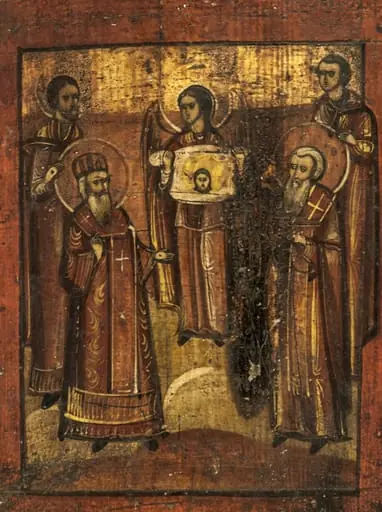 Sfânta Mahramă este, conform sfintei Tradiții, cea mai veche icoană a lui Hristos, nefăcută de mâna omului. Sfântul Ioan Damaschin(filozof, teolog și iconograf din sec VIII) descrie originea acesteia în Dogmatica ortodoxă: Se știe din tradiție că pe când Avgar era regele Edessei, a trimnis un pictor să picteze chipul Domnului, dar din pricină că pictorul nu a putut să -l picteze din cauza luminii strălucitoare a feței, Domnul Însuși , punând haina pe obrazul Lui dumnezeiesc și de viață făcător, s-a imprimat pe haină chipul Lui și astfel a trimis-o lui Avgar, care îl dorea. Deși inscripțiile nu mai ajută la identificarea exactă a momentului ilustrat, icoana ilustrează momentul în care sfânta Mahramă este adusă regelui Avgar. Un înger plasat în centrul compoziției arată mahrama cu chipul lui Iisus înconjurat de nimbul cruciger. De o parte și de alta, plasați simetric, un episcop și un preot în vârstă, binecuvântând, în spatele lor regele, în pandant un personaj fără nimb, toți privind către chipul lui Hristos imprimat pe țesătură. Conform unei legende, chipul lui Hristos s-a imprimat și pe mahrama cu care Veronica i-a șters chipul în timpul patimilor. Compoziția este narativă, echilibrată, chipurile expresive. Cromatica specifică icoanelor de tip krasnushka, tonuri de pământ în combinație cu fondul foiței aurii(fond -1/4 superior). Bordura brun roșcată, lată, delimitat prin linii negre.Icoana prezintă urme de arsură.
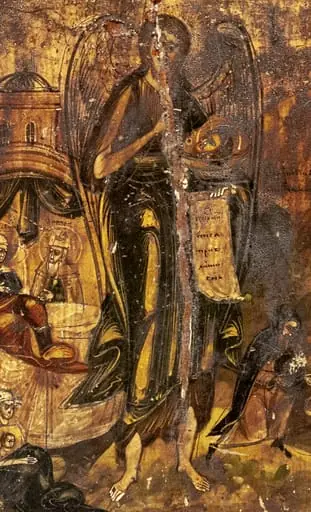 În centrul spațiului pictural, prim plan, Sfântul Ioan Îngerul Pustiului, cu aripi mari,având în mâna stângă un rotulus desfășurat, cu dreapta ținând capul său tăiat pe o tipsie. Este înveșmântat cu o mantie verde peste blana de cămilă, picioarele desculțe. În planul doi, dreapta, este redată scena aflării capului. Un călugăr îngenuncheat lângă capul aureolat al sfântului prooroc, un alt personaj în veșminte roșii(deși tot călugăr), prezentat în picioare, cu capul înclinat, indicând locul cu o săgeată (în alte icoane ambii călugări au lopeți). Este vorba de una dintre aflările capului sfântului, în zilele lui Constantin cel Mare. Aceasta s-a întâmplat în muntele Eleonului. În partea stângă a icoanei este redată nașterea sfântului Ioan. Pe un pat înalt, Elisabeta, în spatele patului, proorocul Zaharia, cu barbă lungă, albă, privind-o. În fața patului, o slujnică ținându-l în brațe pe pruncul Ioan, cu aureolă în jurul capului. Scena se petrece într-un iatac dintr-o clădire cu o turlă. În colțul din stânga sus, Iisus așa cum apare pe mahrama Veronicăi sau sfântul Keramion. Inscripții: pe chenar în partea superioară - Chipul Sfântului Ioan Înainte Mergătorul; în jurul nimburilor părinților proorocului -Elisaveta și Zaharia; în partea dreaptă a icoanei cu litere mici cursive: Aflarea capului Sfântului Ioan Botezătorul, pe rotulusul desfășurat inscripții indescifrabile.Fondul - foița aurie brunificată, (partea de sus), pe care se proiectează crestele muntoase. Cromatica specifică acestui tip de icoane, predomină culorile calde, tonurile de brun, încadrate de bordura roșiatică( galben, ocru, tonuri de verde, brun, roșu, negru.) Desenul trasat cu linie fină. Suportul prezintă o crăpătură longitudinală, lacune ale stratului pictural.
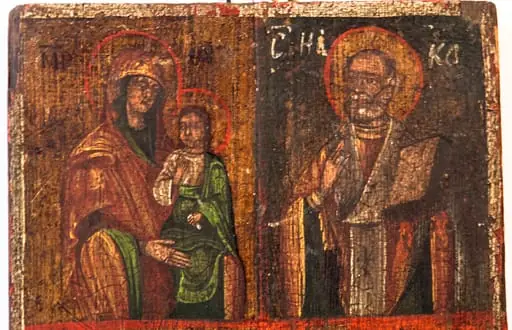 Icoana cu patru scene în care sunt reprezentați: Maica Domnului cu Pruncul(tipul Hodighitria), Sfântul Nicolae, sfântul Gheorghe, cuvioasa Paraschiva. Toți sunt redați 3/4, din semiprofil, pe un fond de culoare(galben) care servește și ca suport pentru pictură, la două casete peste acesta s-a aplicat albastru( fond la sf. Nicolae) și roșu (fond la Cuvioasa Paraschiva, continuat ca bandă de separație orizontală între registre.Pictura este ușor naivă și stângace, dar zugravul cunoștea canoanele picturi bizantine, chipurile sunt expresive, proporțiile respectate, se observă virtuozitate în realizarea faldurilor. Maica Domnului este înveșmântată cu maforion roșu deschis, drapaj galben, intradosul verde și stola bleumarin. Pruncul binecuvintează cu mâna dreaptă, în stânga ține un rotulus. Înveșmântat cu chiton alb și himation verde. Sfântul ierarh Nicolae binecuvintează cu dreapta în stânga ține Evanghelia. Are capul descoperit fruntea înaltă, barba și părul scurte. Sacos roșu cu drapaj galben, stihar bleumarin, epitrahil alb. Sfântul Gheorghe, tânăr, poartă o lorică argintie, tunică albastră, mantie roșii cu drapaj galben.. În dreapta ține o cruce, în stânga o lance.Cuvioasa Paraschiva poartă un maforion întunecat, tunică roșie cu drapaj galben și mâneci verzi.În dreapta ține o cruce mică, în stânga niște mătănii.Nimburile trasate cu o linie roșie. Chenar- bandă albă.
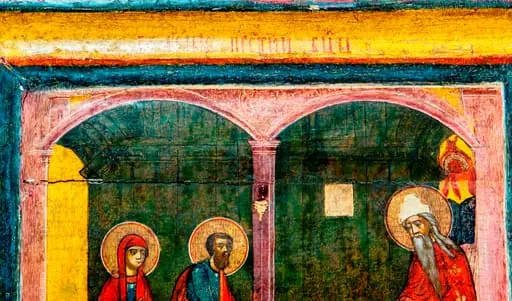 Intru co
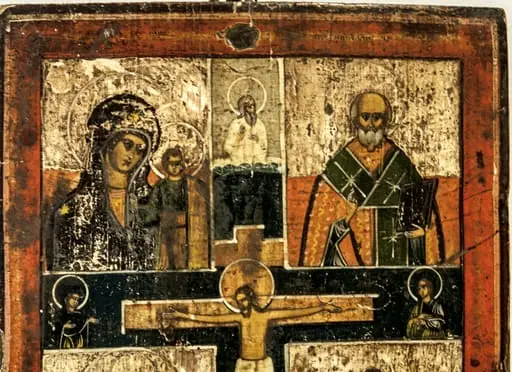 Răstshka
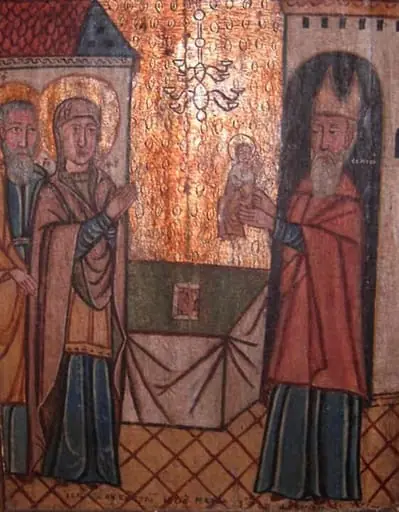 Întâmpinarea Domnului
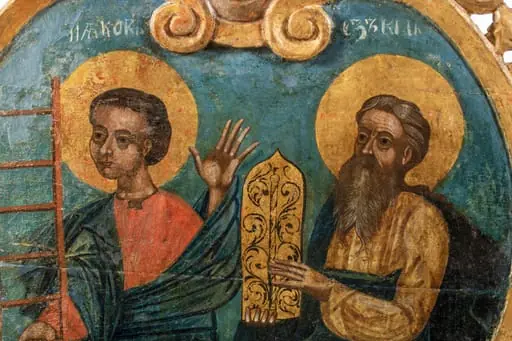 Iacov și Ezechil
 Icoaezeneapt