Artwork
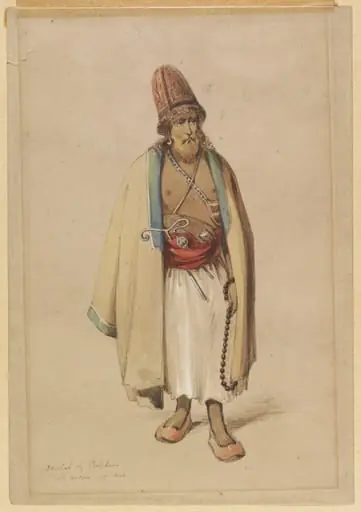
Derviș cerșetor
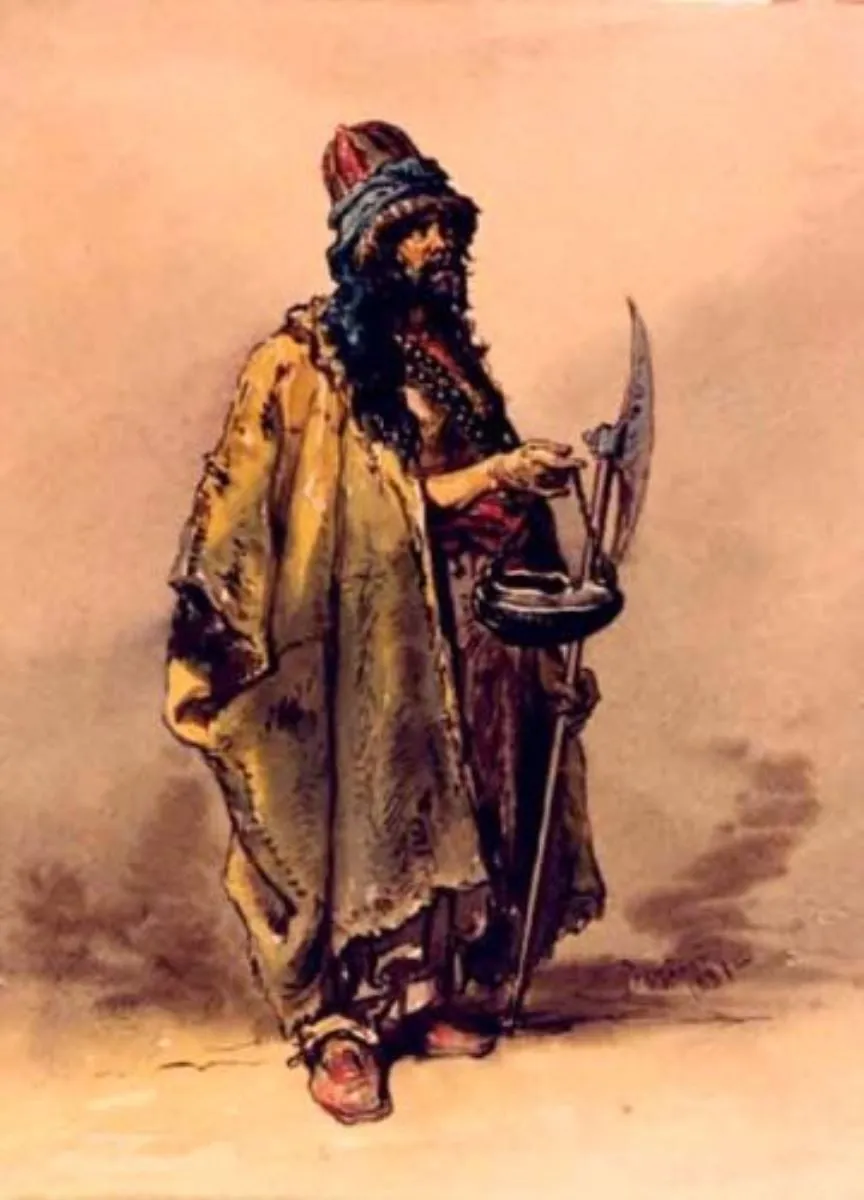
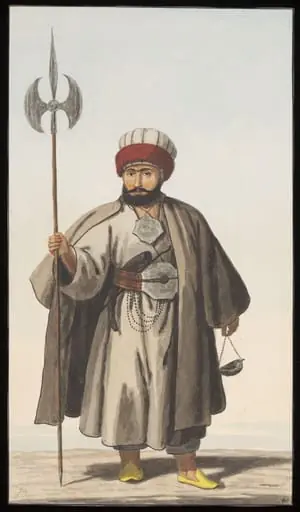
Derviș cerșetor is an unspecified painting by the Impressionist artist Amedeo Preziosi. It dates from 1881 and is held in the collection of the National Museum of Art of Romania.
About this work
Overview
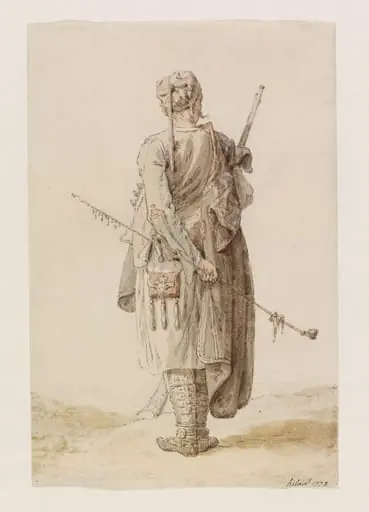
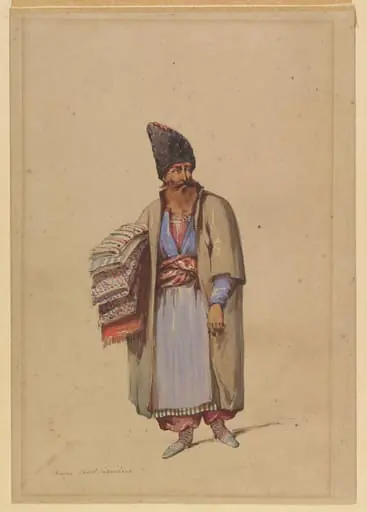
Amedeo Preziosi’s 1881 oil painting titled Derviș cerșetor depicts a solitary figure in a desolate setting. The central character, a raggedly dressed man, holds a small metal bowl and a walking staff, his weathered face and patched garments merging with a muted, dusty landscape.
Subject & Meaning
The work presents a beggar, or dervish, as a study of poverty and endurance. By emphasizing the figure’s worn shoes, tattered robes, and the humble bowl, Preziosi draws attention to the daily hardships endured by itinerant individuals in the region.
Technique & Style
Executed with loose brushwork and a restrained palette of earth tones, the painting achieves a tactile realism. The artist’s focus on surface details—such as the texture of the fabric and the sheen of the metal bowl—creates a sense of immediacy and physical presence.
History & Provenance
Created in 1881, Derviș cerșetor belongs to the later period of Preziosi’s career, when he turned toward more observational subjects. The painting has remained in private collections since its completion, with limited exhibition history, reflecting its modest reception compared to the artist’s earlier orientalist scenes.
Artist & collection
Artist
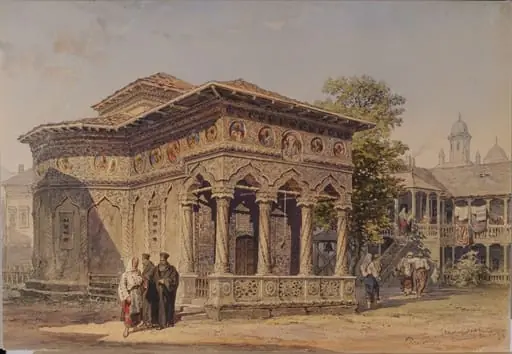
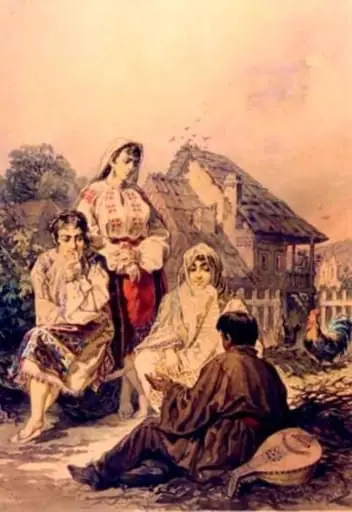
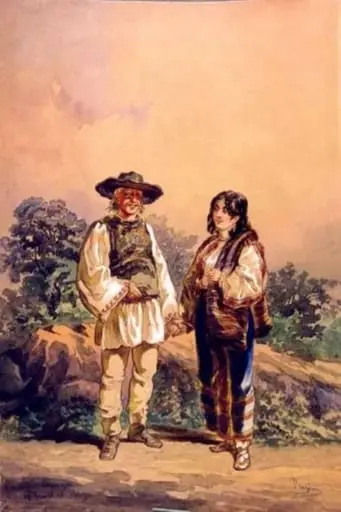
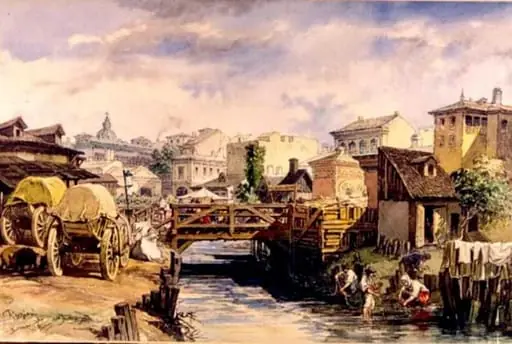
Amedeo Preziosi painted everyday life in 19th-century Bucharest. His brush caught the Surugii din Obor textile market in 1868 and the wooden Pod peste Bucureștioara bridge the next year, plus village scenes like Țărănci…