Artwork
Pod peste Bucureștioara
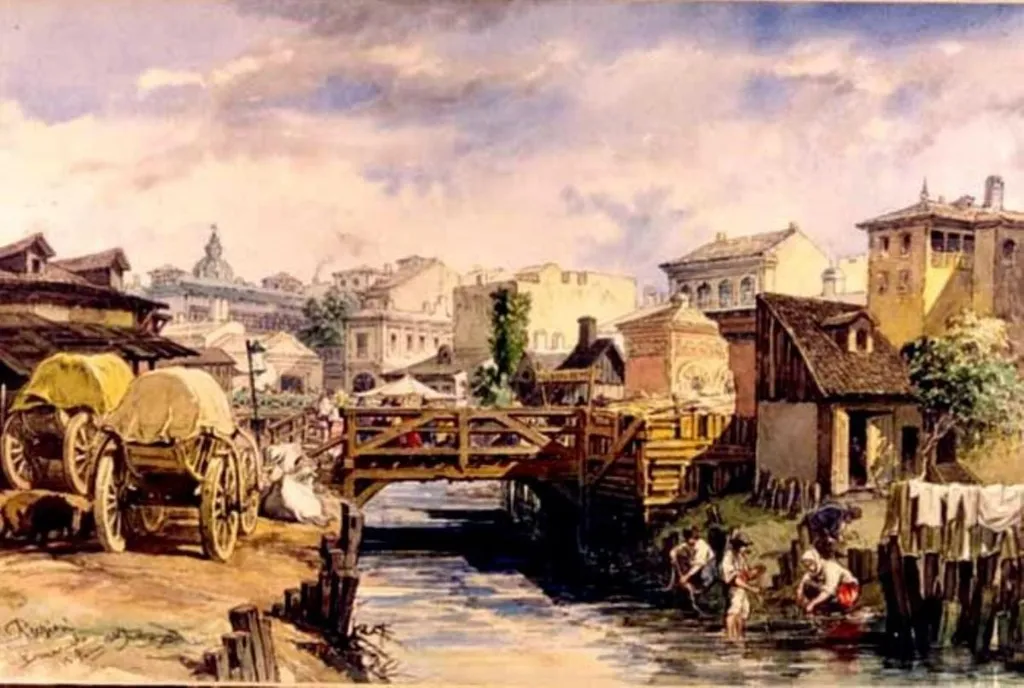
Pod peste Bucureștioara is an unspecified painting by the Impressionist artist Amedeo Preziosi. It dates from 1869 and is held in the collection of the National Museum of Art of Romania.
About this work
Overview
Painted in 1869 by Amedeo Preziosi, this work depicts a modest bridge spanning a narrow river in Bucharest.
Painted in 1869 by Amedeo Preziosi, this work depicts a modest bridge spanning a narrow river in Bucharest. The scene captures daily activity along its banks—figures washing linens, hauling water, and moving between dwellings—set against a backdrop of unadorned buildings and a distant church spire. The sky is muted, diffusing a gentle light that softens the textures of wood, stone, and wet fabric.
Subject & Meaning
The painting presents an unembellished view of urban life in mid-19th-century Bucharest, focusing on routine labor rather than spectacle. The presence of laundry, wagons, and water carriers suggests a community shaped by practical needs. There is no overt narrative, but the quiet rhythm of movement and stillness conveys a sense of ordinary endurance, grounded in the rhythms of place and season.
Technique & Style
Preziosi employs careful observation of natural light, particularly how it reflects off damp surfaces—clothes, stones, and water. Brushwork is precise but not overly polished, favoring texture over idealization. The composition balances horizontal lines of the bridge and riverbank with vertical elements like towers and figures, creating a calm, measured rhythm that reinforces the scene’s quiet realism.
History & Provenance
Created during Preziosi’s time in Romania, the painting reflects his interest in documenting local life after settling in Bucharest. It was likely painted for private collectors or as part of a broader series on Balkan urban scenes. Its survival suggests it was valued for its documentary quality rather than its decorative appeal, though its current location remains unconfirmed in public records.
Context
In the 1860s, Bucharest was undergoing modest modernization, yet many areas retained pre-industrial rhythms. Preziosi’s work aligns with European Realist trends, avoiding romanticism in favor of unvarnished observation. Unlike grand historical paintings, this scene elevates the mundane, mirroring broader shifts in art toward everyday subjects and the dignity of labor.
Legacy
Though not widely exhibited, the painting contributes to a small but significant body of 19th-century Romanian genre scenes by foreign artists. It offers a visual record of a city before rapid urban transformation, preserving details of architecture, dress, and activity that might otherwise have been lost. Its quiet precision continues to inform studies of Balkan visual culture.
Artist & collection
Artist
Amedeo Preziosi painted everyday life in 19th-century Bucharest. His brush caught the Surugii din Obor textile market in 1868 and the wooden Pod peste Bucureștioara bridge the next year, plus village scenes like Țărănci…







 Valea Prahovei
 Turnul și strada Bărăției
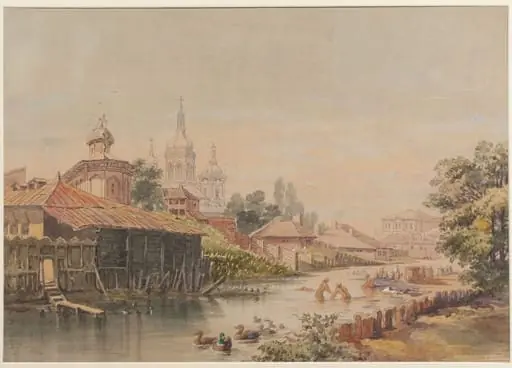 Dâmbovița la Radu Vodă
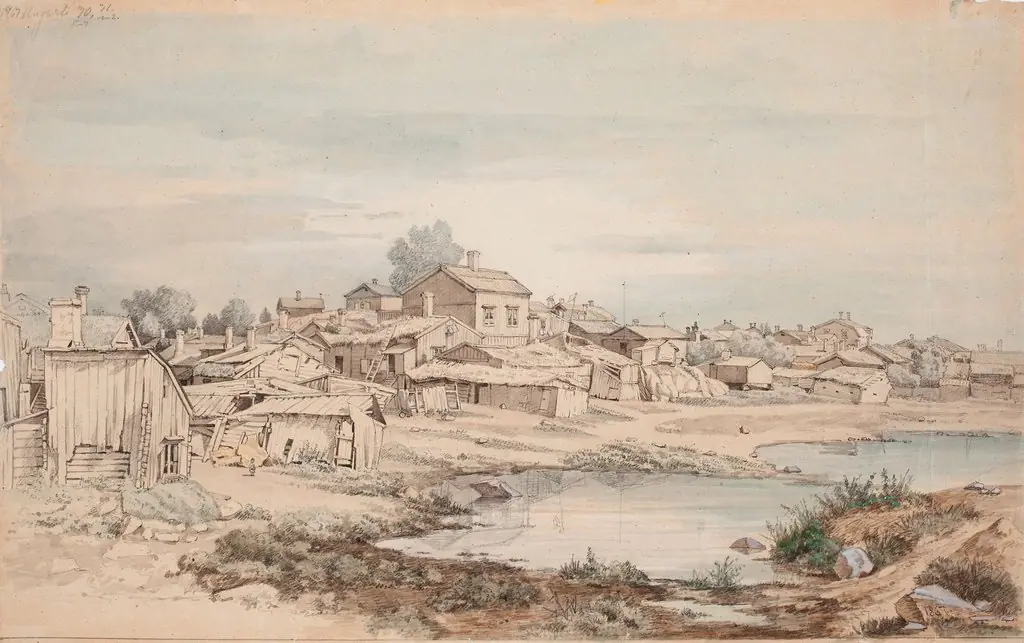 Katajanokka, luonnos
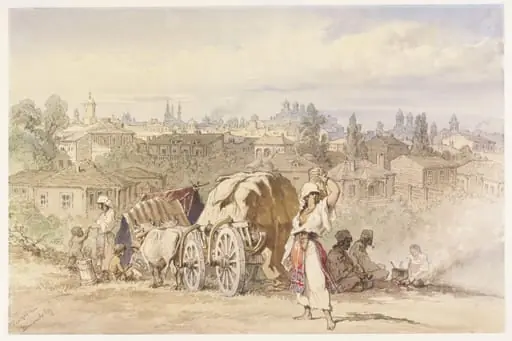 A Gipsy Encampment at Filaret outside Bucharest
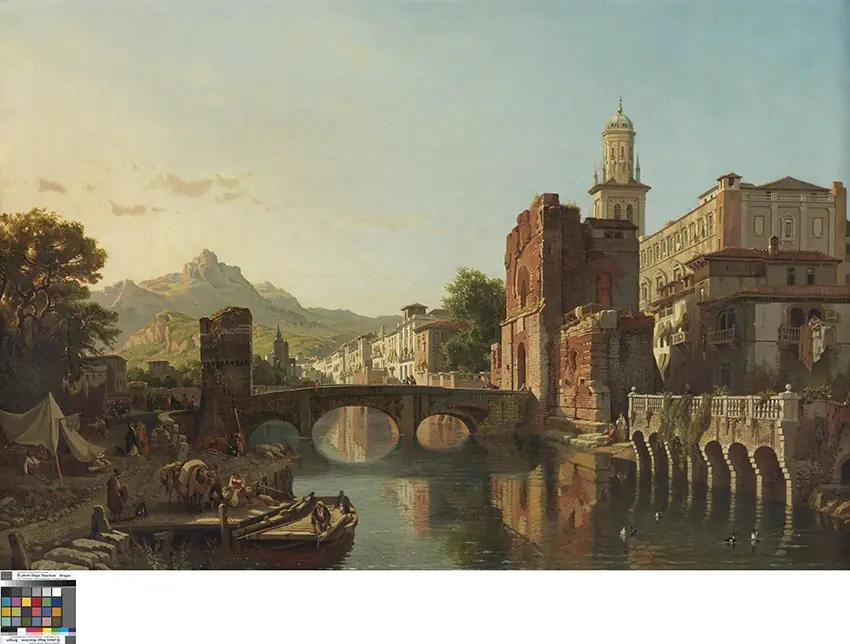 Stadsgezicht in Spanje
 Landscape with Travellers
 Bridge at Honan opposite to Canton
 A Selection of Twenty of the Most Picturesque Views in Paris: View of the Palace and Village of Choisi on the Banks of the Seine
 Biserica Batiștei
 The Porte de Versailles at Pont du Jour
 O mahala din București