Artwork
Valea Prahovei
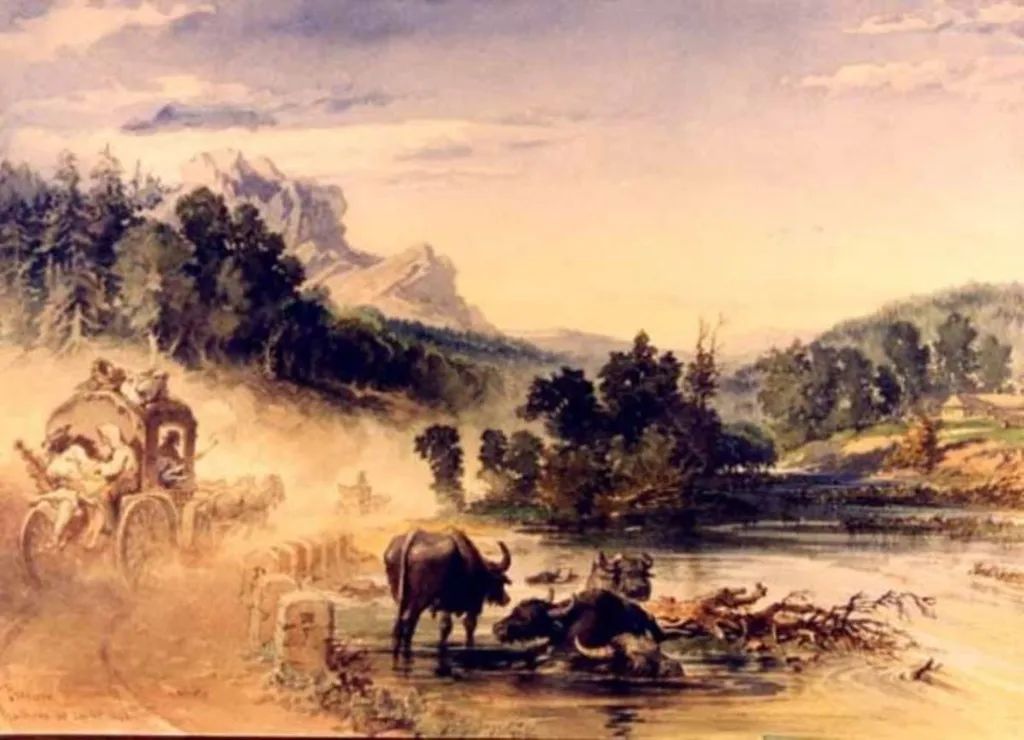
Valea Prahovei is an unspecified painting by the Biedermeier artist Amedeo Preziosi. It dates from 1868 and is held in the collection of the National Museum of Art of Romania.
About this work
Overview
The tone is subdued, avoiding dramatic emphasis, and conveys a sense of stillness rooted in observation rather than idealization.
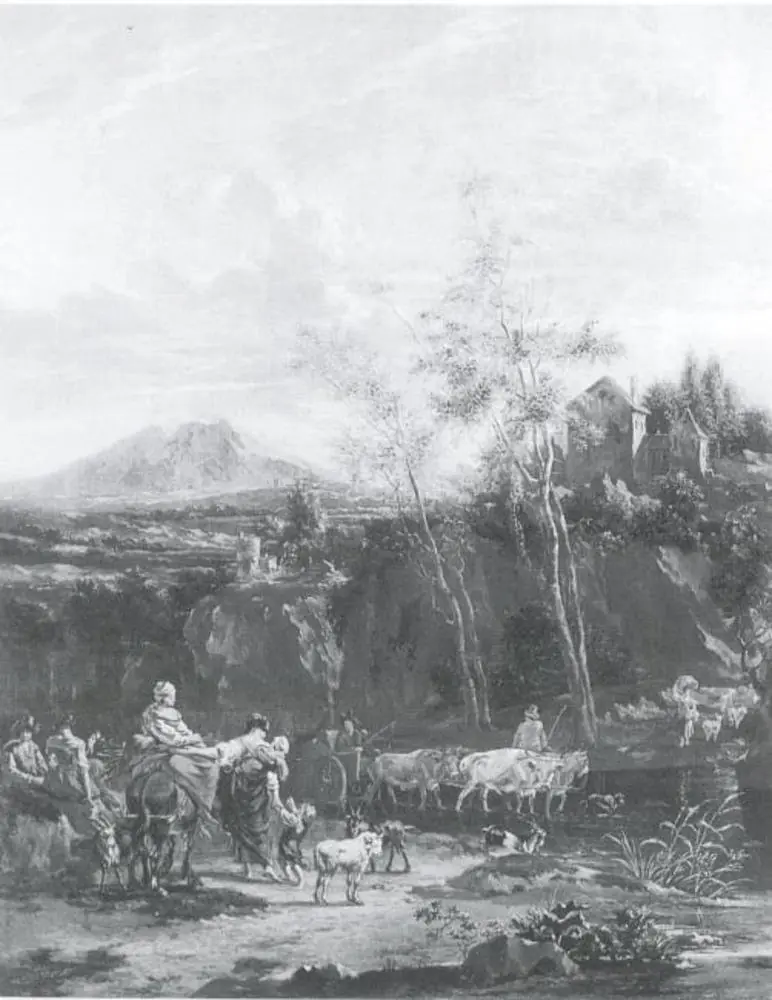
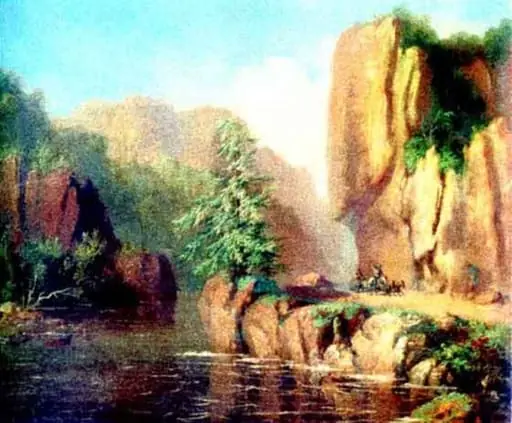
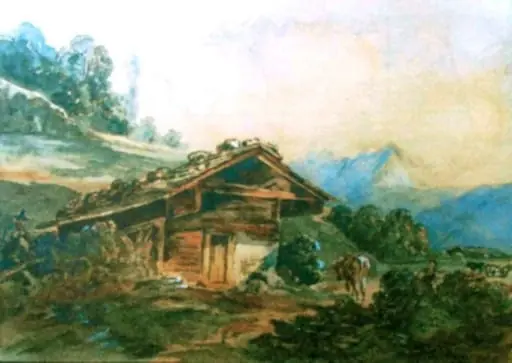
Amedeo Preziosi painted Valea Prahovei in 1868, depicting a tranquil valley in Romania. The composition centers on a quiet landscape where gentle hills roll toward distant peaks. A narrow stream winds through the foreground, drawing the eye toward a group of animals and a solitary figure on a cart. The tone is subdued, avoiding dramatic emphasis, and conveys a sense of stillness rooted in observation rather than idealization.
Subject & Meaning
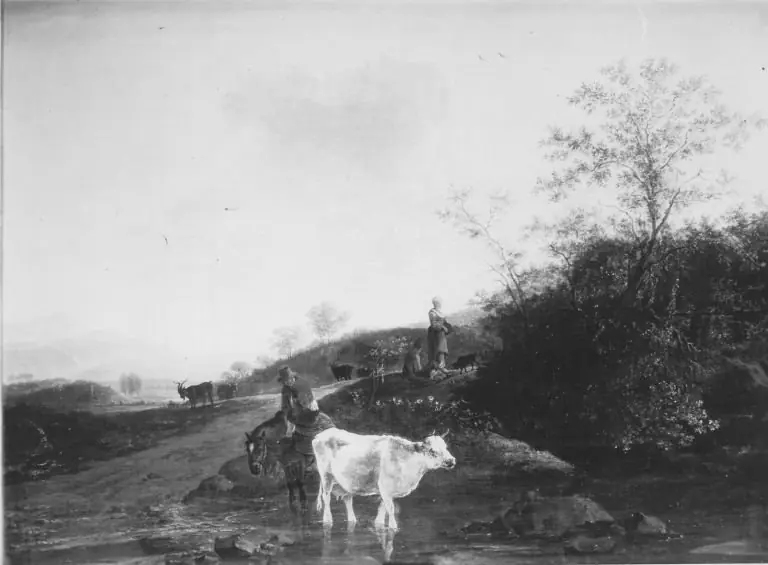
The scene portrays an ordinary rural moment—livestock drinking, a figure resting on a cart—with no narrative or symbolic overload. The absence of human activity beyond the lone figure suggests a quiet harmony between people and land. Preziosi’s focus on unremarkable daily life aligns with Realist principles, valuing authenticity over romanticized or heroic interpretations of the countryside.
Technique & Style
Preziosi employed soft, blended brushwork to render light and atmosphere with quiet precision. The palette consists of muted earth tones—olive greens, ochres, and browns—harmonizing with a pale sky. Shadows are rendered subtly, enhancing the sense of natural illumination without theatrical contrast. The technique avoids sharp definition, favoring a hazy, atmospheric quality that reinforces the scene’s serenity.
History & Provenance
Created during Preziosi’s time in Romania, the painting reflects his engagement with local landscapes after relocating from Italy. While specific ownership records from the 19th century are limited, the work is documented in collections associated with his Romanian period. It was likely produced for private patrons interested in regional scenery rather than public exhibition.
Context
In the late 1860s, European artists increasingly turned to rural life as a subject, moving away from historical or mythological themes. Preziosi’s work in Romania contributed to a broader regional Realist trend, documenting everyday environments with observational fidelity. His approach paralleled contemporaries in France and the Netherlands who sought to depict the unembellished rhythms of peasant existence.
Legacy
Valea Prahovei remains a quiet example of 19th-century Realist landscape painting in Eastern Europe. Though not widely exhibited, it contributes to the understanding of how foreign artists interpreted Romanian scenery during a period of national cultural consolidation. Its significance lies in its restraint and attention to natural detail, offering a counterpoint to more dramatic nationalist imagery of the era.
Artist & collection
Artist
Born in Malta, Amedeo Preziosi spent years in Romania painting the daily life and landscapes of the 19th century Orient.