Artwork
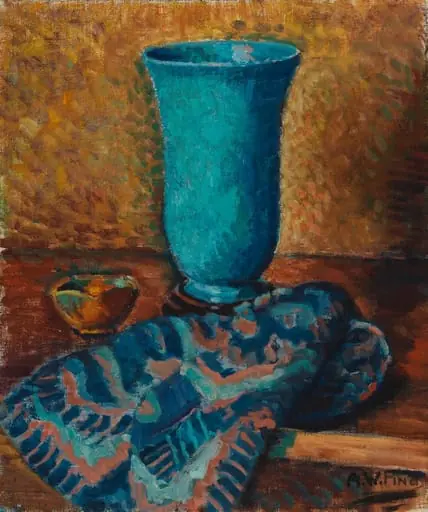
Natură statică cu pahar albastru
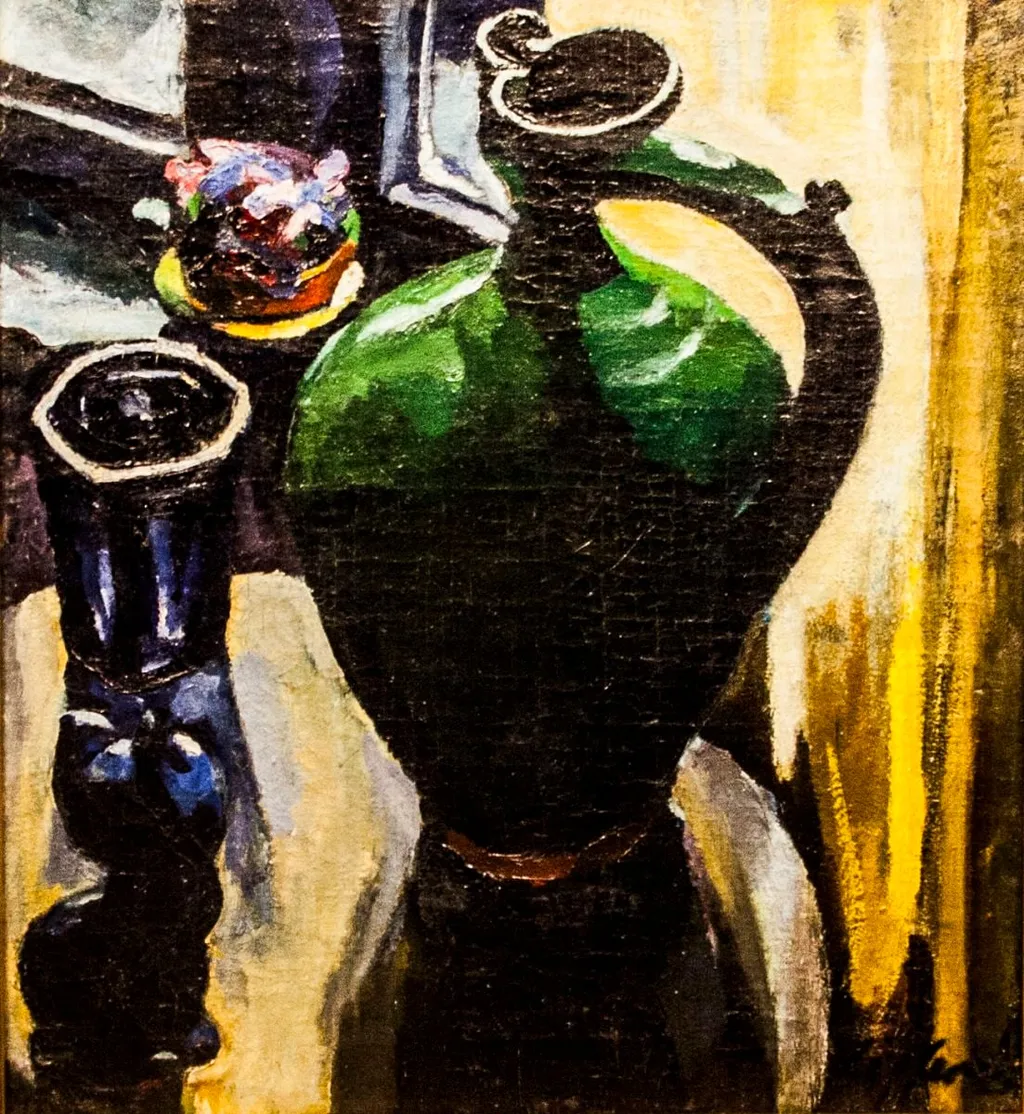
Natură statică cu pahar albastru is an unspecified painting by Sándor Ziffer. It is held in the collection of the Lucian Pop Art Collection.
About this work
Overview
The objects are arranged with deliberate simplicity, suggesting an interest in everyday forms rendered with calm precision.
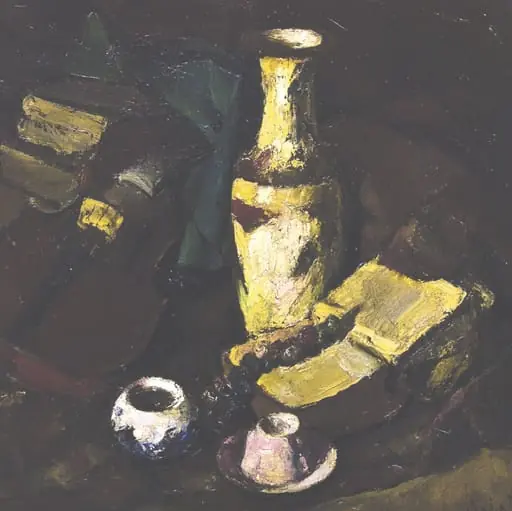
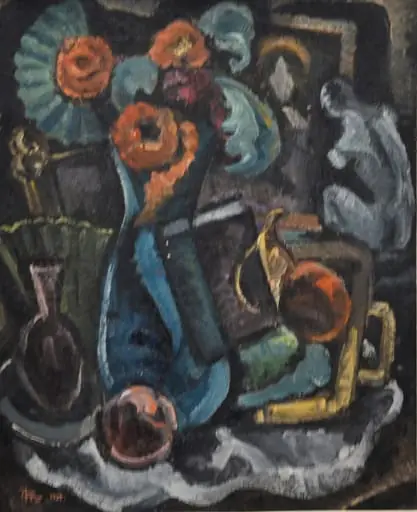
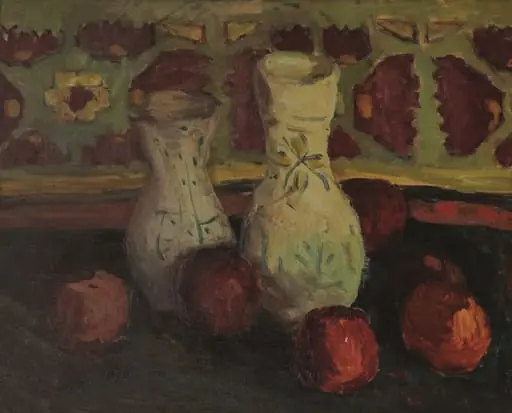
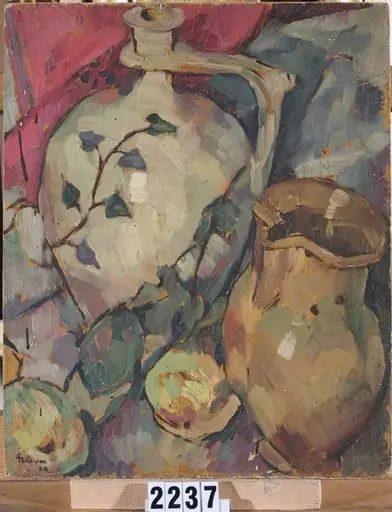
This still life painting centers on a green vase placed prominently on a flat surface, flanked by smaller vessels and set against a warm, yellow-toned background. The composition is restrained, emphasizing quiet balance over dramatic contrast. The objects are arranged with deliberate simplicity, suggesting an interest in everyday forms rendered with calm precision. The absence of overt narrative or symbolism points toward an aesthetic focused on form and tone.
Subject & Meaning
The subject consists of common domestic items—a green vase, a colored bowl, and a dark vessel—arranged without theatricality. Their placement invites contemplation rather than storytelling. The absence of fruit, flowers, or other traditional still-life elements shifts focus to the vessels themselves, treating them as quiet witnesses to ordinary moments. The work suggests an appreciation for the dignity of mundane objects, devoid of symbolic weight.
Technique & Style
Brushwork is subdued and deliberate, with soft transitions between tones and minimal texture. Color is used sparingly: the green vase stands out against the muted yellow background, while the other objects are rendered in earthy, low-saturation hues. Light is diffused, casting no sharp shadows, which contributes to the painting’s serene atmosphere. The style favors quiet observation over expressive brushstroke or dramatic chiaroscuro.
History & Provenance
The painting is attributed to Sándor Ziffer, a Hungarian artist active in the early to mid-20th century, known for his still lifes and interior scenes. While specific details of its creation or early ownership are not documented, its aesthetic aligns with Ziffer’s broader body of work, which often explored domestic stillness through restrained color and composition. Its provenance remains untraced beyond its association with his oeuvre.
Context
Created during a period when Central European artists were moving away from overt symbolism toward introspective realism, this work reflects a broader trend of valuing quietude in art. Ziffer’s still lifes emerged alongside similar efforts in Hungary and neighboring regions, where painters sought to capture the poetry of ordinary spaces. The painting fits within a quiet, post-impressionist lineage that prioritized mood over narrative.
Legacy
Though not widely exhibited or reproduced, the painting contributes to the recognition of Ziffer’s role in Hungarian modernism. It exemplifies a regional tendency toward understated still life, distinct from the more expressive movements of the time. Its endurance lies in its quiet resonance—offering a contemplative alternative to the dynamism of early 20th-century avant-garde trends.
Artist & collection
Artist
Sándor Ziffer made quiet, earth-toned landscapes and portraits in the early-to-mid 1900s.